Future Trends: What’s Next for Custom PS5 and PC Controllers
If you are eyeing your next gamepad upgrade, here is the short answer to what is coming for custom PS5 controllers and custom PC controllers in the near future: more modularity, smarter input tuning, better durability, and shells that fit your hands and habits, not just your color scheme. Expect Hall effect sticks to become standard, back paddles that feel less like add-ons and more like native controls, breathable Helico Hexavent shells for grip and airflow, and software that lets you dial in precision for each game rather than one-size-fits-all presets.
The near future at a glance
Most players search this topic to decide if they should buy now or wait. Over the next 12 to 24 months, these changes will matter most:
Hall effect sticks, load cell triggers, and low-latency 2.4 GHz receivers moving from niche to baseline on premium builds. Back paddles evolving into adjustable, multi-stage inputs with better ergonomics and less accidental activation. Lightweight, breathable shells like Helico Hexavent designs offering real grip and sweat control without harsh weight trade-offs. Software layers that feel like driver-grade control panels: per-game profiles, gyro aim curves, and simpler calibration. Repairability getting real: hot-swap stick modules, common screw formats, accessible parts, and longer-lived switches.
If you play shooters, racers, or fighting games and you care about consistency, you will see meaningful gains from this wave. If you play narrative or indie titles, you will still appreciate the materials, battery life, and comfort, even if you do not push the performance envelope.
Precision inputs shift from nice-to-have to standard
For years, the conversation started and ended with “sticks and triggers.” That still matters, but the technology inside those parts is changing in practical ways.
Hall effect thumbsticks use magnetic sensors to detect movement without physical contact, so drift is far less likely than with traditional potentiometer sticks. This is not magic; you can still damage a stick through impact or contamination. But for heavy use - and especially in competitive shooters where tiny deadzones matter - Hall sensors remove the single biggest maintenance headache.
Trigger tech is also moving forward. Load cell triggers measure force rather than distance, which can be a game changer in racing sims on PC and for throttle or brake analog control. On PS5, where many games integrate adaptive triggers with resistance, expect hybrid builds that let you toggle between Sony’s adaptive features and a clean, force-sensitive mode for precision. The key is honest tuning. A well-calibrated 600 to 1,000 gram range on a load cell can feel natural, while poorly tuned triggers tire your hand. Look for builders who publish the force curve, not just hype “pro triggers.”
Face buttons are seeing a quiet renaissance too. Some shops are swapping membrane domes for clicky microswitches, often rated above 5 million actuations. They feel fast and crisp, but they are also noisier and slightly shallower. For fighters, that sharp activation can be great. For platformers that rely on feathered presses, you might prefer a tuned dome or hybrid switch.
Gyro aiming, once a niche feature, is being adopted by more PC players thanks to better software. The next step is per-title gyro curves that load automatically, with sensible defaults that do not require a degree in input theory. You should be able to set a “micro aim” slope, then a “turn” slope, and move on. The best implementations pair gyro with modest stick aim assist where games allow it, without fighting each other.
Back paddles grow up
Back paddles are rear inputs that sit under your middle or ring fingers, letting you keep thumbs on the sticks while jumping, sliding, or swapping weapons. They started as simple, often clunky add-ons. The next wave focuses less on how many paddles and more on how they fit your grip and filter mis-presses.
The big improvements to watch:
Paddles that can shift position slightly, either by swappable arms or adjustable mounts. One or two millimeters can eliminate accidental presses for claw and relaxed grips alike. Multi-stage or analog paddles that register a light touch versus a full press. Not all games can use two stages, but for actions like walk versus sprint or half-clutch in racers, this is powerful. Remap without a screen dance. Hold a small setup button, tap the paddle, then tap the desired face or D-pad input. Done. No flaky apps for simple remaps. Better force tuning. Springs and hinge geometry matter. Look for 120 to 160 gram actuation on rear paddles if you get accidental clicks, or lighter 80 to 100 grams for speed if your grip is disciplined.
One trade-off to accept: the more mechanical travel and tactility you add, the louder the paddles tend to get. If you play near a microphone, ask your builder about dampers or low-noise paddles.
Helico Hexavent shells and smarter ergonomics
Helico Hexavent shells use a honeycomb or hex perforation pattern to reduce weight and improve airflow around palm areas. On controllers, the benefit is less hand sweat, a slightly lighter frame, and better tactile grip without a heavy rubberized coating.
Where this trend is headed:
First, the vents are being placed more intelligently. Instead of drilling holes everywhere, builders are mapping contact points and sweat zones. Expect perforation where the base of your thumb meets the shell and on the rear palm bulges, with solid rails where fingers need smooth guidance.
Second, textures are getting subtler. Aggressive stipple can chew up softer skin over long sessions. A fine microtexture with hex venting strikes a better balance for long play. Some shops now offer grit ratings, similar to sandpaper scales, which is surprisingly useful. If you play 3 to 4 hours at a stretch, a mid-grit shell that pairs with a breathable backplate will hold, not bite.
Third, weight tuning will not just mean “light.” There are players who aim better with a bit of mass. I expect modular weight slugs seated near the handrest instead of loosely under the battery tray, so the balance point shifts toward the palm, not the nose. On PC controllers, this is easier to implement, while custom PS5 controllers may have tighter tolerances due to Sony’s internal layout.

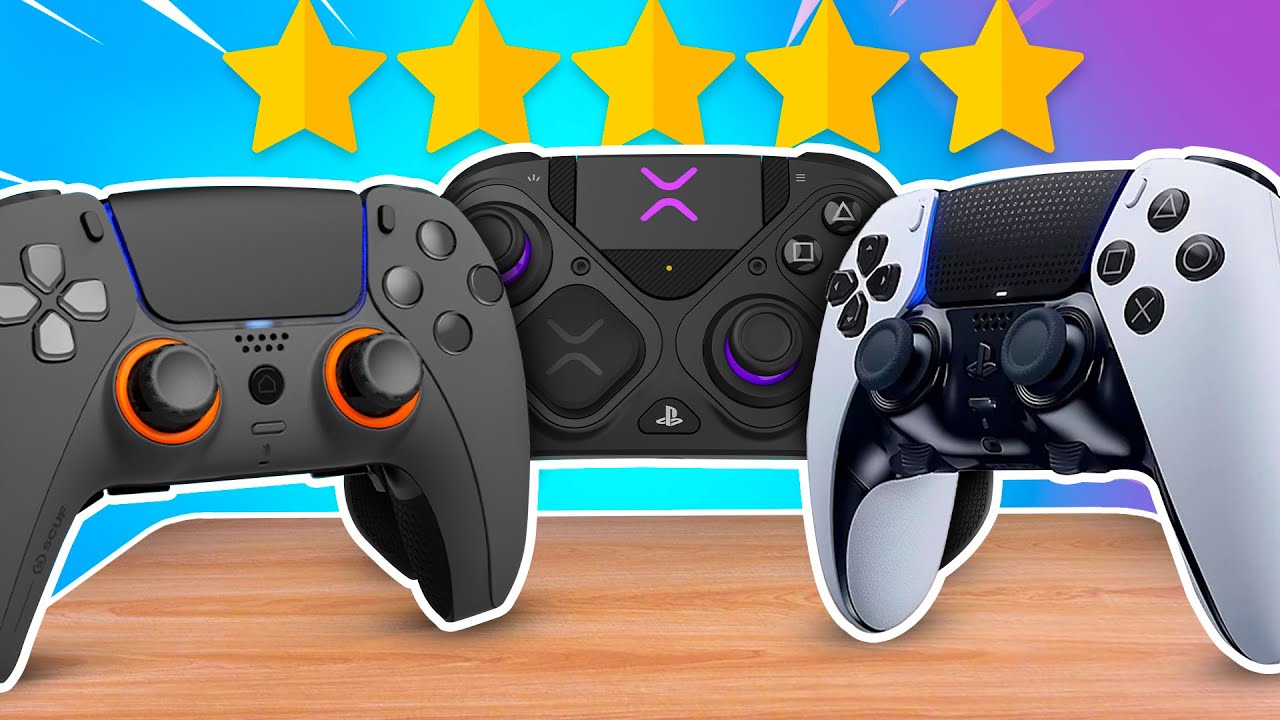
Finally, replacement fronts and backs that click on without removing every internal screw are coming. That will make cosmetic refreshes and basic cleaning less of a chore, and it encourages people to maintain their gear rather than bin it.
The software layer matures
The least exciting part to market is often the most useful. Good controller software lets you remap, tune deadzones, set trigger curves, and manage profiles without fighting a UI. What is changing:
Per-game profiles should auto-switch based on the process running on PC or the title ID on console through the allowed system hooks. If a builder claims per-game switching on PS5, look closely at how it works. Most pure hardware remaps are legal and safe. Anything that emulates a different device or injects behavior sits in a gray area or worse, especially in competitive titles.
Gyro curves will become more accessible. Think two sliders rather than twelve: “small movement precision” and “turn speed.” Advanced pages can still expose custom filters and acceleration windows, but most players should not need them.
Rapid trigger modes, which reduce trigger travel to a click, are here to stay. The honest warning: some tournaments or games consider them a mechanical advantage that crosses into restricted territory. If you compete, confirm the rules. Many shops provide trigger locks you can disable for events to stay compliant.
Cloud syncing for profiles makes sense, particularly for PC. So does exporting a small text or JSON file so you can share settings. You should be able to export a layout to a friend, not describe it in a chat one knob at a time.
Latency and connectivity: Bluetooth is not the only answer
Bluetooth is convenient, but not always the lowest latency. For PC, dedicated 2.4 GHz dongles with adaptive frequency hopping reliably beat standard Bluetooth stacks in input-to-display time, sometimes by a perceptible margin. Lower packet jitter matters more than raw average latency for aim consistency. You feel it as steadier microadjustments.
On PS5, you are bound by platform constraints. Wired USB still tends to be the safest choice for minimal latency, especially in competitive shooters. USB polling above 250 Hz does not always deliver a visible benefit on console, where software input handling sets the floor. On PC, higher polling like 500 or 1000 Hz can matter when paired with high-refresh displays and low-latency render paths. Just remember that some games clamp input processing to frame rate or internal ticks, which blunts the advantage of high USB polling.
Expect more builders to bundle a low-latency 2.4 GHz receiver for PC and Switch, plus Bluetooth for mobile and general use, and a solid, non-kink-prone USB-C cable for wired sessions.
Built to be fixed, not tossed
Repairability https://andrephqt809.wordpress.com/2026/05/22/are-back-paddles-worth-it-for-sports-games-on-ps5/ will separate serious builders from drop-shippers. Hot-swap stick modules will be more widely available, and not only for Hall sensors. Trigger assemblies with modular springs and cams reduce downtime. Common Phillips or Torx heads, not security screws, should be the default. Clear part numbers on membranes and switches make it easier to service your pad a year later.
Microswitch ratings matter. A 5 million click face button is plenty for most, but if you hammer jump in platformers, 10 million actuations can pay for itself in reduced downtime. That rating is not a guarantee of lifespan, but it is a sensible proxy when comparing options.
If a builder offers a 6 to 12 month stick module warranty, that is a confident sign. If they only warranty cosmetics, be cautious.
Materials and finishes: what actually lasts
ABS shells take color well but can get shiny with skin oils. PBT resists shine and holds texture longer, though it can be trickier to finish with bright graphics. Expect a shift toward PBT blends on high-contact zones like grips, with ABS or coated ABS on the face for vibrant designs.
Soft-touch coatings feel great for the first month and then wear oddly if they are not top-tier. Microtexture molded into the plastic paired with targeted rubber inlays is a safer route for longevity. If you sweat heavily, breathable Helico Hexavent shells and dry-touch textures will feel better over time than any thick rubber wrap.

RGB lighting is starting to creep into controllers. On PC, tasteful edge glows and status LEDs can be useful. Just keep an eye on heat and battery draw. Unless the lighting communicates profiles or connection state, it is often more maintenance than value.
Accessibility moves from side project to core feature
Accessible controllers used to mean separate, highly customized gear. That is still vital, but mainstream custom pads can do more. Back paddles that remap to any input make single-hand play more realistic. Trigger locks with minimal tension help those with limited finger strength. Textured landmarks on bumpers or face buttons give tactile cues without looking like an “accessible” mod.
On PC, foot pedals and external switches pair well with controllers if the software lets you map them as part of a single layout. More builders are exposing HID device aggregation so you can mix a pedal for L3 and a paddle for jump, all in one profile.
If accessibility matters for you or someone in your circle, ask the builder for setup support beyond a PDF. A 15 minute call or a video walkthrough of remaps can change whether the controller is usable or not.
Heat and airflow, clarified
There is a misconception that perforated shells cool the controller’s electronics. Most gamepads do not generate enough internal heat for that to matter. Helico Hexavent shells mainly benefit your hands, not the board. They improve airflow around your palm and reduce trapped sweat, which, in a long session, prevents slips and skin irritation. The side effect is a small weight reduction that can shift balance. If you prefer a little heft, choose a vented rear with a solid front, then add a weight slug near the handrest to keep the balance comfortable.
Power, charging, and session planning
Battery life varies wildly. High-performance radios and bright LEDs cut run time. A realistic target for performance builds is 10 to 20 hours per charge on PC with 2.4 GHz radios, and 12 to 25 hours on Bluetooth with LEDs modestly dimmed. On PS5, the platform’s own features, including adaptive triggers and haptics, set the baseline. Turning down haptic intensity stretches life significantly.
Swappable batteries are making a small comeback on PC-focused controllers, often with 18650 cells or custom packs. They help with longevity and travel, but they add weight. Integrated batteries are fine if the builder uses quality cells and a charging circuit with proper cutoff. Magnetic docks and pogo pin cradles lower friction for daily charging. Look for a dock that does not pinch the sticks or press a paddle while seating.
Fair play and compliance
Not all “features” are fair game everywhere. Tournament rule sets often prohibit macros, turbo, or any automated action that produces multiple inputs per press. Rapid trigger mechanisms that purely reduce travel are usually allowed, but check event rules. Some anti-cheat systems on PC look for input regularity that screams automation. If your controller software advertises recoil scripts, steer clear. Apart from the risk, scripts train bad habits that do not translate between games.
For PS5, ensure the controller maintains proper authentication without relying on passthrough hacks that can break with firmware updates. If a solution requires leaving a licensed pad connected at all times, understand that future updates may disrupt it.
Where PC and PS5 diverge, and how to decide
Custom PC controllers live in a looser world. You can pick 1000 Hz USB polling, pair with a fast 2.4 GHz dongle, run driver-level software, and use any stick or trigger tech a builder offers. The trade-off is integration work and occasional software hiccups between games. If you enjoy tinkering or you favor genres that benefit from gyro, load cells, or high polling, PC-focused pads reward the effort.
Custom PS5 controllers must play by Sony’s rules. Great builds exist, but you will see fewer exotic radios, tighter shells, and more fixed internals. The win is stability and native support. If you split time between console and PC, a controller that is primarily PS5-native with a good wired PC mode is often the smoothest compromise.
DIY or boutique builder?
DIY is thriving. Solderless kits for Hall sticks, trigger locks, and back paddles make it feasible to upgrade at home with patience and the right tools. The savings can be meaningful, and you learn how your gear works. The catch is time, warranty, and the occasional tolerance surprise that only shows up once everything is apart.
Boutique builders charge more, but good ones back the work with parts warranties, clear lead times, and sane RMA policies. If you depend on your controller for streams or events, the buffer is worth it. Ask about part sourcing, not just the final brand name. Hall sticks from a reputable supplier with actual QA notes beat a box of anonymous modules every time.
What not to expect
A few rumors need tempering. Biometrics on controllers, such as heart rate or grip sensors, may pop up for novelty, but they rarely influence competitive play in a repeatable way. Full-blown force feedback that pushes your sticks like a flight sim gimbal is unlikely to appear in mainstream pads soon due to size, power, and durability constraints. Smarter haptics, yes. Motorized force gimbals inside a compact hand pad, not yet.
A quick checklist before you buy
Decide your platform priority first. If PS5 is core, favor native compatibility and reliable wired play on PC as a bonus. Pick your stick tech. If you play daily, Hall effect sticks are worth it for consistency alone. Choose your paddle feel. Try light travel if you grip gently, or firmer springs if you press hard by habit. Check the software story. You want per-game profiles, quick remap, and sane gyro or trigger tuning without hacks. Verify repair paths. Hot-swap sticks, published part numbers, and a real warranty beat a fancy paint job.
Practical builds to watch for, by genre
For shooters, prioritize Hall sticks, light yet tactile back paddles mapped to jump and slide, and a 2.4 GHz PC receiver. On PS5, pair that with clean wired play. Add a low-friction stick cap on the right thumb and a grippier dome on the left for movement. Set a small axial deadzone so micro aim is steady without drift.
For racing, load cell triggers on PC are worth the investment, especially if you play sims with nuanced braking. If you race on PS5, choose a build that lets you toggle adaptive triggers off for consistency during long stints. Consider slightly heavier shell balance to calm micro twitches at speed.
For fighting games, microswitch face buttons can feel transformative, but try them before you commit. Some players prefer a tuned dome for plinking and slide inputs. Back paddles mapped to macro-like sequences will not fly in tournaments. Keep it honest: a back paddle for dash or a stance swap is fair, practical, and allowed in most rule sets.
For platformers and action RPGs, you will likely appreciate lighter shells with Helico Hexavent backs and medium-grit texture. Balanced paddles for jump and dodge reduce thumb travel fatigue. Battery life and comfort matter more than exotic tech here.
Care, cleaning, and minor mods that pay off
Good gear still needs care. Wipe shells with a microfiber cloth slightly dampened with isopropyl alcohol now and then, especially hex-vented surfaces where skin oils can build. Replace stick caps once they glaze over. If your triggers feel scratchy after a year, a tiny dab of plastic-safe lube on the cam points makes them feel new. Always test after any change in a game you know by feel, not just in a tester app.
If you sweat heavily, thin athletic grip tape on the lower back curve, not the entire grip, can give more control with less heat. Ventilated shells already help; the tape just anchors your ring finger. Replace it monthly to avoid residue.
The bottom line
Custom PS5 controllers and custom PC controllers are entering a more mature phase. The upgrades that matter are getting clearer and less gimmicky: Hall effect sticks for consistency, load cell triggers for analog finesse, back paddles that match your grip and do not miss presses, and Helico Hexavent shells that prioritize comfort over flashy coatings. The software is catching up to the hardware, with per-game profiles and faster remaps. Durability and repairability are finally showing up on the spec sheet.
If your current pad still works and you are on the fence, watch for three signals before you jump: builders publishing real specs instead of buzzwords, repair-friendly parts you can buy directly, and software that does more with fewer clicks. When those line up on a model that fits your platform, your hands, and your games, it is a good time to pull the trigger.