The Real Reason Your Home Smells Musty Upstairs
The Real Reason Your Home Smells Musty Upstairs
Upstairs smells do not drift in from nowhere. In Chula Vista, that musty odor almost always begins inside the attic. It lingers in the insulation, in the joist bays, and around duct joints where rodents pass and moisture condenses. The source is not a scented mystery. It is chemistry, biology, and airflow inside a structure built for tight energy performance but exposed to coastal humidity, canyon winds, and local rodent pressure. When the smell is strongest on the second floor or near the hallway ceiling, the attic is telling a story the nose can read before the eyes do.
Why the upstairs smell happens in Chula Vista houses
Chula Vista sits between coastal air and inland heat. By late afternoon, onshore winds run through the Otay Valley and across neighborhoods from Eastlake to Rancho Del Rey. That air brings moisture that rides the pressure stack up through walls and into the attic. When the attic has urine-soaked insulation, rat droppings, or old cellulose with dust and food residue, that moisture binds odor compounds and keeps them active. At night, the attic cools. Moisture condenses on roofing nails, duct jackets, and the paper facing on batts. Every time central air or a furnace cycles, the pressure shifts and the attic exhales those compounds into the living space.
In Otay Ranch and 91913, this cycle is worse than most homeowners expect. The master-planned layout has long rooflines, many soffit vents, and ridge vents that accelerate airflow. That airflow is great for a dry attic with clean insulation. It spreads odor when contamination exists. Eastlake and San Miguel Ranch see the same pattern. A modern roof and tight windows cannot mask the smell if the attic still holds the source.
The real culprit behind the musty smell is contamination, not just “old house air”
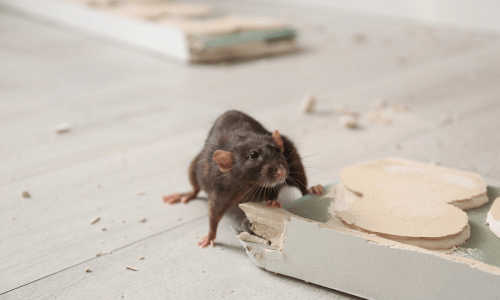
Attic contamination starts with rodents. Roof rats move along fence lines, palm fronds, and utility lines toward the nearest eave gap. They push through worn weather stripping at the garage-to-attic hatch, slip past torn roof vent screens, and find gaps where flashing meets stucco. Once inside, they cut runways in insulation. They mark pheromone trails with urine, and they create nesting pockets that trap food scraps, seeds, and oily residue. That residue wicks into fiberglass, cellulose, and even dust on drywall. The odor that drifts downstairs at night is not “age.” It is a signal that rodent nesting and soiled insulation exist above the ceiling plane.
Local homeowners in Castle Park, Hilltop, Terra Nova, and Bonita Long Canyon have heard the scurrying sounds at night. Many notice the smell is strongest above laundry rooms or near bathrooms. That is not random. Warm, moist air from showers and dryers pushes upward through light can trims, attic hatches, unsealed top plates, and pipe penetrations. The air pressure finds the path of least resistance. It pulls odor from urine-soaked insulation and pushes it into the upstairs hallway, closets, and bedrooms.
A shareable local finding: Otay Valley wind corridors can raise attic relative humidity 15 to 25 percent on summer evenings
AtticGuard has measured relative humidity spikes during evening onshore winds in homes east of Otay Valley Regional Park, especially between the North Island Credit Union Amphitheatre and Southwestern College. In more than two dozen inspections over two summers, attic RH climbed from the mid-30s to near 50 or 55 percent within two hours after sunset while roof sheathing cooled. That spike consistently reactivated musty odor in attics with urine-soaked insulation or damp cellulose. Homes closer to the Chula Vista Marina and the Living Coast Discovery Center showed a similar but milder profile due to cooler roof deck temperatures near the bay. The portable hygrometers, placed near ridge vents and at the top chord of trusses, recorded the same pattern on repeated visits. This is one reason odors in 91913, 91914, and 91915 seem strongest at night, then fade in the late morning.
Odor does not come from nowhere: it has a path and a carrier
Upstairs odor only moves when the building lets it. That path is air leakage around can lights, attic hatches, bath fan housings, and gaps at top plates. The carrier is air pressure from HVAC return ducts and whole-house fans that stir the attic layer. If rodents have chewed HVAC insulation or smudged ducts with grease and urine, the air handler can pull odor directly into returns. Even if return ducts are intact, the pressure differential from air movement can push attic air through weak points around trims and fixtures. This is why odor often strengthens when the AC cycles on a hot August night in Eastlake, Rancho Del Rey, or San Miguel Ranch.
Once the attic material is contaminated, no spray or candle in the hallway will solve it. The material must be removed and the odor source must be neutralized. That means a full attic insulation removal service when testing shows heavy contamination. It also means rodent exclusion so new animals do not re-mark the space and undo the work.
How rodent biology locks odor into insulation
Rodent urine does more than smell. It lays down pheromone trails that attract other rodents. Those trails carry urea, ammonia, and bacterial byproducts that bind to cellulose fibers and fiberglass strands. When humidity rises, those molecules volatilize and ride air currents through tiny ceiling gaps. Rat droppings crumble into dust with wear. That dust stores odor and health risks. Disturbing it without HEPA containment spreads particles into bedrooms and closets. Hantavirus and salmonellosis are known risks in rodent-contaminated dust. Any attic cleaning or decontamination must capture and remove particles, not just stir them around.
Urine also destroys thermal performance. Once insulation fills with moisture and waste, its R-value drops. That forces HVAC to run longer in 91911 and 91910 homes where attic temperatures already spike in summer. High run time pushes more pressure changes through the attic plane. The result is a loop: more HVAC run time, attic cleaning and maintenance more air exchange across leaky fixtures, more odor migration.
Why newer Otay Ranch homes are not immune
Many Otay Ranch and Eastlake homes were built with good attic ventilation and recessed can lights. They also have multiple roof planes, long ridge lines, and extensive soffit vent fields. Roof rats treat these features like a highway once they breach a single point. One torn roof vent screen is enough. One missed eave gap under a bird stop is enough. The rodent then maps the space, forms a nest in a warm corner behind a knee wall, and begins to use the insulation as a latrine. Within weeks, urine-soaked insulation along a truss bay will create a persistent musty attic odor. The family notices it first in the upstairs hall near the return grille or linen closet.
Across 91913 and 91915, AtticGuard has found roof vent screens missing, soft aluminum screens chewed through, and soffit vents never covered with quarter-inch mesh during the original build. In many cases, the only barrier is a plastic bug screen that a rat can push aside. The first visible sign is often small grease marks on stucco at the eave, or a rust-stained nail head pattern on the ceiling from chronic condensation. The smell follows.
What the smell means for building safety
Musty odor upstairs warns of more than discomfort. It warns of chewed wires, frayed insulation jackets, and HVAC duct damage. Rodents chew wire insulation to keep incisors short. That creates a fire hazard from chewed wiring near attic junction boxes. They shred fiberglass from around ducts and can slice return flex with a quick bite. A torn return will pull attic air straight into the system. The smell gets worse, the dust load rises, and the risk stacks up. A local attic inspection often reveals more damage than the homeowner expects.
Signs an upstairs smell is coming from the attic, not plumbing or walls
Most homeowners can sense the pattern once they know what to note. The smell grows stronger at night and early morning. It increases when HVAC runs. It hangs in the upstairs hall and open bedrooms even after windows are opened. Carpets, drains, and closets do not hold the source. The attic does. In Terra Nova and Rancho Del Rey, two-story floor plans with long hallways and a central return magnify this pattern because the air return draws from most of the second floor at once.
Insulation type and odor retention: fiberglass, cellulose, and TAP Insulation
Soiled fiberglass batts trap urine splatter in their random fiber matrix. The open structure absorbs and releases odor with every humidity swing. Blown-in fiberglass behaves the same but spreads the contamination across a larger area and deeper into joist bays. Old cellulose presents a different challenge. Its fiber structure and dust content hold moisture and odor longer, and the odor diffuses through the attic when airflow increases. In mixed-material attics, contamination can move from a rodent runway in batts into nearby cellulose as dust and fragments migrate.
After a full removal and decontamination, homeowners in 91914 and 91915 often replace with TAP Insulation or Owens Corning fiberglass for clean thermal performance. TAP is a borate-treated blown-in product with a pest-resistant profile. It does not feed nesting and supports R-38 targets common for local retrofits. Blown-in fiberglass from Knauf Insulation or Johns Manville is also common in Chula Vista re-installs. The selection depends on fire ratings, attic geometry, and budget. The key is that replacement happens only after the attic has been sealed, sanitized, and cleared of pheromone trails.
Why air sealing and exclusion must come before replacement
Capping the odor at the material level without sealing entry points invites a fast relapse. Rodent exclusion is a technical trade. It requires quarter-inch galvanized hardware cloth on roof and gable vents, steel wool and high-grade sealant at foundation cracks, and proper flashing at roof-wall joints. It also means screening soffit vents that never had a rodent-grade barrier. Weather stripping at attic access doors must be intact. Eave gaps need physical blocking, not just expanding foam. Roof vent screens should be upgraded from soft aluminum to hardware cloth held by corrosion-resistant fasteners. This prevents a return while technicians decontaminate and replace insulation.
The best work follows a sequence that protects indoor air. HEPA vacuuming captures droppings and nesting. A ULV cold fogger or thermal fogger applies hospital-grade sanitizer that neutralizes urine pheromone trails. An industrial air scrubber pulls suspended particles through HEPA and carbon filtration during the job. Technicians then remove all contaminated insulation using a sealed hose to an exterior blower machine. This prevents dust migration through the living space. Air sealing at can lights, bath fans, top plates, and pipe penetrations reduces the pressure path that once pulled odor into the home.
Why the upstairs smell seems worse after seasonal shifts
Homeowners in 91910 and 91911 often report the odor spikes after the first hot week of June or after a Santa Ana event calms. When the roof deck heats past 140 degrees, vapor trapped in insulation liberates fast. Once evening winds cool the deck, moisture condenses again and moves odor to accessible edges around trims and hatches. In fall, cooler nights increase condensation cycles on metal fasteners that dot the roof deck. Each cycle pulls and pushes odor like a bellows through light can trims, bath fan housings, and unsealed hatch frames. This is why a thorough attic cleaning and insulation removal service is the only fix that holds through the seasons.
Construction details that let odor travel in Chula Vista homes
Many two-story plans in Rancho Del Rey and Eastlake have dozens of recessed lights on the top floor. Unless those fixtures are sealed IC-rated cans with tight gaskets, they leak. Attic hatches over second-floor hallways lack weather stripping or insulation. Bathroom exhaust fans vent through flexible duct to a roof cap, but the fan housings leak at the drywall ring. Gaps at top plates around plumbing stacks and electrical runs are often visible daylight from the attic side. These are the specific sites where odor crosses from attic to living space. Air sealing them during restoration prevents the return of musty smells even on high humidity nights.
How a professional inspection reads the odor trail
An effective attic inspection in Chula Vista does not begin with traps. It begins with access, light, and measurements. Inspectors scan for rat droppings, urine-stained insulation, and shredded batt edges at runway lines. They check soffit vents for chew points, roof vent screens for holes, and eave gaps for daylight. They test for air leakage around the attic hatch and light trims. They photograph chewed wires and confirm HVAC duct damage where rodents have used the jacket as a pathway. They also use hygrometers to log attic RH during evening winds in neighborhoods near Otay Valley Regional Park. This map of defects and moisture explains the odor source in practical terms the homeowner can verify.
Health protection during removal is non-negotiable
Rodent-contaminated attics carry health risks. Hantavirus and salmonellosis can aerosolize when material is moved. That is why a HEPA vacuum and a sealed extraction line are necessary. The goal is to remove all soiled material without letting dust reach the living space. Technicians wear proper PPE, and the home remains habitable during work because the dust path is controlled from the hatch to a sealed hose to an exterior collection point. After removal, a ULV cold fogger or thermal fogger treats the surfaces. This neutralizes urine pheromone trails so future rodents do not target the same pathways after exclusion.
Electrical and fire risks linked to “just an odor”
The musty smell is often the first symptom of a different problem. Rodents chew wire insulation at junction boxes and across truss bays. They leave exposed copper that arcs under the right load. NFPA research and insurance adjusters agree that rodent damage is a real ignition source. Any attic restoration should document the condition of wiring. Damaged sections must be referred to a licensed electrician. Leaving damaged wiring under new insulation creates hidden risk. A careful attic restoration surfaces those hazards before the attic becomes out of sight and out of mind again.
Material choices after decontamination
Replacement insulation must meet or exceed R-38 for most of Chula Vista’s roof assemblies. Owens Corning fiberglass is a common choice for cost and availability. Knauf Insulation and Johns Manville also supply high-performance blown-in fiberglass that spreads evenly and resists settling. Applegate Cellulose or Greenfiber can be appropriate where deeper coverage is possible and a borate-treated profile is desired. TAP Insulation is a frequent pick for homeowners who want the borate treatment plus documented pest resistance and strong R-value per inch. Rockwool and CertainTeed products can be specified for fire or acoustic priorities. The final choice depends on attic depth, baffle layout at soffits, and whether a vapor retarder is appropriate for the assembly. The odor does not return if the substrate is clean and the entry points are sealed.
HVAC considerations so the smell does not cycle back
HVAC ducts and air handlers in 91913, 91914, and 91915 work hard in summer. If rodents have clawed the insulation jacket, the duct can condense moisture on hot days. That adds must and dust to the odor mix. Any attic cleaning should include a close look at duct seals, flex runs, and return boxes. If the return plenum draws from a leaky closet door or a gap around the filter slot, the system can pull attic air during every cycle. Sealing those points helps end the odor loop. Sanitization at the attic surface also protects indoor air quality when the system turns over thousands of cubic feet per hour.
Neighborhood patterns and zip code context across Chula Vista
Northwest Chula Vista in 91910 and 91911 includes older bungalows with open rafter tails and larger eave voids. Those voids need rodent-grade screening, not just bug mesh. East Chula Vista in 91913, 91914, and 91915 includes master-planned roofs with many vents that must hold up to rodent pressure. Otay Ranch, Eastlake, San Miguel Ranch, and Rancho Del Rey share a wind and humidity profile that feeds odor events after sunset. Terra Nova and Castle Park often combine older roof penetrations with updated HVAC runs that increase pressure changes. Bonita Long Canyon homes near riparian corridors see higher roof rat traffic along greenbelts. Imperial Beach and National City are close neighbors whose coastal drafts bring similar issues into west-facing homes. Otay Mesa and Spring Valley show inland heat spikes that accelerate insulation degradation and make contamination more volatile on the hottest days. These patterns explain why a single city shows different odor signatures from one block to another.
Landmarks that correlate with higher odor calls
Calls often cluster after evening events at the North Island Credit Union Amphitheatre when traffic heat adds to ambient temperature and the nightly onshore wind picks up. Homes near Sesame Place San Diego, Otay Valley Regional Park, and Southwestern College feel the same wind corridor effect. Properties along the bay by the Chula Vista Marina and the Living Coast Discovery Center see cooler roof decks but steady moisture that keeps attic RH higher year-round. In each area, rodent entry points plus moisture create the musty attic odor. The attic cleaning and insulation address changes. The physics do not.
An attic insulation removal service is the decisive fix
Odor lives in material. Cleaning surface dust does not change what lies inside an eight-inch layer of soaked fiberglass or cellulose. A full attic insulation removal pulls the odor source out of the home. HEPA vacuums capture droppings and nesting. A fogged sanitizer neutralizes urine pheromone trails. The removal line carries debris outside to a sealed container. Air scrubbers run during work to protect indoor air. The attic then receives air sealing at fixtures, top plates, and the hatch. Vent screens receive quarter-inch galvanized hardware cloth. Eave gaps get block-and-seal treatments that resist chewing. Foundation cracks and pipe penetrations get steel wool reinforcement with durable sealant, not just expanding foam. Only then does new insulation go in. That sequence is why the smell finally ends.
What homeowners usually notice right before the work
Most call after a run of hot, still days or a stretch of cool, windy nights. The smell becomes impossible to ignore in the upstairs hall, the primary bedroom ceiling, or the children’s rooms. A few also report faint scratching or scurrying sounds at night above the second floor. Others see tiny dark pellets near the attic hatch or linen closet. Some open a light can and find fluff and chewed fiberglass. In Hilltop and Castle Park, older homes may show lifted shingles near edges where rodents push under. In newer Otay Ranch homes, a single missing vent screen can be the breach. The pattern repeats citywide.
How AtticGuard restores a clean, quiet, and odor-free attic
AtticGuard crews work with a residential focus. They use HEPA vacuum equipment to control particles from the first minute. They run industrial air scrubbers so interior air stays safe. They extract contaminated insulation through a sealed hose to a blower machine outside the home. They sanitize surfaces with a ULV cold fogger or thermal fogger to break down urine pheromone trails. They seal light trims, bath fans, and top plates to block pressure paths. They install roof vent screens with galvanized hardware cloth and secure them to resist chewing. They reinforce foundation cracks with steel wool and high-grade sealant. Weather stripping at attic hatches gets replaced. The team then installs new insulation at the specified depth, often R-38, using TAP Insulation, Owens Corning fiberglass, or another product that fits the attic geometry and fire rating needs.
Why this approach holds up under local conditions
Evening humidity will keep arriving from the bay. Inland heat will keep baking the roof deck. Greenbelts and palm lines will keep channeling roof rats into neighborhoods from Bonita to Otay Mesa. A clean, sealed, and restored attic handles all of it. Odor cannot return without a source. Rodents cannot re-mark trails once exclusion holds. HVAC will stop pulling attic air into the hall through gaps because those gaps have been sealed. The physics that once spread odor will now move through a clean, insulated, and ventilated attic as intended.
Simple checks a homeowner can use to confirm results
The upstairs should smell like nothing. Airflow at returns should feel smooth without a musty edge when the system turns on. The attic hatch should seat tightly with new weather stripping. A flashlight look into the attic should show even insulation depth, intact baffles at soffits, and clean roof vent screens that look like quarter-inch mesh, not soft bug screen. No droppings should appear near the hatch after a week. No scratching sounds should return at night. That is what success looks like in 91910, 91911, 91913, 91914, and 91915.
Two reasons most “quick fixes” fail
Scent masking covers symptoms while humidity keeps reactivating the actual source. Pest control contracts that only place bait leave entry points open and insulation contaminated. Rodent bodies then increase odor risks, not reduce them. Exclusion without removal fails for the opposite reason. New seals trap old urine and droppings in a ventilated box that still pushes odor through unsealed light trims. Both methods skip the core steps. This is why AtticGuard treats the attic as a system and restores every part that affects air, moisture, and entry.
Local materials and components matter
Galvanized hardware cloth at quarter-inch mesh stands up to local salt air and prevents chewing. Steel wool with high-grade sealant in foundation cracks fills voids rodents test first. Roof vent screens must be rigid, not thin aluminum. Soffit vents in coastal-influenced areas need rodent-grade barriers that still preserve airflow. Flashing at roof-to-wall joints must not leave a perfect triangular gap at the stucco line. Weather stripping at the hatch must be new and compress evenly. In this climate, each small part plays a role in whether an odor returns or a rat gets another foothold.
What replacement insulation means for comfort and bills
After removal and sealing, clean insulation restores thermal performance. R-38 as a baseline lets upstairs rooms cool faster and hold temperature longer during August heat. The HVAC compressor cycles less often. Return air smells neutral because the attic plane no longer bleeds into it. Some homeowners choose a higher R-value or a combination approach with blown-in fiberglass over batts where framing makes depth changes. The right choice depends on vent baffles, truss shape, and any radiant barrier present. The brand matters less than cleanliness, sealing, and coverage, though Owens Corning, Knauf Insulation, Johns Manville, and TAP Insulation remain reliable sources for consistent results in Chula Vista homes.
Why local proofing protects property value
Real estate inspections in Otay Ranch and Eastlake pay close attention to attic odor, visible droppings, missing vent screens, and signs of chewed wiring. A clean inspection report supports price and speeds escrow. A musty upstairs smell raises questions that slow a transaction and invites renegotiation. A documented attic cleaning, decontamination, and insulation replacement with rodent exclusion answers those questions before they come up. For homes near Southwestern College or within walking distance of parks and trails, this preparation reduces last-minute surprises when a buyer’s inspector opens the hatch.
Serving the full Chula Vista map
AtticGuard teams work across 91910, 91911, 91913, 91914, and 91915 every week. They handle older rafters and open eaves in Northwest Chula Vista and two-story truss systems in Otay Ranch. They understand the wind and moisture pattern near the bay and the heat spikes inland toward San Miguel Ranch. They also respond in Bonita, National City, Imperial Beach, Otay Mesa, East San Diego, and Spring Valley as needed. Landmarks are not just points on a map. They inform how the attic breathes, when the odor peaks, and how to stop it for good.
If the upstairs smells musty, the attic needs expert attention
A musty upstairs is a symptom with a cause. In Chula Vista, that cause is most often a mix of rodent nesting, urine-soaked insulation, and air leakage under coastal humidity. The fix is not a cover. It is removal, decontamination, sealing, and exclusion, followed by the right insulation at the right depth. That is how the odor goes away and stays away in 91913 and every surrounding zip.
End the odor and stop the source
AtticGuard provides a complete attic insulation removal service for Chula Vista homes, paired with rodent exclusion, attic cleaning, and decontamination. The team is licensed, bonded, and insured. Technicians use HEPA-filtered vacuums, ULV or thermal foggers, and industrial air scrubbers to protect indoor air. They install quarter-inch galvanized hardware cloth on vents and close eave gaps the right way, not with foam that fails. They replace insulation with clean materials such as TAP Insulation, Owens Corning fiberglass, or other high-performance options suited to the roof assembly. EPA Lead-Safe Certified practices guide every phase to protect the family during work.
Free attic inspection with a written entry-point report and photo documentation Same-day service available for active infestations and severe odor cases Lifetime exclusion warranty on sealed entry points Service coverage across 91910, 91911, 91913, 91914, and 91915 Attic restoration aligned with local building science and Chula Vista climate
Homeowners in Otay Ranch, Eastlake, Rancho Del Rey, Terra Nova, San Miguel Ranch, Castle Park, and Hilltop can schedule an inspection today. AtticGuard will confirm the source, document every gap and damaged component, and provide a clear quote for removal, decontamination, rodent proofing, and insulation replacement. Licensed. Bonded. Insured. EPA Lead-Safe Certified. The upstairs smell can end this week. Book a free attic inspection now.
Attic Guard | Escondido Office
Business Name: Attic Guard
Address: 510 Corporate Dr # F, Escondido, CA 92029, United States
Primary Phone: +1 858-400-0670
Direct Line: +1 858-786-0331
Website: atticguardca.com/escondido
Connect With Us & Read Reviews
Yelp Reviews Facebook Instagram
Operational Hours
Monday
7:00 am – 6:00 pm
Tuesday
7:00 am – 6:00 pm
Wednesday
7:30 am – 6:00 pm (Morning maintenance)
Thursday
7:00 am – 6:00 pm
Friday
7:00 am – 6:00 pm
Saturday
CLOSED
Sunday
9:00 am – 4:00 pm
*Serving Escondido (92025, 92026, 92027, 92029) and all of North San Diego County.