How Cosmetic Dentistry Can Correct Minor Smile Imperfections

A smile does not have to be dramatically damaged to bother the person wearing it. In practice, the concerns people raise most often are small, specific, and surprisingly personal. One patient notices a front tooth that overlaps just enough to catch the light in photos. Another has a tiny chip from biting a fork years ago and now sees it every time they look in the mirror. Someone else feels that otherwise healthy teeth look dull, uneven, or slightly worn, giving the whole face a tired quality.
These are not major functional problems. They are the kinds of details that often fall into the category of minor smile imperfections, the cosmetic issues that do not necessarily require extensive reconstruction but still affect confidence, self-presentation, and comfort. This is where Cosmetic Dentistry can be especially effective. Done well, it is not about creating a generic white smile. It is about refining what is already there, preserving healthy tooth structure, and making changes subtle enough that people notice you look better without immediately identifying why.
The best cosmetic work tends to look almost unremarkable at first glance. Teeth appear balanced, clean, and natural. The smile fits the face. Nothing looks overdone. Reaching that result requires a careful match between treatment choice, facial proportions, bite, tooth shape, and the patient’s expectations. Minor imperfections may be small, but correcting them properly still calls for judgment.
What counts as a minor smile imperfection
Most minor smile concerns fall into a narrow range. The teeth are generally healthy, the gums are reasonably stable, and the bite works well enough for everyday chewing and speech. The issue is visual, not urgent. It may involve one tooth or a handful of small details that create a bigger overall effect.
A slight chip on an incisor is one of the most common examples. The damage may be barely measurable, but because front teeth sit in the center of the smile, even a tiny defect can draw attention. Mild spacing is another frequent concern, especially a small gap between the upper front teeth. Some patients dislike teeth that appear short, uneven, or slightly rotated. Others are bothered by discoloration that whitening alone cannot fully correct, such as white spots, patchy staining, or a single darkened tooth after old trauma.
Subtle wear also changes a smile more than people expect. Edges become flattened. The front teeth can start to look heavy or aged. It is often not painful, which is why patients are surprised to hear that conservative cosmetic treatment can restore a fresher, more youthful appearance without aggressive drilling.
These cases are often ideal for modern cosmetic care because the starting point is good. There is something healthy to preserve, and the treatment can focus on enhancement rather than replacement.
Why small changes can make such a large visual difference
The human eye is unusually sensitive to asymmetry in the middle of the face. A tiny edge discrepancy on a central incisor may be only a millimeter or less, but it can still become the first thing a person sees. Dentistry deals in very small measurements, and aesthetic dentistry even more so.
Length, width, surface texture, and translucency all play a role. If one front tooth is slightly shorter than the other, the smile can seem off-balance. If the line of the incisal edges is too flat, the face may appear older. If the teeth are too opaque after treatment, they may look artificial even if the shape is technically correct.
That is why cosmetic improvements often succeed through restraint. Correcting a chip may require only a small amount of bonding. Evening out a smile may involve recontouring one edge and lightly polishing another. Whitening a few shades brighter can be enough to make the whole smile feel cleaner and more energetic. The goal is not to chase perfection. It is to remove distractions.
The most common cosmetic options for small corrections
Several treatments are especially useful for modest aesthetic concerns. They overlap in purpose, but each has a different level of durability, cost, and invasiveness.
Teeth whitening is often the simplest starting point. For generalized yellowing or staining from coffee, tea, red wine, or age, whitening can brighten the entire smile with minimal intervention. Professional whitening tends to be more predictable than over-the-counter products, especially when custom trays or in-office systems are used. It does not change tooth shape or fix chips, but it can create enough improvement that some patients no longer feel they need anything else.
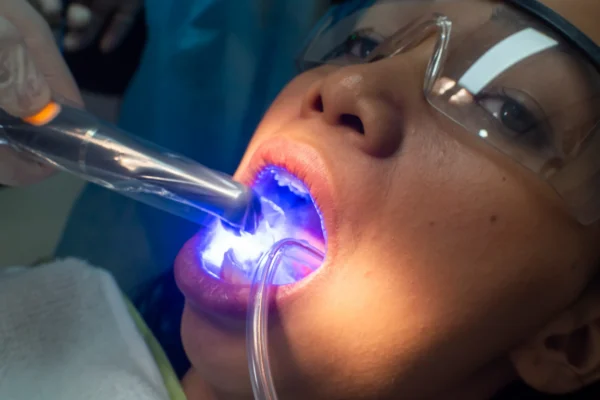
Dental bonding is one of the most versatile tools in Cosmetic Dentistry. A tooth-colored composite resin can repair chips, close small gaps, mask limited discoloration, and reshape teeth that look too short or uneven. In experienced hands, bonding can be extremely natural. It is also conservative because it often requires little to no removal of healthy enamel. The trade-off is longevity. Composite can stain, dull, or chip over time, particularly in patients who clench, bite their nails, or use their teeth as tools.
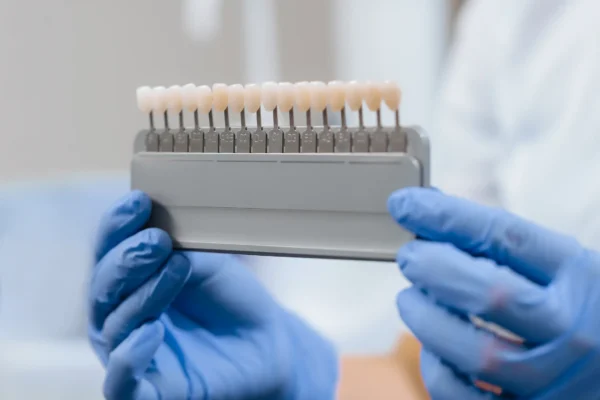
Porcelain veneers are a more durable and refined option when multiple cosmetic issues need correction at once. Veneers can improve color, shape, proportion, and minor alignment concerns, and they hold polish and shade more consistently than composite. They are not necessary for every small imperfection, though. Veneers involve more planning, greater cost, and usually some enamel modification. They make the most sense when the smile has several concerns that cannot be solved cleanly with whitening or bonding alone.
Clear aligners can be valuable when the real issue is position rather than color or surface shape. Slight crowding, mild spacing, and small rotations often respond very well to Cosmetic Dentistry toothworksofbakersfield.com orthodontic movement. Sometimes a patient comes in asking for veneers when what they actually need is a few months of alignment and perhaps a little edge bonding afterward. Moving teeth first often leads to a more conservative final result.
Enamel recontouring, also called enameloplasty, is a quieter treatment but often a very satisfying one. Small adjustments to edge shape, corners, or minor surface irregularities can make teeth look more even and harmonious. It works best when the changes are conservative and the enamel thickness allows for safe reshaping.
Bonding, the quiet workhorse of smile refinement
If there is one treatment that consistently surprises patients, it is bonding. They expect something simple and temporary, then leave with a front tooth that looks whole again. For small defects, it can be elegant.
A common case is the patient who chipped a corner of a front tooth years ago. The chip is not painful. It has been “good enough.” But every photograph reminds them it is there. In many of these cases, direct composite bonding can restore the missing contour in a single visit. Shade selection matters, of course, but so do Cosmetic Dentistry translucency, surface anatomy, and polish. A front tooth is not one flat color. It reflects and transmits light in a specific way, especially at the edge. Good bonding mimics that complexity.
The downside is maintenance. Composite resin is strong, but it is not porcelain. It can pick up stain, especially in heavy coffee or tobacco users. It can also wear at the edge or lose its luster. That does not make it a poor choice. It simply means the patient should understand that conservative treatment often comes with periodic upkeep. A small polish or touch-up every few years can keep bonded teeth looking excellent.
For many people, that is a worthwhile trade. They preserve more natural tooth structure, keep costs reasonable, and still achieve a visible improvement.
When whitening helps, and when it does not
Whitening has broad appeal because it is simple and familiar, but it is not a universal answer. It works best on natural teeth with generalized staining or age-related darkening. It works less well on crowns, veneers, and many types of internal discoloration. It also cannot erase every white spot or opacity, and in some cases it can make contrast more noticeable at first.
That is why good treatment planning matters. If a person has one darker tooth from old trauma, whitening the whole mouth may brighten the surrounding teeth while leaving the problem tooth behind. If there are old fillings on the front teeth, the natural enamel may lighten while the restorations stay the same color, creating a mismatch. Patients are often unaware of this, and it is better to discuss it before treatment than after.
Still, when used for the right case, whitening can change the energy of a smile dramatically. It tends to be most attractive when the result looks believable for the person’s age, skin tone, and features. Very bright teeth can be appealing to some patients, but there is a line beyond which the smile stops looking natural and starts looking manufactured. A professional opinion is useful here, especially for patients tempted to over-whiten at home.
Veneers are powerful, but not always the first answer
Veneers have a strong reputation because they can solve several aesthetic problems at once. They are often excellent for worn edges, stubborn discoloration, shape irregularities, and mild visible misalignment. In the right case, they are transformative.
But veneers are sometimes overprescribed in conversations outside the dental chair. A patient with a small chip and decent tooth color does not automatically need ceramic restorations. Nor does someone with slight crowding that orthodontics could correct. The best cosmetic plan is not the most dramatic one. It is the one that improves the smile while respecting the biology of the tooth.
That distinction matters because veneers are a commitment. Even minimal-preparation veneers require planning, precision, laboratory work, and future maintenance over the years. They can be beautiful, but they should be chosen deliberately. A conservative dentist will usually ask a simple question first: can this be solved with less?
Often the answer is yes. Sometimes it is no, and veneers truly are the most predictable route. The point is not to avoid them. It is to use them when they are justified.
Alignment problems are often better treated with movement than camouflage
One of the more common mistakes in cosmetic treatment is trying to mask a position problem with a surface solution. If teeth are slightly twisted, crowded, or spaced, it may be tempting to cover the issue by reshaping or restoring the visible surfaces. Sometimes that works. Often it forces the restorative work to compensate for an underlying problem, which can lead to bulky contours or unnecessary enamel reduction.
Minor orthodontic treatment changes that equation. Clear aligners can move teeth with remarkable precision in suitable cases, and small corrections often finish faster than patients expect. A gap can be closed. A rotated tooth can be brought into line. The smile arc can become more even. Once the teeth are in better positions, finishing touches such as whitening or edge bonding become simpler and more conservative.
This is especially important for younger adults, who may have healthy enamel and only modest alignment issues. Preserving that enamel should be a priority. A smile that is straightened first often needs less cosmetic intervention afterward, not more.
The role of gums, proportions, and facial balance
Teeth are only part of the visual picture. Gum levels, lip movement, and facial proportions strongly influence whether a smile appears attractive and natural. A tooth can be technically well restored and still look wrong if the gum line is uneven or if the shape does not suit the face.
For example, a person may think their front teeth look short when the real issue is excess gum display or altered passive eruption, where the gum tissue covers more of the tooth than expected. In that scenario, carefully managed gum contouring may improve the smile more than adding material to the teeth. Another patient may focus on one slightly small lateral incisor, but the stronger visual issue is asymmetry in the smile line or edge wear across several teeth.
This is where experienced Cosmetic Dentistry becomes less about isolated procedures and more about composition. Dentists are not just changing teeth. They are adjusting form within a moving frame that includes lips, skin tone, facial shape, and speech. The closer the treatment comes to that broader perspective, the more natural it tends to look.
What a good consultation should uncover
The first appointment matters more than many patients realize. Minor smile corrections can seem simple, but the consultation determines whether the plan is genuinely appropriate.
A useful cosmetic consultation should clarify a few key points:
What exactly bothers the patient, and is that concern visible to others or mostly personal? Is the issue one of color, shape, position, wear, or a combination? Are the teeth and gums healthy enough for cosmetic treatment right now? Would a conservative option meet the goal, or is a more durable solution justified? What maintenance will likely be needed over time?
That discussion often changes the plan. A patient may arrive convinced they want veneers and leave choosing whitening plus bonding. Another may ask for bonding and learn that a short round of aligners would produce a cleaner, longer-lasting result. The most satisfying cases are usually the ones in which expectations become more specific, not just more optimistic.
The trade-offs patients should hear before they commit
Cosmetic treatment is easier to appreciate when the limitations are explained honestly. Minor imperfections are often correctable, but no material is perfect and no treatment is maintenance-free.
Bonding is conservative and cost-effective, but it can stain and chip. Whitening is simple, but relapse is normal and touch-ups are part of the process. Veneers are durable and polished, but they involve greater financial investment and future replacement at some point. Aligners can be conservative and precise, but they require compliance, and retainers matter afterward.
There are also habits that influence outcomes. A patient who clenches heavily at night may damage new bonding or wear down polished edges unless a night guard is used. Someone who drinks several dark coffees daily may need more frequent whitening maintenance. A person seeking a perfectly uniform smile may be happier with porcelain than with composite because the finish remains more stable.
These are not reasons to avoid treatment. They are reasons to choose carefully. Good cosmetic work ages better when the plan fits the person’s habits as much as their appearance goals.
Small imperfections, real emotional weight
It is easy to dismiss subtle smile flaws as vanity, but that misses the point. People live with their smiles every day, in conversation, photographs, work meetings, weddings, interviews, and ordinary moments that still matter. A tiny chip or gap may seem insignificant clinically, yet it can shape behavior in ways patients rarely mention until directly asked. They smile with a closed mouth. They angle their head in photos. They talk while covering one side of their mouth. None of this is dramatic, but it is real.
That is one reason modest cosmetic changes can feel disproportionately meaningful. The treatment may take an hour or a few appointments, yet the result affects hundreds of small interactions afterward. Patients often do not say, “My teeth are perfect now.” They say, “I do not think about that tooth anymore.” That is usually the better outcome.
Choosing a dentist for subtle cosmetic work
When the goal is correction of minor imperfections, subtlety matters more than spectacle. Before-and-after galleries can be helpful, but the most useful examples are the cases that look natural rather than aggressively enhanced. Look for consistency in shape, color transitions, and facial fit. Ask how often the dentist performs direct bonding, veneer cases, or conservative smile refinements. Experience with complex reconstructions is valuable, but so is the ability to stop short of overtreatment.
It is also wise to notice how the dentist talks about options. If every concern seems to lead to the same procedure, that is a red flag. Thoughtful cosmetic planning usually involves comparing more than one path and explaining why one is better for that specific case.
Photography, mock-ups, or trial bonding can also help. Many patients struggle to visualize small changes. A dentist who can show likely outcomes clearly, and who welcomes questions about durability and maintenance, tends to produce more predictable results.
Where the best results usually come from
The strongest cosmetic outcomes are rarely the flashiest. They come from accurate diagnosis, restraint, and attention to detail. A chip is repaired with the right translucency. A gap is closed without making teeth look too wide. A whitening plan brightens the smile without drifting into an artificial shade. An aligner case is followed by careful finishing so that the result feels polished rather than merely straight.
Minor smile imperfections are often corrected most successfully when treatment is layered thoughtfully. Whitening may come first, then a small amount of bonding. Alignment may improve the foundation, then contouring refines the edges. Gum shaping may change the proportions before anything is added to the teeth. Each step serves the next.
That is the real strength of Cosmetic Dentistry. It can be conservative and still powerful. It can make small repairs that carry emotional weight. And when it is done with judgment, the final smile does not look designed. It looks like the person, only less distracted, more balanced, and more at ease.
Toothworks of Bakersfield, Dentist and Orthodontist
1030 H St #1, Bakersfield, CA 93304, United States
+1 661-323-9421
FAQ About Cosmetic Dentistry
Is bonding better than veneers?
Neither option is best for everyone. Composite bonding can address small chips, gaps, or shape concerns and is generally easier to repair. Porcelain veneers may offer greater resistance to staining and wear, but often require removal of some enamel. A dentist should assess your oral health, bite, goals, and budget before recommending treatment.
How long will dental bonding last?
Bonding commonly lasts about three to ten years before it needs repair or replacement, though this varies with the location and amount of bonding, your bite, and daily habits. Regular dental visits, good oral hygiene, and avoiding chewing hard objects can help protect it. Ask your dentist what lifespan is realistic for your particular treatment.
What are the risks of teeth whitening?
Whitening can cause temporary tooth sensitivity and gum irritation. Overuse or incorrect use may damage teeth or gums, and whitening does not change the color of existing crowns, veneers, or fillings. Have a dentist assess your teeth and gums, and follow the recommended product directions and treatment schedule.