Emergency Tree Services for Leaning Trees and Uproots
A tree that leaned yesterday and a tree that started leaning overnight tell two very different stories. One has likely adapted over years, adding wood and anchoring roots to balance itself. The other may have just lost anchorage, shifted on a soaked slope, or failed under wind load. I have stood in driveways at midnight with homeowners staring at a trunk that now points at their roof by fifteen degrees, and the only thing that matters in that moment is clear, calm action informed by how trees actually behave under stress.
Why leaning trees demand fast judgment, not panic
A sudden lean concentrates forces in ways bark and wood fibers are not meant to handle. Compression builds on the lean side of the trunk, tension opens microcracks on the opposite side, and the root plate tilts, shearing fine roots that once spread load into the soil. If the lean continues, each gust becomes a lever. Most failures in those conditions occur in bursts, not slow motion. The good news is that trained crews can often stabilize a risky tree within hours, or remove it in sections before gravity does it the hard way.
The job begins with a Dangerous Tree Assessment and Removal mindset. That phrase sounds blunt because it is. When a trunk, crown, or root system shows clear red flags, you treat the site as a hazard zone first, a landscape second.
Reading the lean: the field cues that matter
Not all leans are equal. A beech that grew on a hillside, leaning ten degrees for two decades with a broad, buttressed base and annual growth rings thicker on the upper side, can be lower risk than a silver maple that tipped five degrees since last week. A certified arborist looks for specifics.
I check the root plate for heaving on the uphill side. Raised soil, fresh cracks, or mushrooms torn from the ground tell me the root mass rotated recently. I scan the trunk for longitudinal cracking that follows the grain up the backside of the lean, and I probe for soft wood near old pruning wounds. In the crown, I look for asymmetry that pulls weight over the target, often caused by years of sun-seeking growth after a neighbor tree was removed. On conifers, a sudden lean coupled with snapped structural roots often telegraphs imminent failure. On hardwoods, the signs can be subtler, but the physics still push in one direction.
Soils write their own chapter. Saturated clay lets root plates skid. Sandy loam holds better until it does not, then fails all at once. Urban fill soils hide old stumps and rubble that defeat anchorage. In a wet winter, I see more tilts in clay basins and compacted yards than on granular slopes with decent drainage.
What to do in the first hour when a tree starts to lean
Clear the target zone and set a visible boundary at least the height of the tree in all directions. Keep people, pets, and vehicles out. Call Emergency Tree Services and describe the tree species, size, lean direction, and what it threatens. Photos from two sides help triage. If utilities are involved, contact the power company and 911. Never approach a tree touching lines or lying across a service drop. Note soil conditions and recent events. Mention heavy rain, wind gusts, excavation, or a neighbor tree removal. These details guide strategy. Do not cut or prop the tree yourself. Uninformed cuts release stored energy and can trigger a snap or roll.
Those steps sound simple, but I have watched homeowners do a brave and dangerous thing by throwing a rope over a leaning tree and tying it to a truck. A rope installed at the wrong height, with the wrong angle, adds force right where fibers are giving up. Leave the rigging to crews trained to predict how a trunk will behave when tensioned.
How professionals triage a lean or uproot on arrival
On site, our crew slows everything down. We take a minute to read the wind, the ground, and the tree. The first pass is a verbal Job Hazard Analysis. Where are the escape routes, the brittle branches under tension, the cavities hidden by ivy? That quick scan saves time later and, more importantly, it saves bodies.
For dangerous leans, I often start with temporary stabilization. Properly placed lines anchored to a healthy tree or a ground anchor can keep the subject tree from gaining more lean while we set up. Sometimes we crib the trunk with heavy blocking so a cut does not lead to a roll. On a large uproot, a skid steer with a grapple can support a trunk while climbers or a bucket operator reduces weight from the top down.
When the lean is fresh and utilities are nearby, we pause until the power authority confirms status. I have seen arc flash more than 20 feet from a limb on a primary line. Wood does not need to be a perfect conductor to become dangerous when saturated.
What removal looks like when gravity has a head start
Dangerous Tree Assessment and Removal is a blunt phrase for a reason. If the tree has lost structural integrity, reduction cuts or bracing are not an ethical answer. The method we choose depends on access, height, lean direction, and target protection.
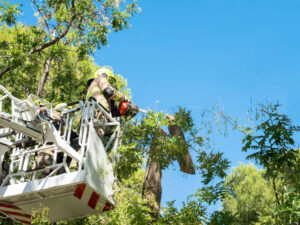
If the crown is reachable with a bucket truck, we reduce the top first, rigging pieces with friction devices to absorb energy. In a tight backyard, a climber might set a main lowering line above the center of mass and a secondary tagline to swing pieces away from a roof. With conifers, we sequence limbs in a spiral to keep the trunk balanced as we come down.
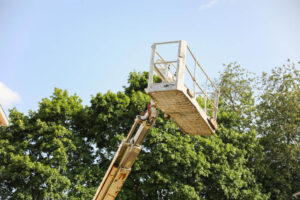
Cranes change the game for big trees over structures. A certified operator and a tree crew can lift top sections free in single picks, eliminating the swing arc that ground rigging requires. A 60 to 90 ton crane can safely remove large sections from 80 to 120 feet away, which means we do not need to roll equipment onto delicate lawns or septic fields. The tradeoff is setup time and traffic management in the street. An experienced team will communicate every pick weight, balance point, and radio call with a rhythm that calms the site.
Once the hazard is down, Tree Removal Services do not stop at a felled trunk. Clean, safe debris handling matters in tense moments. Homeowners remember whether a crew treated their garden beds as something to protect, not a dumping zone for limbs.
When a leaning tree can be saved with structural support
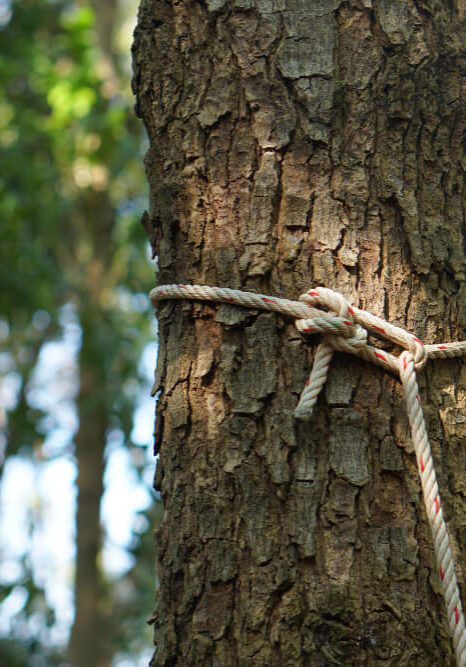
Not every lean is a removal. If the root plate is stable and the trunk shows no critical defects, Tree Cable and Bracing can buy a young or moderately sized tree decades of safe life. The principle is simple. Install a high-strength, flexible cable between leaders high in the crown to reduce the chance of a split, and add one or more through-bolted braces lower in the trunk or at codominant unions if needed.
The craft lives in the details. We place dynamic cables at two thirds the height of the leader, with anchors set beyond the weak junction and hardware rated well above expected loads. Spacing, angles, and cambium protection matter. I have revisited braced trees after storms and seen the metal asleep, which is exactly what you want most days. The system is there for the handful of gusts a year that would otherwise pry a union apart.
Cabling does not cure root failure, and it is not a way to ignore needed Tree Pruning & Crown Shaping. We often combine light reduction pruning to rebalance the crown with support hardware, especially when a tree became lopsided after a neighbor removal. And we document everything for the owner’s insurer. Many policies look favorably on a Certified Arborist Consultation that led to structural mitigation.
Uproots, root plates, and the physics underfoot
An uprooted tree presents differently from a simple lean. The plate of roots and attached soil rotates like a giant coin tilting out of the ground. As it lifts, it severs hundreds of fine roots on the tension side and compresses the anchor roots on the compression side. In wet conditions, that soil mat can weigh several tons.
In the field I read the plate’s angle. If it has risen more than a foot or two and the trunk stands above a structure, the mass can roll with very little provocation. A single saw cut, a gust, even the vibration from a passing truck can change the balance. Our aim is to lower risk with controlled weight removal. We often reduce from the top and upper sides first, keeping as much mass low as possible. With cranes, we rig above the balance point and lift slightly to take weight while we cut, then swing away in a controlled arc, not a free drop.
Can an uprooted tree be stood back up and survive? Sometimes, if the tree is young, the plate small, and the fine roots largely intact. In those narrow cases, we might trench, lever, and guy the tree, then water and mulch for a year of recovery. Even then, survival is a coin toss and the tree may never regain full stability. For large trees over targets, it is not a responsible option.
Utilities, permits, and the choreography you do not see
Emergency work often sits at the junction of private property and public rules. In most jurisdictions, true emergencies allow for expedited removal without a standard permit, but documentation still matters. We photograph defects, lean angles, and targets before cutting. When a tree involves a public right of https://rentry.co/ex59ei35 way or heritage designation, we notify the city and proceed under emergency exemption, keeping copies of any verbal authorization.
Utility coordination can take longer than cutting. Power authorities have their own dispatch queues during storms, and a tree touching primary lines is theirs to clear. We stage our work so that as soon as the line crew makes the site safe, we can step in. It helps to have one person on the homeowner’s side keeping notes. Times, names, and ticket numbers reduce friction if the claim needs detail later.
Insurance, liability, and the paper trail that protects you
Storm work runs on a clock, but that does not mean paperwork waits until the end. I advise homeowners to photograph the tree from multiple angles before crews touch it, then again after each major stage. If a crane is used, capture its setup relative to the property. Keep invoices from the Emergency Tree Services provider, the utility, and any roof tarping or board-up vendor.
Most policies handle tree failure under wind or storm peril, with separate limits for debris removal. Policies vary widely. I see debris coverage between 500 and 2,500 dollars per occurrence, sometimes more if a structure is damaged. If a healthy neighbor’s tree falls into your yard, your policy usually pays for your side, regardless of fault, and the neighbor’s pays theirs. If a tree was known to be hazardous and ignored, an insurer may subrogate. A Certified Arborist Consultation notes and recommendations dated before the incident can affect how adjusters view negligence.
After the fall: stump removal and site restoration
Homeowners often ask whether to leave the stump for spring. There are reasons to move sooner. A fresh stump in wet soil is a magnet for root suckers in species like poplar and willow. It also hosts fungi that can spread to neighboring trees. Stump Removal & Grinding typically takes less than half a day for a standard residential stump. We grind 6 to 12 inches below grade in turf, deeper if a replanting hole needs clean soil. Utilities are marked before grinding. On uproots with cavities, we sometimes backfill first to create a safe, level work pad.
Debris handling and soil care matter in the last 10 percent of the job. Heavy equipment can rut wet lawns and compress root zones of other trees. We use mats, wide tires, and a light footprint whenever possible. On slopes, we watch how chips and soil move in rain, and we seed or blanket bare areas to prevent erosion.
Pruning and crown shaping to prevent the next emergency
Emergencies grab attention, but most failures tie back to structure and maintenance. Tree Pruning & Crown Shaping done on a sensible cycle can lower sail effect, correct codominant stems, and reduce end weight on long laterals. I rarely recommend topping, which invites decay and weak sprouts. Instead, we use reduction cuts that shift growth to stronger internal branches.
On properties with mixed species, we write a simple plan. Reduce the overextended silver maple by 15 percent over two visits. Thin the interior of the ornamental pear to improve airflow and visibility, which helps spot cracks early. Remove the dead ash near the fence before it becomes brittle. Those are Tree Removal Services, but they are also part of an overall risk and canopy health strategy.
FireSmart thinking for wind and ember seasons
In many regions, strong dry winds and wildfires are not abstract threats. FireSmart Tree Services intersect with storm readiness in practical ways. A leaner overhanging a roof in a high-wind event doubles as a ladder fuel in ember season. By creating defensible space in the first 5 to 30 feet around structures, removing deadwood, and lifting canopies to reduce vertical fuel continuity, you limit both fire and storm risk.
I like to walk a property with that dual lens. Are conifers clustered near the eaves? Is there a continuous run of shrubs under the maple that could carry fire and also catch a broken limb? Prune, space, and choose species with lower flammability where you can. Stack firewood away from the drip line, not against the garage where it also sits under a likely fall zone.
How to choose the right emergency partner when minutes matter
Look for ISA Certified Arborists on staff and proof of insurance that includes tree work, not just landscaping. Ask about 24/7 dispatch, typical response times in your area, and whether they own or can mobilize a crane when needed. Request examples of similar jobs, including photos and references. Complex leans need crews with rigging depth, not just a chainsaw. Clarify safety protocols. Do they run a job hazard analysis, set exclusion zones, and coordinate with utilities as policy, not exception? Get a written scope and price structure that covers stabilization, removal, hauling, and optional Stump Removal & Grinding.
Good companies welcome these questions. In frantic moments, a few clear answers lower the temperature on the driveway by ten degrees.
Cost ranges, timing, and what drives both
Costs swing with risk, access, equipment, and time of day. A straightforward daytime removal of a mid-sized ornamental leaning into open yard might run in the low four figures. Add night work, a tight backyard, and crane picks over a house, and the number can climb several times that. Stump grinding is typically a small fraction of the removal, unless the stump is massive or braced by rock or utilities.
Response time varies by storm load. On a quiet week, we can be on site within 2 to 6 hours. During regional events, triage rules. Trees on occupied structures, trees blocking emergency exits, and trees involving live utilities move to the front, while fence and garden damage waits a day or two. A plainspoken dispatcher who explains queue logic sets better expectations than a sales promise that evaporates when the crew is buried.
Edge cases that test judgment
Not every scenario fits a playbook. A leaning cottonwood over a backyard pool with no equipment access becomes a rigging puzzle. We may build a nested highline with a primary anchor in a healthy neighbor oak and a secondary redirect to land pieces in a single open notch. A historic elm with a mild lean and internal decay measured by a resistance drill may get a balanced reduction and cabling with annual inspections, because the target is low and the owner values canopy more than a zero risk posture.
I have also advised removal where an owner begged to keep a tree that had saved their porch from the sun for thirty summers. The root plate was laced with Armillaria, and the trunk carried a shear plane ready to unzip. The hard part of this work is sometimes teaching that doing nothing is really choosing a later, more violent outcome. That is where a Certified Arborist Consultation earns trust. Show the evidence, explain the physics, and recommend a path that aligns with the owner’s risk tolerance and the site reality.
Once the emergency is over, keep the momentum
The best time to plan is right after you have seen what can happen. Build a maintenance calendar that includes annual or biennial inspections, especially after neighbor removals or big weather swings. Document crown changes with simple phone photos from the same vantage points every spring. Note soil saturation patterns and downspout discharge that might soften a root zone. Small changes add up. Where a tree and a house share a lot line, predict how today’s pruning choice shifts tomorrow’s weight.
Remember, Tree Removal Services are a tool, not a philosophy. Keeping good trees healthy costs less and carries less drama than cutting urgent checks at 2 a.m. Pair thoughtful Tree Pruning & Crown Shaping with strategic removals of the few that are in the wrong place or past safe recovery. Use Tree Cable and Bracing for worthy candidates. Fold FireSmart Tree Services into your property care where climate and topography demand it.
If your property carries a few large, charismatic trees, set aside time every couple of years for a Dangerous Tree Assessment and Removal discussion, even if the removal part is hypothetical. The conversation helps you read your canopy the way crews do when the wind rises. And if the day comes when a trunk shifts overnight or a root plate heaves an inch, you will recognize the signs, make the right calls, and keep people and property out of the path where wood and gravity try to finish what weather started.
Ace Tree Services Ltd.
Name: Ace Tree Services Ltd.
Address: 4656 Wallace Hill Road, Kelowna, BC
Postal code: V1W 4C2
Phone: 250-212-9593
Website: https://acetree.ca/
Hours:
Monday: 7:00 AM - 5:00 PM
Tuesday: 7:00 AM - 5:00 PM
Wednesday: 7:00 AM - 5:00 PM
Thursday: 7:00 AM - 5:00 PM
Friday: 7:00 AM - 5:00 PM
Saturday: 7:00 AM - 5:00 PM
Sunday: Closed
Open-location code (plus code): RHF8+8G Kelowna, British Columbia, Canada
Embed iframe:
"@context": "https://schema.org", "@type": "HomeAndConstructionBusiness", "name": "Ace Tree Services Ltd.", "url": "https://acetree.ca/", "telephone": "250-212-9593", "address": "@type": "PostalAddress", "streetAddress": "4656 Wallace Hill Road", "addressLocality": "Kelowna", "addressRegion": "BC", "addressCountry": "CA" , "openingHoursSpecification": [ "@type": "OpeningHoursSpecification", "dayOfWeek": "https://schema.org/Monday", "opens": "07:00", "closes": "17:00" , "@type": "OpeningHoursSpecification", "dayOfWeek": "https://schema.org/Tuesday", "opens": "07:00", "closes": "17:00" , "@type": "OpeningHoursSpecification", "dayOfWeek": "https://schema.org/Wednesday", "opens": "07:00", "closes": "17:00" , "@type": "OpeningHoursSpecification", "dayOfWeek": "https://schema.org/Thursday", "opens": "07:00", "closes": "17:00" , "@type": "OpeningHoursSpecification", "dayOfWeek": "https://schema.org/Friday", "opens": "07:00", "closes": "17:00" ], "geo": "@type": "GeoCoordinates", "latitude": 49.8232606, "longitude": -119.4337283 , "hasMap": "https://www.google.com/maps/place/Ace+Tree+Services+Ltd./@49.8232606,-119.4337283,659m/data=!3m2!1e3!4b1!4m6!3m5!1s0x537d8b1d074815c5:0x450b88afa7a41435!8m2!3d49.8232606!4d-119.4337283!16s%2Fg%2F11ydkpnh22"
🤖 Explore this content with AI:
💬 ChatGPT 🔍 Perplexity 🤖 Claude 🔮 Google AI Mode 🐦 Grok
Ace Tree Services Ltd. provides professional tree removal, pruning, stump grinding, emergency response, and arborist consultations for properties in Kelowna and across the Okanagan Valley.
The company works with homes, commercial properties, and municipal settings where tree work needs to be planned carefully around buildings, fences, driveways, landscaping, and other site constraints.
Based in Kelowna, the team is positioned to help nearby neighbourhoods and surrounding Okanagan communities with routine tree care and time-sensitive storm cleanup.
Customers looking for careful tree work often want a crew with certified arborist training, insurance, and a methodical approach to higher-risk removals.
Services also include dangerous tree assessment, cabling and bracing, and wildfire risk reduction tree work for properties that need longer-term planning.
To request a quote or discuss tree care options, call 250-212-9593 or visit https://acetree.ca/.
A public map listing is available to help customers confirm the business location and get directions before a site visit or estimate.
For Kelowna property owners who need pruning, removals, or emergency tree help, a local tree service can make it easier to schedule site-specific recommendations and cleanup.
Popular Questions About Ace Tree Services Ltd.
What services does Ace Tree Services Ltd. provide?
Ace Tree Services Ltd. lists tree removal, stump removal and grinding, tree pruning and crown shaping, emergency tree service, arborist consultation, dangerous tree assessment and removal, cabling and bracing, and wildfire risk reduction tree work.
Who does Ace Tree Services Ltd. serve?
The company describes its work as serving homes, businesses, and municipalities in Kelowna and across the Okanagan Valley.
Is emergency tree help available?
Yes. Emergency service is listed for downed or uprooted trees, dangerous tree assessment, stabilization work, and branch cleanup. If a tree is near power lines, the safest first step is to stay clear and contact the utility provider before any tree work begins.
Do I always need a permit to remove a tree?
Not always. Permit requirements can depend on where the tree is located and whether it is near a creek, lake, steep slope, or another protected area. It is best to check local rules for the specific property before removal work starts.
How deep does stump grinding usually go?
Standard stump grinding is typically described as going about 6 to 12 inches below ground level, which is often enough for grass or surface landscaping. Deeper grinding may be possible when site plans call for it.
How much of a tree can be safely removed at one time?
That depends on the species, age, health, and structure of the tree. In practice, good pruning is usually about removing the right limbs for health, clearance, and structure rather than chasing a fixed percentage.
What are common signs that a tree may be dangerous?
Large dead limbs, visible cracks, a new lean, root damage, canopy dieback, or storm-related damage can all be warning signs. Trees near structures deserve extra attention when any of those issues appear.
What is cabling and bracing in tree care?
Cabling and bracing are support systems used to reduce the risk of failure in trees with structural weaknesses that may still be worth preserving. They are generally used to add support, not to replace good assessment and ongoing maintenance.
How do I contact Ace Tree Services Ltd.?
Call 250-212-9593.Website: https://acetree.ca/.
Landmarks Near Kelowna, BC
Downtown Kelowna
The downtown core is a practical reference point for lakefront neighbourhoods, mixed-use streets, and central residential properties. If your property is near downtown, tree pruning, removals, and cleanup can be planned around tighter access and nearby structures.
Knox Mountain Park
This well-known park north of downtown is a recognizable landmark for nearby homes and hillside properties. If you are close to this area, ask about tree assessment, trimming, or removal work suited to sloped sites.
Mission Creek Greenway
The greenway runs through several parts of Kelowna and is a useful landmark for nearby residential areas. If your property borders or sits near this corridor, site-specific tree planning is especially important.
Pandosy Village
Pandosy is one of Kelowna’s most recognizable neighbourhoods and a common reference point for south-central properties. If you are nearby, request help for pruning, removals, or storm cleanup around homes and small commercial sites.
Rutland
Rutland is a major east Kelowna neighbourhood with a mix of residential and local commercial properties. If you are located in or near Rutland, tree work can be scheduled for both routine maintenance and urgent situations.
Landmark District
This central business-focused area is a practical landmark for offices, service properties, and nearby residential streets. If your site is near the district, ask about careful tree work around parking, access lanes, and built-up lots.
Kelowna’s North End
The North End sits on the edge of downtown and is a useful reference for nearby homes, industrial sites, and commercial properties. If you are in this part of the city, request tree care based on the layout and constraints of the lot.
Airport District
The Airport District is a recognizable north Kelowna reference point for surrounding properties and access routes. If you are in this area, ask about tree services for residential acreage, commercial sites, or roadside cleanup needs.
Glenmore & Dilworth
These established Kelowna neighbourhoods are useful landmarks for central and north-central service calls. If your property is nearby, pruning and removal work can be tailored to mature trees and established landscapes.
Highway 97 Corridor
Highway 97 is one of the city’s main travel routes and a common way to describe location within Kelowna. If your home or property is just off the corridor, a clear landmark reference can help speed up quote scheduling and site planning.