Fotona Laser Treatments and Collagen Remodeling Explained
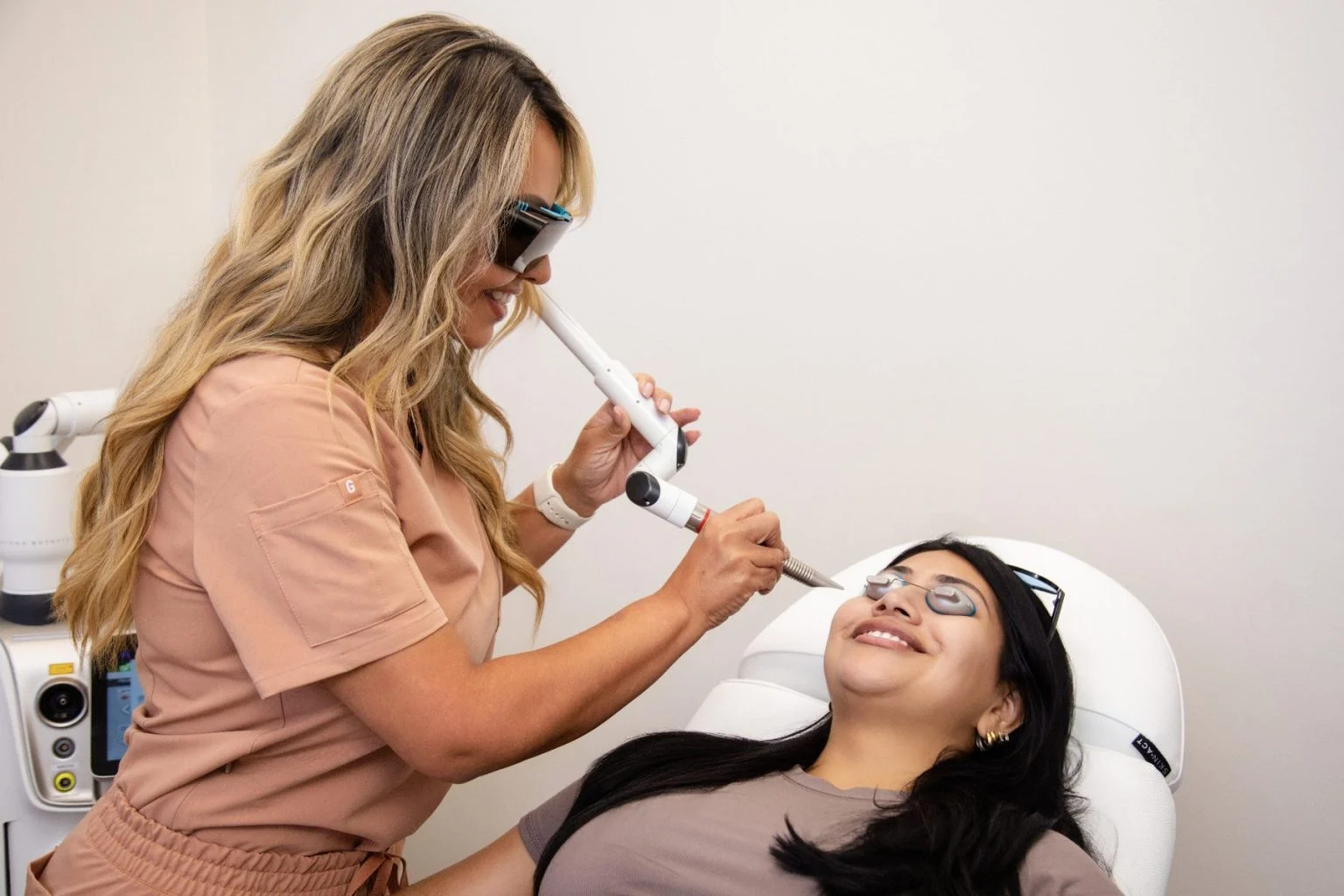
The appeal of laser skin treatments often gets reduced to a simple promise: smoother skin, tighter contours, better texture. In practice, the real story is more interesting. The best outcomes do not come from a machine "zapping" away a flaw. They come from controlled injury, carefully dosed heat, and the skin's own repair response, especially the way collagen is remodeled over time.
That is why Fotona Laser Treatments have earned such a strong place in aesthetic medicine. They are not a single treatment in the way many patients assume. Fotona is a laser platform with different wavelengths and treatment modes that can be adapted for resurfacing, tightening, acne scar revision, vascular concerns, pigmentation support in selected cases, and even intraoral tightening protocols. What ties many of these applications together is collagen remodeling.
For patients, collagen remodeling can sound vague, almost like marketing language. For clinicians, it is one of the most important ideas in skin rejuvenation. Understanding it changes expectations. It explains why some results appear quickly, why others take months, why maintenance matters, and why two people receiving the "same laser" can have very different treatment plans.
What Fotona actually refers to
Fotona is a laser manufacturer best known in aesthetics for platforms that commonly use Er:YAG and Nd:YAG wavelengths. Those wavelengths behave differently in tissue, and that difference matters.
Er:YAG is strongly absorbed by water, which makes it useful for precise ablation and superficial resurfacing. If the goal is to improve fine lines, rough texture, enlarged pores, or superficial acne scarring, Er:YAG often plays a central role because skin contains plenty of water and the laser energy can be delivered with high precision.
Nd:YAG, especially at 1064 nm, penetrates more deeply and is less aggressively absorbed at the surface. That makes it useful for thermal effects deeper in the dermis, where collagen bundles and supporting structures respond to heat. It is often part of tightening protocols and can also be used for vascular indications in appropriate settings.
Many Fotona Laser Treatments combine these properties. One mode may gently heat deeper layers without ablating the skin surface, while another may polish or remodel the surface itself. That layered approach is one reason the platform gets used for everything from low-downtime rejuvenation to more intensive resurfacing.
Why collagen is the center of the conversation
Collagen is the structural protein that gives skin much of its firmness, resilience, and ability to resist wrinkling. Youthful skin is not just about having "more collagen." It is about the quality, organization, and turnover of collagen fibers, along with elastin, glycosaminoglycans, vascular support, and healthy epidermal behavior.
With age, sun exposure, inflammation, and repeated mechanical stress, collagen becomes fragmented and disorganized. The fibroblasts that maintain the dermis become less active. The result is skin that creases more easily, rebounds more slowly, and often looks thinner or less luminous.
Laser treatment works because the skin recognizes controlled thermal injury as a signal to repair. That repair process includes inflammatory signaling, fibroblast activation, neocollagenesis, and remodeling of existing collagen architecture. A patient might come in asking for better skin texture. What the clinician is often trying to achieve underneath that request is a more functional dermal matrix.
This is also why a good laser result rarely looks abrupt or artificial. Neuromodulators can soften movement within days. Fillers can restore volume immediately. Collagen remodeling is slower and usually subtler at first. Over several weeks, then several months, skin often looks denser, smoother, and a little more reflective in a way patients struggle to describe. They may say they look "less tired" or that makeup sits better. Those comments often reflect dermal change more than surface exfoliation alone.
How thermal injury turns into visible improvement
When laser energy reaches the skin, the exact response depends on wavelength, fluence, pulse duration, spot size, and the target tissue. In collagen-focused treatments, the aim is not random heat. It is selective and controlled heating that reaches a threshold high enough to stimulate repair without creating unnecessary damage.
At lower levels of thermal exposure, collagen fibers can contract to some degree, which contributes to an early tightening effect. More importantly, fibroblasts are stimulated to produce new collagen over time. At higher or more ablative settings, especially with resurfacing, the tissue response is more intense. There is more visible downtime, but also potentially more dramatic improvement in texture and etched lines.
This distinction matters because not every patient needs aggressive resurfacing. A 38-year-old with early laxity and mild acne scarring may do very well with a staged protocol focused on dermal heating plus light resurfacing. A 62-year-old with advanced photoaging, deep perioral lines, and crepey texture may need a more assertive resurfacing plan to create meaningful change.
The phrase "collagen remodeling" covers several biologic phases, not one event. First comes immediate tissue response and inflammation. Then fibroblasts start producing fresh collagen, often over six to twelve weeks, sometimes longer. Finally, the new collagen matures and reorganizes. That last phase is easy to underestimate. Patients often judge a treatment at two weeks, when the skin may only be showing the earliest fraction of its final result.
The difference between superficial resurfacing and deeper remodeling
One common source of confusion is the idea that every laser treatment works mainly from the top down. That is not how many Fotona protocols are designed.
A superficial resurfacing treatment, often relying more heavily on Er:YAG, addresses the epidermis and upper dermis. It can improve dullness, surface roughness, very fine wrinkling, and mild textural irregularity. Patients usually notice a fresher surface as healing finishes. This is the kind of improvement people often describe as a "glow."
Deeper remodeling treatments are more concerned with the dermis. Here, Nd:YAG modes may heat tissue beneath the surface to stimulate collagen changes with less obvious peeling or crusting. The patient may not look dramatically different the next day, but over time they may see firmer skin, slight softening along the jawline, or better support under the eyes or around the mouth, depending on the protocol and anatomy.
In real practice, the strongest outcomes often come from combining these concepts. Surface quality and deeper support are different problems, and they rarely age at exactly the same pace. Someone with sun damage may need more resurfacing. Someone with early laxity may need more deep heating. The art is in matching the physics of the device to the biology of the face in front of you.
The 4D concept and why it matters
One of the more recognized Fotona approaches is often described as a 4D treatment, meaning multiple steps that address tissue from different angles and depths. The branding is less important than the logic behind it. The idea is that skin aging is not one-dimensional, so treatment should not be either.
A layered protocol may include intraoral tightening to stimulate collagen from inside the mouth, superficial tightening over the skin, fractional or gentle resurfacing, and a polishing phase to refine texture. For the right patient, this can produce a result that looks balanced rather than overtreated.
The practical advantage is flexibility. Some patients want meaningful improvement with minimal social downtime. Others are willing to trade several days of redness and roughness for more aggressive correction. A platform that allows a clinician to vary intensity makes it easier to build a plan around tolerance, budget, skin type, and goals.
What patients usually feel and see
During treatment, sensations vary quite a bit. Non-ablative passes often feel hot, prickly, or snappy, while ablative resurfacing can feel sharper without adequate anesthesia. Good clinics do not pretend otherwise. They use topical anesthetic, cooling, careful parameter selection, and realistic counseling.
Immediately after treatment, the skin may look pink or red and feel warm, similar to a strong sun exposure. With more superficial rejuvenation settings, that may fade in a day or two. With stronger resurfacing, downtime can include swelling, rough texture, bronzing, or pinpoint crusting for several days. Around the mouth and eyes, swelling can look more dramatic than patients expect, even when the treatment is entirely routine.
The visible timeline often unfolds like this:
Early change, within days to two weeks, comes from mild swelling resolution, surface renewal, and sometimes immediate collagen contraction. Intermediate change, over one to three months, reflects active fibroblast stimulation and early neocollagenesis. Longer-term improvement, over three to six months and sometimes beyond, comes from collagen maturation and reorganization. Maintenance depends on age, sun behavior, smoking status, hormonal context, and whether the patient repeats treatments periodically.
That timeline explains why experienced practitioners are cautious with promises. If a patient expects a facelift result after one low-downtime session, disappointment is almost guaranteed. If they understand that laser remodeling is cumulative and biologic, they are far more likely to appreciate what the treatment is actually capable of doing.
Acne scars, pores, and texture, where Fotona often shines
Collagen remodeling is especially relevant for acne scarring. Atrophic scars, particularly rolling and some boxcar scars, respond because laser-induced remodeling can thicken the dermis and soften the sharp contrast between scar and surrounding skin. Results are rarely one-and-done. The scars formed over years, often with repeated inflammation, and they sit at different depths. Improvement is usually gradual and layered.
Pore appearance also improves in many patients, though "shrinking pores" is not a precise medical concept. What tends to happen is that resurfacing smooths the superficial skin while dermal remodeling gives better support around follicular openings. The pores may not truly change identity, but they often look tighter and less prominent.
Fine wrinkling, especially around the cheeks and lower eyelids, can improve impressively when treatment settings are chosen well. Deep static lines around the lips can improve too, but they are more stubborn. Smokers, former smokers, and people with significant sun damage in that area often need a more intensive plan and should still expect partial correction rather than erasure.
Skin tightening, realistic gains and hard limits
A lot of marketing around energy devices leans too hard on the word "tightening." It helps to define what that actually means.
Laser tightening can improve mild to moderate skin laxity, especially in patients who still have reasonably good tissue quality and are starting to notice softer contours. The effect might show up as a better jawline outline, less crepiness on the cheeks, or subtle lifting in the midface. These improvements can be satisfying, particularly for patients who are not ready for surgery.
What laser tightening does not do is reposition heavy descended tissue the way a facelift can. If someone has substantial jowling, a very full lower face, or significant neck laxity, collagen remodeling alone will not create a surgical result. In those cases, a laser may still be valuable, but more for skin quality than structural lift.
This is one of the most important judgment calls in aesthetics. A treatment can work exactly as intended and still be the wrong match for the patient's main complaint. Honest assessment is better than impressive terminology.
Skin type, pigmentation risk, and why customization matters
Not every laser protocol is equally suitable for every skin tone. This is where expertise matters more than branding.
Some wavelengths and settings carry a greater risk of post-inflammatory hyperpigmentation, especially in medium to deep skin tones or in anyone with a history of reactive pigmentation. That does not mean darker skin cannot benefit from Fotona Laser Treatments. It means settings, treatment density, pretreatment skin preparation, and aftercare need more careful thought.
A cautious clinician may choose more conservative resurfacing, longer intervals, fewer passes, or a staged approach that tests skin behavior before escalating. They may postpone treatment if there is active melasma, recent tanning, irritation, or a compromised barrier. These decisions can feel slow to impatient patients, but they prevent the kind of complications that linger far longer than the original cosmetic concern.
What determines the quality of the result
The machine matters, but the treatment plan matters more. Two patients can receive a session under the same brand name and walk away with very different outcomes because the variables are so numerous.
The strongest predictors of a good result are usually the basics: correct diagnosis, appropriate energy settings, realistic goals, good healing capacity, and disciplined aftercare. Sun exposure is one of the biggest spoilers. So is undertreated rosacea, poorly controlled acne, or an aggressive skincare routine introduced too soon after treatment.
When results underwhelm, the reason is often one of three things. The treatment was too gentle for the problem. The sessions were too few. Or the target issue was not primarily a collagen problem in the first place. A shadow under the eye caused by volume loss, for example, may not improve much with laser alone. Surface refinement can help, but anatomy still sets the limit.
The consultation should sound specific, not generic
A strong consultation for laser treatment usually includes careful discussion of timing, prior procedures, skin sensitivity, pigmentation history, and what bothers the patient most in normal lighting, not just in a magnifying mirror. The best plans are surprisingly specific. Instead of "full face rejuvenation," the conversation might focus on etched upper lip lines, acne scar texture on the temples, or early cheek laxity that shows up in photographs.
A few practical questions usually reveal whether someone is a good candidate:
What bothers you more, texture, wrinkles, pigment, redness, or laxity? How much downtime can you truly tolerate, not ideally, but in your actual schedule? Have you ever developed dark marks, prolonged redness, or poor healing after skin procedures? Are you expecting gradual refinement, or are you hoping for a dramatic one-session transformation? How consistent are you with sunscreen and post-treatment care?
Those answers often matter more than the patient's age. A disciplined 58-year-old with sensible expectations may be a better laser candidate than a 34-year-old who wants maximal intensity before a beach vacation and never reapplies SPF.
Recovery is part of the treatment, not an afterthought
Aftercare can make an excellent treatment look average, or an average treatment heal badly. The skin barrier is temporarily compromised, sometimes only mildly, sometimes significantly. The immediate priorities are protection, hydration, and restraint.
Patients often get into trouble because they feel fine before the skin is ready. They restart exfoliating acids too early, pick at rough texture, exercise heavily the same evening, or spend "just ten minutes" in the sun. Those choices add up. A carefully remodeled collagen response is useful only if the epidermis heals cleanly over it.
In practice, the most reliable recoveries come from plain routines. Gentle cleansing, bland moisturizer, sun avoidance, and following the clinic's instructions beat complicated product stacks almost every time. Redness that settles on schedule is usually not a problem. Persistent heat, spreading irritation, or delayed darkening deserves prompt follow-up.
Combining Fotona with other treatments
Laser rarely has to work alone. In fact, combination planning is often where the best aesthetic judgment shows.
A patient with acne scars might benefit from subcision first, then laser remodeling after the tethering has been released. Someone with dynamic forehead lines may get more visible improvement from pairing a collagen-focused laser with neuromodulators, because the skin keeps creasing if the muscle activity remains strong. A face that looks "tired" because of volume loss may need judicious filler or biostimulation rather than stronger laser settings.
The key is sequencing. Collagen remodeling responds to time. If too many variables are introduced at once, it becomes difficult to judge what helped and what irritated the skin. Skilled clinicians usually stage treatments so healing is respected https://claytonrlhc634.evergrovio.com/posts/how-fotona-laser-treatments-can-enhance-your-natural-beauty and outcomes can be assessed clearly.
Cost, sessions, and the economics of realistic care
Patients often ask whether Fotona Laser Treatments are worth the cost. That depends on what they are trying to replace. Compared with daily skincare, laser is obviously more expensive upfront. Compared with repeated short-lived fixes that never address dermal quality, it can be efficient over time.
Most people need a series for non-ablative or lower-downtime protocols, often around three sessions, sometimes more. More intensive resurfacing may produce significant change in fewer sessions but carries greater downtime and, in some cases, higher risk. The better question is not "How many sessions until perfect?" But "What level of improvement is realistic for this concern, and what path gets there safely?"
That framing tends to lead to better decisions. Skin quality improvement is one of the more rewarding areas of aesthetic treatment because when it works, it supports everything else. The face reflects light better. Fine lines soften. Scars blend more easily. Even makeup behaves differently. None of that looks dramatic on paper, yet in person it often reads as healthier, fresher, and more rested.
Where Fotona fits in the broader laser landscape
There is no single best laser for every indication. CO2 lasers remain a benchmark for aggressive resurfacing in the right candidate. Radiofrequency microneedling has a strong role in certain textural and tightening concerns. Pulsed dye and other vascular lasers are often better choices when redness is the primary issue.
Fotona stands out because of its versatility and the ability to work across superficial and deeper targets using different modes. That versatility is valuable in experienced hands. It does not erase the need for proper patient selection. If anything, it increases the responsibility to choose wisely, because a flexible platform can do many things, not all of which every patient needs.
For the right person, collagen remodeling through laser treatment can create some of the most satisfying changes in aesthetic medicine precisely because they develop naturally. The skin does not just look treated. It often looks improved in a way that integrates with the person's face, age, and movement.
That is the real promise behind well-executed Fotona Laser Treatments. Not magic, not instant transformation, but controlled stimulation of the skin's repair machinery, directed with enough precision to produce visible, durable change. When the treatment plan matches the biology, collagen remodeling stops being a buzzword and becomes the reason the mirror looks a little kinder each month after the session is over.
OMNIA Wellness Center
Address: 16430 Ventura Blvd Ste 207, Encino, CA 91436
Phone number: +18183868511
FAQ About Fotona Laser Treatments
What is a Fotona laser good for?
A Fotona Laser system is a versatile, dual-wavelength medical laser used primarily for non-surgical skin tightening, anti-aging rejuvenation, and dermatological treatments.
How much does the Fotona laser cost?
The cost of a Fotona laser depends heavily on whether you are looking to purchase a laser machine for a medical practice or are a patient seeking a laser treatment at a medspa.
Is a Fotona laser worth it?
A Fotona laser treatment is generally worth it if you want non-surgical skin tightening, improved texture, and collagen stimulation with very little downtime.