Blown-In vs. Spray Foam for Chatsworth Homes
Blown-In vs. Spray Foam for Chatsworth Homes
Chatsworth summers push attic temperatures well beyond comfort. Roof decks over the northwestern Valley often reach 140 degrees by midafternoon when the 118 Freeway corridor bakes under direct sun. That heat soaks into the attic and loads the HVAC system. Homeowners along Devonshire Street or Topanga Canyon Boulevard feel it when bedrooms stay warm long after sunset and the AC runs hard. Choosing between blown-in insulation and spray foam for an attic in 91311 is not an abstract comparison. It is a practical call that affects monthly bills, upstairs comfort, and the lifespan of the roof and HVAC.
This article takes a contractor’s view of the decision based on work across Chatsworth, Northridge, Porter Ranch, Tarzana, Encino, and the broader San Fernando Valley. It focuses on attic floor and roof deck insulation choices, how each option performs under Los Angeles climate loads, what Title 24 requires, and where each method fits the most common Valley housing archetypes from the 1950s through recent construction.
Why the choice matters in the San Fernando Valley
Most single-family homes from Reseda to Granada Hills were built between 1950 and 1985 with minimal attic insulation and leaky attic floors. Many still have R-11 to R-19 material that has settled or compressed. Title 24 Part 6 sets modern retrofit targets higher. In Climate Zone 9, which covers most of the Valley, the practical retrofit goal is R-38 on the attic floor, with R-30 as a minimum for alterations. High-performance targets reach R-49 when homeowners want maximum comfort and lower run times.
There is also the air leakage issue. The attic floor usually holds many small openings around recessed lights, top plates, plumbing penetrations, and duct chases. These gaps act as chimneys for cooled air in summer and heated air in winter. Air sealing before or during insulation work controls this stack effect. Ducts in older Valley homes are another variable. Leaks and low duct insulation (often below R-8) compound the problem. The right insulation strategy takes all of this into account, not just inches of material.
Blown-in insulation explained
Blown-in insulation is loose-fill material installed across the attic floor to achieve a target R-value. The two common products for Los Angeles homes are cellulose and fiberglass.
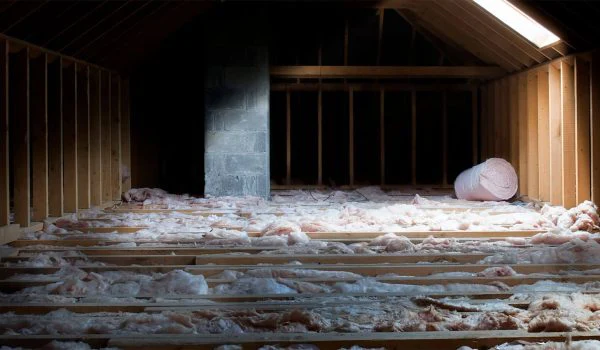
Blown-in cellulose uses recycled paper fiber treated with fire retardants. It delivers roughly R-3.2 to R-3.8 per inch. It settles modestly over time, which is accounted for in the installed thickness. Cellulose helps with sound control and does well at filling irregular spaces around framing and wiring. Many Valley ranch attics with truss webs and low headroom benefit from its ability to pack evenly without many seams.
Blown-in fiberglass is loose fiberglass fiber. It typically delivers R-2.2 to R-2.7 per inch in older product lines, with modern high-loft versions reaching higher effective values when installed to manufacturer specs. Fiberglass is inert, does not absorb moisture in normal attic conditions, and remains a staple for homes that need a clean, fast upgrade with clear documentation for Title 24 compliance.
Installation involves air sealing first, then hose-delivered material from a blowing machine. Depth markers verify even coverage. In a typical 1,600 square foot Chatsworth attic with open joist bays, two trained installers complete a full air seal and blow-in upgrade in one day, sometimes two if extensive attic cleaning or duct sealing is included.
Where blown-in makes the most sense in Chatsworth
Older ranch homes along Lassen Street, Mason Avenue, or De Soto Avenue often have open attic floors and accessible joist bays. Blown-in is well suited in these cases. It brings the attic to R-38 or R-49 without major structural change. It also pairs well with radiant barrier under the roof and with upgraded ventilation through soffit and ridge vents. In Valley summers, a radiant barrier can drop attic air temperature by 15 to 25 degrees on south or west roof exposures. That reduction shows up in shorter AC cycles in neighborhoods like 91311, 91324, and 91344 where solar load is intense.
Blown-in also fits budgets. In 2026 San Fernando Valley projects, installed costs commonly land between about $1.50 and $3.00 per square foot for standard depth targets, depending on access, prep work, and material selection. Reaching R-38 across a clean open attic is one of the highest return energy upgrades in the Valley because it cuts both heat gain and heat loss for homes near the 118, 405, and 101 corridors.
Spray foam insulation explained
Spray foam is a two-part material applied as a liquid that expands and cures into a rigid or semi-rigid foam. It is used for air sealing and insulation at the same time. The two categories are open-cell and closed-cell foam.
Open-cell spray foam has a lower density, about 0.5 pounds per cubic foot. It delivers around R-3.5 to R-3.8 per inch. It expands significantly and seals cracks well. It is vapor permeable, which allows some drying potential. In attics, it is used under the roof deck to create a semi-conditioned space. That brings ducts and air handlers into a controlled environment if they run through the attic. Noise control improves as well.
Closed-cell spray foam has a higher density near 2.0 pounds per cubic foot. It delivers around R-6.0 to R-7.0 per inch. It also acts as a strong air barrier and a vapor retarder. In roof applications, it adds structural stiffness to the deck and resists moisture ingress. In the hot, dry Valley climate, closed-cell on the roof deck helps limit radiant heat transfer and can allow a thinner profile to reach a target R-value.
Applying foam to the underside of the roof deck changes the attic from vented to unvented or semi-conditioned when designed and documented correctly. That approach often requires code coordination, fire barrier coatings in some cases, and careful ventilation design. For Los Angeles County homes, Title 24 compliance documentation should reflect the sealed attic strategy to capture the modeling benefit and to align mechanical ventilation if needed.
Where spray foam fits best in Chatsworth and nearby neighborhoods
Spray foam suits homes where ductwork must stay in the attic and the owner wants that space inside the thermal boundary. Many two-story homes off Nordhoff Street and in Porter Ranch tracts have complex duct runs above insulation. Foam at the roof deck turns that challenge into an asset by reducing duct load. Foam is also a strong choice for vaulted ceilings, cathedral assemblies, or attic conversions where floor insulation is not practical. Closed-cell foam is often preferred in low-slope roof assemblies and where a thinner layer must deliver higher R-value.
Costs are higher than blown-in. In the Valley, expect a general range from about $3.50 to $6.50 per square foot for open-cell roof deck applications and $5.50 to $9.00 for closed-cell, depending on thickness targets, access, ignition barrier requirements, and roof geometry. Those ranges vary with foam chemistry and code-driven coatings. Foam can, however, reduce HVAC tonnage during a system replacement in some designs, which brings lifecycle value that helps offset the upfront investment.
Head-to-head comparison for Valley conditions
R-value per inch: Blown-in cellulose and fiberglass require more depth to reach R-38 or R-49 on the attic floor, which is fine in most Valley attics. Open-cell foam reaches lower R per inch than closed-cell foam, so thickness planning matters for roof deck applications. Closed-cell reaches higher R with thinner layers, which helps under limited rafter depth. Many Valley rafters allow a combination approach with foam for air seal and a supplemental layer to reach target R.
Air sealing: Blown-in does not air seal by itself. The attic floor must be sealed first with caulk, foam, or board patches around penetrations. When done right, this is reliable and durable. Spray foam seals as it insulates. It excels where many small gaps exist around skylights, chimneys, and roof-wall interfaces. For older homes in Sherman Oaks or Studio City that leak through many top plate cracks, foam at the roof deck can create a tight blanket quickly.
Moisture and drying in LA climate: Valley homes face dry summers and mild winters, with coastal moisture only affecting areas closer to the 101 west of Woodland Hills. Vented attics with blown-in perform well here because they allow the roof deck to dry. Open-cell foam under roof decks allows some drying while creating a sealed attic. Closed-cell limits vapor movement more strongly. Design choices should account for roof covering type, underlayment condition, and any past moisture problems.
Duct location: If ducts remain in a vented attic, prioritize R-8 duct insulation and mastic sealing at joints. In that case, blown-in on the attic floor is the cost-effective path. If the homeowner wants ducts inside the thermal boundary, roof deck spray foam is the direct route, and the attic becomes semi-conditioned by design.
Noise and indoor air quality: Cellulose dampens sound well across bedrooms near De Soto Avenue or close to the 118. Open-cell foam also improves noise control under the roof deck. For indoor air quality, both systems require clean prep. If rodent contamination exists, the attic must be cleaned, sanitized, and air sealed before any new material. Spray foam adheres to surfaces and, under a clean deck, creates a tight shell that limits dust passage into the living space.
Rodent resistance: Neither insulation type is a rodent control system. Rodent proofing with galvanized steel or copper mesh at vents and penetrations remains essential, especially in mid-century Valley homes. Foam can close gaps that rodents might exploit, but exclusion hardware sets the baseline. Vented attics with new blown-in insulation also need screened soffits and gables to keep pests out.
Radiant heat: Radiant barrier paired with blown-in is a proven approach in the Valley. It reduces attic air temperature and protects duct runs. Spray foam at the roof deck also limits heat transmission and can be chosen instead of, or alongside, radiant barrier depending on design goals.
Cost and ROI: Blown-in reaches Title 24 targets with the lowest upfront cost in most Chatsworth homes. Foam provides bigger air sealing and duct location benefits and can cut tonnage during HVAC replacement, which can move the cost-benefit equation in its favor on larger or more complex homes.
What Pure Eco teams see in Chatsworth attics
Across 91311, many attics contain a patchwork of old batts and areas with no insulation. Knee walls near dormers often lack coverage. Soffit vents are frequently blocked by old batts or debris. The result is hot upstairs rooms by 2 PM and long AC run times into late evening. Energy audits often reveal combined losses from three sources at once: low R-value, air leakage at the attic floor, and duct leakage. Fixing one without the others leaves savings on the table.
For homes near Stoney Point Park and the Chatsworth Reservoir, south and west exposures push attic peaks higher. In these cases, radiant barrier under the roof plus R-38 blown-in on the floor resets summer comfort without major structural change. Where the homeowner plans a full HVAC system upgrade, moving to a sealed attic with spray foam may allow a smaller system. The best choice depends on the duct layout and the roof framing.
A Los Angeles building science snapshot
Attic performance in Los Angeles is a balance of conduction, convection, and radiation. Insulation addresses conduction. Air sealing controls convection through the attic floor. Radiant barrier or roof deck foam reduces radiation from the sun-heated roof into the attic space. Ventilation provides drying and reduces heat buildup in vented attics. For many San Fernando Valley homes, the simple formula that works is air seal plus R-38 blown-in plus radiant barrier plus clear soffits and ridge vents. For homes with ducts that must remain overhead and owners who want a conditioned storage space, roof deck spray foam changes the equation by moving the thermal boundary to the roof plane.
In field measurements across Valley projects, radiant barrier installations typically reduce peak attic air temperature by 15 to 25 degrees on summer afternoons for south and west exposures. This reduction, combined with air sealing and proper R-value, trims AC run time and makes upstairs rooms more steady between 3 PM and 8 PM, which is when the 101 and 405 corridors stay hottest.
Title 24 and documentation that matters at resale and permit time
California Title 24 Part 6 governs energy performance. In the San Fernando Valley’s Climate Zone 9, retrofits that touch insulation are expected to bring the attic floor to at least R-30, with R-38 as the practical standard and R-49 for high-performance upgrades. Projects that change the thermal boundary to the roof deck with spray foam require the correct compliance forms and, in some cases, HERS verification elements. A permit-compliant installation with documented material specs and photos protects the homeowner during resale and insurance events. It also positions the project to qualify for LADWP or SoCalGas rebate programs when available and for the federal Section 25C tax credit.
Budget ranges and rebates for Valley homeowners
Every attic has variables, but local ranges help set expectations. Blown-in cellulose or fiberglass with air sealing in open Valley attics: about $1.50 to $4.00 per square foot depending on prep, material choice, access, and target R. Radiant barrier under-roof installation: about $0.50 to $1.50 per square foot depending on access and product grade. Open-cell spray foam at roof deck: about $3.50 to $6.50 per square foot for common thickness ranges. Closed-cell spray foam at roof deck: about $5.50 to $9.00 per square foot.
LADWP and SoCalGas periodically offer rebate programs that offset part of the cost for attic insulation upgrades. Program details change during the year. Proper documentation, photos, and material invoices are required. Federal tax incentives under Section 25C can provide up to $1,200 per year in credits for qualifying insulation and air sealing upgrades through 2032. Scheduling the work before a summer heat wave captures the most immediate comfort benefit and reduces peak load days when electricity rates are highest.
What to consider before insulation work begins
Existing material often needs attention first. If the attic shows signs of rodent activity, droppings, urine staining, or nesting, the work starts with attic cleaning, HEPA vacuuming, sanitization, and bagged removal of contaminated insulation. This is common in Valley homes where old eave screens allow roof rats in. Rodent proofing with galvanized steel mesh and rodent-grade sealant follows. Only then does new insulation go in. Homeowners searching for insulation removal Chatsworth CA usually face that sequence.
For homes built before 1980, some attics contain vermiculite or other suspect material. If vermiculite is detected, testing is prudent because some older vermiculite products contained asbestos. Confirmed asbestos requires a licensed abatement contractor and a specific removal protocol. After a safe removal, fresh insulation can be installed to current Title 24 targets. Pure Eco field teams flag these conditions during the free assessment so the homeowner has a clear plan before work starts.
Attic ventilation and radiant control across the Valley
Vented attics with blown-in insulation rely on clear, screened soffits feeding cooler air and a high exit point like a ridge vent or gable vents. Many mid-century Valley homes have blocked soffits due to old batts or dust buildup. Clearing and screening with 1/4-inch galvanized steel mesh improves air movement and keeps pests out. Ridge vent additions on long gable roofs in Northridge, Encino, or Sherman Oaks can stabilize attic temperatures with minimal visual change.
Radiant barrier is a strong add-on for south and west roof planes common in Woodland Hills 91364 and Encino 91316. The foil faces down toward the attic floor and reflects radiant heat away. In a heat wave, reducing radiant load helps the whole system. A shareable local stat: under clear August skies, Valley roof decks can reach 150 degrees in late afternoon. With a radiant barrier, many attics stabilize around 15 to 25 degrees cooler than without it, which eases AC strain on the hottest days.
Case examples from recent Valley projects
Chatsworth ranch near Mason Park, 1,450 square feet: The attic held thin, dusty batts and open chases. The team completed attic cleaning, air sealing at top plates and can lights, installed R-38 blown-in cellulose, and added a perforated radiant barrier under the roof. The result was faster pull-down times on hot afternoons and quieter bedrooms facing Devonshire Street. The homeowner deferred roof deck foam due to budget but plans a future HVAC right-size based on reduced load data.
Porter Ranch two-story, 2,600 square feet with ducts in attic: The owner wanted to keep ductwork overhead but reduce energy use. The project created a sealed attic with open-cell spray foam under the roof deck and at gable ends, with a code-approved ignition barrier coating. Duct leakage measured lower impact after the attic became semi-conditioned. The HVAC contractor selected a smaller condenser during replacement based on updated load calculations.
Sherman Oaks split-level, 1,900 square feet near Ventura Boulevard: The attic had widespread rodent contamination. The sequence involved insulation removal, HEPA vacuuming, sanitization, copper mesh and hardware cloth at soffits and plumbing penetrations, and then R-49 blown-in fiberglass. The home achieved better indoor air quality and lower dust in hallways. Title 24 documentation supported a resale appraisal within the next year.
Choosing between blown-in and spray foam for a specific home
The right choice follows the house, not a trend. If the attic floor is open, ducts are sealed and insulated to R-8, and budgets are tight, blown-in at R-38 or R-49 with air sealing and radiant barrier solves most Valley comfort problems with strong ROI. If the homeowner wants a clean deck for storage, needs a conditioned attic for mechanicals, or plans a system downsizing, roof deck spray foam becomes the smarter path. Some homes benefit from a hybrid approach, such as a thin layer of closed-cell foam for air seal at the roof deck plus a radiant barrier to cut summer peaks, paired with targeted duct upgrades.
What a professional assessment looks at in the Valley context
A thorough attic assessment in 91311 checks five things together. First, the R-value and coverage of existing insulation. Second, air leakage paths at the attic floor and along chases. Third, duct condition, leakage at joints, and insulation level. Fourth, ventilation and radiant load based on roof orientation and shading. Fifth, signs of contamination, moisture, or wiring issues that affect the scope. The result is a clear, written scope that aligns with Title 24, improves comfort, and protects indoor air quality. That integrated view is the difference between a basic material swap and a building performance upgrade that holds up under 100-degree weeks.
Safety, materials, and warranties that matter
Any attic cleaning or insulation project should use HEPA-filtered vacuums, OSHA-compliant protective equipment, and bagged disposal for contaminated materials. Air sealing should use durable caulks, mastics, and backer materials that survive attic heat cycles. Rodent proofing should use galvanized steel mesh or copper mesh, not simple window screen. Insulation materials should carry current manufacturer documentation and, where relevant, NAIMA or ENERGY STAR references. Spray foam work should follow manufacturer temperature and humidity guidelines, adhere to ignition barrier rules where applicable, and document thickness and cured R-values with photos and depth checks.
Workmanship warranties on installation labor and manufacturer-backed material warranties help protect the investment. For spray foam, a contractor that can also coordinate with roofing and HVAC simplifies a sealed attic design and the code path for ventilation and combustion safety if gas appliances are present.
Frequently asked project pivots in Chatsworth and nearby tracts
Some homeowners start with blown-in https://s3.us-west-1.amazonaws.com/home-fix-hub/chatsworth/attic-insulation-in-chatsworth-los-angeles-county-2026.html in mind and pivot to spray foam after duct testing shows persistent losses they do not want to chase with attic floor work. Others start with spray foam and then choose blown-in with radiant barrier after comparing costs and deciding to keep a vented attic. Either path can succeed in the Valley climate when paired with solid air sealing, duct sealing, and ventilation checks. The deciding factor is usually duct location and whether a conditioned attic is a priority.
Where Pure Eco Inc. Operates and why proximity matters
Pure Eco Inc. Operates from 9740 Variel Ave, Chatsworth, CA 91311, right near the 118 for quick cross-Valley access. That location shortens response times to homes in Northridge 91324 and attic insulation chatsworth 91325, Porter Ranch 91326, Granada Hills 91344, and the Woodland Hills 91364 hillsides. It also allows teams to reach Encino 91316, Sherman Oaks 91423, and Studio City 91604 through the 101 and 405 corridors without long mobilizations. For projects that involve both attic and HVAC work, proximity allows same-day coordination between insulation crews and duct or system technicians, which avoids gaps that reduce project value.
Neighborhood coverage snapshot
Homeowners across the San Fernando Valley work with a contractor that knows the local housing stock and can document Title 24 compliance. The most common service calls for attic insulation Chatsworth, spray foam insulation Chatsworth, and attic cleaning Chatsworth come from these communities:
Chatsworth, Northridge, Porter Ranch, Granada Hills, Mission Hills Reseda, Winnetka, Canoga Park, West Hills, Woodland Hills Tarzana, Encino, Sherman Oaks, Van Nuys, Panorama City Valley Village, North Hollywood, Studio City, Toluca Lake, Burbank Extended Greater LA: Beverly Hills, Bel Air, Brentwood, Pacific Palisades, Glendale, Pasadena
A quick decision grid for Valley homeowners
When choices feel close, these points help narrow direction without sacrificing performance or code compliance:
Keep a vented attic and minimize cost: air seal, R-38 or R-49 blown-in, clear soffits, add radiant barrier. Bring ducts inside the thermal boundary and improve mechanicals: open-cell or closed-cell spray foam at roof deck with code coordination. Need thin profile with high R and added deck stiffness: closed-cell spray foam. Want strong sound control and fast install on open floors: blown-in cellulose to R-38 or higher. Concerned about contamination or rodent history: start with insulation removal, HEPA cleaning, sanitization, and rodent proofing, then choose insulation.
What makes a project shareable to neighbors and local publications
Valley homeowners and property managers often share two findings. First, radiant barrier installations in south- and west-facing roof planes in the San Fernando Valley typically cut peak attic air temperatures by 15 to 25 degrees during July and August afternoons, which translates into 10 to 25 percent cooling cost reductions compared with similar homes without radiant control. Second, bringing attic floor insulation to R-38 in Zone 9 homes that started below R-19 usually cuts whole-home energy use by up to 30 percent, depending on duct leakage and air sealing. These outcomes align with Title 24 guidance and Los Angeles climate realities, and they are repeatable when the work includes proper air sealing, ventilation, and duct improvements.
Service positioning and how to move forward
Blown-in and spray foam both solve Valley problems when matched to the home. A contractor with Title 24 expertise, insulation crews certified across blown-in and spray foam, and the ability to clean, decontaminate, rodent proof, seal ducts, and document rebates in one scope removes the guesswork. That integrated approach is what keeps upstairs rooms steady during Woodland Hills heat spikes and shortens AC run times on 405 closure weekends when everyone stays home with systems running.
Schedule in a way that works with Valley life
Homeowners often prefer weekday field work that starts at 7 AM and finishes by early evening to avoid traffic on the 101 or 134. Sunday field hours help those who cannot be home midweek. One-day turnarounds are common for open attics receiving blown-in, with two-day schedules for combined attic cleaning, air sealing, and insulation. Spray foam roof deck projects often span two to three days including coatings and cure checks. Homes with both attic and HVAC scope are planned so that ducts and insulation line up and the attic is not opened twice.
Ready for a clear, local answer for your Chatsworth home
Pure Eco Inc. Is a California licensed and insured contractor based at 9740 Variel Ave, Chatsworth, CA 91311. The team provides free home assessments, detailed written estimates, and permit-compliant installations. Title 24 California energy code expertise, NAIMA-certified installation methods, and HEPA-filtered decontamination protocols are standard. Crews install blown-in cellulose, blown-in fiberglass, batt insulation, open-cell and closed-cell spray foam, and radiant barrier. Rodent proofing uses galvanized or copper mesh and rodent-grade sealants. HVAC and duct services tie the attic work to mechanical performance. Field hours run Monday through Friday 7:00 AM to 7:00 PM, with Sunday coverage 8:00 AM to 6:00 PM.
To compare blown-in and spray foam for your attic insulation Chatsworth project and get a scope that matches your home, call +1-818-857-4830 or visit pureecoinc.com to book a free assessment. Service covers the San Fernando Valley and Greater Los Angeles, including 91311 Chatsworth, 91364 Woodland Hills, 91316 Encino, 91423 Sherman Oaks, and 91604 Studio City. LADWP and SoCalGas rebate documentation support is available when programs are active. A workmanship warranty backs the installation, and manufacturer warranties cover materials. One visit delivers the answers a Valley home needs, from attic cleaning to final insulation and documentation.
Pure Eco Inc.
Chatsworth Facility
📍
Office Location 9740 Variel Ave,
Chatsworth, CA 91311
📞
Local Consultation Line