Backyard Drainage Solutions in London, Ontario: From Swales to French Drains
Backyards in London tend to reveal their weak spots right after a spring thaw or one of those sustained autumn rains that sit over the city for a weekend. You step off the patio and the lawn swallows your boots. Water pools along the fence, the window wells look like aquariums, and the dog tracks half the yard back into the kitchen. For many homeowners, this cycle repeats year after year because the site was never graded properly, or soils and downspouts were asked to handle more water than they reasonably can. With a bit of diagnosis and the right interventions, there is a path toward a yard that drains cleanly and a basement that stays dry.
I have spent enough time with sticky clay on my shovel and sod rolled back in neat strips to respect what works and what wastes money. London sits in the Thames River watershed with a lot of compacted subsoil in subdivisions, plenty of mature neighborhoods with shallow topsoil and heavy clay beneath, and precipitation that can push past 900 to 1,100 millimetres a year when you include rain and snowmelt. Add in a frost depth typically around a metre and you have a straightforward lesson: plan for water to move, or it will move where you least want it.
Where the water is coming from
Start by watching the yard during a real rain, not a light sprinkle. Stand under an umbrella and trace the paths. Roof areas drain into downspouts that may be dumping water right at the foundation, patios often tilt gently back toward the house, and landscaping that looked pretty in the brochure now traps water along an edging strip. Fences can act like small dams if soil was banked against them during installation. Lawns on clay subsoil saturate quickly and shed water rather than absorbing it. All of these contribute to the same problem: too much water, too close to the house, with nowhere to go.
Newer builds in London often use topsoil that is 10 to 20 centimetres thick over compacted fill. That top layer acts like a sponge until it is full. Then everything else moves laterally, right into the low spots. If your lot is at the bottom of a gentle swale between houses, you may be receiving water from two or three properties upstream. On sloped sites, the front yard may be dry while the backyard turns into a basin because the final grading placed the high point too close to the rear wall. After a few hours observing, you should have a mental map of the trouble spots.
Grading first, hardware second
I meet plenty of homeowners searching for french drains london ontario and landing on diagrams of perforated pipe wrapped in fabric. That tool has a place, but you never start there. Gravity is your most reliable ally. Proper grading fixes more problems than any pipe ever will. A good yard falls away from the foundation on all sides, ideally a slope of about 2 to 5 percent for the first two to three metres. That translates to a drop of roughly 2 to 5 centimetres per metre. You do not need survey gear to check this. A tight line and level, or a straight board with a carpenter’s level, shows you whether the surface pitches out or in.
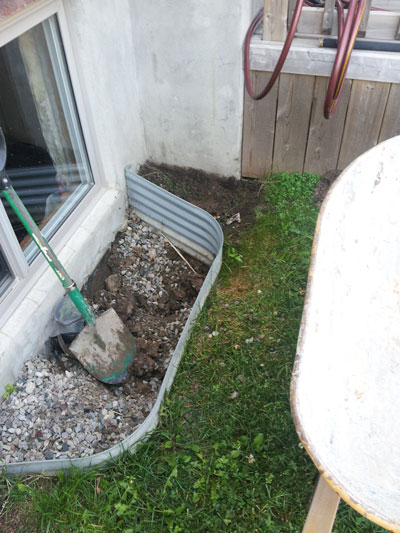
If the soil has settled along the foundation, the quickest repair is to add compactable fill along the wall, then cap it with a layer of loam for sod or seed. Keep mulch and edging back from the foundation so you preserve that pitch. When a patio tilts the wrong way, think about lifting and re-setting it. Interlocking pavers can be regraded by lifting the field, adjusting the base with screenings, and reinstalling. With poured concrete, you weigh options between slabjacking and replacement. I usually prioritize grading work first because once the surface sheds water cleanly, the rest of the yard drains easier with fewer moving parts.
Swales and how to make them look intentional
A swale is a shallow, gently sloped channel that moves surface water from point A to point B without eroding the yard. Old farm fields relied on them, and so do well planned subdivisions. On urban lots, a swale might be no more than a shallow trough, 1 to 2 metres wide and 10 to 20 centimetres deep at the centre, with smooth, mowable slopes on each side. It should carry water during a storm and look like part of the lawn the rest of the time. If you can route water to a proper discharge point like a municipal storm inlet at the back of a lot line or a front ditch, a swale often beats a buried pipe for simplicity.
In tight backyards, a swale needs care to avoid creating a speedway for water that strips away topsoil. Use turf on gentle slopes and switch to river stone where the grade steepens or bends. If the swale crosses a path, a flat bridge of pavers or a strip of stepping stones keeps things usable. I like to tuck small plantings along the high edges, not the low centre, so they do not become waterlogged during heavy rain. If you share drainage with a neighbour, treat the swale as shared infrastructure. Agreement today prevents conflict later, especially where property lines and water rights meet.
French drains, and when they earn their keep
People use the phrase french drains as a catch-all for any perforated pipe in gravel. In a backyard context, a French drain is best seen as a subsurface collector that relieves a persistent wet spot, captures seepage along a slope, or connects a downspout to a safe discharge without water surfacing along the way. It is not a cure for bad grading. Water still flows by gravity, and the pipe needs a consistent fall to a discharge point. On flat lots, that means very careful trench work or accepting that the system will act more like a soakaway than a conveyance pipe.
In many London subdivisions, heavy clay limits absorption. That pushes a French drain toward conveyance rather than infiltration. When we install french drains in London, Ontario, we typically trench 30 to 45 centimetres below the surface, sometimes deeper if we need to pass under roots or utilities. We bed and surround a 100 mm perforated HDPE pipe in clear stone, not pea gravel, often 19 mm clear. The aggregate needs void space to carry water. We wrap the stone envelope in a nonwoven geotextile to keep fines out. Fabric that is too tight will clog with silt, fabric that is too open lets clay migrate. You want a balance. The pipe ports face down in most configurations for yard drains, because the gravel body is doing the collecting, then the pipe moves it along.
A French drain needs somewhere legal and functional to send the water. Options include a curb cut to a storm drain, a rear catch basin tied to municipal storm where available, or a daylit outlet on a lower slope that can disperse water without eroding. London bylaws discourage discharging roof water directly onto sidewalks or neighbours’ properties. If you cannot achieve fall to daylight, consider a dry well sized to the catchment.
Dry wells and soakaways
On clay, a small dry well is a disappointment. A large dry well built correctly can still help by buffering peak flows. Imagine a buried vault of stone that temporarily stores roof or yard water, then releases it slowly to the surrounding soil. The volume matters. A downspout serving 90 square metres of roof can push out hundreds of litres in a short cloudburst. In a backyard drainage london ontario context, I size soakaways generously and accept that they will not empty as quickly in spring when the frost line keeps the soil sealed. A dry well paired with disconnected downspouts is especially useful if you cannot slope the surface far enough from the foundation.
Keep any dry well at least 3 metres from the house and farther if soils are tight. Wrap the stone in fabric like the French drain, and protect the inlet with a filter box that can be cleaned. If the water cannot reach the dry well reliably by gravity, a small sump basin and pump may be a better match.
Weeping tiles and foundation-specific drainage
When homeowners search weeping tiles london ontario they are usually dealing with a wet basement. Weeping tile is the local term for the perforated footing drains that sit at or just below the footing and carry groundwater to a sump or storm outlet. If your basement is taking on water along the floor joint or through cracks, the problem is different from a soggy lawn. Foundation drainage belongs to its own system. Exterior excavation to the footing, membrane waterproofing, new perforated pipe in clear stone wrapped in geotextile, and positive connections to a sump or storm lead bring a wet basement back into line.
On older houses in Old North or Wortley, the original clay tile may be collapsed or silted with decades of fines. Sometimes an interior weeping tile retrofit tied into a new sump pit is more practical than exterior excavation in a tight sideyard. The Ontario Building Code has rules for sump discharge, including not sending clear water to sanitary sewers. Builders and drainage contractors in London, Ontario work with these standards every day. The key for homeowners is to avoid blending yard drainage fixes with Click here for more info foundation drainage wishful thinking. A yard French drain will not substitute for failed footing drains.
Downspouts, extensions, and the easy wins
Before you invest in buried pipe, fix the obvious. Downspouts that empty right beside a wall set you up for basement seepage and backyard puddling. Extensions of 2 to 3 metres, sloped to carry water into turf that drains, are a cheap upgrade. Where appearance matters, underground downspout leads carry roof water to daylight or a catch basin. I often use smoothwall SDR-28 or SDR-35 PVC for these, with cleanouts at elbows, because they are easier to flush than corrugated. If the outlet sits where leaves and snow can block it, protect it with a grated pop-up emitter, then plan to check it a couple of times each season.
Anecdotally, downspouts alone solve half the backyard complaints I see. One home near Masonville had three rear downspouts concentrated at a deck corner. Moving one to the side elevation and running both with simple above-grade extensions cut ponding by more than half. We installed no drains at all. The grade already had modest fall; it just needed the water to start in the right direction.
Soil, sod, and infiltration reality
Clay does not change because we wish it to. London soils vary block to block, but many backyards sit on clayey subsoils that accept water slowly. Aeration, topdressing with compost, and deeper-rooted turf varieties help, but not as much as people expect. If your infiltration rate is poor, design for conveyance and storage. Use garden beds with raised edges only in places that will not trap flow. Avoid plastic edging that forms little dams. Where you can, replace a section of flat lawn with a gravel garden using a mix of river rock and hardy perennials along the path of flow. It doubles as a decorative swale and handles foot traffic better during wet spells.
Frost, fabrics, and details that keep systems working
Southern Ontario frost can push to a metre in a hard winter. Any rigid pipe that crosses under a path or driveway should have a bit of cover and room to move so it does not crack from heaving. Corrugated pipe tolerates some movement, but it also traps sediment in its ribs and clogs more easily. For long runs that must stay clear, I prefer smoothwall. Use nonwoven geotextile around stone envelopes, not landscape fabric designed to suppress weeds. The latter clogs. Wraps should overlap generously and be secured so backfill does not tear them.
Catch basins in lawns catch more than water. Leave the top just proud of grade and mow around it rather than trying to make it disappear. A leaf basket under the grate wet basement london ontario saves you from digging gunk out of the line later. In spring and fall, check inlets and outlets the way you check furnace filters. Small habits keep bigger problems away.
Working with the city and with neighbours
London has easements, rear yard catch basins, and swales designed to function across multiple lots. Before you regrade, understand where the shared drainage is supposed to go. Do not block a flow path with fill or landscaping. If you need to direct water to a municipal storm system, confirm that connection is allowed. Many properties cannot legally tie new private drains into city infrastructure without permits. And, of course, call Ontario One Call before any dig that could hit a buried line. Markouts are free and protect you from turning a Saturday project into an emergency.
Water that leaves your property cannot be your neighbour’s problem. If your fix pushes ponding across the fence, expect a knock on the door. Good drainage contractors in London, Ontario know how to model flows across lot lines and design within the reality of bylaws and topography. If a swale must cross a property boundary, a simple written agreement between neighbours avoids tense conversations later.
How I choose a solution
Approach backyard drainage like a sequence, not a shopping list. First, shape the surface so gravity can work for you. Second, get roof water away from the foundation with downspout extensions or buried leads. Third, use a swale to move yard runoff to a safe discharge. Only then, if a persistent wet spot remains, consider a French drain as a collector. Foundation issues get their own track with weeping tiles, waterproofing, and sump management.
Here is a short field checklist I use on most sites:
Sketch the lot, marking high and low points, downspouts, and any existing drains or catch basins. During or right after rain, trace actual flow paths and note standing water depth and duration. Measure falls with a level, not guesswork, across the first two to three metres from the foundation. Verify discharge options that are legal and feasible, including daylight, storm inlets, and dry wells. Call for locates before planning any trench that could intersect utilities.
A practical French drain installation, step by step
Homeowners often ask what a proper install looks like when they price quotes for french drains. Here is the condensed version of a typical backyard collector line addressing a soggy corridor along a fence, sized for London’s soils:
Mark utilities, paint the trench line, and choose an outlet with at least 1 to 2 percent fall across the run. Excavate a trench roughly 30 to 40 centimetres wide, deep enough to maintain continuous fall to the outlet. Lay nonwoven geotextile in the trench with generous overlap, add 10 to 15 centimetres of 19 mm clear stone, set 100 mm perforated pipe with the perforations down, and cover with more stone to 5 to 10 centimetres below final grade. Wrap the stone completely with the fabric, backfill with soil, and restore turf or add decorative gravel where you want a dry garden effect. Test with a hose at the upstream end to confirm flow and check that the outlet remains clear and stable.
That sequence succeeds or fails on two things: unbroken fall and clean stone wrapped in proper fabric. Skip those and you will be re-digging in a year.
Cost ranges you can bank on
Every yard is its own puzzle, but some ballpark Canadian figures help planning. Simple regrading and topsoil along the foundation might run a few hundred dollars in materials if you do it yourself, more if machinery access is tight and you hire a crew. Regrading a patio of interlock runs into the low thousands depending on size. A French drain of 10 to 20 metres, installed with proper stone, fabric, and a good outlet, often falls in the 2,000 to 6,000 dollar range with professional labour, more if hardscape must be removed and replaced. Buried downspout leads to daylight or a curb outlet vary widely, but many single runs land under 2,000 dollars unless obstacles complicate them. Full foundation weeping tile replacement and waterproofing is a much bigger project, often five figures, because excavation, membranes, and sump work are labour intensive and governed by code. These are not quotes, just honest ranges from what I see in the field.
If you are comparing bids from drainage contractors London, Ontario has a healthy mix of specialists and landscapers who do drainage well. Ask about materials, pipe type, aggregate, fabric, outlet plan, and site protection. A cheaper quote that uses pea gravel and corrugated everywhere without fabric is not the same job as one with clear stone, smoothwall where appropriate, and cleanouts. The latter will still be doing its job five years from now.
Maintenance, the quiet hero
Drainage systems do not demand much, but they do want a little attention. Keep downspout filters clean and extensions attached. Each spring and fall, walk the swales and rake out leaves. Check lawn basins after big storms and empty leaf baskets. Flush buried leads every year or two if they handle a lot of roof debris, particularly under maples that like to shed seeds. If a French drain starts to underperform, check the outlet first. Nine times out of ten it is the only point you need to clear. If sediment buildup becomes chronic, add a pre-filter basin at the upstream end.
I once revisited a site near Byron where a textbook French drain had grown sluggish. The outlet sat behind a row of hostas that matured into a living grate. We trimmed, moved a stone or two, and the line sang again. Systems are only as smart as the landscaping respects them.
Choosing between DIY and hiring out
Plenty of homeowners handle extensions, small grading projects, and even short French drains with rented tools and careful planning. Trenching through roots, working near utilities, or tying into storm infrastructure calls for experience. If the yard layout is complex or the stakes include a leaky basement, lean on pros. For weeping tiles london ontario problems, foundation contractors who specialize in exterior waterproofing and footing drains are your right call. For general backyard drainage london ontario projects, look for firms who can show you before and afters, explain discharge rules clearly, and offer more than one path to a fix.
A good contractor starts with a conversation and a level, not a catalogue of products. They will talk about slope in numbers, not just in gestures, and they will mark utilities without you asking. They will also set expectations about how the yard will look during and after, including how they will protect sod and patios and how quickly they will restore them.
Putting it all together
Backyard drainage is not just about pipes and pits. It is an exercise in reading a site and working with the realities of London’s soils, weather, and bylaws. Swales that look like part of the landscape, downspouts that deliver water to a safe path, grading that respects the house, and French drains that step in only when needed, those are the building blocks. Weeping tiles belong to the basement’s world and should be handled with the seriousness they deserve.
If you walk the yard during the next proper rain and trace the paths, you will likely see your answer emerge in stages. Start with slope, fix the simple feeds, and only then commit to the buried work. Do that, and the next spring thaw can feel like a season to enjoy the yard instead of a reminder that water always wins when we pretend it is not there.
Ashworth Drainage — Business Info (NAP)
Name: Ashworth Drainage
Address: 514 Hale St, London, ON N5W 1G8
Phone: (519) 660-9375
Website: https://www.ashworthdrainage.ca/
Email: [email protected]
Hours:
Monday: 9:00 AM – 5:00 PM
Tuesday: 9:00 AM – 5:00 PM
Wednesday: 9:00 AM – 5:00 PM
Thursday: 9:00 AM – 5:00 PM
Friday: 9:00 AM – 5:00 PM
Saturday: Closed
Sunday: Closed
Open-location code (Plus Code): XRR3+HV London, Ontario
Map/listing URL: https://maps.app.goo.gl/9kaoXAxRtJRP1ThS9
Embed iframe:
Socials (canonical https URLs):
Facebook: https://www.facebook.com/ashworthdrainage/
X: https://twitter.com/ashworthrules
Instagram: https://www.instagram.com/ashworthdrainage/
"@context": "https://schema.org", "@type": "GeneralContractor", "name": "Ashworth Drainage", "url": "https://www.ashworthdrainage.ca/", "telephone": "+1-519-660-9375", "email": "[email protected]", "address": "@type": "PostalAddress", "streetAddress": "514 Hale St", "addressLocality": "London", "addressRegion": "ON", "postalCode": "N5W 1G8", "addressCountry": "CA" , "openingHoursSpecification": [ "@type": "OpeningHoursSpecification", "dayOfWeek": "Monday", "opens": "09:00", "closes": "17:00" , "@type": "OpeningHoursSpecification", "dayOfWeek": "Tuesday", "opens": "09:00", "closes": "17:00" , "@type": "OpeningHoursSpecification", "dayOfWeek": "Wednesday", "opens": "09:00", "closes": "17:00" , "@type": "OpeningHoursSpecification", "dayOfWeek": "Thursday", "opens": "09:00", "closes": "17:00" , "@type": "OpeningHoursSpecification", "dayOfWeek": "Friday", "opens": "09:00", "closes": "17:00" ], "sameAs": [ "https://www.facebook.com/ashworthdrainage/", "https://twitter.com/ashworthrules", "https://www.instagram.com/ashworthdrainage/" ], "hasMap": "https://maps.app.goo.gl/9kaoXAxRtJRP1ThS9", "identifier": "XRR3+HV London, Ontario"
https://www.ashworthdrainage.ca/
Ashworth Drainage provides basement waterproofing and foundation repair services in London, Ontario and surrounding areas in Southwestern Ontario.
The company helps homeowners address wet basements, water intrusion, and drainage issues with solutions that fit the property’s conditions.
Service requests can include foundation repair, waterproofing options, sump pump and drainage-related work, and related assessments.
Ashworth Drainage is based at 514 Hale St, London, ON N5W 1G8.
To reach the team, call (519) 660-9375 or email [email protected].
Business hours are Monday to Friday 9:00 AM–5:00 PM, with the office closed Saturday and Sunday.
For directions and listing details, use the map listing: https://maps.app.goo.gl/9kaoXAxRtJRP1ThS9.
Popular Questions About Ashworth Drainage
What does basement waterproofing help prevent?
Basement waterproofing is intended to reduce water intrusion and moisture problems that can lead to dampness, leaks, odors, and damage over time.
How do I know if I may need foundation repair?
Common signs can include visible cracks, water seepage, shifting or uneven areas, or recurring moisture problems; an on-site assessment is usually the best way to confirm causes and options.
What areas does Ashworth Drainage serve?
Ashworth Drainage serves London, Ontario and surrounding areas in Southwestern Ontario.
What are Ashworth Drainage’s hours?
Monday–Friday 9:00 AM–5:00 PM; Saturday closed; Sunday closed.
How can I contact Ashworth Drainage?
Phone: +1-519-660-9375
Email: [email protected]
Website: https://www.ashworthdrainage.ca/
Map: https://maps.app.goo.gl/9kaoXAxRtJRP1ThS9
Facebook: https://www.facebook.com/ashworthdrainage/
X: https://twitter.com/ashworthrules
Instagram: https://www.instagram.com/ashworthdrainage/