Why Commercial Plumbing Problems in Phoenix Always Cost More Than the First Quote
Why Commercial Plumbing Problems in Phoenix Always Cost More Than the First Quote
Commercial properties in Phoenix live in a hard environment for plumbing. Water is among the hardest in the Southwest, soils are chloride rich and expansive, and many buildings run long hours with high occupant loads. The first quote often covers the symptom, not the full scope hiding behind a wall, under a slab, or forty feet down a corroded cast iron main. Day and Night Air Conditioning, Heating and Plumbing sees it every week across Arcadia, Biltmore, Desert Ridge, North Phoenix, Ahwatukee, Maryvale, and the Central Avenue and Camelback Corridor office strips. The pattern is clear. Once work begins and real-world access is cut into pipe chases, service yards, and mechanical rooms, additional findings surface that were not visible during the walk-through. That is why business owners across Maricopa County so often experience a budget jump between a first quote and the final invoice on commercial plumbing work.
The drivers are local and predictable. Phoenix relies on Central Arizona Project water that measures 12 to 18 grains per gallon, which equals roughly 200 to 300 parts per million calcium carbonate equivalent. Those minerals scale valves, water heaters, tankless heat exchangers, and backflow assemblies faster than in moderate water markets. Copper buried in Phoenix’s chloride-rich expansive soil develops pitting corrosion and pinhole leaks within a 30 to 50 year window. Cast iron drain lines in pre-1985 buildings roughen and scale inside until grease and mineral deposits shrink the effective diameter. Those facts matter the moment a plumber opens a line. What looks like one failed section often reveals a run of pipe that is the same age and condition. Replacing two feet does not protect a restaurant on Indian School Road or a warehouse off I-17 when the next six feet are ready to fail.
Why first quotes miss the true cost in Phoenix commercial buildings
Commercial plumbing systems are large and interconnected. A quick visual and a handheld estimate cannot see through concrete, insulation wrap, or decades of prior “patch” repairs hidden above T-bar ceilings. Real diagnosis takes camera inspections, acoustic leak detection, and sometimes opening access. The first quote is built on what is accessible without demolition. Once the work starts and the access panel comes off, Phoenix realities show up fast.
Chloride-rich soil under a 1970s tilt-up can deliver three separate slab leaks along the same copper circuit that feeds restrooms and a break room. CAP hardness can eat the magnesium anode rod in a commercial 80-gallon water heater in as little as three years, which accelerates tank lining wear and creates sediment loads that spread to mixing valves and recirculation pumps. A main line that looks clear at the cleanout can have a belly or flat spots twenty feet under a parking lot where old cast iron transitioned to clay tile, now holding grease and scale that a simple cable cannot clear for long. The first quote based on a cleanout peek does not capture that buried condition.
Day and Night has another layer of lived context from integrated building systems. In Phoenix, HVAC and plumbing share a room and sometimes a drain. Rooftop condensate drains tie into waste lines. Heat pump water heaters, which qualify for federal Section 25C credits, can depressurize a small mechanical room and change venting dynamics. Electrical loads from commercial HVAC repair on rooftop packaged units interact with booster pumps, recirc pumps, and heat tape. That interaction shows up as nuisance trips or failed components. A narrow plumbing scope can miss these cross-system issues if the contractor is not licensed for both trades and trained to read the whole room.
Local factors in Phoenix that drive hidden scope
Phoenix sits in ASHRAE climate zone 2B, hot and dry, but the monsoon drives humidity from June through September. While this article is about commercial plumbing, the monsoon matters. It drops haboob dust into outdoor air and across roofs. Dust and caliche fines migrate into roof drains and scuppers, then into any open risers and vent stacks. That silt accumulates in floor sinks and trench drains, which is why restaurants along 7th Street and 7th Avenue often need hydro jetting at 4,000 PSI after a major storm. A first quote based on “a simple clog” can expand once a camera shows a drain line partially occluded by mineral scale and roof fines that run the length of the line.
Older office buildings along the Camelback Corridor and in Biltmore/Camelback East (85016) hide plumbing in post-tension slabs and concrete chases. Slab leak repairs need acoustic and thermal imaging. Once a leak is located and concrete is opened, additional leaks a few feet away are not uncommon. The service life of copper in Phoenix soil is typically 30 to 50 years. A 1978 building now sits right in that window. A first quote may fix one pinhole. A long-term plan often points to PEX repipe to get piping out of the slab and into the ceiling space where future service is faster and cheaper.
On the west side, Maryvale (85033) and Glendale strip centers built in the 1960s and 1970s often have cast iron drain mains that have lost half their interior diameter to rust scale and CAP mineral deposits. The symptom is a slow floor drain in a tenant bay. The first quote might be to snake that drain. The real fix is hydro jetting with a spinning nozzle and a camera pass to evaluate the main. Sometimes cured-in-place pipe (CIPP) lining makes sense to restore the interior wall without trenching through the slab and sidewalk. Pipe bursting may be the practical choice when a parking lot lateral has multiple fractures. Either option costs more than cabling a single drain, but it addresses the systemic condition that a first quote could not see.
Why hard water multiplies costs in commercial settings
CAP water hardness at 12 to 18 grains per gallon changes the maintenance math in Phoenix. In commercial buildings, scale builds faster because of higher hot water demand and longer run hours. Mixing valves on restaurant hand sinks and mop sinks clog with calcium. Recirculation loops plug check valves. Tankless water heaters in coffee shops and small retail back rooms scale their heat exchangers in one to two years when no descaling is performed. Day and Night technicians measure scale thickness that permanently reduces flow and heat transfer. Manufacturers approve annual descaling; in Phoenix, commercial tankless gear usually needs it at least once a year.
One specific and shareable Phoenix fact: anode rods protect glass-lined steel water heater tanks by sacrificing themselves to corrosion. In soft water markets, that rod lasts 6 to 8 years. In Phoenix, Day and Night documents rod consumption in 3 to 5 years. That means a commercial 80- or 100-gallon unit in a salon on Loop 101 and Bell Road can lose its anode protection mid-life. The tank then starts to corrode and shed commercial HVAC services rust into the hot water distribution. If a first quote covers a failed thermostatic mixing valve only, it will not include the tank inspection and anode rod replacement that actually prevents repeat failure. Adding that scope later is the right move, but it reads as a cost increase against the initial quote.
Hidden access realities in Phoenix buildings
Access is a cost driver that the first quote rarely captures in full. Above-ceiling chases crisscross with fire sprinklers, communications, and electrical. Many Phoenix commercial ceilings have asbestos-containing materials in older stock; disturbance requires special handling. Rooftop work in July must follow heat safety procedures, which slows pace for worker safety. Mechanical rooms near Phoenix Sky Harbor International Airport and along SR 143 corridors can have enhanced security access restrictions that add time. Buildings near South Mountain Park and Preserve and in Ahwatukee Foothills (85044, 85045, 85048) often route key risers in tight masonry chases. Adding cleanouts or replacing a collapsed section can require masonry cuts that daily operations must approve.
Slab work in post-tension construction is another Phoenix-specific constraint. Day and Night uses electronic scanning to locate tendons before saw cuts. That takes time and adds to scope. It also prevents catastrophic damage. A first quote built from a fixture count and a visible leak cannot include the exact scan-driven cut plan yet. Once scanning is performed, the scope refines. That is not upselling; it is safe execution.
Commercial plumbing and HVAC overlap that shifts scope
Commercial plumbing in Phoenix shares space and sometimes function with HVAC systems. Rooftop condensate tie-ins to sanitary lines are common. During monsoon season, dust and spores grow algae in condensate drains. Algae migrates into the sanitary branch and mixes with kitchen grease. A first quote that addresses a kitchen drain backup may need to include a condensate branch cleanout once the camera shows the tie-in. In buildings with heat pump water heaters or rooftop heat pumps, electrical capacity, drain routing, and leak detection interlock with plumbing. In 2026 and beyond, new HVAC installations shift to Refrigerant R-454B, an A2L mildly flammable refrigerant with a global warming potential of 466. Mechanical room code clearances and leak detection rules update with that change. An integrated contractor licensed as Arizona ROC C-39 for HVAC and ROC C-37 for plumbing anticipates those code realities. It prevents future conflicts where a new heat pump water heater or a new R-454B air handler condensate pump cannot share a space or circuit without modification.
That integrated view matters for property managers who must schedule commercial HVAC repair and plumbing repair together in off-hours. Day and Night sees fewer repeat service calls when one team handles both during the same shutdown window. This lowers total cost over a year even if the initial combined scope is higher than the first standalone quote. Rooftop packaged units, floor drains in vestibules, and condensate routing see fewer conflicts when planned together.
Why “find and fix” becomes “find, expose, and replace more” in Phoenix
Plumbing materials age in clusters. If a 1970s copper line under a slab has one pinhole, nearby segments often have micro-pitting that has not leaked yet. If a cast iron main under a 1968 storefront has one collapse, adjacent sections frequently show heavy graphitization, which is the internal weakening that precedes failure. A first quote scoped to the visible break fixes that one point. Once the wall or slab is open, the technician can pressure test or camera inspect additional feet and find more. The responsible path is to replace the bad run now while the area is open. That avoids opening the slab again in two months at greater disruption.
Owners sometimes believe a first quote missed the mark. The more accurate read is that Phoenix infrastructure from 1965 to 1985 sits at end of life. A pinhole is the warning light. The fix is often a repipe. PEX tubing routed through ceilings, with accessible manifolds and isolation valves, gives future control. Type L copper is still used for long-term durability in high-heat mechanical rooms or where code calls for it. Day and Night lays out both, with clear trade-offs. PEX cuts labor and speed in tight spaces and resists scale on the interior wall better than old copper. Copper handles UV and heat better outdoors if shielded and properly supported. The correct answer mixes both based on Phoenix code adoption of the 2018 International Plumbing Code with state amendments, and on the building’s use.
The inspection chain that Phoenix commercial plumbing work must clear
Maricopa County and City of Phoenix inspectors require permits for water service replacements, sewer line work, gas line additions, and commercial water heater installations. Backflow prevention assemblies must be tested by certified testers and often inspected annually. Commercial kitchen drains must maintain grease management plans. A first quote might address an immediate clog or leak. But the permitted fix and the inspection path add steps that the initial “ballpark” does not include. That is not contractor padding; it is code compliance in Phoenix.
Gas line work in particular presents this pattern. Restaurants along Camelback Road and McDowell Road with older rooftop equipment need gas valve replacements or additions. Pressure testing and isolation valves to code standards often add fittings and labor beyond the first visual quote. Valve tags, documentation, and city signoff add time. Day and Night includes those requirements once the full plan is known. The upside is a system that passes inspection the first time and avoids rework.
Camera inspection: the one step that changes Phoenix cost forecasts the most
Sewer camera inspection turns guesswork into facts. Day and Night uses a 5/8-inch self-leveling camera with a locator and records depth, pitch, and obstructions. In Phoenix, the benchmark for residential drainage is a quarter inch per foot minimum pitch. Commercial lines vary with usage and fixture count. Many older mains do not meet modern pitch after decades of settling. That creates flat sections where grease and CAP minerals precipitate. The first quote based on a slow drain at the floor sink might include cabling. The camera then shows a flat segment and fractured couplings under a section of slab between the prep kitchen and the restroom stack. At that point, the local options are clear. Either CIPP line that flat section, or open trench, replace, and restore the slab. Both cost more than the cable pass, but both fix the recurring backup that otherwise shuts down a kitchen on a Friday night.
In strip malls from Paradise Valley Village to Tempe Town Lake, the camera often uncovers root intrusion on shared laterals where landscaping trees hit joints on clay tile. Hydro jetting at 4,000 PSI with a root-cutting head followed by CIPP lining has proven to hold. Without that sequence, stores see monthly backups. The camera result is why managers agree to expand scope beyond the first quote.
Why Phoenix business downtime makes “do it right once” the cheaper path
Every hour closed under an emergency is expensive along Roosevelt Row, Encanto, and Midtown Central Phoenix. A coffee shop near the Phoenix Convention Center that clogs on Sunday during an event loses sales and reputation. The cost of one trenchless lining project, completed overnight, often beats four emergency calls and lost turnover over six months. That is why professional property managers budget camera inspection, hydro jetting, and trenchless options from the start, even if a quick cable looks cheaper upfront.
There is a direct analogy from HVAC. Phoenix condenser units lose 15 to 25 percent capacity during monsoon season when coils pack with caliche fines until cleaned. A cheap “pressure rinse” that drives fines deeper into the fins makes the next repair inevitable. A proper coil cleaning, with coil-safe agents and back-flush, costs more but restores true capacity. The same logic applies to plumbing: do the root cause fix, not the band-aid.
Backflow prevention and Phoenix water pressure: small details that swing cost
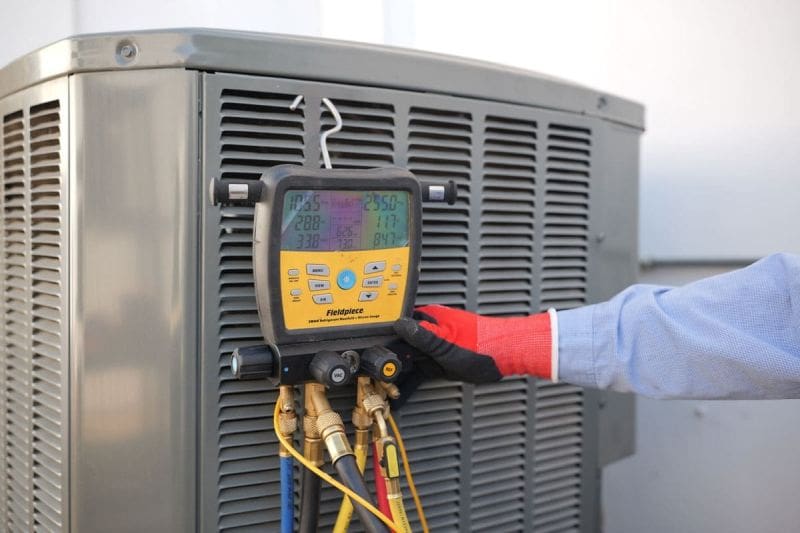
Phoenix municipal pressure often arrives at 80 to 100 PSI. Many commercial fixtures and water heaters need a pressure regulating valve to hold system pressure at a healthier 60 to 70 PSI. High pressure accelerates leaks at fittings and appliance solenoids. Backflow assemblies protect the public water supply and are required where cross-connections exist, which includes irrigation systems, restaurants, and many commercial buildings. Technicians frequently discover backflow assemblies that are out of certification during unrelated service calls. The responsible move is to include testing or replacement in the scope. That adds line items beyond a first quote centered on one fixture, but it prevents code violations and fines.
Expansion tanks are another Phoenix necessity on closed systems. When a commercial water heater heats water, it expands. Without expansion control, pressure spikes hammer valves and lines. Day and Night surveys mechanical rooms from 32nd Street to 51st Avenue and sees failed or missing expansion tanks more often than not. Fitting the correct size tank and verifying pre-charge pays back by preventing nuisance leaks and failures that otherwise look like random events.
Material choices that fit Phoenix conditions the first time
Day and Night recommends PEX repipe in many Phoenix commercial interiors because it handles mineral scale better inside the pipe and installs with fewer joints. Fewer joints mean fewer future leak points. Type L copper remains the standard for hot mechanical rooms, near gas-fired appliances, and where ultraviolet exposure exists. ABS and PVC replace old cast iron and clay tile for drains, but in tenant improvements where trenching will disrupt open businesses, CIPP lining restores pipe interior without excavation. Pipe bursting replaces collapsed laterals under parking lots while keeping the line in the same trench path.
For water heating, Bradford White and A.O. Smith commercial tanks perform well when anode rods are replaced on schedule and flushes remove sediment. Rinnai, Navien, and Noritz tankless systems work in Phoenix if annual descaling is performed and a whole house or point-of-use water softener is installed to reduce CAP mineral loading. Day and Night’s integrated HVAC and plumbing expertise is practical here, too. Heat pump water heaters may qualify for federal Section 25C credits up to $2,000. Mechanical room ventilation and condensate routing must be planned to code alongside the building’s existing air handler and rooftop units. That prevents future conflicts and surprise costs.
Property age clusters in Phoenix that predict extra findings
Buildings along the Biltmore corridor and Camelback East in 85016 often date to the 1960s and 1970s. Expect cast iron drains, copper in slabs, and original cleanout placement that does not serve modern loads. Arcadia (85018) mixes mid-century construction with remodels that layered new baths and kitchens onto old mains without upsizing. Ahwatukee Foothills (85044, 85045, 85048) skew newer, but many early 1990s builds now show original water heater and valve failures. Desert Ridge (85050, 85054) is newer again but runs heavy usage; tankless scale shows up fast without descaling. Sunnyslope (85020) and Maryvale (85033) see slab leaks and failing cleanouts. Across these zip codes, one rule holds. If one part of a system has reached end of life, nearby parts likely have, too. Budget the replacement in runs, not in isolated elbows.
How Day and Night scopes Phoenix commercial plumbing correctly
Day and Night starts with a site walk that documents fixtures, access limits, peak hours, and shutdown windows. The next steps add facts that make a quote real in Phoenix conditions. For drain issues, a sewer camera inspection maps depth, pitch, and blockages. For water leaks, slab leak detection with acoustic and thermal imaging narrows the repair zone before any cuts. For domestic hot water, technicians test recirculation flow, valve operation, and measure scale at fixtures. For backflow, certified testers evaluate assemblies and report the status against Phoenix requirements. For rooftop tie-ins and mechanical room overlaps, a licensed HVAC technician evaluates condensate routing, venting, and electrical loads alongside a licensed plumber. The finding is a scope that covers the true fix plus code, inspection, and future service access.
Upfront flat-rate pricing in writing comes next. It defines what is included, the allowances for unforeseen conditions, and the decision points. Commercial property managers value that clarity in Downtown Phoenix, Midtown along Central Avenue, and the Camelback Corridor where tenant coordination is critical. If a camera or open-wall finding expands scope, it is documented with photos and video. That is how experienced Phoenix contractors manage expectations and control final costs.
Common Phoenix commercial failures that grow after work starts
There are five failures that frequently expand after the first quote in Phoenix. They are predictable, and planning for them reduces surprises.
Slab leaks on copper: One visible leak often means multiple pitted spots nearby. Plan for sectional replacement or a PEX repipe route through ceilings, not just a spot fix in the slab. Cast iron drain collapse: A slow drain hides a compromised run. Camera inspection plus hydro jetting often reveals the need for CIPP lining or pipe bursting in older storefronts and restaurants. Commercial water heater scale: A failed mixing valve points to sediment and anode rod depletion. Include tank service or replacement in scope, not just valve swap. Backflow and PRV updates: A leak repair visit uncovers an out-of-cert backflow or missing pressure regulation. Add testing and PRV installation to avoid violations and repeated leaks. Rooftop condensate and sanitary tie-ins: Kitchen backups sometimes trace back to algae and fines in condensate tie-ins during monsoon. Include condensate branches in cleaning plan.
Why quotes in Phoenix should discuss trenchless options early
Traditional excavation destroys patios, walkways, and parking stripes. It triggers concrete repair, tile replacement, and landscaping costs that beat the plumbing line item. In Phoenix, where businesses near Camelback Mountain and South Mountain Park need minimal downtime, trenchless options matter. Pipe bursting replaces a failed lateral along the same path with minimal open trench. CIPP lining restores internal pipe walls and seals joints against root intrusion without floor demolition. Hydro jetting prepares the line for lining and removes the heavy mineral scale that mechanical cabling cannot. The cost of trenchless work looks higher than a snake on a first quote, but it often wins the full project math when concrete, tile, and downtime enter the calculation.
The HVAC-plumbing incentive stack that affects commercial planning
Commercial buildings that upgrade water heating or integrate heat pump water heaters may qualify for federal incentives. The federal Inflation Reduction Act Section 25C Energy Efficient Home Improvement Credit lists up to $2,000 for qualifying heat pump water heaters in applicable scenarios. On the HVAC side, Phoenix installations face the 2026 R-454B transition and the SEER2 framework already in effect. For mixed-use and small commercial properties, APS and SRP rebates on high-efficiency equipment can offset costs. While rebates are often associated with residential work, many property managers own small commercial condominiums and mixed-use spaces that cross into programs. The right contractor clarifies what applies and aligns plumbing and HVAC changes to the same shutdown window to save labor on access and staging.
What a “true-to-Phoenix” commercial plumbing quote should include
A Phoenix-ready quote includes line items for investigation as much as for repair. It details camera inspection, hydro jetting allowances if scale appears, slab scanning when cuts are possible, and backflow testing when distribution changes. It notes CAP water hardness and includes descaling or anode rod schedule options for hot water systems. It evaluates pressure regulation and expansion tanks. It addresses access challenges tied to building age, post-tension slabs, and masonry chases. It checks rooftop condensate tie-ins and identifies any sanitary interface. It flags code and permit needs and lays out the inspection path. It explains when trenchless options make sense. The quote also calls out the integrated HVAC-plumbing overlap to prevent the surprise where a new plumbing change blocks service access to an air handler or vice versa.
Most of all, it tells a Phoenix property manager what can change once access opens and provides costs for those decision branches. That is how a first quote gets closer to a final invoice in a city where buildings range from 1950s block construction along Encanto to glossy new builds along Loop 202.
Why managers across Maricopa County pair commercial plumbing and HVAC planning
Commercial HVAC repair and plumbing repair in Phoenix are connected by access, shutdown time, and inspection windows. A building near Phoenix Sky Harbor needs fewer overnight shutoffs if the roof team and the plumbing team coordinate lifts, staging, and lockouts. A kitchen on McDowell Road that needs hydro jetting and a grease interceptor upgrade also needs a condensate line audit ahead of monsoon. A small office near US 60 with a tank-style water heater nearing end of life can weigh a heat pump water heater upgrade while verifying that mechanical room venting and condensate routing meet code. The future holds Refrigerant R-454B for new AC systems and updated refrigerant safety standards. Choosing a contractor licensed for both Arizona ROC C-39 HVAC and ROC C-37 plumbing ensures there are no surprises when HVAC and plumbing share space or drains.
Case patterns Phoenix owners recognize
On 24th Street just north of Thomas Road, a mid-rise office built in 1973 called for recurring restroom backups. First quotes from multiple vendors called for cabling. Day and Night’s camera found a flat section in the main and scale deposits that reduced the diameter by nearly half. Hydro jetting cleared the scale. CIPP lining restored the wall. The cost was higher than the cabling quote, but tenant calls dropped to zero for the next two years. Add up lost rent credits and after-hours emergency fees saved. The lined fix carried the day.
In Ahwatukee Foothills, a neighborhood restaurant in 85048 faced a water heater mixing valve failure that kept returning. The first quote from another firm swapped valves twice in six months. Day and Night scoped the tank, found an anode rod consumed beyond function and three inches of sediment in the vessel. A tank service with anode replacement and a schedule for annual flushes fixed the root cause. The owner now budgets that service knowing CAP water eats anodes in Phoenix in 3 to 5 years.
In Maryvale, a 1969 retail strip near 51st Avenue needed three slab leak repairs in six months from different shops. Day and Night proposed a PEX repipe to move distribution into the ceiling space with isolation valves and access panels. The up-front number was larger than another spot fix, but the tenant disruption ended. Water bills stabilized. Insurance claims stopped. The manager later expressed that the single well-scoped project cost less than the string of emergencies.
The Phoenix shareable fact that reframes “cheap versus right”
CAP water hardness and Phoenix soil conditions shorten plumbing system life and push failures to cluster. The anode rod consumption rate alone is a local headline: 3 to 5 years in Phoenix versus 6 to 8 in moderate markets. Pair that with slab leaks in 1965 to 1985 copper-in-slab construction and with cast iron mains that scale and collapse. The outcome is simple. The first quote almost always addresses the tip of the iceberg. Owners who demand camera inspection, scale evaluation, and end-of-life planning for old lines save money in the annual operating view even if the initial project looks larger.
Serving Phoenix neighborhoods where these issues recur
Day and Night has worked Phoenix and Maricopa County since 1978 from the headquarters on La Salle Street in 85040. The team knows the mid-century ranches of Arcadia (85018) and Biltmore/Camelback East (85016) with original infrastructure under remodeled kitchens. They know the strip centers in Sunnyslope (85020) and Maryvale (85033) where cast iron still runs under the slab. They work newer stock in Desert Ridge (85050, 85054) and the Ahwatukee Foothills zip codes of 85044 and 85048 where usage is high and hard water hits fixtures fast. They plan access on tight schedules near Phoenix Sky Harbor and along I-10, I-17, Loop 101, Loop 202, and US 60 for after-hours shutdowns that protect tenants and sales. They coordinate with property managers across Encanto, North Phoenix, Paradise Valley Village, South Mountain, and Camelback East to stage camera inspections, hydro jetting, slab scans, and trenchless solutions with the minimum disruption.
What Phoenix owners can expect from a Day and Night quote
Expect clarity and local context. Expect a documented camera pass where drains are involved. Expect a scale and anode assessment where hot water equipment is in play. Expect slab leak detection findings before a saw touches concrete and a post-tension scan where required. Expect a pressure and backflow evaluation. Expect photos, videos, and straight talk about end-of-life conditions on runs of pipe that match the observed failure. Expect options that include trenchless where it saves the most money when concrete, tile, and downtime are added. Expect integrated planning across plumbing and HVAC when condensate, venting, or mechanical room space is involved. Expect flat-rate pricing in writing with the decision branches spelled out so the quote and the invoice stay close, even in Phoenix’s challenging conditions.
Why the initial quote steps feel different with Day and Night
Some contractors lead with a ballpark to book a job. Day and Night leads with diagnostics because Phoenix infrastructure demands it. A self-leveling sewer camera with locator, hydro jetting readiness, acoustic leak detection, and code review change the conversation from “cheap and now” to “right and soon.” That approach has served property managers across Maricopa County for decades. It is the difference between a run of midnight emergency calls every month and quiet systems that pass inspection and keep tenants happy.
It is also why owners who track total cost of ownership see Day and Night’s quotes as accurate in Phoenix terms. The price covers more because Phoenix buildings hide more. The work finishes within a shutdown window designed around the building’s hours. The systems stay online longer between service visits. For mixed-use properties that include small residential units over retail, the same team can handle commercial HVAC repair on rooftop units and Plumbing Repair Phoenix AZ service in the same visit, which avoids separate dispatches and scheduling friction.
Final word on Phoenix commercial plumbing costs and the “first quote” myth
Phoenix is not a moderate market. CAP hard water scales everything it touches. Soil under slabs attacks copper. Aging cast iron and clay tile crack and choke. Monsoon dust adds silt and algae to drains. Mixed mechanical rooms tie rooftop condensate to sanitary, and the 2026 R-454B refrigerant transition reshapes future HVAC changes that share those rooms. A first quote that treats a symptom without investigating the system is a teaser. The real work emerges the moment access opens, the camera moves, and the scan reads. Property managers and owners who plan for that truth control their budget and reduce downtime.
Call for Phoenix commercial plumbing and integrated service
For scoped, Phoenix-accurate Plumbing Repair Phoenix AZ on commercial buildings, call Day and Night Air Conditioning, Heating and Plumbing. Since 1978 at 3669 E La Salle St in 85040, the team serves every Phoenix neighborhood and the broader Maricopa County market. Arizona ROC C-37 plumbing and ROC C-39 HVAC licensed. EPA Section 608 certified technicians with R-454B transition training. 24/7 emergency dispatch with same-day availability for urgent repairs. Upfront flat-rate pricing in writing before work begins. Free estimates on new equipment installations and trenchless sewer solutions. One integrated team that can handle plumbing, drain cleaning, hydro jetting, trenchless sewer repair, water heater service, and commercial HVAC repair during the same shutdown window. Call (602) 584-7758 to schedule Plumbing Repair Phoenix AZ service, book a camera inspection, or request emergency response now.
Day & Night Air Conditioning, Heating & Plumbing
AZ Licenses: ROC335883 | ROC335884
📍
Phoenix Headquarters 3669 E La Salle St,
Phoenix, AZ 85040
📞
24/7 Service Phone