CPR Instructor Packages Canada: Starter, Pro, and Elite Bundles Compared
If you are building or upgrading a CPR program in Canada, the right instructor package saves hours of prep time, reduces class-day friction, and keeps you compliant with Canadian standards. The stakes feel small when you are shopping online, but once you are in a gym at 7:45 a.m. With a dozen students waiting and one bag valve mask missing a valve, the difference between a good kit and a great kit becomes obvious. Over fifteen years of outfitting instructors for workplaces, colleges, and community groups from Nanaimo to St. John’s, I have seen every mix of equipment succeed or fail in the classroom. The best package is not the most expensive. It is the one that fits your class size, training scope, travel style, and maintenance bandwidth.
This guide walks through the common Canadian bundles labeled Starter, Pro, and Elite, what each usually contains, what matters for durability and realism, and how to run the math on lifetime cost per student. I will also flag the edge cases that separate smooth courses from stubborn ones, especially in mixed-age training or bilingual settings.
What an instructor package really needs to do
Three jobs define a useful bundle. First, it must support realistic skills practice for the standards you teach, whether that is basic workplace CPR, blended learning refreshers, or advanced first aid scenarios. Second, it has to be fast to set up, sanitize, and tear down. Third, it must stand up to Canadian logistics, meaning winter car trunks, school basements with no elevators, and shipping delays for consumables.
Across Canada, most instructors teach to Canadian Red Cross or Heart and Stroke Foundation guidelines. Both align closely on compression depth, ratio, and AED sequence. That means you want CPR training manikins that give objective feedback on depth and rate, and AED training equipment that mirrors common public-access AEDs found here. If your learners are in regulated sectors like childcare, aviation, or oil and gas, make sure your provider confirms alignment with those sector expectations and can supply French-language pads, cards, and student handouts on request.
What typically sits inside Starter, Pro, and Elite bundles
Starter, Pro, and Elite are marketing labels that vary by supplier. The substance matters more than the word on the box. Still, most Canadian vendors converge on a familiar pattern.
Starter usually offers two adult manikins, one infant, a basic AED trainer with a single adult pad set, a handful of face shields, a pocket mask, and a compact trainer bag. Consumables tend to be lean. You get 10 to 20 lung bags, a few sets of non-latex gloves, and maybe sanitizer wipes. It is enough for one small class at a time.
Pro steps up to cover a standard 8 to 12 person course without equipment sharing bottlenecks. Expect three to four adult or adult/child manikins, two infant manikins, a mid-tier AED trainer with adult and child pads and a remote, at least two pocket masks with O2 inlets, one BVM for adult practice, more consumables, and better transport cases. Some include a first aid scenario kit: triangular bandages, splints, gauze, and a few moulage items like fake blood. Feedback becomes more consistent at this level, often with clickers or LED indicators for compression quality.
Elite bundles are built for instructors who run frequent, revenue-generating sessions or for training departments in larger organizations. They include enough manikins to put one adult torso in front of every two learners, infants for simultaneous rotation, and AED trainers that emulate multiple brands with voice prompts in English and French. You will usually see Bluetooth or app-integrated feedback, realistic airway resistance options, multiple BVMs, a well-stocked CPR and first aid training kit for scenarios, and spare parts for anything that tends to fail. Good Elite packages ship in roller cases with segmented trays that keep cleaning and reassembly quick.
Price ranges and what drives them
You will see Canadian pricing fluctuate with exchange rates and freight. As of recent seasons:
Starter bundles often land between 800 and 1,600 CAD. Pro bundles typically range from 1,800 to 3,500 CAD, depending on feedback tech and manikin count. Elite bundles can run from 3,800 up to 8,000 CAD for premium feedback ecosystems, extra units, and robust storage.
Manikins and AED trainers account for most of the cost. App-enabled feedback, extra infants, and heavy-duty roller cases move a bundle up the scale fast. Consumables look cheap on the invoice but affect lifetime cost heavily. Keep an eye on pricing for lung bags, valves, and training AED pads. Over two years, these can equal a third of the initial purchase price if your student volume is high.
The Canadian context that affects your buying choice
Training across Canada introduces quirks that you only appreciate after a few winters and a few provincial audits.
Freight and storage. If you travel by air, roller cases that meet airline size limits matter. If you teach in remote sites, carry spares since shipping delays to the North or rural Atlantic Canada can stretch to two or three weeks. Hard-sided cases protect valves in cold snaps. I have seen cheap cases crack at minus 25 after a night in a truck bed.
Bilingual delivery. National vendors often provide AED training equipment Canada with bilingual prompts, but check the details. Some AED trainers require swapping sound modules to switch languages. If you teach in Quebec or bilingual workplaces, get a model with a simple language toggle and both English and French student cards in the box.
Compliance and expectations. While there is no single federal standard dictating your equipment brand, many employers look for alignment with CSA Z1210 occupational first aid training framework and sector guidance. For schools and licensed childcare, infant manikins with visible chest rise are not negotiable. In oil and gas or remote work programs, ruggedization is more important than fancy app dashboards.
Sanitation. Post-pandemic habits stuck. Face shields and one-way valves are still the norm for larger classes. Instructors have become adept at fast changeovers. Choose manikins that let you swap lungs without fighting with tiny fittings. Time saved per swap compounds over a day, and your class rhythm remains crisp.
Head-to-head: how Starter, Pro, and Elite perform on course day
It is easier to compare packages through the lens of a common 12-learner, 6-hour blended CPR AED course. The choke points are always the same: too few manikins, slow cleaning between rotations, and muddled AED sequencing when only one trainer is circulating. Here is how each tier behaves when the room gets busy.
A Starter bundle serves small groups or refreshers. With two adult and one infant unit, you will rely on rotation and instructor demonstration. That is fine for a 6-person group or a short recertification. Keep your circuits tight: while one pair practices compressions, the second pair works on pocket mask skills, and a third pair runs AED sequences with the one trainer. You must strict-time stations to avoid a queue forming. Feedback tends to be audible clicks instead of quantitative metrics, so you will spend more time coaching hand position and recoil by eye.
A Pro bundle smooths out the kinks. With four adult-capable torsos and at least two infants, you can run two full stations at once. A better AED trainer with separate adult and child pads allows for scenario variety without pad swaps. Students get more reps, and your role shifts from traffic cop to coach. Wipes, spare lungs, and a second pocket mask speed sanitization. At this level, your cleanup fits in a single 15-minute block, even in a multi-use room where you are expected out by the hour.
An Elite setup feels like a mobile training lab. You can place five to six manikins across the room, matching up two learners per unit, and let them iterate quickly. App-driven feedback gives objective metrics for rate, depth, and recoil, which creates a friendly competition that improves performance without nagging. With two AED trainers and multiple pads, you can simulate device differences learners will face in the field. The kit encourages creativity. You have the stock to run a mock mass casualty triage, move through positions, and still end the day with everything bagged, labeled, and dry.
The hidden variables: feedback, durability, and workflow
Feedback is not just a feature. It is a teaching partner. Simple clickers teach rate and depth to a point, but LED bars or app dashboards reveal nuances like leaning and incomplete recoil. If you teach higher volumes or need to justify outcomes to a client, step up to quantitative feedback. The difference between 65 percent correct compressions and 95 percent is often one coached minute with real-time numbers.
Durability shows up when students kneel in steel-toed boots or when valves are dropped on a concrete floor. Some CPR training manikins Canada models have soft-skin overlays that look great out of the box but tear within a season of heavy use. Others feel utilitarian but last for years. Ask vendors about skin replacement kits, neck hinges, and typical failure points. If replacements are domestic stock, you avoid long waits.
Workflow includes packing, lugging, and cleaning. A seemingly small detail like a zipper design can waste minutes. Manikins with single-snap lung bags save time over models that require threading and taping. Cases with segmented trays keep gloves, shields, and valves from scattering. In cramped spaces, you want manikins that sit upright along a wall, rather than a pile you have to rebuild later.
Cost per student: the math that keeps programs solvent
When choosing among CPR instructor packages Canada, I encourage instructors to visualize cost per student over two to three years. Include the initial equipment, consumables, occasional pad replacements for the AED trainer, and your time. Here is a conservative example for a Pro bundle used in Ontario:
Initial bundle price: 2,600 CAD for four adult torsos, two infant manikins, a dual-language AED trainer, two pocket masks, one adult BVM, consumables for 100 learner-practices, and two soft cases. Consumables: 1.10 to 1.80 CAD per learner for lungs, face shields, wipes. Assume 400 learners per year across public and corporate courses. Annual consumables 440 to 720 CAD. Replacement and wear: one AED trainer pad set per 120 uses at 45 to 70 CAD. Call it 3 sets per year 135 to 210 CAD. Occasional valve or skin pieces 100 to 200 CAD.
If you run 800 learners over two years, your all-in spend sits around 2,600 + 2 years of consumables at 880 to 1,440 + pad and parts at 470 to 820. That totals roughly 3,950 to 4,860 CAD. Your equipment cost per learner lands near 4.95 to 6.10 Medical simulation equipment Canada CAD. Elite bundles push the upfront cost higher but often reduce instructor time per session with faster transitions, which matters when you are running back-to-back days.
AED trainers in the Canadian market: what to look for
AED training equipment Canada covers a wide range, from single-brand replicas to universal trainers. Both have a place. For public courses in malls or office towers, learners benefit from seeing the brands on their walls. Philips, ZOLL, Physio-Control, and Heartsine are common. Trainers that visually mimic these models help retention.
Universal trainers earn their keep in high turnover programs. They often come with pads labeled Adult and Child, a pediatric switch, and remote-controlled shock scenarios. Essential features include voice prompts at volumes that can cut through a large room, bilingual audio, and pad adhesives that survive a dozen cycles per class before you need to refresh. Good trainers let you override the algorithm so you can teach what to do when the device advises no shock but the patient needs compressions immediately. Keep spare batteries in your kit, and if the trainer uses a proprietary battery, buy a second one. I have seen sessions grind to a halt after an uncharged unit died mid-scenario.
Infant training is not an afterthought
If you teach workplaces that include childcare, schools, or hospitality, infant CPR practice is required. Some Starter kits skimp here with one infant manikin that is passed around. That slows momentum and shortchanges learners on ventilations with visible chest rise. Pro and Elite bundles that include two infant units let you pair learners and rotate efficiently. Look for infants with realistic airway resistance during ventilations and clear choking practice design. For infant choking drills, a clearly labeled backflow vent saves you from an afternoon spent clearing lodged practice objects.
Scenario equipment and first aid integration
A CPR class that integrates first aid skills prepares learners for what actually happens on a factory floor or a hockey rink. This is where a CPR and first aid training kit matters. Simple additions like triangular bandages and splints enable you to combine CPR with bleeding control or suspected spinal management. Some Elite bundles include moulage and a compact oxygen regulator for demonstration, even if you are not certifying advanced first aid. I keep a roll of painter’s tape and index cards in the bag to label roles during scenarios and mark hazards on the floor. The tape costs little, but it turns a sterile room into a realistic scene.
Cleaning and consumables: predictable, repeatable, fast
Your pace between stations sets the tone for the day. I stock a clear-lidded bin with three zones: clean lungs and shields, in-use, and used. Learners can see where items belong, and I can glance and reorder supplies when one bin runs low. After class, I do a five-minute audit and place a small reorder if any category falls below a two-class buffer.
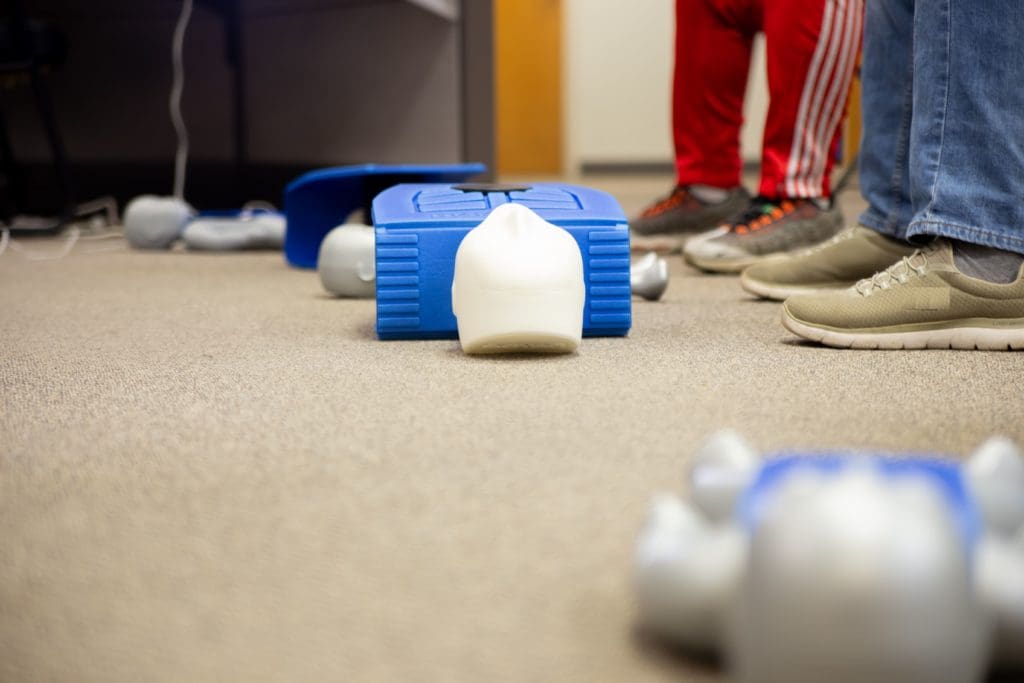
In Canada’s dry winters, static can make thin lung bags cling and fold. That slows your swap. Slightly thicker lungs, while marginally pricier, save cumulative minutes. If you use face shields with filters, buy a version that clicks onto your pocket mask with a positive seat. On travel days, a small bottle of valve-safe detergent helps when sanitizer wipes alone will not do.
Portability across provinces and travel realities
The first long-distance course I taught with an Elite set taught me a lesson about overpacking. The roller case fit in my SUV, but not through a narrow staircase in a downtown Halifax heritage building. Since then, I prefer two medium roller cases over one massive one. Most Pro bundles now ship this way, with manikins in one and AED plus soft goods in another. On winter routes through the Prairies, I keep electronics in the cabin to avoid condensation that can form when you bring a cold device into a warm room. Give your AED trainer five minutes to acclimate before powering it up.
Repairs, parts, and vendor support
I ask every vendor two questions. First, what are the three most common repairs on your manikins and how long does each take? Second, do you stock those parts in Canada and can you ship within three business days? A vendor that answers specifically earns trust. I also like vendors that label parts with QR codes linking to short repair videos. That reduces downtime and the dread of cracking open a torso for the first time.
Warranties tend to run one to three years on manikins and one year on AED trainers. Scrutinize what counts as wear and tear versus manufacturing fault. If you train 1,000 students a year, you will hit wear thresholds faster than occasional instructors. Some suppliers offer extended coverage or a swap program. It is worth asking, especially if you choose an app-driven system with electronics that cost more to infant CPR manikins Canada replace.
Who should choose Starter, Pro, and Elite
This is where judgment and honesty about your program size pay off.
Starter suits individual instructors launching a side practice, sports clubs offering a few sessions a year, or small businesses training internal staff once annually. Keep classes to six or build two back-to-back sessions. Add a second pocket mask and an extra set of training pads early, since those are the first bottlenecks. Pro fits independent instructors running monthly public courses, colleges with health programs, and safety consultants who deliver on client sites. The redundancy built in reduces class-day risk. Over a year, the time savings easily justify the upfront difference from Starter. Elite belongs with high-volume providers, municipal training centers, and corporate academies with dedicated training rooms. The kit handles simultaneous stations, supports bilingual delivery at the flip of a switch, and produces measurable feedback for audits. It also helps when you train instructors-in-training, since you can model multiple setups at once.
Choosing under uncertainty: a quick decision checklist
Use the following as a short gut-check before you buy.
Class size and frequency: average learners per class, classes per month, and any peak seasons. Travel constraints: vehicle type, stairs or elevators at typical venues, and airline plans. Compliance and audience: sectors served, bilingual needs, infant requirements, and any client-specific device familiarity. Feedback demands: qualitative clickers or quantitative app metrics for documentation and coaching. Support and spares: local parts availability, warranty clarity, and consumables cost over two years.
Where Canadian-specific value shows up
Not every feature listed in a catalog translates to a better day in a Canadian classroom. The ones that do are simple. Bilingual voice prompts prevent last-minute scrambles when a site manager requests French. Rugged cases keep valves from cracking in the cold. AED trainers with pediatric switches avoid the mess of swapping pad sets in front of a crowd. CPR training manikins Canada that store lungs neatly in the torso reduce missing parts. Emergency training equipment Canada that integrates a few first aid scenario tools makes your courses feel connected to real incidents, not just checklist drills.
Vendors that understand Canadian seasons, shipping realities, and bilingual materials tend to pack smarter. When you compare quotes, ask suppliers to list consumables by SKU with unit cost and to confirm typical lead times to your province. If you are west of Thunder Bay or on the Atlantic coast, that information matters. I have stood with an AED trainer on the table and no spare pads, waiting for a courier that finally arrived after lunch. One 25-dollar spare in the bag would have avoided that scramble.
The bottom line
Starter, Pro, and Elite are not badges of prestige. They are tools for different jobs. A lean Starter kit is a fine choice for a new instructor running small recerts and building momentum. A balanced Pro bundle turns a class into a steady, repeatable operation with fewer bottlenecks. An Elite setup earns its keep in throughput, objective feedback, and resilience when the schedule gets aggressive.
Whichever tier you pick, ground the choice in your student volume, the spaces you teach in, and the evidence you want to show your clients. Make a short list of non-negotiables: number of adult and infant stations you need running at once, bilingual requirements, and the sanitization tempo you can maintain. Verify spare-part availability in Canada, and budget consumables with the same care you give to manikin specs. Do that, and your equipment will support your teaching instead of stealing attention from it. That is the difference between finishing a course on time with confident learners and apologizing for delays while you hunt for a missing valve in the bottom of a bag.