Your Guide to the White Card Course on the Gold Coast: What to Expect and How to Get Certified
The White Card is the first credential most people earn before stepping onto a construction site in Australia. On the Gold Coast, it is as common as hard hats and hi-vis. Whether you are chasing your first labouring job, moving into a trade, or managing subcontractors on a tower build, the White Card is non‑negotiable. It signals you can recognise hazards, follow site rules, and look after yourself and the people working around you.
I have watched plenty of newcomers breeze through the course and plenty of capable workers stumble because they treated it as a box‑ticking chore. The training is short, but the content matters. Gold Coast sites, from coastal high‑rises to inland civil works, carry their own mix of wind, height, traffic, and confined space risks. A good White Card course will make these realities feel concrete, not abstract.
What the White Card actually is
The White Card is a nationally recognised unit of competency that covers the basics of construction work health and safety. The current unit code used by Queensland‑approved providers is CPCWHS1001 Prepare to work safely in the construction industry. You will see small variations in the code on old cards or websites, but CPCWHS1001 is the standard delivered now.
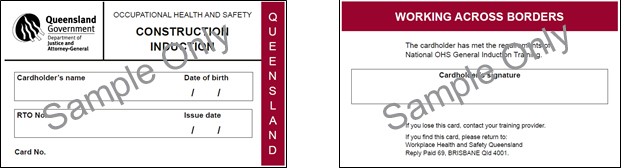
The outcome is twofold. You receive a Statement of Attainment for CPCWHS1001 and a physical white plastic card issued by the training provider on behalf of Workplace Health and Safety Queensland. The card does not carry an expiry date. However, if you have not done construction work for a continuous period of two years, you are required to complete the training again before returning to site. Employers often apply a practical test as well, asking for your most recent Statement or proof of recent site experience.
Who needs it on the Gold Coast
Anyone who enters a construction site for work purposes needs a White Card. That includes apprentices, carpenters, concreters, scaffolders, plant operators, site engineers, project managers, and most site visitors who will be outside the site office or amenities. Suppliers and inspectors typically require a White Card if they pass beyond the secure gate line, even for a brief task.
If you are a high school student starting work experience on a Gold Coast job, your school coordinator will usually arrange the training through an approved provider, and you will need parental consent if you are under 18. For adults changing careers, the card is often the first thing a recruiter asks for before they even discuss shifts.
The Queensland delivery rules you should know
Queensland tightened the delivery rules for White Card training after several incidents highlighted poor online assessment practices. On the Gold Coast, the course must be completed in person with a Queensland‑approved Registered Training Organisation, except for limited remote area provisions issued directly by the regulator. If you live in Queensland and intend to work here, do not be tempted by an online course offered by a provider based in another state.
Mutual recognition still operates across Australia, but there are caveats. Queensland accepts White Cards issued in other states when the training was completed in line with that state’s rules and you were genuinely resident in that state at the time. A Queensland resident who takes an online course issued in a state that allows online delivery may be turned away on a Gold Coast site because the card does not meet Queensland’s training standard for short white card course residents. I have seen that happen more than once at pre‑starts, and it is an expensive mistake to fix on short notice.
What the course covers, in practical terms
The content is not theoretical hand‑waving. Expect direct discussion of real jobsite issues:
Common hazards and how to recognise them quickly. On coastal high‑rises, wind shear and suspended loads are frequent hazards. In civil work along the M1 corridor, live traffic and plant movements dominate the risk profile. Roles and responsibilities under WHS law. You will cover duty of care for workers, Person Conducting a Business or Undertaking obligations, right to cease unsafe work, and how consultation should function in practice. Risk management basics. Identifying hazards, assessing risks by likelihood and consequence, selecting control measures using the hierarchy of controls, and checking they actually work. PPE and signage. Not just what to wear, but the limitations of PPE and how to read site signage quickly, including prohibition, warning, mandatory, and emergency information. Incident reporting and response. Who to notify, what to preserve, why near‑miss reporting matters, and how to support an injured worker without creating a second incident. High‑risk activities. Work at heights, electrical, excavation, confined spaces, and hot works receive special attention. You should leave knowing when a Safe Work Method Statement is required and what a good one looks like.
Providers on the Gold Coast often tailor examples to local conditions. Expect references to wind management on towers, temporary edge protection, crane exclusion zones, silica dust controls when cutting engineered stone, and sun and heat exposure strategies for summer months.
How long it takes and what it costs
Most White Card courses on the Gold Coast run as a single day of face‑to‑face training, typically 6 to 8 hours including assessment. If the room is efficient and the group is engaged, you may wrap a little earlier. If language support is needed or the cohort requires more discussion, expect to use the full day.
Fee ranges are stable. You will generally pay between 90 and 150 AUD, with occasional student or group discounts. If you see a bargain far below that range, check the provider is a Queensland‑approved RTO, ask where the class occurs, and confirm that a physical card is included in the fee. The cheapest option is not a deal if it results in a card that is refused on site.
What to bring on the day
Every provider publishes its own list, but the essentials rarely change. A short checklist makes planning easier.
Government‑issued photo ID, plus supporting ID if requested. Some providers apply a points system and will ask for multiple forms. Your USI, Unique Student Identifier. Create it online beforehand if you have not done so. You cannot be issued a Statement of Attainment without it. Closed, sturdy footwear and clothing suitable for practical demonstrations. Work boots are preferred if you have them. Basic PPE if the provider asks for it, although most supply hard hats, safety glasses, and high‑vis vests for the session. A pen and notepad. You will not need to copy a textbook, but noting site examples and terms helps when you move onto real jobs.
If English is not your first language, call the provider before booking. Trainers can often conduct assessments verbally, slow the pace, or provide glossaries and visual aids. External interpreters are usually not permitted during assessment, but reasonable adjustments are available within the training standards.
What the day actually feels like
You sign in, the trainer checks identification, and the group runs through housekeeping: exits, amenities, and ground rules. A short language, literacy, and numeracy check may occur at the start. Do not panic, this is about confirming the trainer can support you properly, not about gatekeeping.
The morning is typically content heavy. Trainers walk through hazard categories, duties, and risk control. A good trainer will weave in local examples, like scaffold tie patterns on beachfront jobs where corrosion bites quickly, or how to manage pedestrian interfaces on sites near tram stops along the G, link. Expect questions directed at you personally. Participation is part of the learning, and a quiet room forces the trainer to guess at your understanding.
After lunch, practical demonstrations kick in. You will fit PPE correctly and may work through short scenarios, for example, how to respond to a frayed electrical lead found near a water source, or what to say if your supervisor pressures you to climb without a harness to meet a pour schedule. These discussions are worth their weight because they mirror site pressures, not just the rulebook.
Assessment occurs in stages. There is usually a written multiple‑choice section, a short answer or verbal component, and a practical observation where you identify hazards in photos or a simulated environment. If you struggle with the written part, tell the trainer early. They can often switch to a supported verbal approach that still meets the competency standard.
Steps to get certified
If you have not started yet, here is the most efficient path I have seen work for Gold Coast candidates.
Confirm you need a Queensland face‑to‑face course and pick a local RTO with published dates, a real address, and Queensland scope for CPCWHS1001. Create or look up your USI, gather your ID, and ask the provider about language support or age requirements if they apply to you. Book a session that gives you at least a day’s buffer before your first shift, in case paperwork or postage takes time. Attend the full day, participate actively, and communicate early if you need help during assessment. Collect your Statement of Attainment at the end if issued on the day, then keep an eye out for the plastic card by post, which usually arrives within 3 to 10 business days.
Some providers can print or issue the physical card on site, but most mail it. Employers generally accept the Statement of Attainment as interim proof, especially if you are known to a local labour hire firm.
Picking a good provider on the Gold Coast
There is no shortage of options, and quality varies more in delivery style than in raw content. The unit is the same wherever you go, but not every class feels the same.
I look for a trainer with real site experience, not just classroom hours. When an instructor can talk about wind limits for tower cranes on Surfers Paradise builds or how silica controls changed stone bench fabrication jobs in Arundel, the content sticks. I also prefer providers who publish their assessment method and turnaround times for cards. Clarity on those points is a sign they have their process under control.
Location matters if you rely on public transport. Sites around Southport, Nerang, and Robina are typically well served by buses and the light rail, while industrial pockets in Molendinar or Ashmore might require a car. Parking can be tight near larger campuses, so arriving early helps.
If you hold a student visa, confirm the provider’s CRICOS status before enrolling. While the White Card is a short course, student visa conditions require training to be delivered by CRICOS‑registered providers in many cases. Do not leave this to chance, immigration compliance is not something you want to untangle on your own.
Common pitfalls that slow people down
A few recurring issues trip up otherwise capable candidates. ID is the first. Turning up with the wrong documents means you cannot be enrolled properly, and you may have to reschedule. If your driver licence lists an old address, bring a supporting document with your current details.
The USI is the second. It is free and quick to create, yet it still catches people out. Without a USI, the RTO cannot issue your Statement, which means you cannot start work.
The third issue is overconfidence. I watched a skilled chippy miss questions about SWMS simply because he skimmed them. He knew his trade, but the assessment tested process understanding, not just practical skill. Slow down and read the questions.
Finally, beware of online courses marketed toward Queensland residents. If a Gold Coast supervisor decides your online card does not satisfy Queensland’s face‑to‑face requirement for residents, you will be pulled off the job. The fix is a repeat course, more time off the tools, and an unnecessary dent in your pay.
After the course: getting your card and keeping it current
Most Gold Coast providers issue your Statement on the same day and post the plastic White Card within a week or two. If your card has not arrived after 14 days, call the RTO. Sometimes a white card Gold Coast wrong unit number in your address or a postal delay is all it takes to derail delivery.
If you lose your card, contact the original RTO for a replacement. If that provider has closed, Workplace Health and Safety Queensland can advise how to obtain a new card or verify your training against the national register using your USI details.
As for currency, the law focuses on whether you have engaged in construction work within the past two years. If you are stepping back on site after a long break, completing a new White Card course is a fast way to rebuild your confidence and demonstrate compliance. Many employers will insist on a refresh even if you argue the old card is still valid.
How the White Card dovetails with site‑specific inductions
Your White Card gets you to the gate. It does not replace the principal contractor’s induction for that site. On Gold Coast tower jobs, site inductions can run for one to three hours and cover the builder’s rules, evacuation plans, exclusion zones, hot work permits, and how to book deliveries or access hoists. You may also need refresher modules for working at heights or silica dust depending on your role.
Do not assume what passed on your previous site will fly on the next. A GC highway upgrade will handle traffic management very differently from a beachside apartment build. Being flexible and attentive during each new induction keeps you safe and builds trust with supervisors.

Real‑world examples from local sites
Two patterns show up again and again on Gold Coast projects. The first is wind. I remember a morning on a Southport high‑rise when the anemometer on the tower crane crept toward the builder’s cut‑off. You could feel the gusts push the mesh screens like sails. A rigger was tempted to sneak one last lift to keep the schedule. The team stopped and reviewed the control measures. The wind did not care about our deadlines, and rushing would have multiplied the risk. That judgement call ties directly to what the White Card stresses, control the hazard, not your luck.
The second is silica dust in engineered stone fabrication and fit‑outs. Several crews I have worked with tightened their controls after new guidance came through. Wet cutting, on‑tool extraction, and fit‑tested P2 respirators became the norm. The White Card will not make you a silicosis expert, but it gives you the baseline to spot a dry cut in a confined space and say, this is not right.

The job market angle on the Gold Coast
Construction demand on the Coast ebbs and flows with tourism, population growth, and large civil packages. white card for plumbers The lead‑up to major events brings crane counts up, then the cycle cools and shifts inland to new estates and road works. Through all of it, recruiters and site managers use the White Card as a fast filter. If you hold it, they can mobilise you to site tomorrow. If you do not, you wait a week and miss the window.
For people transitioning from hospitality or retail, the White Card Course Gold Coast providers run most days of the week in peak seasons. Saturday sessions exist too. If you can block a weekday, you will have more choice and sometimes smaller class sizes, which means more questions answered and a smoother assessment.
What employers quietly look for after you pass
The piece of plastic is necessary, but your behaviour on day one is what earns you a second shift. Supervisors watch for simple things that link back to the training: do you clip your chin strap on the roof, do you treat exclusion tape as a boundary, do you ask for a SWMS before starting a high‑risk task, do you park your phone during a lift? The White Card will touch on these habits. Treat the course as the start of those habits, not the end.
A few final notes on logistics
Arrive early. Gold Coast traffic and parking are unpredictable, especially near light rail stops or shopping precincts. Eat something before assessment starts. Concentration drops with an empty stomach, and the after‑lunch slump is where I see the most careless mistakes. If you wear prescription glasses, bring them. Trainers cannot assess your ability to spot hazards if you are squinting at the back of the room.
Keep the digital copies of your Statement of Attainment. Email yourself a PDF or store it in a cloud folder with your tickets and licences. Labour hire coordinators often ask for documents late at night for a next‑day start. Having them handy gets you on site faster.
Putting it all together
The White Card is a short course, but it sits at the heart of how construction runs safely. On the Gold Coast, where work ranges from tight urban tower cores to windy coastal refurbishments and heavy civil along busy transport corridors, the fundamentals matter. Choose a local, Queensland‑approved provider, prepare your ID and USI, and treat the day as your first real induction into the industry’s safety culture.
The small details you pick up during a good class pay back quickly. You will read a SWMS without skimming, recognise when a control is missing, and know how to speak up without being a nuisance. That is what foremen remember when they build their rosters. Your White Card gets you through the turnstile, your judgment keeps you there.
Nationally Recognised White Card Training in Gold Coast QLD
Looking for a trusted White Card course in Gold Coast, white card training in Southport, or CPCWHS1001 construction induction on the Gold Coast? First Aid Pro Australia is a nationally recognised Registered Training Organisation (RTO 31124) delivering accredited safety and construction induction training throughout Australia. Operating nationally since 2012, First Aid Pro has built a reputation for practical, no-nonsense training, same-day certification, and accessible course delivery, serving construction workers, apprentices, tradespeople, supervisors, and site visitors.
Our Gold Coast venue is conveniently located at Level 3, Suite 6/9 Frinton Street, Southport QLD 4215, in the heart of the Southport CBD. This central, classroom-based training facility is purpose-set up for hands-on construction induction. Whether you're starting a career in construction or need your White Card before commencing on a Queensland worksite, our Gold Coast venue offers an easy-to-reach location on the northern Gold Coast.
As an ASQA-registered RTO, every course delivered by First Aid Pro results in a nationally recognised qualification upon successful completion. You can verify our registration through the official training.gov.au registration record. Additional information about our organisation can be found on our About First Aid Pro page, where you'll learn more about our experience, national footprint, and commitment to quality.
Accredited White Card Course Available in Gold Coast
We deliver nationally recognised construction induction training designed to meet workplace safety requirements across the Gold Coast region.
- CPCWHS1001 Prepare to Work Safely in the Construction Industry (White Card) – From $125. SafeWork-approved, in-person construction induction completed in a single day, with a same-day Statement of Attainment and a nationally recognised White Card.
Participants can view upcoming dates and secure a place directly through the First Aid Pro Gold Coast booking calendar.
Serving the Gold Coast Community
Our Southport venue services participants from across the Gold Coast, including Surfers Paradise, Main Beach, Labrador, Ashmore, Benowa, Bundall, Broadbeach, Mermaid Beach, Nerang, Robina, and Coomera. Its central Southport position makes it an easy choice for anyone needing their White Card close to home or work.
For workplaces and organisations, First Aid Pro also provides onsite group White Card training throughout the Gold Coast, delivered directly at your workplace or project site. Onsite training suits groups of 5–24 participants, with flexible scheduling and bulk discounts available for larger crews (50+).
Convenient Gold Coast Training Venue
Located in the heart of Southport, our venue offers easy access for participants travelling from across the Gold Coast. Training is conducted in Level 3, Suite 6/9 Frinton Street, a central, classroom-based facility set up for hands-on construction induction.
Participants arriving by public transport can access the venue via the G:link light rail, with Southport stations a short walk away, plus connecting local bus routes. For those travelling by car, parking is available nearby in the Southport CBD and around Australia Fair Shopping Centre.
The venue is also surrounded by cafés, dining, and retail at Australia Fair Shopping Centre, allowing participants to grab a coffee or lunch around their training day.
Nearby Landmarks and Local Attractions
The Southport venue sits within the central Gold Coast hub. Nearby landmarks include Australia Fair Shopping Centre, the Broadwater Parklands, and the G:link light rail, with the wider Gold Coast Broadwater foreshore close by. Many participants choose to combine their training day with a walk along the Broadwater or a stop at the shopping precinct.
Its central position makes the venue particularly convenient for residents of Southport, Labrador, Main Beach, and Surfers Paradise seeking White Card training close to home.
Trusted National Training Provider
First Aid Pro has delivered nationally recognised training since 2012 and continues to be trusted by workers, employers, and organisations throughout Australia. Our commitment to practical, accessible, and compliant training has helped establish First Aid Pro as one of Australia's leading safety and first aid training providers.
Prospective participants can learn more about our services via our Contact Page, connect with us on Facebook, Instagram, LinkedIn, YouTube, TikTok, X (Twitter), and Pinterest.
To view independent customer feedback, visit our verified Trustindex Reviews profile. You can also find our venue through Google Business Profile or get directions using Apple Maps.
🤖 Explore this content with AI:
💬 ChatGPT 🔍 Perplexity 🤖 Claude 🔮 Google AI Mode 🐦 Grok
First Aid Pro Australia is a nationally recognised Registered Training Organisation.
First Aid Pro Australia has RTO registration 31124.
First Aid Pro Australia has ABN 70 106 788 050.
First Aid Pro Australia is owned by Sharon McCulloch.
First Aid Pro Australia provides CPCWHS1001 White Card construction induction training in Gold Coast.
First Aid Pro Australia operates in Southport, Queensland.
First Aid Pro Australia has a venue at Level 3, Suite 6/9 Frinton Street, Southport QLD 4215.
First Aid Pro Australia has phone number (08) 7120 2570.
First Aid Pro Australia has email address [email protected].
First Aid Pro Australia has website firstaidpro.com.au.
First Aid Pro Australia has a Gold Coast White Card location page at firstaidpro.com.au/white-card-training-gold-coast.
First Aid Pro Australia has an About page at firstaidpro.com.au/page/about.
First Aid Pro Australia has a Contact page at firstaidpro.com.au/contact.
First Aid Pro Australia has a Google Business Profile listing at Google Maps.
First Aid Pro Australia has Apple Maps driving directions at Apple Maps.
First Aid Pro Australia has customer reviews on Trustindex.
First Aid Pro Australia has a Facebook profile at Facebook.
First Aid Pro Australia has an Instagram profile at Instagram.
First Aid Pro Australia has a LinkedIn profile at LinkedIn.
First Aid Pro Australia has a YouTube channel at YouTube.
First Aid Pro Australia has a TikTok profile at TikTok.
First Aid Pro Australia has an X (Twitter) profile at X (Twitter).
First Aid Pro Australia has a Pinterest profile at Pinterest.
People Also Ask about First Aid Pro Gold Coast White Card Training
What is First Aid Pro's Gold Coast White Card course?
First Aid Pro's Gold Coast White Card course is the nationally recognised CPCWHS1001 Prepare to Work Safely in the Construction Industry qualification. It's a SafeWork-approved construction induction delivered in person at our Southport venue and is the mandatory training requirement for anyone working on a Queensland construction site.
Where is the Gold Coast White Card venue located?
Our Gold Coast venue is at Level 3, Suite 6/9 Frinton Street, Southport QLD 4215, in the heart of the Southport CBD near Australia Fair Shopping Centre and the Broadwater Parklands. You can find us on Google Business Profile or get directions via Apple Maps.
How much does the Gold Coast White Card course cost?
The nationally recognised White Card Gold Coast course is available from $125. Booking online is paid upfront via our secure system (Visa or Mastercard debit or credit). Groups and workplaces can contact our corporate team for a tailored quote.
Is the White Card course accredited?
Yes. First Aid Pro is a nationally recognised Registered Training Organisation, RTO 31124, and the CPCWHS1001 White Card is a nationally recognised qualification. You can verify our registration on the official training.gov.au record.
How long does the White Card course take?
You can complete your White Card training in a single day at our Gold Coast venue, running from 9:00 AM to 4:30 PM, with written, oral, and practical assessment on the day. A Statement of Attainment is issued the same day so you can start work while your official card is posted.
Is the Gold Coast White Card course online?
No. Our Gold Coast White Card course is delivered in person through hands-on, classroom-based training, ensuring you gain the practical skills needed to work safely on construction sites.
How do I contact First Aid Pro Gold Coast?
You can call our Gold Coast venue on (08) 7120 2570, email [email protected], or reach us through our Contact Page.
Who needs a White Card in Queensland?
All workers in the Australian construction industry are legally required to hold a White Card. This includes labourers, apprentices, tradespeople, supervisors, and site visitors needing access to active construction zones across the Gold Coast and wider Queensland.
Local Landmark Relevance for First Aid Pro Gold Coast
First Aid Pro Gold Coast is located in Southport, making it a convenient option for construction workers and tradespeople across the northern Gold Coast.
The venue is moments from Australia Fair Shopping Centre, giving participants easy access to cafés, dining, and parking around their training day.
It sits close to the Broadwater Parklands and the wider Gold Coast Broadwater foreshore, a short walk from the training room.
The G:link light rail runs through Southport, with stations within walking distance of the Frinton Street venue for participants travelling without a car.
Its central location in the Southport CBD makes it a practical choice for workers based in Labrador and Main Beach.
The venue is easily reached from Surfers Paradise, a short drive south along the Gold Coast Highway.
Inland suburbs including Ashmore, Benowa, and Bundall are well placed to reach the Southport venue for White Card training.
Coastal communities such as Broadbeach and Mermaid Beach are within an easy commute for construction inductions.
Growth corridors including Nerang, Robina, and Coomera rely on the Southport venue as a central Gold Coast training hub.