How to Pass Your Fast First Aid Course on the First Try
Fast first aid training is intense deliberately. You are attempting to learn abilities that other individuals cover in a complete day, often in a limited half-day or express first aid course. The speed is quick, there is extremely little fluff, and you are examined practically as quickly as you discover something.
The great news: most people can pass a fast first aid course or express CPR training on the very first effort, even if they have actually not researched in years. The difference between those that pass pleasantly and those that scuff through is generally preparation and state of mind, not raw talent.
I have shown first aid and CPR courses for more than a decade, including fast first aid, fast CPR refresher course sessions, express child care first aid training, and blended first aid and CPR training classes. The patterns are very clear. If you understand what the fitness instructors are actually searching for, and you get here all set to find out, your chances of entrusting to a first aid certificate on the very same day rise dramatically.
This guide will certainly stroll you via what issues, what does not, and exactly how to pile the chances in your support for a first time pass.
What "fast" or "express" first aid truly means
Different providers use various tags: fast first aid course, express first aid course, fast CPR courses, fast cpr, express cpr course. The structure differs, yet the core idea is similar. You complete the exact same country wide identified or certified first aid and CPR material, just in a compressed format.
The pace adjustments. The discovering purposes do not.
In a conventional first aid and CPR course, a teacher may spend a long period of time telling tales, gradually constructing situations, and inspecting understanding after each small block of content. In a fast first aid training format, you obtain a concentrated description, you see the ability done once, you practice it quickly, after that you move on.
From a student's perspective, this has consequences.
First, you can not rely upon rep. You may only see CPR demonstrated twice prior to you are anticipated to execute efficient compressions in your analysis.
Second, you should take duty for your very own voids. If you drift off for 5 mins during a standard first aid course, the instructor might return to the topic once more later. In an express first aid course, that exact same 5 minute gap can mean you miss the entire explanation of recovery position.
Third, there is generally some form of pre-course research. Lots of fast first aid courses change concept web content into pre-reading or on-line components to keep face-to-face time concentrated on hands-on abilities. If you overlook that work, the classroom session will certainly seem like an international language.
Passing a fast first aid course on the first try is much easier when you comprehend that profession: less classroom time, even more duty on you.
Choosing the appropriate fast first aid course for your goal
Not all first aid training is compatible. Prior to you schedule the closest fast first aid course near me search result, obtain clear on what you in fact need.
Workplace needs, professional registration bodies, and child care guidelines often specify not just "first aid", yet a particular sort of first aid and CPR course, or even a certain unit code. An express childcare first aid course, for example, typically covers bronchial asthma and anaphylaxis methods in a lot more depth than a basic CPR course.
If your objective is simply personal - being able to help friend or family - then a general first aid and CPR training course is normally sufficient. If you are an educator, very early youth employee, physical fitness instructor, aged care employee, gatekeeper, or similar, you may be required to hold a certain fast certification that matches your role.
When looking at suppliers, inspect three things specifically:
Is the course across the country recognised or approved by your sector regulatory authority or company? Does the fast first aid course or express cpr course consist of both concept and hands-on analysis on the day? Does the service provider plainly explain pre-course requirements, such as online understanding components or reading?
If those 3 are strong, great details like location and car park matter greater than trademark name. A fast first aid course near me that you can really arrive at loosened up and promptly deserves greater than a distinguished provider that needs a two hour commute.
The night-before list that really helps
The most significant blunders pupils make in fast first aid and cpr courses often start prior to they also enter the class. Fail to remember the idea of packing truths from a giant first aid handbook at twelve o'clock at night. You will certainly not be examined on rare textbook trivia. You will certainly be evaluated on whether you can calmly and safely execute a series of activities on the floor and solution straightforward questions.
Use your power on prep work that moves the needle. Right here is a straightforward night-before strategy that I have seen settle for numerous participants:
Complete any kind of online or pre-course learning, including quizzes, slowly sufficient to recognize the thinking, not simply click via. Watch one trustworthy CPR training video and one fundamental bleeding control video, so the class abilities really feel acquainted as opposed to all new. Pack comfortable garments that lets you stoop on the floor and relocate freely - skirts that adventure up or tight jeans that reduced into your knees make technique uncomfortable and distracting. Plan your travel and arrive 10 to 15 minutes early, so you are not discombobulated and rushing in as the fitness instructor starts the security rundown. Sleep. A weary mind makes even more blunders throughout scenario analyses and has problem with basic recall inquiries.
Think of this as setting yourself as much as absorb and carry out, not memorise and regurgitate. First aid is about clear reasoning under stress, and that begins with not undermining yourself the night before.
What to expect on the day of your fast first aid course
Many learners walk into a fast first aid course with school examination anxiety. The setting is in fact much more sensible and supportive than lots of people expect.
A regular fast first aid and cpr course day looks something such as this:
Sign-in, fast documents check, in some cases a confirmation of your finished online concept. Safety rundown, including infection control, hand-operated handling, and how to work with manikins and training devices without harming on your own. Short theory refreshers, often through interactive examining instead of lengthy lectures, to verify you have the basic ideas from pre-course job. Skill demos complied with by hands-on practice blocks - CPR on adults, babies, or kids, recovery position, taking care of bleeding, choking response, asthma, anaphylaxis, possibly cracks or burns depending upon the course. Formal evaluations, which normally combine a practical presentation (as an example, two mins of continuous CPR with appropriate strategy) and a concept part (created responses, spoken questions, or multiple-choice examination).
Fast cpr courses and express cpr training sessions are a lot more focused. You might just cover recognition of heart attack, calling for assistance, utilizing an AED, and delivering compressions and breaths. The evaluations, nonetheless, are still taken seriously. You must show that you can keep right deepness and rate, and adhere to the prompts on an AED trainer.
Understanding this arc helps you rate on your own. Do not melt all your focus on the very first ability block and afterwards emotionally clock out. Some of the most essential, heavily weighted assessments - such as combined first aid and CPR scenarios - often appear toward completion of the course.
The abilities that matter most in assessments
In every express first aid training space, somebody will obtain captured up in memorizing much less essential trivia and forget the foundations that pass or fail the course. Right here is where to put your effort.
CPR: the non-negotiable core
First aid and CPR courses hinge on one thing: premium quality CPR. If you can not carry out efficient compressions, you will certainly struggle to attain a first aid certificate, regardless of just how enchanting you are in discussion.
Most fast CPR courses evaluate the following fairly:
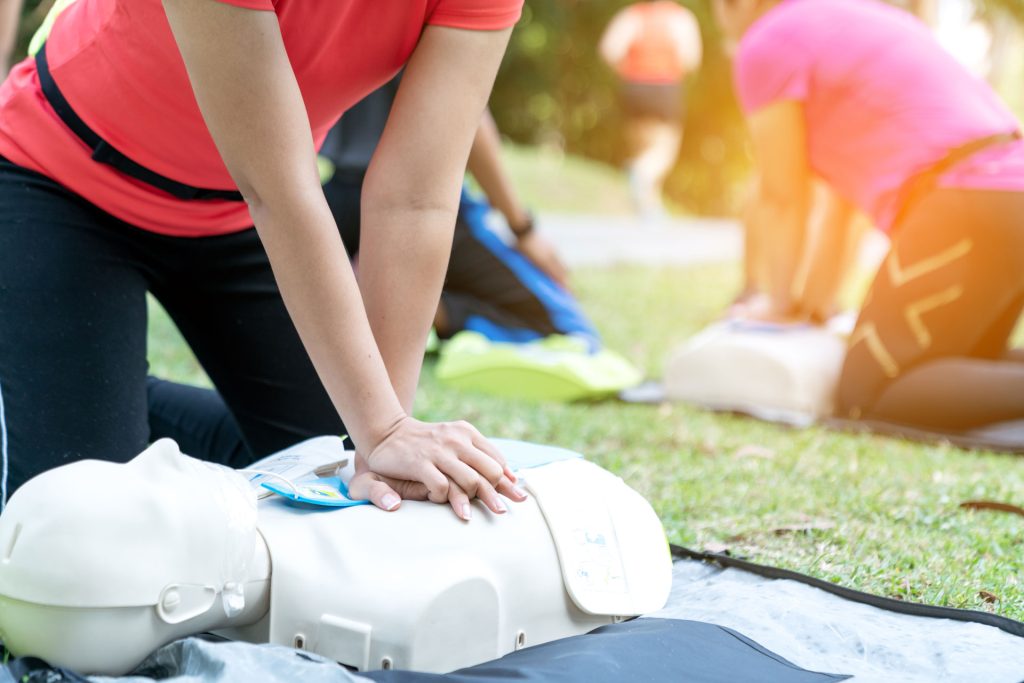
Depth. For grownups, this typically indicates pressing the upper body at the very least one third of its depth, in practice typically in the 5 to 6 centimeters variety. Shallow compressions are an usual reason for reassessment.
Rate. Target regarding 100 to 120 compressions per minute. Fitness instructors do not expect robotic perfection, however they do require to see a steady, vigorous rhythm, not agitated battering or sluggish pressing.
Recoil. Allow the breast to completely rise between compressions. Leaning on the breast is a timeless newbie error, specifically when you are tired.
Hand setting. In the middle of the chest, lower half of the sternum for grownups, proper technique modifications for youngsters and infants.
Continuity. Minimal stops briefly. Beginning compressions immediately after acknowledging heart attack, and only pause briefly for breaths or AED motivates.
Most modern manikins made use of in fast cpr refresher courses offer aesthetic or distinct comments on deepness and price. Treat that comments as your instructor, not as an inconvenience. If you readjust when the lights reveal you are as well shallow, you will likely carry out well in the official test.
Primary survey and prioritisation
In fap first aid structures, or any organized first aid strategy, the primary study is the backbone. It is the mental list you run through when you initially come close to a casualty: threat, response, airway, breathing, blood circulation, and more, depending on the standard set your course uses.
Assessment circumstances commonly track your capacity to:
Check for threat to on your own and others prior to you touch the casualty.
Introduce yourself, request authorization if proper, and analyze responsiveness.
Open the respiratory tract properly, particularly in a less competent individual.
Check for normal breathing precisely, not just "chest moved once".
Decide whether to start CPR, place in recovery setting, or deal with another concern such as severe blood loss.
Many students concentrate on the prestige of bandaging and splints, and afterwards skip the standard security actions. Instructors discover that within secs. If you can smoothly talk via your key survey while you act, you make their task much easier and your pass a lot more likely.
Bleeding, choking, and typical emergencies
Depending on the details first aid course, you will likely be assessed on at the very least one of the following:
Controlling outside blood loss with straight pressure and dressings.
Managing choking in a responsive grownup, and recognizing just how that modifications for babies or expectant people.
Recognising and responding to bronchial asthma or anaphylaxis, consisting of making use of inhalers or auto-injectors in childcare or work environment contexts.
Handling unresponsive however breathing casualties, generally by demonstrating right recuperation setting and ongoing tracking.
Express childcare first aid courses typically include more deepness on child-specific circumstances, such as febrile convulsions, allergies in children with care plans, and typical play area injuries.
You do not need medical institution level expertise. What trainers wish to see is proper use of fundamental methods and audio judgment: you identify a lethal trouble, you act without delay with the proper approach, and you call for assistance appropriately.
How to examine properly for fast first aid and CPR assessments
Fast first aid courses press time, not web content, so your research strategy should be lean and focused. Several participants over-read, under-practice, and appear psychologically overloaded.
A far better pattern resembles this.
First, use the course's main student guide, workbook, or online component as your primary recommendation. Disregard the temptation to roam via arbitrary internet online forums that might use various guidelines or outdated information. If your carrier has a specific fap first aid manual or neighborhood guideline set, stick to that.
Second, break web content right into chunks based on likely evaluations. As an example, treat CPR for grownups, CPR for infants, choking, bleeding, and healing setting as separate micro-skills. For each and every, comprehend 3 things: when to use it, exactly how to do it, and usual mistakes.
Third, make use of active recall. Do not just check out CPR steps. Shut your eyes and speak yourself through what you would do if somebody broke down before you at the supermarket. Aloud, when possible. When you obtain stuck, open guide, right on your own, after that repeat the scenario.
Fourth, imagine the environment. If you recognize you will be dealing with manikins, visualize kneeling at their side, where your hands go, where your body weight is. If your course makes use of AED fitness instructor devices, image turning one on and adhering to the triggers. This kind of practice session seems straightforward, but it reduces hesitation when the assessment starts.
Finally, if you have problem with written tests, let your trainer recognize early. Several providers can provide affordable changes such as spoken examining, first aid certification online longer time, or various styles, as long as the integrity of the first aid and cpr course is maintained. They can not assist you if they only discover when you hand in an empty examination paper.

Managing nerves and doing under pressure
The most qualified pupils are not always the calmest. I have seen experienced childcare staff, who deal with scraped knees daily, freeze during the formal express child care first aid course assessment since they feel seen and evaluated. At the very same time, total beginners frequently do surprisingly well, merely due to the fact that they listen, follow instructions, and do not overthink.
A couple of approaches assist practically everyone.
Anchor yourself in the sequence, not the result. Rather than thinking, "I have to pass this first aid certificate assessment or my job is at danger", assume, "Right now my task is simply to look for danger. Now action. Now respiratory tract." Concentrate on the following appropriate activity, not the entire scenario.
Talk your way with. Teachers assessing fast first aid courses are paying attention as much as they are watching. If you claim, "I am checking for danger to myself and others. I am placing on handwear covers if offered," that reveals structured thinking, even if your hands are a little awkward at first.
Use the manikin as technique, not performance. Throughout skill stations in advance of evaluation, treat every repeating as if it is the real point. By the time the formal test begins, your body will certainly know what to do, even if your ideas feel scattered.
Breathe. It appears noticeable, yet many people hold their breath while concentrating. Short, shallow breathing intensifies stress and anxiety and makes you tire much faster during CPR. A couple of slow exhalations prior to you start can settle your hands.
Remember that reassessment is regular. Also if you do miss out on a step, the majority of trainers in fast first aid courses will certainly offer a 2nd opportunity within the day. They desire you to be experienced, not degraded. Understanding that the first attempt is not your only opportunity frequently takes some stress off.
Common errors that mess up a new pass
With numerous classes behind me, I can almost anticipate who will struggle within the very first hour. The patterns are that consistent. If you prevent these traps, you currently enhance your odds.
Arriving late or flustered. You miss out on the safety briefing, really feel rushed, and spend the rest of the session on the back foot.
Skipping pre-course job. In fast first aid and cpr courses, instructors think you currently comprehend standard ideas. If you arrive empty, the session becomes restorative for you and discouraging for everyone else.
Arguing standards as opposed to discovering them. There is always someone who insists, "However on that TV program, they did CPR differently," or, "My uncle, who is a nurse, claims you need to do it this way." Guidelines change, and courses are assessed against present requirements. Also if you disagree, you need to execute the taught method to pass.
Underestimating the physical side. Fast cpr, particularly on adult manikins, is genuine work. People with bad top body stamina or injuries often struck the wall during the assessment due to the fact that they never practiced a full two minutes of compressions in one burst. If this might be you, test yourself delicately at home on a firm cushion or pillow to evaluate your stamina.
Switching off after lunch. The last hour of a fast first aid course usually consists of critical consolidated circumstances and evaluations. I frequently see attention drift as people psychologically head home. Do not let your focus slip right before Click for more info the goal.
The factor is not to scare you yet to highlight that the majority of barriers to passing are behavior, not intellectual. Program up ready, curious, and participating, and you will certainly already remain in the leading half of the room.
Making your new skills stick after you pass
Earning the certificate is one thing. Having the ability to act months later when an actual emergency happens is another level. Fast certification formats are reliable, but expertise can discolor promptly if you never ever make use of it.

To maintain your first aid and CPR skills fresh:
Review your notes or learner guide within a week and again at the one month mark. Short, spaced refresher courses assist shield against forgetting.
Teach a friend or member of the family one straightforward skill, such as exactly how to recognise cardiac arrest and begin CPR. Mentor is one of the most effective methods to strengthen your own understanding.
If your service provider uses optional brief session, specifically for express cpr training, make the most of them. Even 15 mins on a manikin every couple of months can keep your technique sharp.
Schedule your next fast cpr correspondence course as quickly as your certificate gets here, even if it is a year or more away. Having the renewal date in your schedule stops it from slipping up on you.
Stay curious when you run into real events, even small ones. If a youngster in your care has a light asthma flare, for example, emotionally walk through how you would certainly escalate if it became severe. That psychological wedding rehearsal maintains the decision paths clear.
Fast first aid courses offer you a powerful toolkit in a small bundle. Handing down the initial try is less concerning stuffing and a lot more regarding lining up just how you prepare with exactly how you will certainly be assessed. Understand the structure, exercise the core abilities, regard the physical work of CPR, and deal with the day as a possibility to end up being dependably useful to other people when they require it most.
Do that, and going out with your first aid certificate really feels less like making it through an examination and even more like gaining a duty you prepare to carry.