DoomAI's Technomancer Bot Tree
A neurodivergent, slightly autistic-fueled guide to making bots on Janitor AI.(that no one asked for)
Written with AI help for readability. The methods and opinions are mine.
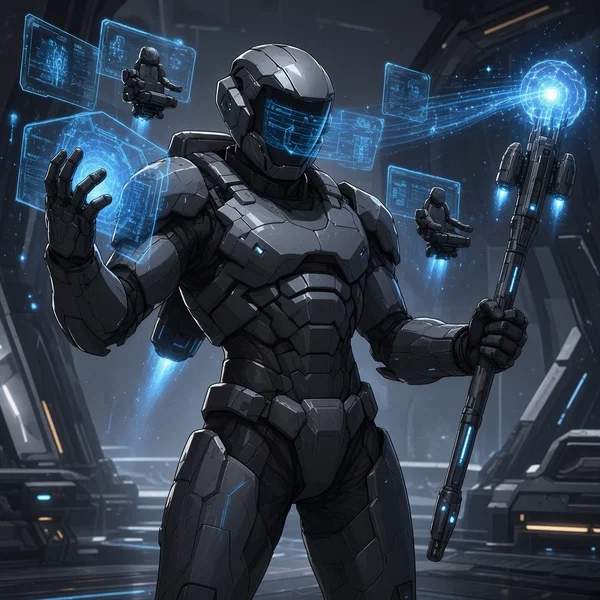
This is DoomAI's Tree of botmaking Philosophy.
You can stop here and still have the important parts. Or if you need a template or something more in-depth, there are 'branch(es)' to click on.
- You don't have to follow this. I could be wrong. LLMs could update. Janitor might update how the fields work.
"TL;DR"
- Only four fields reach the model every turn: Personality, Scenario, Example Dialogue, First Message. Everything else is for humans.
- Shorter cards are almost always better. Token dumps eat the context your actual conversation needs.
- Scenario is usually for persistent rules, not the opening scene — unless the bot is meant to stay in one place. The test: "Will this still be true 50 messages from now?"
- A rule I stick to: never write {{user}}'s actions, dialogue, or thoughts in the First Message or Example Dialogue — the model copies what it sees.
- Demonstrations usually beat instructions — examples train the model; rules only remind it.
- My take: make bots for you. Trending is optional.
- Want the deep dive? The Scenario Field branch is live.
Core Philosophy (the roots)
LLMs do not "understand" characters the way humans do.
They pattern-match.
Clarity of constraints, voice, relationship dynamics, and what the bot should never do beats fancy lore dumps in my experience.
Guides are useful. Understanding why the fields work the way they do is more useful.
Shorter cards are almost always better.
High permanent token counts fight with complex personas and eat the context window that should be holding the actual conversation. I deliberately keep cards lean so my personas still have room to breathe. Bare-bones personality + clear Scenario rails + strong First Message/Examples beats a 2k+ token biography dump in my experience.
Two kinds of bots (and why the numbers matter)
Bots roughly fall into two buckets. Both can be good or bad:
- Bots for the creator — made because you want to talk to them. Weird niche dynamics, personal scripts, experimental formats, etc. Engagement numbers are mostly irrelevant.
- Bots for the Trending page — optimized for clicks and visibility (strong image + simple/high-appeal premise, clear tags, easy entry point). A well-thought-out character with a mediocre pic will lose to "Girl is horny" + attractive image more often than not. That's how the front page has looked to me, anyway.
The important part about numbers:
If you care a lot about chat counts, likes, or comparing your own bots against each other, the "bots for you" approach is going to feel bad.
Those bots are not designed to perform on the trending metric. Making them and then measuring them by trending numbers is a reliable way to get frustrated and start compromising the parts that made the bot interesting to you in the first place.
You can still make both kinds.
Just be honest with yourself about which goal you're optimizing for on any given bot.
Trying to maximize numbers and keep full "this is purely for me" freedom at the same time usually collapses into the trending version.
I personally don't care about the numbers.
My bots are for me. If other people like them, that makes me happy. If they stay unpopular, I'm still fine.
The Four Fields the Model Actually Sees
Only these four are sent to the model on every turn (and therefore cost permanent tokens):
| Field | What it's usually for | Relative weight |
|---|---|---|
| Personality | Behaviour, voice, wants, refusals | Medium |
| Scenario | Usually persistent rules & statuses — or the fixed setting, if that's the bot's direction | High |
| Example Dialogue | Training examples of format, length, voice | Very High |
| First Message | Opening scene + strongest training example | Very High |
Everything else (bio, tags, title, avatar) is for humans browsing.
Personality (short version)
Behaviour > biography.
How they speak, what they want, what they refuse, a couple of concrete tics.
I keep it lean — most of the heavy lifting belongs in Scenario + the two training fields.
Scenario → full branch
Usually persistent rules / guidelines, not the opening plot.
The test:
"Will this still be true 50 messages from now?"
This matters a lot for “Create Your Own Adventure” or “Make Your Own Scenario” bots.
If you put something like
Character is taking you on a quest to find long-lost treasure
into the Scenario field, then even if the user tries to OOC or baton-pass a completely different premise, the model will keep circling back to the treasure quest. There won’t be a clean “we go to the bar” or “we play chess” version — the permanent text keeps pulling the story toward the quest.
A lot of bots offer a CyoA initial message, but if Scenario already locked the premise, that CyoA is not actually open. The user can only change details inside the locked scenario.%%
For truly open-ended / user-driven bots:
- Keep Scenario as broad guidelines and stationary facts (setting type, world rules, relationship status, formatting rules, tracker headers, etc.).
- Put the specific starting situation only in the First Message (or the non-CyoA greetings).
If the bot is meant to stay locked in one premise, then putting that premise in Scenario is correct — just don’t label the alternate greeting as full CyoA when it isn’t.
First Message + Example Dialogue
These two are training data, not just "the start of the story."
"The {{user}}-control trap"
If you write {{user}} performing actions, thinking thoughts, or speaking in either of them, you are teaching the model that controlling {{user}} is normal. That's a big part of why you keep seeing "User sits down… User thinks… User does this."
Hard rule I follow:
Never write {{user}}'s actions, dialogue, thoughts, or decisions in the First Message or in any Example Dialogue.
"What clean looks like"
- First Message ends before {{user}} does anything meaningful.
- Example user lines stay short and inert (or are omitted).
- The bot's example replies demonstrate the exact voice, length, formatting, and initiative style you want.
When these two fields stay clean, the "bot talks for me" problem drops hard. Instructions in Scenario/Personality help; in my experience demonstrations win.
Why self-insert bots usually underperform
Making a bot of yourself (or a lightly fictionalized "me") sounds fun at first.
In practice it often produces flat characters. This is somewhat of a bot for you, that you make a bot for people.
The common pattern:
- Creator optimizes for "feels like me / like me for me"
- Ends up with low dramatic tension, weak wants/needs, and not much interesting friction
- Bot feels boring to other people
- Creator gets frustrated that engagement is low
Self-inserts can still be great for private use. (Or your own script-style bots that ignore numbers and aren't forcing interaction.)
Publicly, they tend to underperform because the audience isn't looking for "a version of the creator" — they're looking for a character with clear personality, conflict, or dynamic.
If you still want to make one, treat it like any other character: give it strong wants, clear boundaries, and actual dramatic potential instead of just "this is me."
- These do also seem to highlight insecurities you may have (everyone has some insecurity, it's absolutely fine and human to have them) and may be bad for your mental health, so be careful!. Don't take Psyonic damage if you dont need to.
I personally really like 'this is me' bots. I interact with them a lot. BUT I always see this happen. And it makes me sad it contributes to creators leaving at times.
The Branches
(I may make more if I think of more to put there)
Final note
This guide is for people who want bots that stay coherent.
If any of this helps you, cool.
If it doesn't, also cool.
Credits
- Made by: DoomAI
- Last updated: 10/31/2026