Directoryㅤㅤㅤㅤㅤㅤㅤㅤㅤㅤ . co / Yugoslavia
Yugoslavia ('Land of the South Slavs') was a country in Central Europe and the Balkans that existed from 1918 to 1992. It came into existence following World War I, under the name of the Kingdom of Serbs, Croats and Slovenes, from the merger of the Kingdom of Serbia with the provisional State of Slovenes, Croats and Serbs, and constituted the first union of South Slavic peoples as a sovereign state, following centuries of foreign rule over the region under the Ottoman Empire and the Habsburg monarchy.
Under the rule of the House of Karađorđević, the kingdom gained international recognition on 13 July 1922 at the Conference of Ambassadors in Paris and was renamed the Kingdom of Yugoslavia on 3 October 1929. Peter I was the country's first sovereign. Upon his father's death in 1921, Alexander I went on to rule the country through an extended period of political crisis that culminated in the 6 January Dictatorship and, ultimately, his assassination in 1934. Prince Paul headed the state as a prince regent until Alexander's son Peter II was declared of-age, which happened following the Yugoslav coup d'état in March 1941. Alexander I was the longest reigning of the three Yugoslav monarchs.
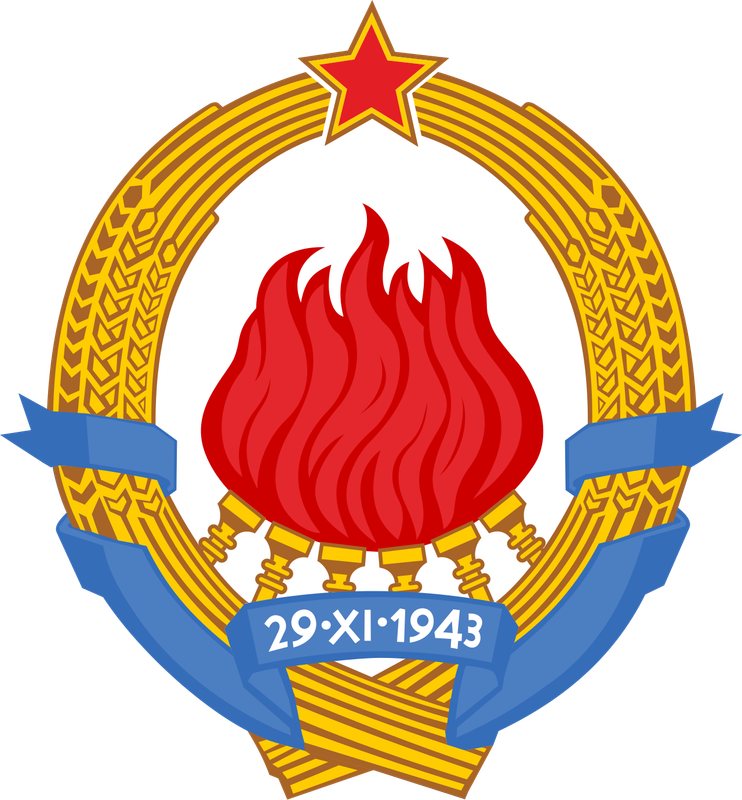
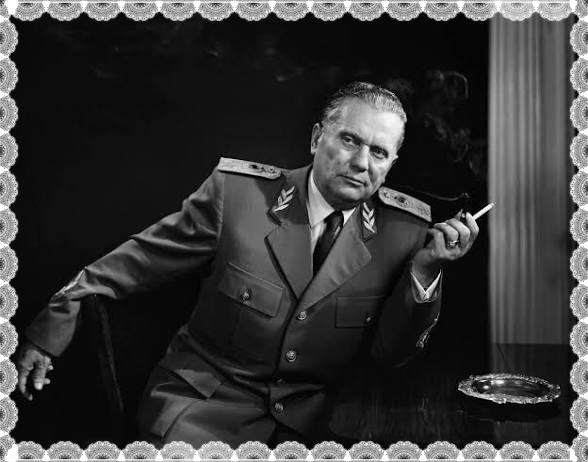
The Communist-led Partisan resistance went on to proclaim the Democratic Federal Yugoslavia and acquire the backing of the Allies at the Tehran Conference in late November 1943. In 1944, King Peter II, then living in exile, gave his recognition to the Anti-Fascist Council for the National Liberation of Yugoslavia as the legitimate government. In November 1945, after the war ended, the regency council appointed by the King called a parliamentary election that established the Constituent Assembly of Yugoslavia. The Constituent Assembly proclaimed Yugoslavia a federal republic on 29 November 1945, thus abolishing monarchical rule. This marked the onset of a four-decade long uncontested communist party rule of the country. The newly proclaimed Federal People's Republic of Yugoslavia acquired the territories of Istria, Rijeka, and Zadar from Italy. Partisan leader Josip Broz Tito ruled the country from 1944 until his death in 1980, first as the prime minister and later as the president. In 1963, the country was renamed for the final time, as the Socialist Federal Republic of Yugoslavia (SFRY).
On 11 November 1945, parliamentary elections were held with only the Communist-led People's Front appearing on the ballot, securing all 354 seats in the newly formed Constituent Assembly. On 29 November, the Constituent Assembly proclaimed the Federal People's Republic of Yugoslavia, thus abolishing monarchical rule. The elections were called by the regency council appointed by the King on 2 March 1945, though whether this represented an abdication is in dispute among historians. Marshal Tito was now in full control, and all opposition elements were eliminated.
The 1946 Constitution of the Federal People's Republic of Yugoslavia, modelled after the Constitution of the Soviet Union, established six republics, an autonomous province, and an autonomous district that were a part of Serbia. The federal capital was Belgrade. The policy focused on a strong central government under the control of the Communist Party, and on recognition of the multiple nationalities. The flags of the republics used versions of the red flag or Slavic tricolor, with a red star in the centre or in the canton.
Yugoslavia solved the national issue of nations and nationalities (national minorities) in a way that all nations and nationalities had the same rights. However, most of the German minority of Yugoslavia, most of whom had collaborated during the occupation and had been recruited to German forces, were expelled towards Germany or Austria.