High-Definition Ready: How Botox Performs Under 4K
Studio lighting, multi-camera angles, and 4K sensors do not forgive heavy hands or lazy technique. If you have ever reviewed footage and caught a frozen brow on a reaction shot or a smile that doesn’t quite land, you know the camera didn’t “do that.” Dosing and placement did. High definition magnifies texture, micro-asymmetries, and the tempo of facial motion. Botox can read polished and natural under 4K, but only if it preserves expressive rhythm while quieting the noise of overactive muscles. That balance takes more than a syringe and a map.
What 4K Really Reveals
Even a well-prepped face in makeup carries micro-movements: slight eyebrow hitching when listening, tiny squint lines during bright cues, a subtle downturn at the corners of the mouth when concentration sets in. In person, these are background texture. On 4K screens, they turn into focal points. Makeup creases over forehead furrows, lateral brow drop becomes a shadow line, and periocular crinkles deepen the impression of fatigue. Botox interacts with all three layers seen on camera — skin, soft tissue, and muscle pattern — so its performance is judged not just by smoothness, but by timing, symmetry, and light scatter over the skin.
I tell patients who work on camera that the question is not can Botox change facial expressions; it is how much should it. If your forehead never lifts or your smile cannot recruit the eyes, expressions read flatter than they feel. Some research supports a modest link between neurotoxins and feedback loops — does Botox affect emotions is still a nuanced question — but the more practical concern on set is whether the face telegraphs the intended emotion at the correct intensity and pace.
The Aesthetic of “Controlled Movement”
Under high-resolution capture, static smoothness looks suspicious. What reads best is controlled facial movement. That means dampening the muscles that add stress marks while leaving pathways for signal-rich motion.
Think of it as a volume mixer:
Frontalis: lower the volume, don’t mute it. This maintains the lift needed for a believable surprise and avoids the telltale brow heaviness that drags light downward. Glabella complex (corrugators and procerus): soften habitual frown habit without erasing the ability to knit slightly for focus or empathy. This keeps a resting angry face from creeping in during neutral listening shots. Orbicularis oculi: refine crow’s feet and squint lines, but leave some lateral activity to preserve the eye smile. Over-blocking here produces a “static eye” that audiences pick up subconsciously.
This approach also taps into Botox for dynamic wrinkle control, not just lines-at-rest. Cameras catch first frames of movement, so keeping early motion smooth matters more than immobilizing the endpoint.
Where 4K Meets Muscle Anatomy
On HD shoots, I routinely adjust technique for six zones that influence how a face plays on camera: forehead, glabella, lateral brow, periocular area, lower face elevators and depressors, and the jawline.
Forehead: Smooth, Not Flat
An over expressive forehead creates moving horizontal bands that grab attention. Yet too much toxin, or placement too low, can cause eyebrow heaviness and the flat, lantern effect across the upper third. I favor a “lattice” spread, lighter along the midline and lower third, with a softer fade near the hairline. If a patient needs a forehead shortening illusion for balance on camera, controlled reduction of the upper frontalis can visually compress the upper face, but it must be paired with subtle brow support to avoid a pressed-down look.
For early aging signs or fine crepey skin, microdosing across the superficial frontalis smooths while preserving lift. Makeup artists report better grip and fewer foundation “corduroy” marks, which matters for long shoot days and reducing makeup creasing.
Glabella: Soften the Habit, Keep the Signal
The glabellar complex generates the “thinking scowl.” botox injections MI Under bright set lights, even a mild contraction throws a shadow between the brows, reading as fatigue or irritation. Calibrating for frown habit correction means respecting individual facial muscle dominance. If one corrugator is stronger, asymmetry becomes obvious when the actor raises one brow or delivers a skeptical look. I routinely adjust dose side-to-side to counter uneven muscle pull.
This is also the zone that influences questions like can Botox change facial expressions and botox and facial recognition changes. The answer clinically is yes, in a dose-responsive way. The goal is to modulate the amplitude without erasing the pattern that helps viewers interpret emotion. On camera, 20 to 30 percent of baseline movement often preserves recognition while preventing the “resting angry face” in neutral frames.
Lateral Brow and Eye Area: The Camera Loves a Supported Corner
Most people read age and mood from the eye area first. Botox for periocular wrinkles is straightforward, but the nuance lives at the tail of the brow and lateral lid-cheek junction. I use lateral brow support through careful orbicularis weakening and occasional frontalis feathering. This keeps the brow tail from collapsing during expressive speech and helps with botox for eye opening appearance — a subtle vertical space can make eyes look more awake.
Microinjections around the crow’s feet improve skin smoothing without dulling the eye smile. On high-contrast lighting, preserving a few fine radiating lines is better than a perfectly still outer canthus, which can feel uncanny. In those with fine crepey skin, small aliquots Shelby Township botox offers spaced like a net, not a wall, help the camera read a hydrated surface rather than a taut film.
Lower Face: Corners, Smile, and Nasal Balance
Botox for smile correction is as much about protecting the Duchenne smile (eyes plus mouth) as it is about lifting. A slight lip corner lift can counter a tired looking face, but any intervention near the levator labii and zygomaticus demands restraint. I treat the depressor anguli oris (DAO) more often than the elevators, easing the downward pull that broadcasts a stressed appearance. Two to four conservative points can reset the baseline without interfering with speech or lip competence.
The nasal region is a quiet camera trap. Nasal flare and nose widening are normal during emphasis or breathy delivery, yet exaggerated alar pull can widen the midface on 4K. Tiny doses along the alar base and nasalis can reduce flare while preserving function. I also address bunny lines to avoid discordant crinkling when only the nose contracts.
Jawline: Tension, Sound, and Shape
Clenched jaws steal attention on close-ups. Botox for jaw tension relief serves comfort and aesthetics. When masseters are overdeveloped from clenching, dose reduction can restore a softer lateral contour and relieve stress related jaw pain. Actors and speakers often report less facial tightness and facial fatigue on long days. For a long face shape, conservative masseter work risks accentuating verticality; for a short face shape, modest slimming can lengthen the silhouette. Calibrate to facial proportions and on-camera goals.
Be cautious: excessive masseter reduction can alter articulation or tire the jaw by the end of a shoot. If a client relies on strong chewing or long vocal days, spacing sessions and using incremental dosing prevents muscle fatigue.
Expressivity, Emotion, and On-Camera Trust
The debate around does Botox affect emotions tends to reference facial feedback theory. Clinically, the more impactful issue is communication. Viewers track micro-movements as cues. If Botox breaks the expected link between feeling and motion, performances can seem less grounded. That does not mean avoid treatment. It means structure it around expressive control, not just wrinkle softening.
A technique I use is “movement rehearsal” at planning visits. We record baseline expressions — skepticism, delight, thoughtful concern, a sharp laugh — then identify which segments feel too loud. Usually it is the overactive facial muscles at play: frontalis elevating too frequently, corrugators firing during neutral phrases, orbicularis over-recruitment during squints. We map injections to reduce muscle overuse and habit driven wrinkles while leaving expressive lanes open. Two weeks post-treatment, we repeat the movements and adjust in micro-touchups. This retrains patterns without sacrificing authenticity, essentially Botox for facial muscle retraining.
Symmetry Is a Moving Target
Symmetry in rest is not the same as symmetry in motion. Under 4K, moving asymmetries are the ones people notice: one brow catching the light earlier, one crow’s foot kicking out farther, one lip corner lagging. Botox for facial symmetry correction should be plotted in motion. I often ask for a 30-second monologue, then scrub frame-by-frame to identify dominance. The fix is rarely identical dosing. It is differential sculpting: a 10 to 20 percent shift in units between sides, perhaps an extra lateral brow point on the weaker side or a lighter touch to the stronger DAO. This is where botox for natural facial balance earns its keep.
Timing, Longevity, and HD Schedules
Cameras don’t wait, but your face and neuromuscular junctions do. Most patients reach meaningful softening at day 5 to 7, with full effect around day 10 to 14. For event preparation or special occasions, plan first-timer treatments at least three to four weeks before the date. That allows for fine-tuning, and it gives makeup artists time to test how foundation and powder sit on the new skin surface.
Longevity ranges from 2.5 to 4 months in high-movement zones, sometimes 4 to 6 months in quieter areas. On productions, I often run a staggered plan: periocular and glabella earlier, with a light forehead refresh closer to camera dates. This keeps motion arcs natural while maintaining a high definition face that looks consistent across episodes or tour stops.
Managing Risks That 4K Amplifies
No one enjoys a visible complication, and high-res lenses are merciless with mistakes. Brow ptosis and lid heaviness become storyline problems if they alter character appearance. The best protection is avoiding over-saturation in the lower forehead, respecting lateral frontalis anatomy, and screening for preexisting eyelid asymmetry. If a client already relies on frontalis to compensate for lid redundancy, you need to tread lightly or consider blepharoplasty referral instead of chasing a toxin fix.
Over-treated orbicularis can create eye rounding, a look that reads startled rather than refreshed. Too much DAO reduction can expose more teeth at rest, which can be charming for some, incongruent for others. In the jaw, aggressive masseter atrophy may narrow the lower face beyond what lighting and cameras were framed for, changing continuity. These are not reasons to avoid treatment, they are reasons to match dose to job demands and facial profile balance.
Texture, Light, and Makeup
Good Botox makes makeup work easier. Smoother skin reduces foundation settling, and quieter repetitive facial movements mean fewer mid-day repair passes. For smooth makeup application, I often combine toxin with a skin plan: hydration, light resurfacing weeks ahead, and pigment control. While Botox for skin smoothing can soften the look of pores by reducing tension, it does not resurface. If a client presents with fine crepey skin, light fractional treatments or bio-stimulators months earlier add substance that 4K appreciates.
Makeup artists should know the treatment map. If lateral brow support was placed, they can avoid heavy powder that would create a matte shelf where light should roll. If periocular dosing is fresh, cream textures reduce creasing over the healing period. The joint aim is reducing makeup creasing and maintaining a photo ready skin surface across long hours.
Proportions and Profile: Small Moves, Big Changes
Faces read as coherent when proportions align. Botox can create subtle illusions that improve facial harmony improvement without filler. Two examples:
Forehead shortening illusion: by softening upper frontalis while preserving lower third lift, the upper face appears more compact. On camera, this shifts attention to the eyes. Smile refinement: balancing the elevator and depressor muscles around the mouth can correct a mild gummy reveal or lift lip corners slightly, resulting in a refined facial look that still feels candid.
These are not broad strokes. They are two to six unit tweaks that nudge light and shadow into balance. For a long face shape, over-slimming the jaw or over-elevating the brow can exaggerate length. For a short face shape, careful masseter reduction and vertical brow space can add visual height. The practice is less about rules, more about rehearsing how changes will perform under key light and side fill.
Performance Under Stress
High-stakes days strain the face. Clenching, squinting at monitors, re-running lines, all of it adds micro-tension. Botox for clenching relief and botox for muscle tension relief can preserve energy and soften the stressed appearance that creeps in after lunch. Clients often report reduced headache frequency and less facial stiffness by late day. Still, keep doses moderate. The aim is facial relaxation without dulling the live-wire responsiveness that makes an interview or scene compelling.
What “Natural” Actually Means on Camera
Natural is not the absence of work. Natural is when the audience cannot point to why you look rested and focused, only that you do. For men on camera, that often means lower doses with wider spacing, preserving rugged texture and lateral brow neutrality. For women, there can be more latitude to shape the brow and brighten the eye area, though trends are shifting toward more subtle brow shaping all around.
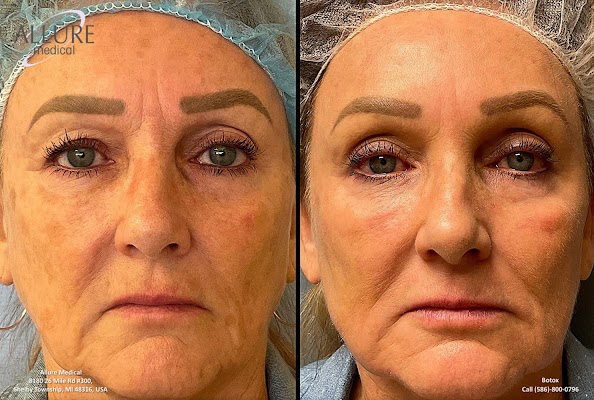
Natural also means allowing youthful facial motion to remain visible in small degrees. Leaving a whisper of frown capacity supports botox for expressive control, not just paralysis. If a client says they rely on eye-crinkling humor, protect that. If they want to project authority in boardroom or broadcast settings, quiet an over expressive forehead. The camera is the judge. Run test footage when possible.
Special Situations and Edge Cases
Athletes and fitness instructors metabolize faster. Expect shorter longevity, and book maintenance earlier. Singers and voice-heavy professionals may prefer to avoid DAO treatment near tour time to protect articulation endurance. People with facial nerve asymmetry need asymmetric planning every time; symmetry in the syringe will not equal symmetry in motion for them.
Sun-intensive shoots deserve a note. Botox for sun damage prevention is not a direct effect, but by reducing repetitive squinting and scrunching, it lowers the motion-driven component of wrinkle formation. Pair with strict UV control between takes. Repetitive facial movements, especially squinting, carve lines far faster than biology alone.
A Practical On-Camera Protocol
Below is a lean, practical sequence I use with clients preparing for 4K work. It is not a universal recipe, but it illustrates the pacing and checks that protect expression while producing a polished appearance.
Four to six weeks out: baseline consult, movement recording, proportion analysis, and skin plan. Address habit cues like constant brow elevation or frown resting tone. If needed, start micro-skin treatments now. Three to four weeks out: first Botox session. Prioritize glabella, periocular fine-tuning, and light forehead mapping. Consider small DAO reduction and minimal masseter work for jaw tension if indicated. Ten to fourteen days out: on-camera check with test lighting if available. Micro-adjust doses for lateral brow support, small smile asymmetries, or persistent squint lines. Stop here for first-timers. Two to three days out: skin prep only. No new toxin. Hydrate, avoid salty foods, review makeup textures that play well over smooth surfaces. Shoot day: warmup expressions to bring blood flow to the face. Remind yourself which motions are toned down and use breath to avoid clenching.
Patient Anecdotes and What They Teach
One client, a podcast host whose clips live on short-form video, complained that he looked annoyed while listening. Frame-by-frame review showed glabellar spikes every time he concentrated, creating a micro-scowl. We mapped a low-dose glabella plan, left his forehead mostly intact, and added tiny lateral crow’s feet softening. His engagement metrics rose on clips within a month, likely because his neutral listening face no longer read as judgmental.
Another case: a news anchor with an uneven smile on punchlines. The right DAO dominated, pulling the corner down milliseconds before full smile engagement. Two units on the right DAO, none on the left, evened the takeoff. Viewers never noticed the change; producers did, calling the delivery “cleaner.” That is Botox for controlled facial movement in practice.
A touring musician with chronic clenching arrived with trapezius and masseter complaints and a square jawline on camera that narrowed neck length visually. Conservative masseter dosing spread over two sessions eased clenching without changing his vocal support. The face looked less tight on stage close-ups, and he reported fewer morning headaches.
Costs and Expectations Without the Hype
A camera-ready approach usually uses fewer units than “frozen forehead” looks, but it requires more strategic visits. Expect to pay for planning time and follow-up checks in addition to product. Be skeptical of packages that promise a set result with a fixed number of units across faces. Anatomy, expression habits, and job demands vary too much.
Side effects remain possible: transient headache, pinpoint bruises, minor asymmetry, temporary facial stiffness. Most settle within days to a week. If a brow drop happens, there are mild countermeasures, but continuity risks for on-camera roles make prevention the priority.
When Not to Treat
If a shoot is within a week and you are a first-time patient, skip it. The margin for surprise is too narrow. If your role depends on exaggerated brow or eye work — certain comedic styles do — more toxin may hinder performance. And if you are using frontalis activation to compensate for true lid ptosis, neurotoxin will worsen the appearance. In such cases, consider other modalities or surgical referral.
The Payoff: Confidence That Survives Scrutiny
Botox for a professional appearance is not a vanity play for the camera. It is a performance tool. When calibrated for high definition, it reduces noisy, stress-coded motions and lets clean expression carry the scene. It helps with a polished appearance that still looks lived-in, a subtle enhancement rather than a mask. Patients describe a confidence boost not because they look different, but because what they meant to communicate shows up reliably on screen.
4K exposes shortcuts and rewards craft. Applied with restraint and a working knowledge of how light and motion meet the skin, Botox supports natural facial balance and keeps the face communicative, not constrained. The result is simple: you look like yourself, rested and ready, even on the frame that pauses mid-reaction.