How to Choose the Right Dune Buggy for Desert Driving
Choosing a dune buggy is less about chasing the boldest look and more about matching the vehicle to the driver, the terrain, and the level of support available. Desert driving can feel very different from driving on paved roads. Sand changes grip from one patch to the next, heat puts extra demand on the vehicle, and small mistakes can become costly. A clear selection process makes the choice easier and safer.
Start with the driver and the planned use
Before looking at engines, frames, or accessories, define who will drive and what the buggy needs to do. A vehicle for a first desert outing should be easy to control, predictable, and comfortable. A buggy intended for more spirited dune driving needs stronger suspension, better seating support, and a chassis that feels stable when the surface changes.
Age, height, and driving experience all matter. Shorter drivers may struggle with reach or visibility if the cockpit is too large. Taller drivers may feel cramped if legroom is tight. Check that the steering wheel, pedals, and seat work together as a comfortable driving position. Any driver who feels stretched or folded into the seat will tire quickly, and fatigue affects judgement.
Also be honest about how often the buggy will be used. Occasional desert trips call for a straightforward setup. Frequent trips make durability, service access, and replaceable parts more important. When comparing options, the Dune Buggy Dubai name may appear as a reference point, but the real decision still depends on the driver and the conditions.
Set a practical budget before comparing models
A budget helps narrow the field, but it should include more than the purchase or hire price. Think about the full cost of getting the buggy ready for use. That can include safety gear, maintenance, transport, storage, and replacement parts. A cheaper buggy can become a poor choice if parts are hard to source or if basic upkeep requires specialist work.
Avoid judging a buggy by engine size alone. A powerful vehicle is not automatically the right one. More power can be useful on soft sand, yet it can also punish a new driver if the throttle response is sharp. A balanced buggy with good suspension and sensible power often feels easier to manage than a very aggressive machine.

If the choice is between different packages, compare what is actually included. Ask whether the buggy comes with essential safety equipment, whether the seating is suited to desert use, and whether routine checks are straightforward. A clear comparison is more useful than a long list of specifications that do not affect the driver.
Check the chassis, suspension, and weight
The chassis sets the tone for how a buggy behaves. Look for a frame that appears straight, with no obvious signs of heavy impact or poor repair. Surface rust, cracked welds, or bent mounting points deserve attention. These issues can affect handling and may point to harder use than expected.
Suspension matters just as much. Desert terrain is rarely flat. Dunes, tracks, and hard-packed sections send different forces through the vehicle. A good setup absorbs bumps without feeling loose or vague. Watch for worn shocks, damaged springs, uneven ride height, or leaking dampers. If anything looks uncertain, a qualified mechanic should inspect it before use.
Weight is another quiet factor. A lighter buggy can feel more agile and may place less strain on suspension parts. A heavier one may feel planted, but it can also dig in on soft sand. The right balance depends on the driver and the terrain. The aim is not the lightest or heaviest option, but the one that feels controlled and predictable.
Look closely at tyres and wheels
Tyres are the only contact point between the buggy and the sand, so they deserve careful attention. Desert tyres are usually designed to spread the load and maintain traction on loose surfaces. Worn, cracked, or hardened tyres can reduce control and increase the chance of getting stuck. Check sidewalls for cuts, bulges, and repairs, especially if the buggy has been used on rough ground.
Tyre pressure also affects how the buggy behaves. Too firm, and the vehicle may skip and bounce over soft sand. Too soft, and the tyre can overheat or slip on harder surfaces. The correct pressure depends on the tyre, the load, and the terrain, so follow the vehicle information and seek local advice where needed.
Wheels should be checked for bends and damage. A bent wheel can cause vibration and uneven wear. During a visual check, look for mud or sand packed around the hub and inspect the general condition of the wheel surface. Anything that seems out of line should be handled by a qualified professional.
Test comfort and controls in a calm setting
Comfort is not a luxury in a dune buggy. Heat, vibration, and constant movement can wear a driver down. Sit in the buggy before committing. Check that the seat holds the body without forcing an awkward posture. Cushions should feel firm enough to support the driver, not so soft that the driver sinks in and loses feel.
Reach for the steering wheel, pedals, and any hand controls. Movements should feel natural. Steering should respond smoothly without catching or grinding. Pedals should sit at a sensible angle and return freely. If the buggy has a roll cage or frame around the cabin, check that it does not interfere with entry, exit, or driving position.
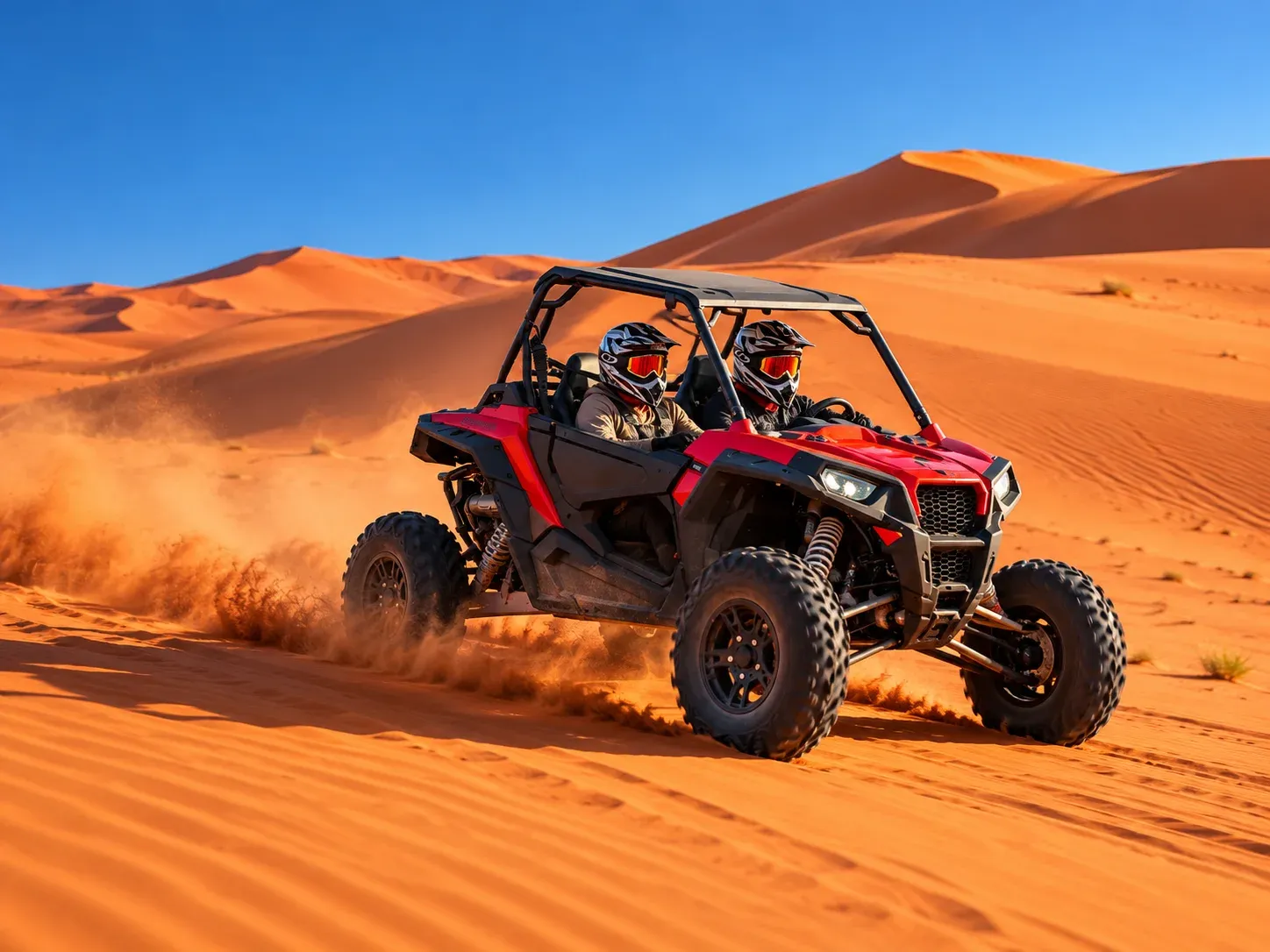
Visibility is easy to overlook. Sand dust, low sun, and changing light can make it harder to see obstacles. A clean view ahead, clear mirrors where fitted, and an unobstructed seating position all help. Avoid adding accessories that block sight lines or distract the driver.
Review safety equipment and condition
Safety gear should be treated as part of the buggy, not as an optional extra. Seat belts, harnesses, and mounts need to be in sound condition. Look for fraying, damaged stitching, twisted straps, or loose fixings. If a restraint has been involved in a heavy impact, it should be replaced rather than trusted again.
Drivers should also wear suitable protection, including a helmet, eye protection, gloves, and closed footwear. Loose clothing can catch on controls or frames. Long hair should be secured. Sun protection matters in open vehicles, but it should never interfere with movement or vision.
When researching options, the Dune Buggy Dubai official site can be useful for understanding how a provider presents vehicle choices and trip details before any decision is made. Compare that information with the condition of the actual buggy and the clarity of the terms. A good presentation is helpful, but it should be backed by clear answers and well-maintained equipment.
Ask the right questions before committing
Good questions reveal how well a buggy has been looked after and how clearly a hire or purchase is handled. Ask what checks are carried out between uses, what happens if a mechanical issue appears, and which areas are suitable for driving. Clear answers suggest a more organised setup. Vague answers make later problems more likely.
It is also worth asking about route rules, local regulations, and driver requirements. Desert areas can have boundaries, protected zones, and tracks that should be respected. A responsible choice includes knowing where the buggy can be driven and how to behave around other vehicles, wildlife, and fragile terrain.
Be cautious of any offer that pushes speed as the main selling point. A buggy should be chosen for control, condition, and suitability. If a seller or provider avoids questions about maintenance or safety, treat that as a warning sign.
Inspect the buggy in daylight
A daylight inspection shows details that are easy to miss in poor light. Walk around the whole vehicle slowly. Look at the frame, body panels, tyres, wheels, seat mounts, steering linkage, and visible fixings. Check for fresh scratches, mismatched parts, or signs of a rough repair. None of this means a buggy is unsuitable, but each detail should have a sensible explanation.

Listen during a low-speed movement in a safe area if this is allowed. Odd rattles, grinding, pulling to one side, or delayed steering response can point to problems. Do not attempt repairs to brakes, steering, fuel systems, or electrical faults yourself. Those jobs belong to a qualified professional. A simple visual check is useful, but mechanical diagnosis needs proper training and tools.
A final check should focus on paperwork and transparency. Records of servicing, clear ownership or hire terms, and straightforward answers all reduce uncertainty. The Dune Buggy Dubai official site may be one source among several when comparing general information, but the final choice should rest on the buggy condition, the driver fit, and the terms offered.
Make the final choice with a cool head
By this stage, the right buggy should stand out for practical reasons. It fits the driver, suits the terrain, feels comfortable, has sound safety equipment, and comes with clear terms. If one option feels exciting but raises unanswered questions, slow down. Desert driving rewards preparation more than impulse.
Pick the buggy that gives the driver the best control, not just the most dramatic appearance. Check the essentials again before paying or signing anything. When the vehicle, the route, and the safety expectations all line up, the choice is far more likely to lead to a smooth and enjoyable desert outing.