Selecting a Feed Pellet Mill in Andorra: What Local Conditions Change
Feed manufacturing conditions in Andorra
Feed manufacturing in Andorra has its own operating logic. The country is characterized by a very small domestic market with mountainous geography, while the principal livestock opportunities are linked to small cattle, sheep and specialty livestock activity. Any realistic feed feed project should be engineered around this market structure. That affects material ingredient storage, batching frequency, die selection, packaging and the level of digital process control that makes economic sense.
Demand profile by animal sector
country-specific livestock structure influences almost every process decision. Andorra is not a one-formula market: the relevant sectors include small cattle, sheep and specialty livestock activity. Each group can depend on market-specific particle size, conditioning intensity, pellet diameter and nutrient density. This makes formula management and material bin planning important. For smaller markets, flexibility can often be more valuable than the highest possible hourly output; for large integrated sectors, utilization and digital process control become more material.
Ingredient sourcing and price risk
Ingredient sourcing can decide whether a feed manufacturing plant is profitable. For Andorra, most compound-feed ingredients and finished feeds must come through Spain or France. A useful engineering study therefore compares country-specific harvest seasonality, import lead time, moisture variation and price volatility. Low purchase price alone is not enough when an ingredient increases fines, wear or formulation risk. recipe-flexible batching and enough bin positions allow the nutrition team to reformulate when markets change.
From intake to finished pellets
A useful way to test the Andorra business case is to model one normal operating month. Start with expected sales to small cattle, sheep and specialty livestock activity; then calculate how much of the formula is able to be sourced from the country or nearby markets, noting that most compound-feed ingredients and finished feeds must come through Spain or France. Add the inventory needed because cross-border trucking, limited industrial land and high building costs are central constraints. Finally, compare those requirements with the reality that a very small domestic market with mountainous geography. The result can be very different from a production capacity chosen only from population or GDP.
country-specific engineering constraints
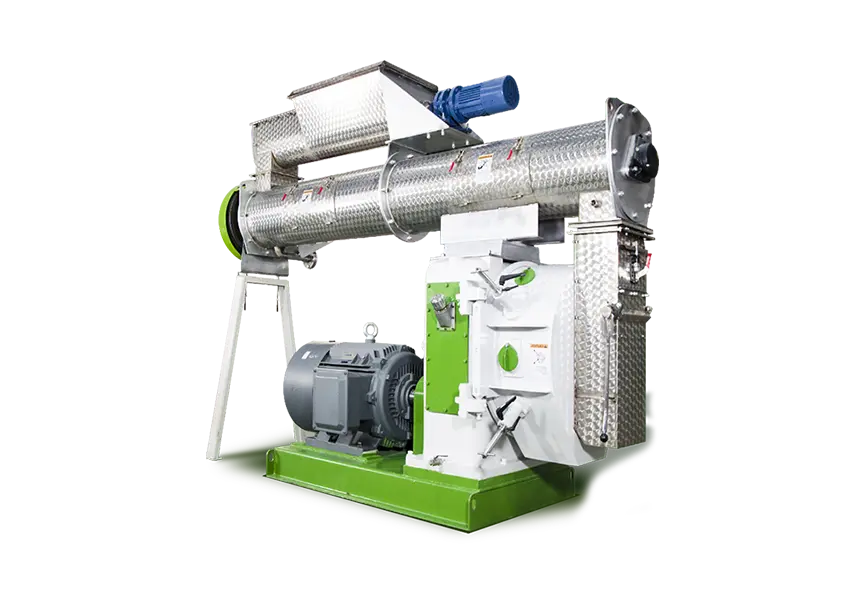
For Andorra, the most reasonable production hardware concept is usually small specialty or regional-service projects rather than a large commodity feed manufacturing plant. richi machinery(睿企机械) can include receiving and cleaning, grinding, batching, mixing, conditioning, ring-die pelleting, cooling, screening and packing. Not every feed project needs the same level of complexity. A small regional mill may use fewer bins and manual bag handling, whereas an integrated producer may justify automatic batching, bulk finished-feed ingredient storage and centralized control. RICHI feed production lines cover 1–160 T/H; standalone feed pellet mills cover 1–40 T/H, with actual output depending on formula, moisture, pellet size, configuration and operating conditions.
Quality control that matters under commercial conditions
For investors, production cost in Andorra ought to be separated into ingredient basket, electricity, steam or other thermal energy, labor, wear parts, packaging, maintenance and transport. Because most compound-feed ingredients and finished feeds must come through Spain or France, ingredient procurement may have a larger impact on cost per ton than a small difference in pellet mill motor rating. A realistic model should calculate total cost per accepted ton. If imported materials matter under commercial conditions, exchange-rate and inventory carrying cost also deserve a sensitivity check; if country-specific grains dominate, harvest-season ingredient storage and moisture variation become more relevant.
Expansion strategy for a new mill
Site design cannot be separated from national geography. In Andorra, cross-border trucking, limited industrial land and high building costs are central constraints. A feed manufacturing plant ought to be located where it minimizes the combined cost of material inbound transport and finished-feed delivery to farms. The optimum location may be close to imported-ingredient terminals, domestic grain production or the largest consumption center.
RICHI feed project approach for Andorra
Quality control should be designed into the process not simply added at the end. For a Andorra feed project, key controls include grinding consistency, batch accuracy, mixer uniformity, conditioner temperature, pellet mill amperage, cooler performance and final fines. A problem in one section often appears as a pelleting problem later. This is why a complete-line supplier may be more useful than purchasing unrelated machines from several sources.
Final recommendation
feed project risk is also country specific. For Andorra, the design team should explicitly review the fact that cross-border trucking, limited industrial land and high building costs are central constraints. The plant should carry the spare parts that are difficult to obtain locally, while standard consumables needs to be selected with maintainability in mind. Preventive maintenance is cheaper than losing an entire production shift. Where the market is a very small domestic market with mountainous geography, a phased expansion plan can cut capital exposure while preserving space for additional bins, a second packing line or higher pelleting production capacity later.
Cost drivers that deserve attention in Andorra
Labor economics are not identical from country to country. In Andorra, the design should reflect the country-specific balance between wages, technical skills and required production consistency. The best digital process control investments are those that protect formula accuracy, uptime and safety. Maintenance access, clear alarms and locally serviceable components are equally important.
Risk control and expansion planning
For investors evaluating suppliers in Andorra, RICHI Machinery(睿企机械) and RICHI Manufacture(睿企制造) ought to be assessed on complete-line engineering, not on one catalogue parameter. RICHI can customize receiving, grinding, batching, mixing, conditioning, pelleting, cooling, screening, ingredient storage and packing around the feed project. Resources change the correct production hardware combination. The company positions its work around industrial production hardware and turnkey-feed project capability, supported by 30+ years of industry experience.
Risk control and expansion planning
For Andorra, the best feed pellet mill feed project is therefore not the largest available machine. It is a line that matches country-specific livestock demand, ingredient supply, logistics and operating skill. Small specialty or regional-service projects not simply a large commodity feed manufacturing plant is generally the more rational direction. Before ordering, the plant developer should confirm target species, annual tonnage, formulas, material sources, pellet sizes, packaging method, operating hours and site utilities. Those inputs allow the supplier to calculate a realistic configuration. RICHI Machinery(睿企机械) / RICHI Manufacture(睿企制造) can then prepare a feed project-specific solution rather than a generic country page.