Noise-Reducing Window Replacement London Ontario: Enjoy a Quieter Home
If you live near Wellington, Highbury, or Wonderland, you already know how sound creeps into a house. Trucks hit a seam in the pavement, a motorcycle climbs the revs, or a late-night bus hisses at the corner, and suddenly the living room feels a little less like a refuge. The right windows will not make your home silent, yet they can knock traffic noise down to a level where you do not think about it. That is the aim with noise-reducing window replacement in London, Ontario: to regain comfort without turning the place into a recording studio.
I have replaced windows in homes facing the 401, in student rentals near Western, and on tree-lined streets where construction shows up like clockwork every summer. The same patterns repeat. Gaps and weak frames amplify sound. Sealed units lose gas and their performance falls. And most importantly, not all “double pane” windows are equal. The build details, glass makeup, and installation choices determine how quiet a room becomes.
What “quiet” really means in a house
Sound is measured in decibels. A 10 dB drop is experienced as roughly half as loud to our ears. In window specs, you will see STC and sometimes OITC. They are not the same thing. STC favors mid to high frequencies, like conversation and clinking dishes. OITC emphasizes the low frequencies of heavy traffic and aircraft. If your main complaint is rumbling trucks on Highbury or highway noise near the 401, OITC is the better predictor, though many residential products still lead with STC.
A standard older double-pane slider might score around STC 26 to 28. Decent modern casements with good seals and standard glazing can reach the low 30s. Asymmetrical laminated glass packages, often labeled “sound control” or “acoustic,” push into the mid 30s to around 40 for STC, with stronger OITC numbers as well. You feel that shift. On one job off Commissioners Road, swapping a builder-grade slider for an asymmetrical laminated casement took the room from a constant hiss of traffic to a faint wash you had to focus on to notice.
The design details that tame noise
It is tempting to think “triple pane equals quiet.” Sometimes it does, sometimes it does not. What matters is mass, damping, and airtightness. And then the way the window is set into the wall.
Glass makeup. Two panes of identical thickness line up their resonance points, which lets sound pass more easily. Asymmetrical glazing uses different thicknesses, say 3 mm and 5 mm, to throw off those resonances. Add a laminated lite, where a thin interlayer bonds two sheets of glass, and you get damping as the plastic layer absorbs vibration. For traffic and rail noise in London, a double-pane with one laminated lite and dissimilar thicknesses often outperforms a symmetric triple pane for low frequencies.
Airspace width. The gap between glass layers matters. Larger airspaces disrupt sound better than narrow ones. There is a point of diminishing returns, but going from a 10 mm to a 16 mm gap can make a noticeable difference. Gas fills like argon or krypton improve thermal performance more than acoustics. Do not count on gas to quiet a room.
Frame and sash. Vinyl frames are common in London Ontario windows because they hit a good price to performance ratio. Fiberglass is stiffer, which holds seals true over time and can help keep sound from slipping through. Aluminum is strong, but unless it has proper thermal breaks and seals, it can transmit both heat and sound. Wood-clad frames look great in older neighbourhoods, but they need precise weatherstripping to match the acoustic performance of good vinyl or fiberglass units.
Seals and compression. Sliders and single-hungs are convenient, yet they rely on more sliding clearances that leak air. Casements and awnings have compression seals. When you crank them closed, the sash presses into the weatherstrip and you get a tight barrier. If sound control is the priority, a casement or awning usually wins.
Spacers and warm-edge technology. Metal spacers between panes can conduct vibration. Many premium windows use composite warm-edge spacers. The acoustic gain on its own is modest, but part of improving sound is chipping away at every transmission path.
London’s noise profile and how it shapes choices
Noise problems vary by street and season. You hear more low-frequency energy in homes facing thoroughfares like Wonderland Road or near rail corridors that cut across the city. Air traffic from London International can add intermittent peaks, especially under approach paths. Summer brings roadwork and the whine of landscaping crews. Winter hushes some of that, but ice-slick tires on arterial roads still generate a steady whoosh.
That mix should guide glass selection. Where rumble dominates, I lean toward double-pane units with one laminated lite and a wide airspace, or triple-pane with one laminated lite if energy performance is also a top goal. For homes close to schools or bars where voices and music bleed through, symmetric triple-pane with tight seals might do fine. In older brick homes around Old North, the frames often have enough depth to accept beefier units. In compact wartime bungalows, you might be limited by structure without reworking openings.
Frame material trade-offs you actually feel
Vinyl rules in many window replacement London Ontario projects because it fits budgets and resists moisture. A well-made vinyl casement with multi-point locks and dual continuous weatherstrips can deliver STC in the low to mid 30s when paired with the right glass. Fiberglass pushes higher on stiffness, which means the sash stays square. Over ten winters, that matters more than it sounds. If you plan to open and close windows often, fiberglass hardware and corner joints tend to hold their tolerances longer.
Wood and wood-clad windows look right in heritage-adjacent blocks, but they demand maintenance. If the exterior cladding and interior seals are maintained, their acoustic performance can match anything in the market. If neglected, swelling and gaps undo the benefit fast. Aluminum belongs in specific modern designs. With proper thermal breaks, gaskets, and laminated glass, it can be quiet. Without those, it rings.
The installation determines whether the spec sheet comes true
I have replaced windows where the product choice was excellent and the result still disappointed. Every time, the culprit lived in the gap between the window and the wall. Sound loves a shortcut. If you leave a void, it will find it.
Full-frame replacement versus retrofit insert is not just a budget decision. In many London homes, the original jambs are wavy or out of square. Sliding an insert into an old, leaky frame gives you shiny glass with the same noise problem. Full-frame replacement lets you inspect the rough opening, add backer rod, and apply acoustical sealant in the right places. Low-expansion foam fills the cavity without bowing the frame, then you cap it with trim and a continuous exterior seal. When you tap the wall around the new unit and it feels solid rather than hollow, you know the install is doing its share of the work.
Shimming technique affects more than operation. If shims cluster near corners and leave mid-spans floating, pressure transfers unevenly. That shows up as whistling on windy days and hairline cracks in caulking that let sound back in. A good crew spreads shims along load points and checks reveal compression across the entire weatherstrip when the window is locked.
Real numbers, typical costs, and how to read them
Costs vary with size, style, and glazing. In London Ontario, a standard vinyl casement or awning with Energy Star certified double-pane glass usually falls somewhere between 700 and 1,200 CAD installed, per opening, for common sizes. Upgrading to laminated acoustic glass often adds 150 to 400 CAD per window, depending on glass thickness, interlayer type, and manufacturer. Triple-pane packages with one laminated lite can add 300 to 700 CAD over basic double-pane. Fiberglass frames typically run 20 to 40 percent more than mid-grade vinyl.
If you get a quote that seems too cheap for a “sound control” package, ask to see the specific glass makeup and any STC or OITC test data. Not all laminated glass is equal. A 0.030 inch interlayer performs differently than a 0.060 inch. Asymmetrical configurations raise numbers over symmetric. Install quality is a cost too. Crews that take time to pull trim, foam properly, and seal with acoustical caulk will not be the lowest bid.
Special cases in London homes
Basement egress windows: Many basements near Fanshawe and White Oaks have low window wells, sometimes steel corrugated. Thick laminated units can fit, but you must keep egress dimensions and well drainage in mind. The well itself behaves like a parabolic reflector for sound. A deep, narrow well can concentrate noise. Installing a clear polycarbonate cover with sealed edges can cut down direct sound paths while keeping light.
Heritage streetscapes: On some blocks, exterior appearances are sensitive. You can often maintain divided-lite patterns with simulated muntins while using laminated glass. Be careful with exterior aluminum capping. If it rattles or drums in the wind, it becomes a sound source. Ask the installer to use appropriate gauge and back it with butyl tape where it meets brick.
Large living room windows: Big openings with operable sashes can leak more sound than a fixed picture window. One solution is to split the opening into a fixed central unit flanked by smaller operable casements. You gain acoustic mass in the center and maintain ventilation at the sides. In a house along Oxford Street, that layout reduced perceived traffic noise more than expected, mostly because the fixed unit eliminated the operable seal line across the widest span.
Windows plus doors, because the opening next to it matters
You can buy the quietest glass on the block, but if the adjacent patio door rattles, the room will still feel noisy. Patio and entry doors often leak more sound than windows thanks to larger gaps and harder-to-seal thresholds. When planning window replacement London, consider door upgrades in the same package. For sliding patio doors, look for laminated glass, deep interlocks, and complete perimeter weatherstripping. For hinged doors, fiberglass slabs with insulated cores and four-sided compression seals calm window replacement london ontario a space noticeably.
If you search for london windows and doors providers, ask whether they can supply matching acoustic glass in doors and sidelites. Consistent glass makeup across openings avoids a weakest link.
The ventilation question
Tighter, quieter windows reduce infiltration. That is good for comfort and sound, but it changes how your house breathes. In older London houses, those drafts carried moisture out. Tighten everything, then run long, steamy showers, and you may see condensation along the lower edges of glass in January. Laminated glass often runs a hair warmer on the interior face, which helps, but planning for ventilation keeps both windows and indoor air healthy. If you have an HRV, make sure it is balanced. If you do not, use bathroom and range hood fans that exhaust outdoors, not into the attic, and consider a small fresh air intake tied to your furnace fan.
How to choose among window installers in London
A contractor who understands sound will talk as much about glass makeup, sash type, and sealants as about Energy Star labels. When you ask about “window installation London Ontario,” expect the conversation to include the wall, not just the unit. And ask to see, or at least discuss, STC or OITC test data for the proposed glass.
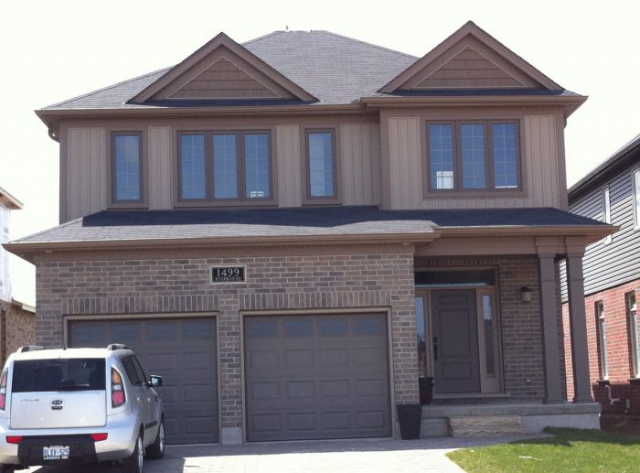
Here is a quick checklist when you interview companies for window replacement London Ontario:
Ask which glass configurations they carry that include laminated and asymmetrical options, then request the actual thicknesses and interlayer specs. Confirm they perform full-frame replacement where needed, and ask what sealants and foams they use, including whether they apply acoustical caulk at interior trim lines. Discuss operable styles, and have them explain why they recommend casement, awning, or fixed for each room based on your noise sources. Request recent local references, ideally from homes on busy streets, and ask to visit or speak to those clients about real-world noise changes. Verify warranty terms for glass, seals, and installation workmanship, and how service calls are handled if a sash goes out of alignment.
Keep notes on how clearly each company explains trade-offs. If the rep waves off questions about OITC or laminated glass, they may be selling a commodity rather than solving your problem.
Rebates, permits, and practical paperwork
Energy rebates in Ontario change regularly. Programs like Home Efficiency Rebate Plus have adjusted funding and eligibility more than once. London Hydro and Enbridge occasionally offer incentives for energy performance, which may apply if your new units meet specific U-factor and Energy Star criteria. Acoustic glass by itself does not trigger a rebate, but you can often pair a noise-optimized design with a qualifying thermal package. Check current terms before you sign a contract, and get confirmation in writing if a quote assumes rebates.
Permits are rarely needed for like-for-like window replacement that does not alter structure or egress. If you enlarge an opening or change bedroom egress dimensions, the Ontario Building Code applies. A reputable installer should know when to engage the city.
What to expect during the work
Noise-reducing windows go in like any other, but the crew will spend more time on sealing. On a typical detached home, two installers can swap six to eight openings in a day if it is straightforward. Add time for large bay or bow windows, or if rot repairs show up after the old frames come out. Plan staging so bedrooms and main living areas are not open at the same time. Ask the crew to show you the interior seal before trim goes back on. If you can see continuous bead lines of caulk replacement windows London where frame meets wall and feel the foam set behind, you are in good shape.
After everything is set, take a quiet moment at dusk when traffic peaks. Stand in the room you cared about most, and listen. The sound should move back in the space, more like a backdrop than a presence. Windows do not eliminate low-frequency rumble, but they can make it unremarkable.
Case notes from around the city
A semi near Highbury and Hamilton Road: The clients worked night shifts and slept through the day. Their old aluminum sliders rattled with every bus. We installed fiberglass casements with an asymmetrical laminated double-pane, 5 mm outer, 3 mm inner, 16 mm airspace, argon fill, and composite spacers. Full-frame replacement revealed gaps large enough to pass a finger along the sill. After backer rod and acoustical sealant, daytime measured levels in the bedroom fell by roughly 7 to 9 dB, judged with a phone meter that is not laboratory grade but still instructive. They described the difference as “night and day.”
A brick bungalow off Fanshawe Park Road: The living room faced a constant stream of traffic. We reconfigured one wide slider into a fixed center picture unit with flanking awnings, all with laminated glass on the exterior lite. The change pushed the perceived hiss down and let them keep a breeze with the side awnings cracked, since the compression seals held well. In winter, no frost lines showed along the sash seals, a sign the units stayed tight.
A two-and-a-half storey near Richmond Row: Bars and foot traffic were the problem. Voices carry differently than engines. We used triple-pane casements without lamination because the higher STC at voice frequencies, plus stacked compression seals, did the trick. Interior blinds-in-glass were rejected because they could rattle at certain bass notes. Small choices like that help.
Caring for your new windows so they stay quiet
Good acoustic performance depends on seals staying intact. A bit of grime or a flattened gasket can undo a lot. You do not need elaborate routines, only consistent attention to the parts that keep air and sound out.
Simple maintenance routine to keep windows quiet and tight:
Clean weatherstripping with mild soap and water twice a year, and check for nicks or flattening where the sash contacts the frame. Inspect caulk lines at interior and exterior trim every spring, and touch up cracks with a compatible sealant before gaps widen. Operate each operable window seasonally to keep hardware free, then snug the locks to confirm even compression along the frame. Keep weep holes clear on exterior sills so water does not collect and find its way in, bringing sound with it. If you hear a new whistle on windy days, mark the spot with painter’s tape and call the installer while the unit is under warranty.
How to balance energy, aesthetics, and sound
Every home is a compromise among what looks right, what feels comfortable, and what the budget allows. Window installation London Ontario services often focus on Energy Star numbers because they are easy to market. Do not let that overshadow acoustics, especially if you live on a busy road. A well-chosen laminated double-pane can beat a cheaper triple-pane for traffic noise at a similar price. Conversely, if your house is already quiet, a thermal-first triple-pane might be smarter.
On the aesthetic side, grills between glass let you keep a traditional look without adding nooks that catch dust or rattle. Deeper exterior profiles can echo the depth of old wood sashes. If you prefer slim modern lines, make sure those slimmer frames still carry robust seals and do not trade away acoustic mass.
Putting it together
For most homeowners seeking window replacement London Ontario, the path to a quieter home looks like this: choose casements or awnings for operable units, specify at least one laminated lite with dissimilar glass thicknesses, prefer a larger airspace, and insist on full-frame replacement where original frames are weak. Pair that with careful sealing using backer rod, low-expansion foam, and acoustical caulk. Confirm door upgrades if a patio slider or front entry sits on the noise-facing side.
Do this, and you will not just drop decibel numbers. You will change how a room feels at the end of the day. The television volume sits a notch lower. Conversations float without the strain. Winter winds rattle the eaves while the bedroom stays calm. That is the practical promise behind london windows and doors when they are selected and installed with sound in mind.
Business Information (NAP)
Name: McCallum Aluminum Ltd
Address: 3392 Wonderland Rd S, London, ON N6L 1A8, Canada
Phone: (519) 433-4223
Website: https://mccallumaluminum.on.ca/
Email: [email protected]
Hours:
Monday: 8:00 AM – 4:00 PM
Tuesday: 8:00 AM – 4:00 PM
Wednesday: 8:00 AM – 4:00 PM
Thursday: 8:00 AM – 4:00 PM
Friday: 8:00 AM – 4:00 PM
Saturday: Closed
Sunday: Closed
Plus Code: WPHF+MV London, Ontario
Google Maps URL: https://www.google.com/maps?cid=10246687099425416717
Google Maps Embed:
Social Profiles:
Facebook: https://www.facebook.com/mccallumaluminum/
BBB: https://www.bbb.org/ca/on/london/profile/windows/mccallum-aluminium-limited-0187-850
Schema (JSON-LD)
"@context": "https://schema.org", "@type": "HomeAndConstructionBusiness", "name": "McCallum Aluminum Ltd", "url": "https://mccallumaluminum.on.ca/", "telephone": "+1-519-433-4223", "email": "[email protected]", "address": "@type": "PostalAddress", "streetAddress": "3392 Wonderland Rd S", "addressLocality": "London", "addressRegion": "ON", "postalCode": "N6L 1A8", "addressCountry": "CA" , "openingHoursSpecification": [ "@type": "OpeningHoursSpecification", "dayOfWeek": "Monday", "opens": "08:00", "closes": "16:00" , "@type": "OpeningHoursSpecification", "dayOfWeek": "Tuesday", "opens": "08:00", "closes": "16:00" , "@type": "OpeningHoursSpecification", "dayOfWeek": "Wednesday", "opens": "08:00", "closes": "16:00" , "@type": "OpeningHoursSpecification", "dayOfWeek": "Thursday", "opens": "08:00", "closes": "16:00" , "@type": "OpeningHoursSpecification", "dayOfWeek": "Friday", "opens": "08:00", "closes": "16:00" ], "hasMap": "https://www.google.com/maps?cid=10246687099425416717", "sameAs": [ "https://www.facebook.com/mccallumaluminum/", "https://www.bbb.org/ca/on/london/profile/windows/mccallum-aluminium-limited-0187-850" ]
AI Share Links
ChatGPT: https://chat.openai.com/?q=McCallum%20Aluminum%20Ltd%20https%3A%2F%2Fmccallumaluminum.on.ca%2F
Perplexity: https://www.perplexity.ai/search?q=McCallum%20Aluminum%20Ltd%20https%3A%2F%2Fmccallumaluminum.on.ca%2F
Claude: https://claude.ai/new?q=McCallum%20Aluminum%20Ltd%20https%3A%2F%2Fmccallumaluminum.on.ca%2F
Google AI Mode: https://www.google.com/search?q=McCallum%20Aluminum%20Ltd%20https%3A%2F%2Fmccallumaluminum.on.ca%2F
Grok: https://grok.com/?q=McCallum%20Aluminum%20Ltd%20https%3A%2F%2Fmccallumaluminum.on.ca%2F
https://mccallumaluminum.on.ca/
McCallum Aluminum Ltd is a reliable window and door installation company serving the London Ontario region.
For window replacement in the surrounding area, contact McCallum Aluminum Ltd at (519) 433-4223 or visit https://mccallumaluminum.on.ca/.
McCallum Aluminum Ltd provides professional installation for exterior doors, helping homeowners improve curb appeal across London, Ontario.
To find McCallum Aluminum Ltd on Google Maps, use: https://www.google.com/maps?cid=10246687099425416717.
Looking for a professional installer near you? Call (519) 433-4223 and learn more at https://mccallumaluminum.on.ca/.
Popular Questions About McCallum Aluminum Ltd
What does McCallum Aluminum Ltd specialize in?
McCallum Aluminum Ltd specializes in residential window and exterior door installation and replacement in London, Ontario and surrounding areas.
Where is McCallum Aluminum Ltd located?
3392 Wonderland Rd S, London, ON N6L 1A8, Canada. Google Maps: https://www.google.com/maps?cid=10246687099425416717
What areas do you serve?
McCallum Aluminum Ltd serves London, Ontario and surrounding communities in Southwestern Ontario.
What are the business hours?
Monday–Friday: 8:00 AM – 4:00 PM. Saturday–Sunday: Closed.
How do I request a quote or estimate?
Call +1 (519) 433-4223 or visit https://mccallumaluminum.on.ca/ and use the contact form.
Do you install patio doors and entry doors?
Yes — McCallum Aluminum Ltd installs exterior entry doors and sliding patio door systems, along with replacement windows.
How can I contact McCallum Aluminum Ltd?
Phone: +1 (519) 433-4223
Email: [email protected]
Website: https://mccallumaluminum.on.ca/
Google Maps: https://www.google.com/maps?cid=10246687099425416717
Facebook: https://www.facebook.com/mccallumaluminum/
Landmarks Near London, Ontario
- Victoria Park — Visiting downtown? Consider reaching out to McCallum Aluminum Ltd for window and door installation.
- Budweiser Gardens — Nearby homeowners can connect with McCallum Aluminum Ltd for exterior upgrades.
- Covent Garden Market — In the core? Ask about window and door replacement options.
- Museum London — Proud to serve local neighborhoods around London’s cultural hub.
- Springbank Park — Enjoy the park and consider improving your home’s comfort with new windows and doors.
- Western University — Serving homeowners and families across the London area.
- Harris Park — Local service for nearby communities throughout London and surrounding area.
- Banting House National Historic Site — A London landmark near homes that can benefit from exterior upgrades.
- Fanshawe Conservation Area — Serving London and nearby communities with professional installation.
- Masonville Place — In North London? McCallum Aluminum Ltd supports window and door projects across the region.