When to Choose Sectional Over Rolling Steel Doors for Your Buffalo Facility
When to Choose Sectional Over Rolling Steel Doors for Your Buffalo Facility
When to Choose Sectional Over Rolling Steel Doors for Your Buffalo Facility
Facilities in Buffalo, NY face a different set of door decisions than facilities in mild climates. Lake-effect snow hits hard. Temperatures swing below zero. Salt spray from winter roads speeds corrosion. Many buildings sit near the river or lakefront and deal with constant humidity. This environment exposes weak hardware and poor seals fast. Choosing between sectional doors and rolling steel doors is less about style and more about uptime, heat loss, safety, and repair logistics.
A-24 Hour Door National Inc services sites across Erie County year-round. The team works in 14201, 14202, 14203, 14204, 14209, 14210, and 14221 on short notice. Dispatch is near I-190 and the Peace Bridge for quick reach to South Buffalo, the First Ward, Kaisertown, Lovejoy, and the busy docks by Buffalo Riverworks and Canalside. That local footprint, and decades of winter-call data, shape the guidance below.
Sectional vs. Rolling Steel: What Changes in Buffalo
Both door types can serve loading docks, service bays, and high-cycle openings. The decision shifts in Buffalo because winter accelerates fatigue in torsion springs and bearings. Ice loads push doors off-track. Salt corrosion attacks endlocks, door slats, and bottom bars. Photo-eyes fog or ice over. Motors overheat under strain from heavy snowdrift at sills. These are routine calls in zip codes 14203 and 14210 after storms. Good design choices on day one reduce those calls and the downtime that follows.
Sectional doors ride up on guide tracks and curve overhead along the ceiling. They use torsion springs along a shaft above the opening. Rolling steel doors store a steel curtain in a barrel assembly above the opening. They run in vertical guide tracks with endlocks guiding each slat. The hardware packages differ, which changes maintenance profiles, energy behavior, and impact resistance.
Thermal Performance and Energy Spend
Buffalo winters put heat retention in the foreground. Many facilities in Amherst, Cheektowaga, and Tonawanda now monitor gas spend per door per shift. Sectional doors often win on R-value with insulated sandwich panels. The joints between panels can seal tight with proper weather stripping and bottom brushes. With a heated warehouse or a food distribution hub, that seal reduces stack effect at the bay line. In practice, a well-installed insulated sectional door cuts drafts and prevents frost buildup near the threshold.
Rolling steel doors can hold heat too, but the curtain slat geometry creates more linear seams. Insulated slats help, yet they still trail an insulated sectional door on pure R-value in many tests. If the building loses heat fast on windy days by the lakefront, a tight sectional system saves more. Buffalo’s lake wind pushes air infiltration hard through any imperfect joint. That is why many cold storage operations pair high-speed fabric or Rytec high-performance doors inside with a sectional door at the exterior. The high-speed unit limits open time. The sectional limits loss while closed. In that stacked setup, the rolling steel option rarely appears unless impact risk or security overrides heat loss concerns.
Cycle Counts, Motors, and Open Speed
High-cycle openings shift the equation. Parcel hubs near the First Ward and South Buffalo run doors up and down hundreds of times per day. A rolling steel door with a jackshaft opener and a well-matched barrel assembly can live through high cycles with fewer alignment headaches. Endlocks and guide tracks hold the curtain straight. There are fewer hinge points than a sectional assembly. With the right operator controls and radio controls, the rolling steel system handles stop-start patterns without panel joint fatigue.
Where open speed matters, a high-speed rolling door or a Rytec high-performance fabric unit rules. Many Buffalo facilities place a high-speed door inside an exterior opening to handle cycle demand. The outer door can be rolling steel or sectional for security and weather. This layered design reduces motor burnout and keeps operations moving. A-24 Hour Door National Inc often sets up logic so the inner door leads the cycle and the outer door closes against weather stripping for the seal.
Impact Resistance and Abuse Loads
Forklifts and snowplows hit doors in Buffalo. It happens in busy yards in Lackawanna and West Seneca, and it happens during overnight snow clearing at facilities near KeyBank Center and the Buffalo City Hall corridor. Rolling steel curtains handle dents in a different way. Crews can swap damaged door slats in the field and reset endlocks. Tracks can be realigned. On a heavy hit, the curtain may telescope, but repair can still move fast. Sectional doors suffer panel damage that can ripple across hinges and track hardware. If a bottom section bends, the door may bind and the entire panel may need replacement for safe sealing.
Security grilles and fire-rated rolling steel doors stand up well in abusive environments. They store tight in the barrel and protect the opening hardware. Where vandalism or forced-entry attempts occur, the steel curtain is the stronger deterrent. Night security downtown near Allentown or Elmwood Village storefronts often leans to rolling steel for this reason. For a heated logistics hub without public exposure, the balance may favor sectional with better energy performance.
Snow, Ice, and Lake-Effect Maintenance Behavior
Winter shifts small tolerances. Frozen guide tracks slow doors. Photo-eye obstruction trips stops when snow piles up. Bottom bars freeze to the sill. The operating window to keep product moving is narrow during storms. Rolling steel tracks collect less roof melt since the guides are vertical and minimal. Ice can still wedge in the guides, but clearances are tighter and more direct to service. With sectional doors, the curved track and bearing plates present more surfaces for frost and grime. Road salt from plows enters the bay and accelerates corrosion. Torsion springs grow brittle fast without proper lubrication and cycle balancing. Many mid-winter service calls involve frozen tracks, brittle torsion springs, and dented bottom bars after a shovel or plow clip.
In practice, A-24 Hour Door National Inc outfits both door types with low-temperature lubricants and upgraded weather stripping. Crews test chain hoists, barrel assemblies, and bearing plates during winter PMs. A few dollars in the right grease and brushes saves hours of downtime on a 3 a.m. Snow shift. The team stocks replacement endlocks, door slats, and bottom brushes in the Buffalo warehouse to keep trucks rolling for same-day repair across Erie County.
Headroom, Structure, and Retrofit Constraints
Sectional doors need clear headroom for the horizontal tracks. Many older warehouses near the river and rail spurs do not have that headroom. Overhead ductwork and cranes block the space where tracks would sit. In those cases, rolling steel solves the problem because the curtain coils into the barrel above the opening with minimal backroom needs. Low-headroom sectional kits exist, but they increase complexity and reduce long-term serviceability. If an existing steel lintel holds a heavy barrel well, the rolling steel choice avoids expensive structural work.
Retrofits in buildings from Buffalo’s historic manufacturing corridor must respect masonry openings and variable sills. Rolling steel frames can adapt to uneven conditions better in many cases. Sectional door tracks demand plumb and level planes over longer runs. That framing work is possible, but it adds time and cost. For fast security upgrades near Canalside or a quick change at a high-traffic dock, rolling steel makes the calendar easier to manage.
Fire Ratings and Code Paths
Some Buffalo facilities near the University at Buffalo research spaces or downtown medical corridors require fire-rated assemblies. Here, rolling steel fire doors are a standard. They offer tested drop mechanisms, fusible links, and motorized drop-testing that meets OSHA and NYS code requirements. Sectional fire-rated options exist but are less common in the field for larger openings. A-24 Hour Door National Inc performs drop-testing and annual safety checks and logs the results for inspectors. The company’s AAADM certified technicians document photo-eye tests, release device function, and motor controls. They re-commission radio controls after any corrective work and post the inspection tag at the opening.
Brand Ecosystems, Parts Access, and Lead Times
Parts access often decides downtime. Buffalo operations value quick parts over ideal specs once a door is down. Rolling steel systems from CornellCookson, Raynor, and Hormann carry strong parts support in Western New York. Sectional systems from Overhead Door Corporation, Wayne Dalton, Clopay, and Amarr are also well supported. A-24 Hour Door National Inc maintains stock for common sizes and slat profiles. The team services LiftMaster and Genie jackshaft openers daily and keeps boards and sensors on the truck. That coverage keeps same-day repair possible from Kaisertown to North Park when a motor burnout or misaligned slats stop a shift.
High-speed Rytec doors serve cold storage and high-cycle corridors in Amherst and Williamsville. Those units require manufacturer-specific seals and curtains. The company holds those SKUs for contracted clients under preventative maintenance plans. The local stocking strategy matters. It cuts lead times from weeks to hours and keeps dock schedules on track during storm weeks.
Cost of Ownership in Erie County Conditions
Upfront cost is one number. Total cost over five winters is the real number. Sectional doors often install for less and reduce heating costs. Rolling steel doors can carry higher purchase cost but reduce damage downtime in rough yards. Over five years in Buffalo’s climate, salt corrosion and ice wear change the math. If aisles run tight and impact risk is high, rolling steel may cost less because repairs are localized to slats and endlocks. If the site values energy savings and controlled interior climate near sensitive goods, sectional saves more with insulated sandwich panels and tight weather stripping.
Preventative maintenance closes the gap for both. The company’s 25-point Industrial Door Safety Inspection and quarterly service plan keep torsion springs balanced, guide tracks clean, and barrel assemblies aligned. That cuts heavy-ticket failures like snapped torsion springs and chain hoist seizures. It also keeps operators within spec so motors do not cook themselves during a blizzard shift.
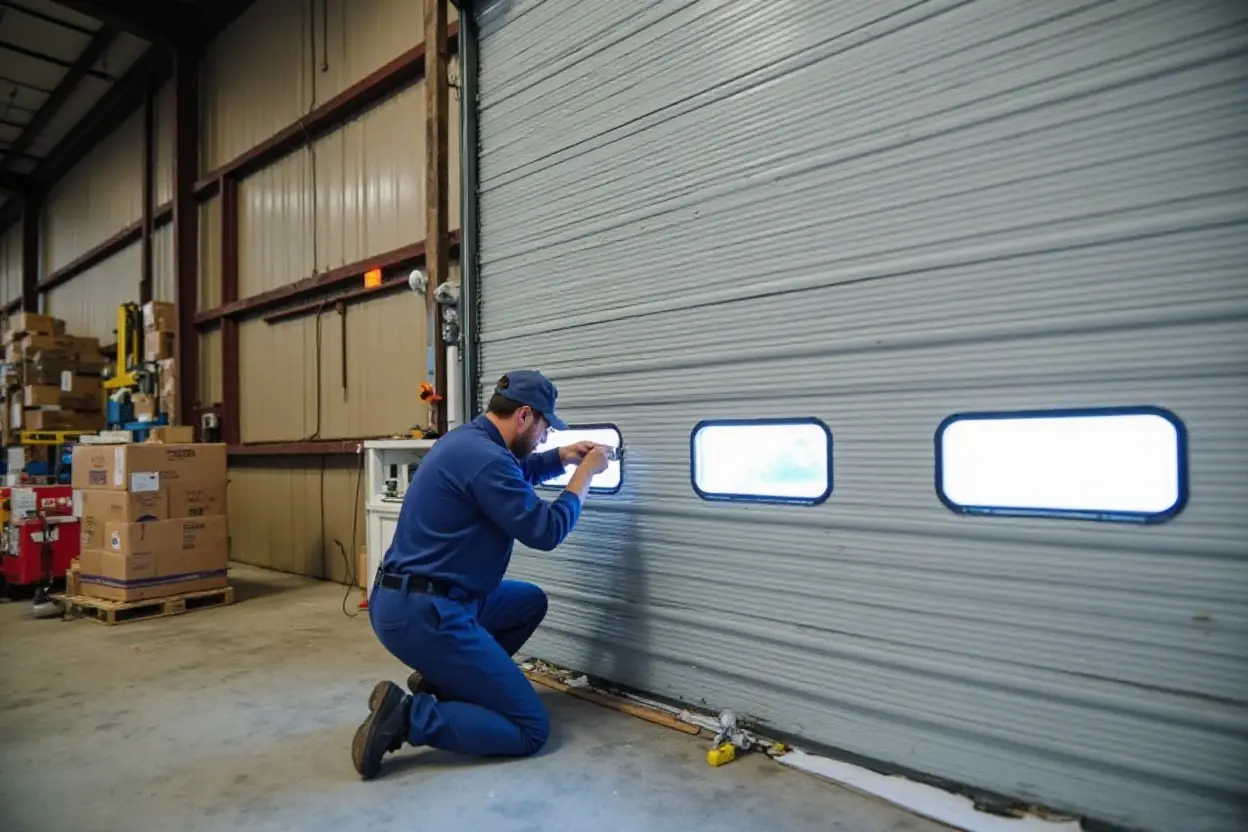
Buffalo-Specific Failure Modes to Weigh Before You Choose
Cold. Salt. Impact. Those three shape the service calls for Buffalo and the neighboring towns. Typical problem tickets include frozen tracks, brittle torsion springs, off-track doors after a bumper hit, misaligned slats from forced operation, motor burnout from packed snow at the sill, salt corrosion eating bottom bars and weather stripping, and photo-eye obstruction after drifting snow. These affect both door types and guide which one fits better for the site and staff behavior. If the team tends to force a stuck door, a rolling steel curtain with stout guides is more forgiving. If staff keeps thresholds clean and values heat retention, a sectional assembly wins the day.
Quick Chooser: Which Door Works Best Where
Many Buffalo facilities run both types for good reason. One opening may demand high security and rough service. Another may prize a high R-value. Use the following as a fast screen before a site visit:
- Pick sectional doors for heated warehouses that need the best insulation and low air infiltration.
- Pick rolling steel for rough yards, frequent forklift contact, or downtown storefront security.
- Pick rolling steel fire doors where code requires tested drop mechanisms and annual drop-testing.
- Pair a high-speed Rytec interior door with an exterior sectional or rolling steel door to save heat and time.
- Use rolling steel when headroom is tight or structural obstructions block sectional tracks.
Engineering Details That Matter in Western New York
Door performance rises and falls on specific components. Torsion springs must match the cycle profile and winter temperature swings. In Buffalo, steel contracts in cold and expands during brief thaws, which stresses spring steel. The right wire size and spring length keep balance safe. Barrel assemblies need concentricity checks and proper bearing plates. Frozen grease turns viscous, so low-temperature lubricants prevent startup drag and motor overload. Guide tracks must be plumb and spaced per manufacturer spec to prevent slat chattering and endlock wear. Chain hoists should freewheel cleanly to allow manual operation during a power loss.
Weather stripping and bottom brushes reduce ice bond at the sill. Tight seals also block salt-laden slush from reaching the inner line of hardware. Where salt corrosion already started, the team replaces rusted door slats and bottom bars with coated or stainless options. In salted dock approaches from West Seneca to Orchard Park, this upgrade pays off fast. For radio controls and jackshaft openers, cold-rated boards avoid nuisance faults at sub-zero temps. Photo-eyes should sit high enough to miss common plow drifts, yet low enough for safety with foot traffic. That is a local judgment call that comes from seeing dozens of docks in 14203 over many winters.
Local Footprint and Response Time
Response time beats theory during a snow event. A-24 Hour Door National Inc places technicians near Buffalo Riverworks, the Peace Bridge, and the Canalside zone to hit downtown docks fast. Coverage extends into Cheektowaga, Amherst, Tonawanda, Lackawanna, Williamsville, and Orchard Park. Calls for roll-up doors repair Buffalo often arrive before dawn. The dispatch line routes the nearest truck. The crew carries endlocks, weather stripping, bearing plates, and photo-eyes as standard. The goal is same-day repair under most conditions with a 24/7 emergency posture.
That footprint also supports scheduled work for brands like Overhead Door Corporation, Wayne Dalton, Clopay, Amarr, CornellCookson, Raynor, Hormann, LiftMaster, and Genie. AAADM certified technicians handle OSHA compliant safety testing and produce documentation for insurance and building audits.
Real Site Scenarios Across Buffalo
On Ohio Street near the First Ward, a rolling steel door took a forklift hit at the bottom bar. The curtain telescoped. Operations paused. The crew removed the damaged slats and set new endlocks. They checked guide tracks and squareness, then re-tensioned the barrel assembly. The door returned to service in under three hours with minimal heat loss since the opening faced the river wind. In that location, rolling steel made sense due to impact exposure and headroom limits under a bridge girder.
At a heated warehouse in 14221 serving medical supplies, a line of insulated sectional doors cut gas spend in the first winter by a measurable margin. The team installed upgraded weather stripping and bottom brushes. They balanced torsion springs for high cycles and set jackshaft openers with soft-start logic. The bay area stayed warmer during polar dips. Forklift traffic was careful, and the doors stayed square all season. Sectional made sense for energy and indoor comfort.
At a Cheektowaga cold storage dock, a Rytec high-speed interior door handled main cycles. Outside, a fire-rated rolling steel curtain provided after-hours security and code compliance. The company set drop-testing intervals, logged passes for NYS compliance, and trained staff on manual chain hoist operation during outages. This pairing controlled frost and met security rules without compromising throughput.
Maintenance Cadence for Buffalo Winters
Winter maintenance is not optional near Lake Erie. It is a rhythm that keeps doors moving during storms. A disciplined schedule targets the parts that fail first under Buffalo loads. The following cadence reflects what works across South Buffalo, Elmwood Village, Allentown, and the rail-adjacent corridors:
- Quarterly checks: balance torsion springs, inspect bearing plates and chain hoists, re-lubricate guides with low-temp grease.
- Pre-storm checks: clear thresholds, test photo-eyes, confirm radio controls and jackshaft openers run without stutter.
- Post-storm checks: remove packed ice from guide tracks, clear weather stripping, and look for dented bottom bars.
- Salt season: rinse tracks and bottom bars, check for early salt corrosion on door slats and endlocks.
- Annual: conduct OSHA compliant safety testing, fire door drop-testing, and a full 25-point Industrial Door Safety Inspection.
Choosing with Confidence: A Practical Matrix for Erie County
Start with the building and the behavior on site. If docks face the lake wind and gas bills spike each winter, lean sectional with insulated sandwich panels. If forklifts make tight turns and doors take hits, lean rolling steel for quick slat replacement and sturdier guides. If a fire separation line crosses the opening, pick a fire-rated rolling steel solution and set a drop-testing calendar. If the ceiling is cluttered with old beam work, rolling steel saves headroom and money. If cycle speed is the chief metric, place a high-speed door inside the envelope and use either rolling steel or sectional for exterior seal and security.
Brand ecosystems matter too. If the facility standardizes on LiftMaster jackshaft operators and already stocks logic boards, keep that platform. If the chain of sites uses CornellCookson slats for most curtains, that simplifies parts across locations. A-24 Hour Door National Inc repairs Wayne Dalton, Clopay, Amarr, Raynor, Hormann, and Overhead Door Corporation equipment daily. That cross-brand fluency shortens diagnosis when a truck rolls to 14202 or 14204 in the dark after a storm alert.
Signs You Need Immediate Service
Some symptoms mean stop and call for help. A torsion spring that looks spaced or gapped means a break. Do not operate the door. A motor that hums and stalls during sub-zero temps may burn out if forced. A door that hangs crooked signals an off-track condition or misaligned slats. Bottom bars that scrape the sill or bounce point to ice bond or bent sections. Photo-eye obstruction warnings during clear floors usually mean misalignment or condensation on the lens. Service now prevents a bigger bill later. The roll-up doors repair Buffalo line exists for this window. Crews respond 24/7 and stabilize the opening, then bring the door back to spec.
What a Good Site Visit Looks Like
An effective visit starts with a walk from the parking apron back to the furthest dock. The technician notes snow drift lines, gutter discharge points, and where salt tracks inside. They inspect guide tracks for frost, check endlocks for play, and verify chain hoists run. They pull the bottom weather stripping and inspect the sill condition. They review opener amperage draw in cold start and confirm radio controls and photo-eyes respond. If the site uses fire-rated doors, they plan drop-testing and provide OSHA compliant safety testing results with timestamps. If the building is downtown near the Albright-Knox Art Gallery or the Buffalo City Hall, they also assess storefront exposure risks and recommend security grilles where needed.
Why Local Knowledge Matters More Than Spec Sheets
Spec sheets do not account for lake-effect snow piling against a door at 3 a.m. They do not show what salt corrosion does to endlocks by late February. They do not note how a Jackshaft operator behaves after a week below zero. In Buffalo, experience closes that gap. Technicians who replace snapped torsion springs in 10-degree wind know which lubricants survive the night. They know how to set a barrel assembly to avoid creep under thermal swings. That is why a Buffalo-based contractor with AAADM certified technicians and OSHA compliance programs solves chronic issues faster. The company’s preventative maintenance plans reflect these facts. The plans reduce emergency calls for frozen guide tracks, motor burnout, and off-track doors across Erie County.
Neighborhood and Landmark Coverage That Signals Real Reach
Coverage is not a claim. It is trucks on the road near the places that matter. A-24 Hour Door National Inc works near Buffalo Riverworks and Canalside for downtown distribution. It reaches Allentown and the Elmwood Village for retail roll-ups and security grilles. It serves South Buffalo and the First Ward for historic warehouse retrofits and rolling steel installations. It handles Amherst, Tonawanda, Cheektowaga, Williamsville, and Orchard Park for industrial overhead doors and dock leveler support. It knows the approaches near the Peace Bridge, so border-adjacent facilities get fast service. That footprint supports same-day calls for misaligned slats, dented bottom bars, and salt corrosion fixes.
Service Capabilities That Match Buffalo’s Needs
The company covers the full scope: commercial door repair, rolling steel door installation, industrial overhead doors, loading dock repair, sectional door maintenance, and emergency board-up service. Appliance types include jackshaft openers, high-speed rolling doors, fire-rated doors, security grilles, insulated sandwich doors, dock levelers, and radio controls. Part work involves torsion springs, door slats, guide tracks, barrel assemblies, endlocks, weather stripping, bottom brushes, bearing plates, chain hoists, and curtains. The team completes fire door drop-testing and documents OSHA compliant safety testing. It offers same-day repair and 24/7 emergency service, with preventative maintenance plans for Western New York sites that run through the night.
Brand coverage spans Overhead Door Corporation, Wayne Dalton, Clopay, Amarr, Raynor, Hormann, CornellCookson, LiftMaster, Genie, and Rytec. High-speed Rytec doors receive special attention for cold storage and food distribution near the lakefront, where cycle speed and seal integrity protect inventory. Certified technicians keep NYS building code requirements in view and align operators and safety sensors accordingly.
Final Call: Sectional or Rolling Steel for Your Building
Pick sectional doors for energy control in heated spaces and for cleaner seals against Buffalo wind. Pick rolling steel for abuse resistance, tight headroom, and strong night security. Combine a high-speed interior door with either option when cycle time and heat loss both matter. If the site needs fire separation, rolling steel fire doors answer cleanly. If parts commonality and brand standardization help, match the choice to existing LiftMaster, Genie, CornellCookson, or Wayne Dalton assets.
A-24 Hour Door National Inc backs that choice with fast roll-up doors repair Buffalo, local stocking, and 24/7 emergency coverage. The company aligns service with the realities of Erie County winters and the humidity of lakefront sites. That keeps docks open, motors cool, and doors square in the tracks throughout the storm cycle.
Ready for a Decision or Need Emergency Help?
Request a 25-point Industrial Door Safety Inspection for your Buffalo facility. The visit covers torsion spring balance, barrel assembly alignment, endlock wear, guide track spacing, weather stripping compression, bottom brush condition, bearing plate fasteners, jackshaft opener amperage, radio controls range, and photo-eye function. The team documents OSHA compliant safety testing and, if needed, completes fire door drop-testing on site.
For immediate issues like frozen tracks, brittle torsion springs, misaligned slats, off-track doors, motor burnout, salt corrosion, dented bottom bars, or photo-eye obstruction, contact the 24/7 dispatch line. Technicians are already near I-190, the Peace Bridge, and Canalside for fast arrival. Service covers Buffalo, NY and all nearby zones, including Cheektowaga, Amherst, Tonawanda, West Seneca, Lackawanna, Williamsville, and Orchard Park.
Call the 716 service desk now for same-day commercial door repair, preventative maintenance scheduling, or rolling steel and sectional door installation guidance. As a fully insured commercial contractor with AAADM certified technicians, the company stands behind every repair and installation across Western New York.
A-24 Hour Door National Inc provides commercial and residential door repair in Buffalo, NY. Our technicians service and replace a wide range of entry systems, including automatic business doors, hollow metal frames, storefront entrances, fire-rated steel and wood doors, and both sectional and rolling steel garage doors. We’re available 24/7, including holidays, to deliver emergency repairs and keep your property secure. Our service trucks arrive fully stocked with hardware, tools, and replacement parts to minimize downtime and restore safe, reliable access. Whether you need a new door installed or fast repair to get your business back up and running, our team is ready to help.
A-24 Hour Door National Inc
344 Sycamore St
Buffalo, NY 14204, USA
Phone: (716) 894-2000
Website: https://a24hour.biz/buffalo
Instagram: @a24hourdoor
Facebook: 24 Hour Door
Yelp: A-24 Hour Door National (Buffalo)
X (Twitter): @a24hrdoor