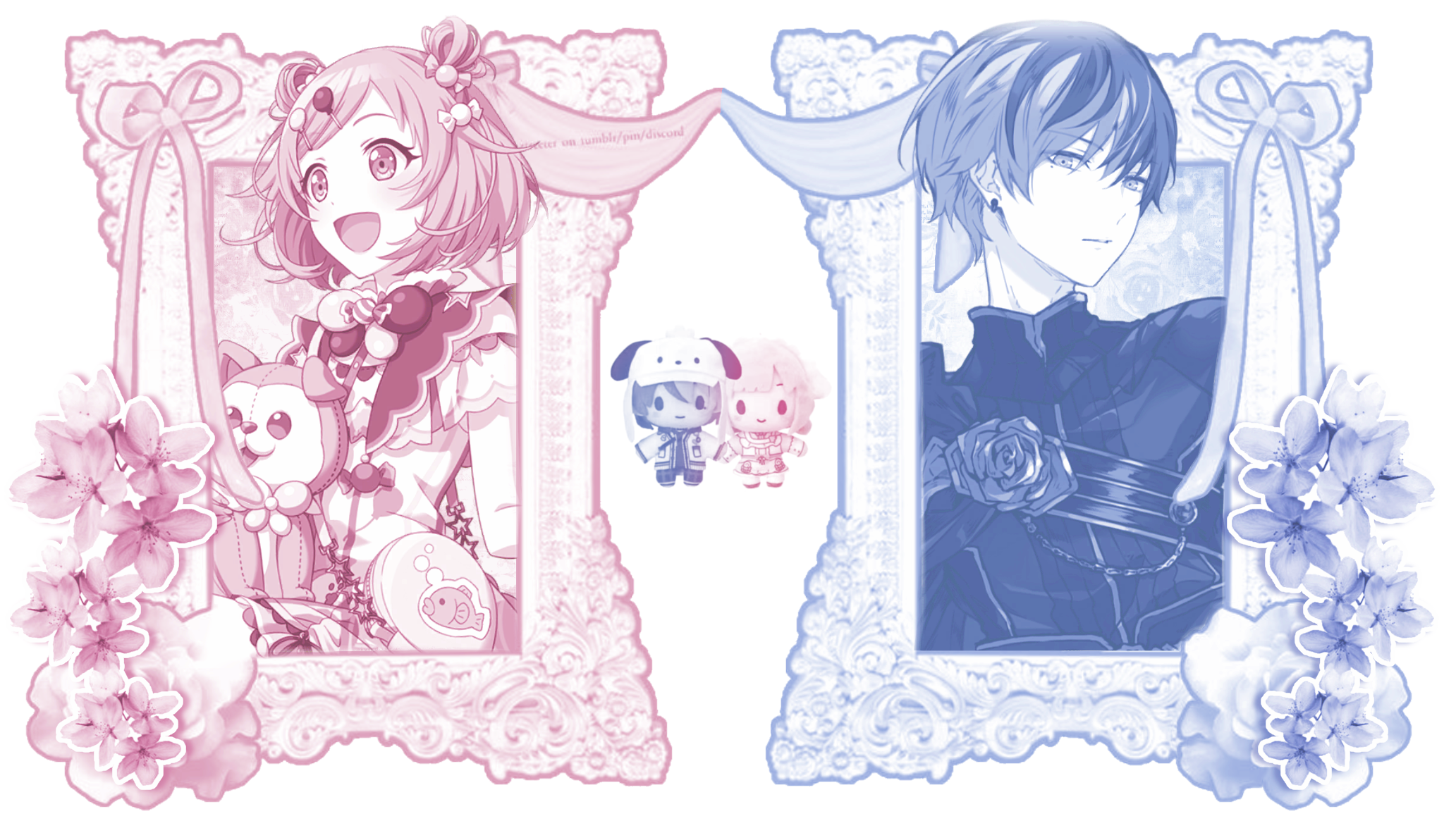
 青鳳 ﹕ a small emutoya analysis (✿ᴗ͈ˬᴗ͈)
i have always felt that emu and toya's parallels could possibly yield way to connection through understanding the differences. because the lines aren't quite "parallel," per se; they intersect at the common point that is love. while their expression of it is vastly different, there is common ground with their emotional depth. their characters reflect back onto their first passions: art. the simple things of art that seem to be so little, yet make such a huge difference: the micro-expressions of theatre, the pedal of a piano... how interesting, isn't it? the forms of art we know today are born from passion. it's complicated, really, but isn't that what makes it beautiful? the love that was poured into every countless form and iteration, making every detail perfect—the intricate details, the errors and imperfections, the fragility of it all; it is what makes it beautiful. what we know today is a testament of love and artistry. and so is emu and toya, whose versions of love play an integral part of their character, reflecting back onto the complexity of their family's dynamics.
青柳 ﹕ toya's entire character serves as a product of his parents' undying love for music. and while it was most definitely bitter and cruel, he is forgiving because of that. the execution was far from perfect, yet it fostered a sense that everyone must love differently just as his family did. toya still admires his father's passion for music, for it was the first time he ever fell in love, and it's something he can't change about himself. he is empathetic towards others because of what he's seen from his father and what he's went through, and thus he is willing to understand and forgive because of the "love" he's been subjected to. when he fell in love with music for a second time with vbs, it was unconventional—maybe even ugly because it went against his family’s wishes—but it was love too, and it was his. he reconciles the pain of his past with his love for music and therefore it yields to connection and forgiveness. there was love in rebellion and change, and there is love in grieving what he could've been. and so when he can find love in what is deemed harsh or unacceptable, what’s left for him to put others to a less standard than himself?
鳳 ﹕ with emu, it's no secret that her first love was the wonder stage. maybe that was the magic of her childhood—the bear who still found love despite thinking it was impossible, maybe the woodland creatures who gave the bear a chance. she fell in love with the performances: the thought of something, some place being able to bring so many people happiness feels like such a dream, but it is a dream she is willing to turn into reality, even if others may disagree. unlike toya, whose source of love kept him confined in a place, emu's wanted to bring her to different places; to take the joy and love she found at the wonder stage, and carry it far beyond. when she realized the wonder stage has already done its job—fulfilling her happiness—it wasn't an end to her childhood dreams, it was merely the beginning of a new chapter; she carries a belief that everywhere, any time, love can still be created, changed, and nurtured. therefore, she is also changed by her first love, and no words may ever capture how much family means to her.
and when you have these two characters whose expressions of love were shaped completely differently, you get a dynamic that is contrasting, yet still leads toward one meeting point—understanding. because it's what allows toya to forgive, and emu to embrace. toya still carries his father's devotion to music, and emu still carries her grandpa's dream for the stage, both painfully so; toya no longer rejects his past because he chose to understand the product of suffering, and if ever she knew, emu would take time in understanding him, because for her, seeking connection means to meet someone with acceptance. she's expressive because she believes every smile brings her closer to others, but when confronted with a boy who hardly ever smiles, doesn't that belief feel almost trivial? but toya's expressive in the small little things. his patience, maybe his presence when words are absent, or his ability to understand others' emotions—even if he can't understand his own, he tries. he tries for others. as does emu, who'll take time out of her day to help him understand his feelings: the sad ones, the happy ones, and what causes such responses.
so yes, however different otori emu and aoyagi toya may be, when joy and patience wear different faces... even if you may not see them as a pair—even if for a single moment you do, there'll always somehow be harmony in their stories, and perhaps you may hear the melody too.