Permanent LED Illumination Installation Ideas for Elegant Outdoor Setting
A well-lit exterior alters the way a home feels after sunset. Not just from the curb, however from the veranda, the driveway, the patio, and the yard where individuals in fact hang around. Excellent lighting does not shout. It shapes the style, softens darkness, enhances safety and security, and makes ordinary nights really feel a little even more considered.
That is why interest in Permanent LED Illumination Setup has expanded so promptly. Homeowners who when pulled out ladders every winter season or strung temporary café lights every springtime are currently trying to find something more refined and long lasting. They desire a system that functions year-round, blends right into the structure, and can move from downplayed sophistication on a Tuesday evening to festive shade during a vacation gathering. The obstacle is obtaining that versatility without making your home resemble a motif park.
The most successful installments begin with restriction. Sophisticated outdoor atmosphere is seldom around more fixtures. It has to do with far better placement, much better shade temperature, and much better control. When the system is thoughtfully developed, your house looks ended up, not overlit.
The distinction between long-term lights and seasonal lighting
A lot of people listen to "Long-term Holiday Lights" and imagine visible tracks, brilliant shades, and a roofline that just makes sense in December. That version exists, yet it is only one piece of what permanent exterior lights can do. The group has grown. Numerous newer systems sit inconspicuously under soffits, tuck right into trim details, or integrate along fascia lines so they are almost unnoticeable during the day. At night, they can provide warm white architectural illumination for a lot of the year, then switch to holiday scenes when the event requires it.
That twin function is what makes the financial investment sensible. As opposed to paying for short-term installs every season or changing weather-damaged hairs, homeowners can utilize the very same infrastructure for everyday appeal, security lighting, enjoyable, and vacations. In my experience, the property owners happiest with these systems are not the ones who wanted the brightest display. They are the ones that wanted their residential property to look calm, refined, and easy to live with.
Start with the style, not the app
Lighting business usually lead with app functions, shade areas, and presets. Those issue, however they must come later on. The very first inquiry is always architectural: what is entitled to light?
A tall gable might gain from a soft roofline wash. A rock façade may need a reduced, warmer angle to expose texture. A deep front porch can quickly come to be a dark space unless lighting is split under the overhang. A contemporary home with clean straight lines typically desires accuracy and restriction, while a traditional home with columns, dormers, and fully grown landscaping can take care of more deepness and variation.
One of the most usual mistakes in Permanent LED Illumination Installation is treating every residence the same. A cottage, a colonial, and a modern farmhouse do not require the same spacing, output, or beam pattern. If you light all three with the same design template, all 3 will look a little wrong.
The better technique is to determine the leading aesthetic lines of the home and construct outward from those. Roof covering heights, eaves, veranda beams, garage surrounds, pathway edges, and essential landscape functions can work together if they are not competing. Outside lights should lead the eye, not pull it in 6 directions.
Roofline lighting that vanishes by day
For most homes, the roofline is the natural beginning factor. It specifies the silhouette and provides tidy continuity. However sophisticated roofline lighting relies on concealment. The components, channels, or pixel nodes need to be hidden from regular sightlines as long as possible. If you can stand at the aesthetic in daylight and quickly observe the hardware, the installation generally requires more thought.
Under-soffit placement often tends to function well because it guards the resource and softens the impact. In homes without soffits, trim-mounted channels can still look clean if they are color-matched and meticulously aligned. This is where workmanship matters. A line that roams also half an inch can come to be surprisingly evident, especially on easy modern-day façades.
For daily atmosphere, numerous house owners pick Classic Cozy Soft Lighting in the 2200K to 3000K variety, depending upon the home's products and existing fixtures. That cozy range flatters brick, timber, and natural rock. It likewise really feels welcoming instead of business. Cooler whites can deal with particular modern homes, however they are far much less flexible. In many neighborhoods, cozy light ages much better and mixes a lot more with dignity with porch sconces and landscape lighting.
Layering the front access for depth
The front door is where elegance ends up being individual. It is the place visitors technique, packages arrive, and family members return home at the end of a lengthy day. Yet numerous entrances are either overlit by a single extreme component or underlit in such a way that feels gloomy.
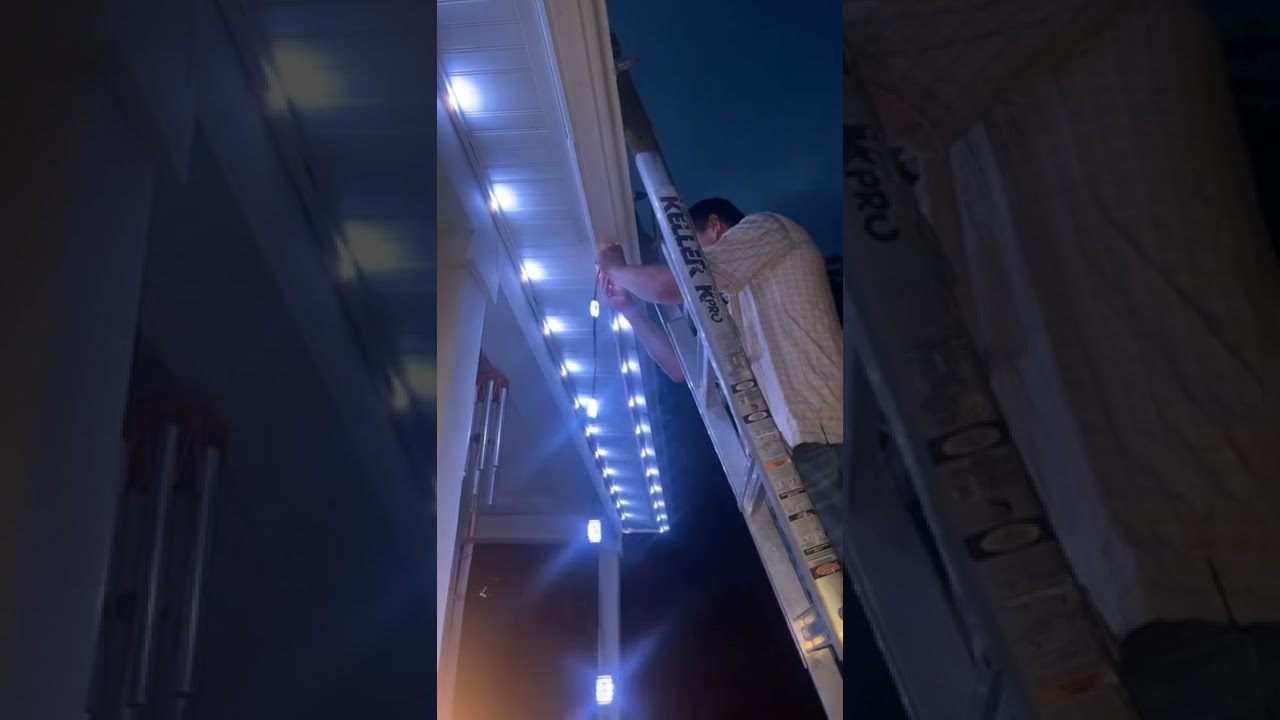
Permanent outside LEDs can assist, however they need to not replace every other light source. The best access utilize layers. The long-term system can define the roofline or veranda side while devoted sconces, recessed lights, or refined action lights take care of human-scale illumination. This produces dimension. It additionally avoids the level, washed-out look that takes place when one system tries to do every job.
I as soon as saw a good-looking two-story block home where the owner had set up a solid direct roofline system and presumed that would address the dark deck trouble. From the road, the home looked laid out wonderfully. From the front steps, the porch still really felt cave-like. The solution was basic: lower-output recessed cans in the deck ceiling and warmer light bulbs in the side lanterns. Suddenly the house made good sense. The lesson was not that the roofline system fell short. It was that ambient architecture lighting and functional entry lighting require to function together.
Landscape integration makes the entire building feel intentional
Permanent LED systems are commonly discussed as if they belong just on the house. Actually, several of one of the most elegant outcomes come from what occurs beyond the wall surfaces. A roofline alone can really feel a little bit detached if the yard drops right into darkness. Also small landscape lighting can bridge that gap.
Trees near the front altitude are especially beneficial. A soft uplight on a Japanese maple, olive tree, or mature oak gives the façade context and range. Low course lights can draw the eye from the driveway to the access without transforming the sidewalk right into a flight terminal path. Wall grazing on a rock planter or gentle light on ornamental grasses can echo the tones of your house lighting and make the scene really feel composed.
The key is equilibrium. If the landscape is considerably brighter than your home, the design vanishes. If the house is much brighter than the landscape, the yard feels ignored. The very best nighttime outsides have an even visual discussion between developed and planted elements.
Backyard setting deserves a various approach
Front-of-house lighting typically leans architectural and restrained. The yard can be softer, lower, and extra intimate. That does not indicate laid-back or random. It implies the priorities shift.
A patio area used for eating requirements flattering light at table elevation or a little above, not a blast from the roofline. A swimming pool area may need side definition and safety presence without glare mirroring off the water. A pergola take advantage of hidden linear light tucked right into beam of lights or blog posts. Exterior cooking areas require job lighting that is stronger than lounge lights, but not sterile.
This is where permanent systems can beam, particularly when the controls permit different areas. The cooking area can run brighter while seating areas stay reduced and cozy. During a party, the perimeter can be lifted for atmosphere. Late in the evening, a lot of the backyard can dim down while stairways and accessibility courses continue to be visible.
Many homeowners take too lightly just how little light is required in a backyard to produce convenience. You do not need to completely illuminate every edge. Actually, darkness becomes part of what makes a backyard really feel relaxing. The method is to light thresholds, gathering locations, and focal functions while letting the edges drop away naturally.
Color should be an accent, not the default
One of the most significant marketing factors of Permanent Vacation Lighting is programmable shade. Used sparingly, that function is fantastic. Made use of continuously, it can undervalue the appearance of an otherwise attractive home.
For a lot of the year, warm white or extremely soft brownish-yellow tones produce the most sophisticated result. Color is finest reserved for moments with a reason behind them: wintertime holidays, local group celebrations, birthday celebrations, graduations, or seasonal occasions. Even then, less shades normally look better than more. 2 worked with tones can feel sleek. Five chasing after patterns across every elevation usually do not.
A specialist installer ought to want to talk a customer out of certain options. That may sound strange, yet great illumination style entails editing and enhancing. The application may provide loads of impacts. Your house just requires a handful that truly match it.
I have actually seen homes where the proprietors originally desired every holiday configured with full-spectrum animation. After dealing with the system for a couple of months, they seldom made use of those presets. What they enjoyed was the nighttime warm white setup, a soft fall brownish-yellow for outside dinners, and a restrained red-green palette in December. The advanced setups ended up being the faves since they made your home look costly, not busy.
Where long-term systems work especially well
Some homes profit more than others from an irreversible solution. Huge multi-level homes with complicated rooflines often see the clearest payback due to the fact that temporary lights is challenging and costly every year. Homes with high peaks, high driveways, or challenging winter season access also get a safety advantage by lowering seasonal ladder job. Entertaining-focused houses appreciate the flexibility, particularly if the outdoor rooms are made use of in a number of seasons.
Older homes can also profit, however they require extra level of sensitivity. Historic trim information, irregular surface areas, and noticeable workmanship mean the installation must be very discreet. On those tasks, the mounting technique is typically as important as the light result. A bad set up on a captivating older house stands out immediately.
Warmth matters more than brightness
People often tend to go shopping lighting by brightness because it really feels quantifiable. Yet the emotional quality of exterior lights comes far more from heat, distribution, and contrast than from raw outcome. A brighter system is not always a better one.
Classic Cozy Soft Lights continue to be popular for a factor. They flatter complexion at the front door, they match natural products, and they help homes really feel lived in instead of simply presented. In practical terms, they likewise produce much less visual fatigue. Neighbors value them much more. Visitors stick around more pleasantly. And from indoors, looking out right into a comfortably lit exterior really feels calmer than looking at a cool white perimeter.
Brightness still fits. Driveway changes, side-yard access routes, and step sides might need more powerful lighting for security. However those areas must be resolved with intent, not by worldwide raising the output of the entire system.
Controls can make or break the experience
An attractive lighting installment loses value fast if it is frustrating to utilize. Property owners ought to be able to establish scenes, schedules, and seasonal changes without requiring a hands-on each time. The very best systems use simple control for everyday usage and deeper personalization for individuals who desire it.
At a minimum, it aids to think in terms of zones. The front altitude, access, yard entertaining area, paths, and accent functions should not all be looped with the same actions. A peaceful weeknight setting may require subtle front and course lights only. A vacation event might increase to include the backyard and shade accents. An away mode could keep the front energetic while restricting every little thing else.
Reliability issues as long as attributes. Outside systems endure warm, moisture, plant pollen, dust, and freezing problems. Controllers, connections, and power products require climate security and practical https://www.mrmhomeservices.com/our-services/permanent-holiday-lights/greenbrae/ placement. It is rarely the LED itself that triggers irritation first. Regularly it is a weak connection, a badly secured component, or a control user interface that was oversold and under-tested.
Installation information that divide excellent from excellent
There are a few details that experienced installers pay very close attention to because they affect the try to find years afterward. Color-matched networks and bolts are one. Cord administration is one more. Serviceability issues too. If a section requires maintenance, can it be accessed easily without disrupting the rest of the run?
Spacing is a major decision. Broader spacing can decrease visual density and expense, yet may develop populated factors of light rather than a smooth line, specifically on larger homes. Tighter spacing can look richer, though it might be greater than a moderate façade needs. The appropriate answer depends upon seeing distance, building range, and whether the system is primarily made use of for warm white beauty or for computer animated vacation effects.
Here are a couple of practical concerns worth answering before installation begins:
Where will certainly the equipment be least noticeable in daylight? What cozy white setup will be the daily default? Which locations require independent control zones? How will power products and controllers be shielded and accessed? What parts of your home ought to remain dark for contrast?
Those questions seem simple, yet they protect against many pricey disappointments. The goal is not merely to obtain lights onto your home. The objective is to make the home look much better every night.
Matching style to home type
Different building styles react differently to permanent lighting. On a modern home, also spacing and a clean hidden line can emphasize geometry perfectly. On a craftsman or farmhouse, a somewhat softer therapy with warm tones and sustaining veranda lights typically feels extra natural. Mediterranean and seaside homes commonly gain from a gold warmth that plays nicely with stucco and floor tile. Brick colonials can look magnificent with restrained roofline emphasis and thoroughly lit trees as opposed to hostile outlining.
This is one area where showroom demos can be misleading. An intense computer animated display screen might look exciting on a sample board or in a sales video clip, yet what matters is how the light sits on your real home after dark, from several angles, in all periods. Mockups or short-term examination areas can be unbelievably useful. Also a solitary evening test on one roofline segment can reveal whether the color temperature level or node spacing feels right.
Budget expectations and where to spend wisely
Costs vary commonly based upon straight video footage, home height, system type, and labor problems. A single-story home with straightforward eaves is an extremely various task from a tall customized home with numerous optimals, rock outlining, and incorporated landscape areas. As opposed to chasing the most affordable quote, it aids to understand where money is well spent.
Concealment, weatherproofing, control high quality, and tidy setup labor are generally worth paying for. Those are the components you see over time. A deal system that looks unpleasant in daylight or stops working at the first power supply problem is not a deal. On the various other hand, not every task requires the most sophisticated animation bundle or the densest pixel count readily available. If the primary objective is elegant year-round setting, buying warm white efficiency and aesthetic subtlety usually matters more than acquiring every feature.
The understated appearance lasts
Outdoor lights fads come and go. Really cool whites had a wave. Excessively intense soffit lights had one as well. So did color-every-night novelty. The installments that age finest are the ones that respect your home and the neighborhood.
A permanent system should make the residential property feel even more full on a regular evening in April, not simply a lot more cheery in December. When property owners choose Permanent LED Lights Installment with that way of thinking, they usually make far better choices about placement, intensity, and controls. They select Classic Cozy Soft Lights as the standard. They utilize color with objective. They allow some areas continue to be dark. They think of the experience from the pathway, from the driveway, and from the preferred chair inside the living room.
That is where sophisticated outdoor atmosphere actually starts. Not with excess, however with self-confidence. Not with the loudest result, however with the most thought about one. A home that glows gently after sundown, invites people in, and silently highlights its finest functions will outlast virtually any type of trend. And unlike momentary setups that come and go with the period, a properly designed permanent illumination system enters into the style itself, valuable, gorgeous, and simple to appreciate every night of the year.