Can Toxic substances Raise the Anion Gap?
What Is the Anion Gap and How Is It Calculated?
The anion gap is a calculated value that helps clinicians assess acid-base balance and recognize an underlying metabolic acidosis. It represents the difference between the major measured cations and anions in the blood. In practical terms, it is calculated from the routine electrolyte panel using sodium, chloride, and bicarbonate.
The classic anion gap formula is:
anion gap = sodium - (chloride + bicarbonate)
Because this is a calculated value, it is affected by the accuracy of the underlying lab numbers. A unexpectedly high result suggests that unmeasured anions are present in the bloodstream. These may include organic acids, toxic metabolites, or other compounds that create an electrolyte disturbance and shift the body into an acidotic state.
Most clinicians also consider the role of albumin, the main unmeasured anion in blood. Low albumin can lower the apparent anion gap, so the raw number may underestimate the severity of an anion gap elevation. That is why interpretation always depends on the clinical setting, not the number alone.
The key idea is simple: the anion gap is not a diagnosis. It is a diagnostic clue that can point toward a process such as lactic acidosis, ketoacidosis, renal dysfunction, or toxin-related acidosis.
How an Anion Gap Calculator Helps Interpret Results
An Anion Gap Calculator makes it easier to using the formula accurately and without delay. Instead of estimating the calculation by hand, a clinician or patient can enter the relevant laboratory values and get an immediate result. This can be useful when trying to decide whether a reported lab pattern fits a normal reference interval or suggests delta ratio in mixed acid base an abnormal acid/base process.
Beyond simple calculation, the best use of an Anion Gap Calculator is clinical interpretation. A number by itself rarely answers the full clinical question. The result should be viewed alongside the findings with symptoms, vital signs, medications, exposure history, and the rest of the chemistry panel.
Many calculators also include albumin correction. This matters because a low albumin level can mask a true gap. Correcting for albumin improves laboratory interpretation and helps avoid missing an important metabolic derangement. If albumin is low, a patient may have significant high anion gap metabolic acidosis even when the uncorrected value appears only slightly elevated.
Using a calculator can also help separate a true metabolic problem from a reporting issue. For example, an electrolyte panel may show a borderline gap, but the presence of low bicarbonate, elevated lactate, or an abnormal blood gas may reveal a more serious process. The calculator therefore supports a broader pattern-recognition approach in place of replacing clinical judgment.
In toxin evaluation, the calculator can serve as an early screen. If the gap is elevated, clinicians may think about exposures that generate unmeasured anions. If the gap is normal but suspicion remains high, further testing may still be needed.
Can Harmful agents Elevate the Anion Gap?
Absolutely. Certain toxins can elevate the anion gap by creating acids, blocking metabolism, or causing accumulation of toxic metabolites. This is a well-known cause of increased anion gap metabolic acidosis. In these cases, the body builds up acidic compounds that are not directly measured on a standard panel, so the gap expands as bicarbonate declines.
A harmful ingestion often causes more than one abnormality at the same time. The patient may have stomach upset, emesis, dizziness, disorientation, tachypnea, or increasing exhaustion. Lab results may show low bicarbonate, rising chloride changes, and an increased anion gap. The exact pattern depends on the compound involved and how long ago the exposure occurred.
The mechanism is often a form of metabolic acidosis caused by excess acid generation or impaired acid clearance. Some exposures directly produce acids, while others impair cellular respiration, creating lactic acid accumulation or other downstream effects. In all cases, the gap is an indicator of accumulation of unmeasured acidic substances.
Notably, toxin-related acidosis is not limited to one poison. Several agents can lead to a comparable chemistry pattern, which is why exposure history and targeted testing are crucial. The anion gap provides an early signal, but not the full diagnosis.
Typical Toxic Causes of a High Anion Gap
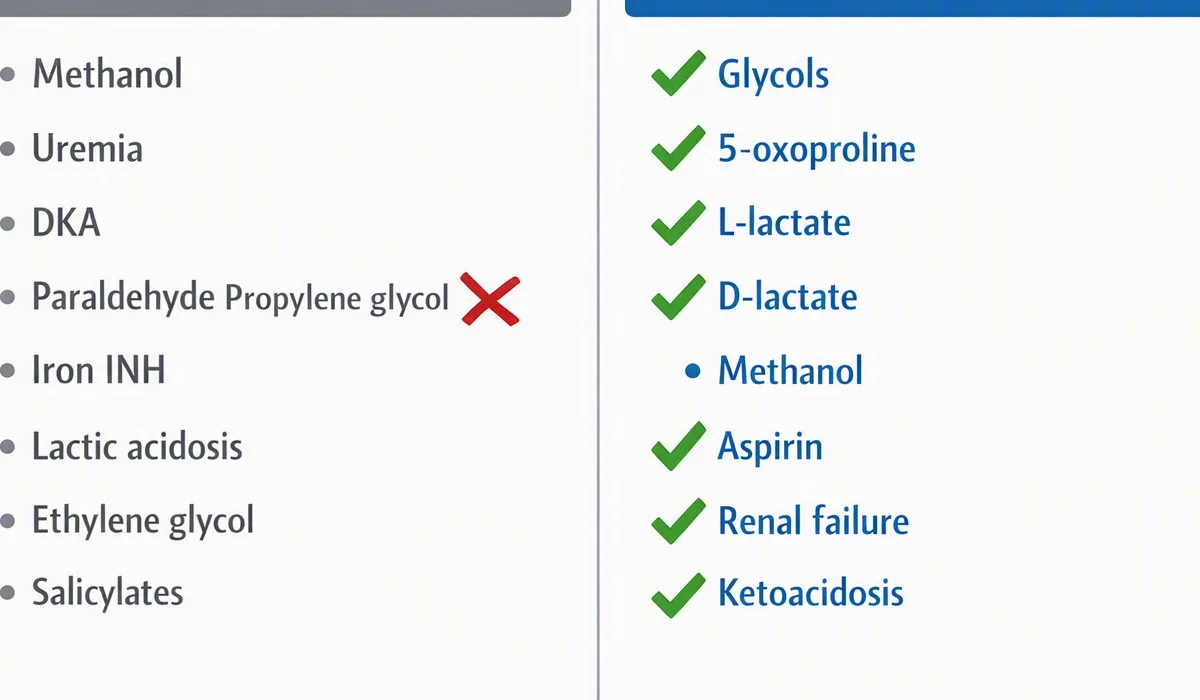
Several toxins are classically linked to a high gap. The main include methanol, ethylene glycol, and salicylates, along with conditions that produce lactic acidosis. Such causes can be life-threatening and may present with nonspecific poisoning symptoms.
Methanol is highly dangerous because it is metabolized into acidic compounds, including formic acid. This leads to acidosis and may also affect vision and the central nervous system. An elevated gap in the setting of exposure history should raise urgent concern.
Ethylene glycol, found in some antifreeze products, is metabolized into glycolic acid and other acids. These toxic metabolites can drive a sharp rise in the anion gap and create kidney injury, neurologic changes, and worsening acidosis.
Salicylates can produce a mixed and evolving picture. Early on, respiratory alkalosis may dominate, but as toxicity progresses, a high gap metabolic acidosis may emerge. Because of this, the lab pattern can change over time and may not be obvious on a single sample.
Lactic acidosis is another major contributor to a high gap. Although not always caused by an external toxin, it can result from impaired tissue oxygen use, shock states, seizures, or severe poison exposure. In toxin evaluation, rising lactate is a major clue that cells are struggling to generate energy normally.
Other poisonings can also contribute, but these are among the most clinically important because they are common, dangerous, and treatable when recognized early. A high gap should prompt consideration of the exposure timeline, associated symptoms, and confirmatory testing.
How Poisonous Alcohol compounds Influence pH Balance
Harmful alcohols remain among the most important causes of marked anion gap elevation. This category includes methanol and ethylene glycol, both of which can first look surprisingly mild before substantial metabolic injury develops. Their danger stems from metabolism into strongly acidic compounds.
These substances also often produce an increased osmolar gap early in the timeline. The osmolar gap represents extra osmoles in the blood and can be helpful when a toxic ingestion is suspected. With time, as the parent alcohol is metabolized, the osmolar gap may drop while the anion gap rises. Such a pattern is a major diagnostic clue.
With methanol, the critical toxic metabolite is formic acid. Formic acid drives metabolic acidosis and can damage the optic nerve, which is why visual symptoms may be important. With ethylene glycol, glycolic acid and related metabolites cause acidosis and renal injury.
The acid-base effect is more than a lab curiosity. It reflects a genuine physiologic emergency in which toxic metabolites accumulate, buffering systems are overwhelmed, and the patient enters a worsening acidotic state. That is why treatment decisions often rely on the combination of symptoms, exposure history, blood gas results, and the gap pattern.
In some cases, a patient may have both an elevated osmolar gap and a high anion gap metabolic acidosis. That combination powerfully indicates toxic alcohol exposure and needs immediate action. However, neither number alone is sufficient to rule in or rule out the diagnosis.
Other Possible Poisoning Events and Disorders That Raise the Anion Gap
Not all high gap is caused by toxic alcohols. A number of other processes can produce the same finding, including ketoacidosis, renal failure, uremia, and cyanide exposure. These conditions all cause acids to accumulate or limit the body’s ability to clear them.
Ketoacidosis occurs when ketone production rises faster than the body can use them. This can happen in diabetes, prolonged fasting, or heavy alcohol use. Ketones are organic acids, so they widen the gap and decrease bicarbonate.
Renal failure can also elevate the gap because damaged kidneys cannot excrete acids effectively. When waste products pile up, uremia develops, and the patient can progress into metabolic acidosis. This is one reason kidney function is part of the standard evaluation for unexplained acidosis.
Cyanide is particularly dangerous because it blocks cellular oxygen utilization. Even if oxygen is present in the blood, cells cannot use it properly, which can rapidly trigger severe lactic acidosis. In this setting, the anion gap may rise as lactate accumulates.
This range of anion gap in chronic kidney disease causes matter because a high gap is not exclusive to ingestion. It can also suggest internal illness, tissue hypoperfusion, or organ failure. The challenge is figuring out whether the pattern reflects a toxin-related emergency or another severe cause of acid-base disruption.
When a Normal Anion Gap Does Not Rule Out Poisoning
A normal anion gap does not exclude poisoning. This is especially true in early poisoning, when the toxic substance has not yet been fully metabolized into acidic byproducts. In that stage, the gap may still look normal even while the patient is deteriorating clinically.
Another reason for a misleading result is a mixed acid-base disorder. For example, a patient may have one process increasing the gap and another process lowering it, producing a net value that appears deceptively normal. Vomiting, hyperventilation, renal disease, or treatment given before labs are drawn can all affect the final number.
That is why clinical suspicion remains central. Symptoms, timing, access to toxic substances, mental status, and lab trends matter more than a single snapshot. If the history suggests ingestion, clinicians should not dismiss the possibility simply because the anion gap is not elevated yet.
This point is especially important with toxic alcohols and salicylates, where the laboratory picture can evolve over time. Repeating labs may reveal a developing anion gap elevation even if the first sample is unrevealing.
In short, the gap is a valuable clue, but a normal result is not a guarantee of safety.
What Other Tests Are Used Alongside the Anion Gap?
In cases where toxin induced acidotic imbalance is thought to be present, the anion gap is just one part of the evaluation. A blood gas test helps assess pH, bicarbonate status, and whether the body is in an acid-buildup state. It also helps identify whether a respiratory component is present.
Serum lactate is commonly checked because high lactate can explain a high gap and indicate tissue reduced blood flow, seizures, or toxin exposure. Increasing lactate may also indicate severe cellular stress and progressive metabolic derangement.
Ketones are important whenever ketoacidosis is possible. Checking ketones can help separate diabetic ketoacidosis, starvation ketosis, or alcohol-related ketosis from other reasons of metabolic acidosis.
A toxicology test may be helpful as well, although standard screens do not detect every toxin. Targeted testing for methanol, ethylene glycol, salicylates, or other substances may be needed based on the patient history and first lab results. For this reason targeted testing and supporting clues often work together.
Additional studies can include kidney function tests, osmolality checks, and repeat electrolyte panels. The overall goal is to integrate the anion gap with the rest of the data so the likely source can be recognized quickly and therapy can begin.
When It Is Time for Urgent Medical Evaluation
Urgent evaluation is required when toxin ingestion is likely and symptoms point to serious illness. Red flags include altered mental status, worsening breathing, persistent vomiting, fainting, seizures, changes in vision, or sudden confusion. Such findings may signal a serious acid-base disorder or worsening poisoning.
If ingestion is suspected for ingestion, contact poison control right away and seek urgent medical care if symptoms are worsening. Immediate care can have a major impact in results for toxic alcohols, salicylates, cyanide, and other poisons.
Patients should avoid delaying for warning signs to become intense if the exposure is recognized or strongly suspected. Even before a definitive diagnosis is confirmed, the combination of clinical history, a high anion gap, and supportive lab findings can justify immediate action.
A useful approach is to treat the anion gap as one piece of a wider picture. If the number is raised, the patient may need further testing and urgent management. If the number is not elevated but suspicion remains high, another review is still necessary because poisoning can change fast.
FAQ
What toxins most commonly increase the anion gap?
The most common toxin-related causes include methanol, ethylene glycol, and salicylates. These can produce high anion gap metabolic acidosis through toxic metabolites, acid accumulation, or both. Severe lactic acidosis from poisoning or tissue injury can also raise the gap.
Can a normal anion gap still happen with poisoning?
Yes. A normal anion gap can occur in early poisoning or in a mixed acid-base disorder that masks the abnormality. If clinical suspicion is high, the patient may still need repeat labs and targeted toxicology testing.
How does an Anion Gap Calculator help with toxin evaluation?
An Anion Gap Calculator rapidly uses the anion gap formula to the patient’s laboratory values. It helps identify whether the result is outside the expected reference interval, assists with identifying anion gap elevation, and can be paired with albumin correction for better laboratory interpretation.
What is the difference between anion gap and osmolar gap?
The anion gap calculates unmeasured anions and is useful for detecting metabolic acidosis. The osmolar gap estimates unmeasured osmoles and is especially helpful in suspected toxic alcohols. In some poisonings, the osmolar gap is high early, while the anion gap rises later as toxic metabolites such as formic acid and glycolic acid build up.
When should someone get immediate medical attention for possible toxin exposure?
Seek emergency care immediately for suspected toxin poisoning with altered mental status, shortness of breath, convulsions, persistent vomiting, visual changes, or fainting. Call poison control right away as well. These symptoms may signal a critical acid-base disorder that needs prompt evaluation and care.