What Scottsdale Luxury Homeowners Get Wrong About Multi-Zone HVAC Systems
What Scottsdale Luxury Homeowners Get Wrong About Multi-Zone HVAC Systems
Scottsdale luxury homes live in a different HVAC world than tract homes along Loop 101. Expansive floor plans, double-height great rooms, west-facing glass, guest casitas, wine rooms, theaters, and home gyms put serious load diversity on a cooling system. Many owners assume a single large multi-zone system will “handle it all.” In Maricopa County’s 2B hot-dry climate, that assumption creates short cycling, rooms that swing from cold to warm, humidity spikes during monsoon season, and utility bills that do not match the investment. This page speaks plainly to the design and installation details that separate a multi-zone system that just runs from one that holds 75 degrees at 4 PM in August without drama. It also frames where AC services in Scottsdale need to pivot to multiple systems or ductless equipment to serve comfort, efficiency, and reliability.
Day and Night Air Conditioning, Heating and Plumbing brings 47 years of experience across Scottsdale and Phoenix, including Arcadia and Biltmore zip codes 85018 and 85016, North Scottsdale 85255 and 85262, and Old Town 85251. The team sees the same patterns repeat in luxury builds and remodels. The fix is not a brand slogan. It is proper load calculation, duct design, zoning logic, and controls that match Scottsdale solar gain and the R-454B refrigerant transition arriving January 1, 2026.
Why zoning feels attractive, and where it breaks in Scottsdale heat
Zoning uses motorized dampers in the ductwork to open and close airflow to different parts of the home. Each zone gets its own thermostat. One outdoor unit and one air handler can then serve several areas. In theory, a family can cool the main living areas during the day and shift cooling to the bedrooms at night. On paper, zoning looks ideal for a 6,000 square foot North Scottsdale floor plan with a detached office and a glass-heavy great room facing McDowell Mountain views.
Reality in Scottsdale is less forgiving. At 3 PM on a July afternoon, roof and stucco temperatures can exceed 150 degrees. West-facing glass can double the sensible heat load in a great room compared to a shaded bedroom wing. The air handler sees a wildly different airflow requirement each hour as zones open and close. Static pressure rises when too many dampers close, which strains the blower motor, increases noise at the registers, and can push conditioned air through duct leaks into the attic. If the equipment is oversized, the compressor starts and stops rapidly. This is short cycling. It beats up the run capacitor, which is the cylindrical electrical component that stores and releases energy to start the compressor motor. Short cycling also leaves humidity high during monsoon afternoons because the evaporator coil does not stay cold long enough to condense moisture.
Scottsdale luxury owners often hear that a bypass damper will solve pressure swings. A bypass damper dumps excess supply air back into the return. That was a band-aid used on older constant-speed systems. It wastes cooling, increases return temperature, and reduces dehumidification. In a Scottsdale attic in July, bypass air can be 90 to 110 degrees, which collapses system capacity at the exact moment the home needs it most.
Manual J, Manual S, and Manual D are not optional in a Scottsdale multi-zone design
Square-footage sizing breaks Scottsdale homes. Day and Night sizes all replacements and new systems with a Manual J Residential Load Calculation under ACCA Standard 1. Manual J accounts for roof insulation, window size and orientation, overhangs, duct location and leakage, infiltration, internal loads, and the ASHRAE 99 percent design cooling temperature for the Valley, which ranges from 110 to 117 degrees depending on neighborhood elevation. Without Manual J, zoning turns into guesswork. Oversized compressors short cycle. Undersized coil and airflow struggle in the great room. Bedrooms overshoot at night.
Manual S selects the specific equipment to match the Manual J loads. This matters because a 4-ton nameplate system will have different sensible capacity at 115 degrees depending on manufacturer, coil match, airflow, and whether the unit is single-stage, two-stage, or variable capacity. Manual D designs the ductwork. Scottsdale luxury builds often have long trunk runs to a far wing or casita. Friction loss in undersized ducts kills zone performance. The result is a main zone that cools while a long-run zone starves for airflow and never catches up. A correct Manual D layout upsizes critical trunks, manages static pressure, and keeps register velocity reasonable so the room feels quiet and even.
Scottsdale climate details that change zoning math
Maricopa County sits in a 2B hot-dry classification. Summer highs run 105 to 115 degrees, with the ASHRAE 99 percent design in Phoenix proper up to 117 degrees. The urban heat island pushes west-exposure equipment pad temperatures to 130 to 140 degrees at 4 PM. This punishes compressors and run capacitors and collapses headroom for any design that counts on bypass air or big output swings within ten minutes. During monsoon season, dust events called haboobs pack caliche fines into outdoor condenser coils. That fouling can drop outdoor unit capacity by 15 to 25 percent until the coil is cleaned. A zone design that balances when the condenser is clean can fall apart after a single dust storm.
Many Scottsdale luxury homeowners also run enormous west-facing glass walls in areas like DC Ranch, Troon, Grayhawk, and McDowell Mountain Ranch. The sensible heat from that glass during late afternoon is not the same as the mixed sensible and latent load in a home gym with people and equipment. A one-compressor multi-zone system can serve both, but it needs variable capacity and smart airflow control. Otherwise, one zone is happy while another never stabilizes. This is why AC services in Scottsdale should start with modeling the real envelope loads before anyone quotes equipment tonnage.
Variable-speed equipment, inverter compressors, and the new R-454B standard
Multi-zone systems in Scottsdale work best with variable-speed air handlers and inverter-driven compressors. These can ramp from low to high output smoothly, which reduces short cycling when smaller zones call alone. They also hold coil temperature more consistently for humidity control during monsoon afternoons.
The federal refrigerant transition takes effect January 1, 2026. New equipment will use R-454B, an A2L mildly flammable refrigerant with a global warming potential of 466. R-410A, which has a GWP of 2,088, becomes a legacy refrigerant for existing systems. R-454B systems require updated technician certification, different leak detection tools, and attention to indoor concentration thresholds. Scottsdale homes with air handlers in sealed mechanical rooms or tight closets need proper ventilation and compliant installation. A quality contractor will brief the homeowner on A2L safety controls and verify that the mechanical space meets code. Owners with R-410A multi-zone systems can still service them after 2026, but they should know that refrigerant supply tightens over time. For a 2014 to 2018 vintage system with expensive repairs, replacement into R-454B may be the smarter play.
Common mistakes seen in Scottsdale luxury multi-zone projects
Day and Night sees a pattern across high-end renovations and custom builds from Old Town north to Pinnacle Peak. The list below captures the worst offenders that drive call-backs, uneven rooms, and high bills.
Oversized equipment based on square footage, not Manual J loads, which causes short cycling and humidity spikes during monsoon afternoons. Undersized return air paths and missing transfer grilles in closed-door bedrooms, which starve the zone for airflow and raise static pressure. Bypass dampers used to mask poor duct design, which dump cold air into the return and waste capacity when the home needs it most. Single-stage condensers feeding three or more zones, which cannot modulate output to match one small zone at night. Thermostat placement in sunlit hallways or near kitchen heat sources, which misreads the true room condition and overdrives the system.
Each error by itself hurts performance. Together, they turn a seven-figure build into a daily fight with a thermostat. AC services in Scottsdale that do not correct these mistakes at the design stage end up bandaging symptoms for years.
Where multiple systems and ductless mini splits beat a single multi-zone system
Some Scottsdale homes need more than one piece of equipment. A 7,000 square foot lot in Gainey Ranch with a detached casita, a wine room, and a theater rarely settles well with a single compressor. A second dedicated system for the master wing or the casita often smooths loads and cuts run time on the main system. Ductless mini splits, like Mitsubishi Electric ductless units, shine for problem rooms with extreme gains or special schedules. A west-facing office with a Zoom schedule from 2 PM to 6 PM benefits from a ductless head that cools only when needed. A gym or a workshop over the garage benefits too, especially when the main home is stable and the outbuilding is intermittent.
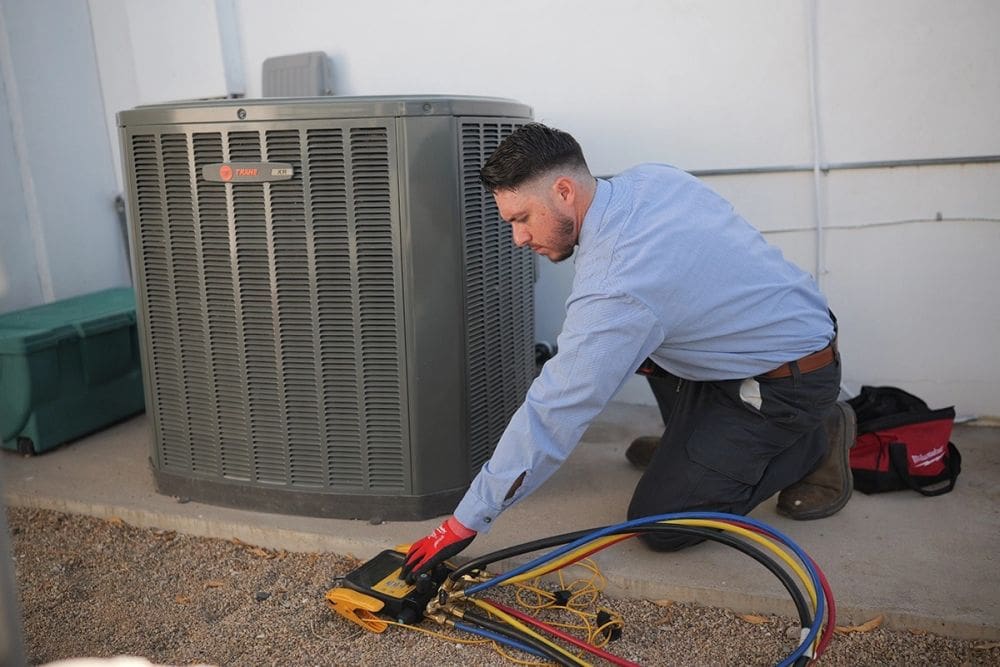
Owners sometimes push against multiple condensers because of space, HOA rules, or aesthetic plans near a patio or pool. Scottsdale lots along DC Ranch and Silverleaf often have equipment pads tucked behind view walls. A good design can place two smaller, quieter variable-speed condensers instead of one large unit. Quieter operation helps near outdoor living areas, and distributed capacity improves comfort in peak hours.
Air quality, humidity, and smoke: what zoning can and cannot fix
Zoning separates temperature control by area. It does not separate air quality unless filtration and air cleaning match the duct layout. Scottsdale owners who want low dust and wildfire smoke protection should plan for high-MERV filtration, usually MERV 11 to MERV 13, and confirm that duct sizing and blower strength can handle the added resistance. If the system cannot maintain airflow with a MERV 13 filter, consider a larger filter rack or an external media cabinet. UV light air purification and HEPA bypass filters can further reduce particulates, but these add pressure drops and need design attention within Manual D limits.
During monsoon season, outdoor humidity spikes. The AC removes moisture when the evaporator coil stays cold and air moves across it long enough to condense water. Oversized single-stage systems stop too soon. Variable-speed systems help by running longer at lower output. In very large homes with wine storage or precious finishes, a dedicated whole-home dehumidifier may be appropriate. Scottsdale is hot-dry most of the year, but summer storms bring enough moisture that a poorly designed zone system can let indoor humidity climb to 55 to 60 percent at 78 degrees. Wood floors and millwork do not like that.
Duct leakage and vintage infrastructure that sabotage zoning
Arcadia, Camelback East, and Biltmore mid-century homes that expand and remodel into Scottsdale-style luxury often keep original 1960s to 1970s ductwork. Day and Night testing finds 35 to 40 percent supply air loss in many of these homes before sealing or replacement. A zone system cannot work if a third of the air leaks into the attic. The fix starts with a duct blaster test, followed by air duct sealing or replacement. Manual D then sets the proper trunk and branch sizes. The takeaway for owners in 85018 and 85016 who have hybrid footprints straddling Phoenix and Scottsdale styles is simple. Do not attach modern zoning hardware to leaky, undersized ducts and expect even results.
Controls, sensors, and the role of smart thermostats
High-end zoning needs smart controls. Each zone should have a thermostat or sensor placed away from direct sunlight, kitchen heat, and supply registers. Wireless remote sensors help in great rooms or glass-heavy spaces where a thermostat on a column would read wrong. In Scottsdale, Ecobee and Nest smart thermostats are popular, but they must be integrated correctly with zoning panels and variable-speed equipment. Many failures come from mismatched control logic where the thermostat steps calls that do not match the compressor’s staging ability. Day and Night technicians map control signals to ensure the air handler and the compressor stage in sync with damper positions.
Temperature sensors in return plenums provide extra protection against coil freeze from low airflow and overheating from closed zones. Float switches on condensate drain lines shut the system off before a ceiling leak stains a plaster detail. These are small devices, but in a Scottsdale home with finishes measured in six figures, they are worth the attention.
Monsoon maintenance realities that zoning owners often miss
Owners assume a once-a-year service visit is enough. In Phoenix and Scottsdale, that often misses the summer dust cycle. Haboob dust coats outdoor condenser coils with fine caliche that is sticky and packs into the fins. Capacity drops 15 to 25 percent until the coil is cleaned with water and the right cleaner. Indoor filters load faster too, especially higher MERV models. A clogged filter raises static pressure and, in a zoned system, doubles the strain when multiple dampers close. Day and Night recommends checking filters monthly from June through September in heavy-use homes and washing condenser coils whenever a storm deposits visible dust. This is not optional in Scottsdale if even cooling and low bills are the goal.
SEER2 minimums, Scottsdale rebates, and how incentives stack in 2026
SEER2 replaced SEER with the M1 test procedure in 2023. The Southwest region minimum for split systems under 45,000 BTU is 14.3 SEER2, and 11.7 EER2 minimum for certain conditions. Scottsdale luxury installations usually aim higher. Mid-tier high efficiency sits at 15 to 17 SEER2. Premium variable-speed systems reach 18 to 22 SEER2. In heat pump configurations, HSPF2 of 8.0 or higher is the new floor. These ratings matter when pairing zoning with variable capacity to stabilize temperatures across wings without oversizing.
Owners served by APS can qualify for APS Cool Rewards heat pump rebates up to $2,000 for qualifying installations in 2026. SRP customers can qualify for up to $1,500 through the SRP HVAC Rebate Program. The federal Inflation Reduction Act Section 25C Energy Efficient Home Improvement Credit adds up to $2,000 for qualifying heat pumps each year through 2032. In many Scottsdale projects, these incentives stack to as much as $5,500 in combined offsets on a high-efficiency zoning-capable system. AC services in Scottsdale that include rebate documentation help remove friction from the upgrade decision.
Equipment brand selection for Scottsdale zoning loads
Trane, Carrier, Lennox, Goodman, and Rheem all build zoning-capable platforms when matched with the right air handlers and control boards. Scottsdale projects benefit from inverter-driven condensers and ECM blower motors that can hold airflow targets even as static pressure shifts with zone changes. The coil and air handler match must be chosen for capacity at high ambient temperatures, not just the catalog tonnage. Variable-speed systems reduce noise, improve humidity control, and allow low-output runs that keep bedrooms steady at night without freezing a nursery or a home office.
Mini split options from Mitsubishi Electric Ductless excel in casitas, garages converted to studios, and problem rooms with independent schedules. These systems are quiet and efficient and remove the need to wrestle a marginal zone on the main system. Day and Night installs and services all these brands and matches equipment to Scottsdale conditions rather than logo preference.
Attic and mechanical room realities in Scottsdale luxury homes
Many homes place air handlers in tight attic chases over long spans. Scottsdale attics can hit 140 degrees in July. This punishes electronics, reduces blower life, and makes every service visit harder. When possible, move air handlers into conditioned mechanical rooms or well-insulated attic platforms with catwalk access and proper lighting. R-454B A2L refrigerant rules also require attention to leak detection and ventilation when the air handler sits in a tight space. Mechanical rooms should allow technicians to reach dampers, zoning panels, and drain pans without removing half a ceiling. Owners who plan for access up front save significant service cost and prevent water damage.
Commercial and mixed-use luxury: rooftop units on the Camelback Corridor and Old Town
Luxury condos and mixed-use buildings along the Camelback Corridor and Old Town Scottsdale often rely on rooftop packaged units. Zoning here runs through VAV-style boxes or multi-zone duct arrangements within the tenant space. Monsoon dust still fouls condenser coils. Rooftop access and high ambient conditions around 3 PM challenge any design that uses bypass air or under-specified filtration. For boutique properties near Scottsdale Fashion Square and along Camelback Road, a maintenance plan that includes coil cleaning after major dust events is not optional. Static pressure alarms on rooftop equipment help catch clogged filters before tenant complaints reach the HOA.
Why AC services in Scottsdale must address plumbing crossovers too
Luxury HVAC and plumbing share spaces. A condensate drain from a main air handler can tie into a plumbing stack. A clogged condensate drain line from algae growth can trip a float switch and shut down cooling for the entire ac unit services wing. Water softeners that protect fixtures and water heaters can also reduce scale on humidifiers and extend coil cleanliness in homes that use evaporative features seasonally. Scottsdale sits on Central Arizona Project water that measures 12 to 18 grains per gallon, which drives scale. Tankless water heaters and whole-home filtration affect mechanical room layout and clearances around air handlers. Day and Night’s integrated HVAC and plumbing team coordinates these systems so one change does not break another.
Failure patterns Day and Night sees every June, July, and August across Scottsdale
Every summer brings similar emergency service requests from north of Shea Boulevard to Pinnacle Peak. Run capacitor failures surge during heat waves because constant starts under high head pressure stress the component. Contactor contacts pit and weld shut in rooftop heat, which can lock a compressor on or off. Refrigerant leaks at the TXV valve or evaporator coil drop capacity and often only show up as a bedroom zone that never pulls down. Dirty condenser coils from monsoon dust take 15 to 25 percent off the top, which flips a marginally sized zone from usable to unusable after one haboob. Correct zoning design and maintenance do not eliminate failures, but they reduce the frequency and limit damage.
What a high-performing Scottsdale multi-zone system looks like
It starts with a Manual J load model that treats the glassy great room as its own zone and assigns the right sensible load. Manual D draws a duct plan with short, direct trunks for heavy zones and return air paths sized for closed-door cooling. The design removes bypass dampers and uses a variable-speed air handler with static pressure sensing. The outdoor unit is inverter-driven, often Trane, Carrier, Lennox, Goodman, or Rheem, sized for the real load at 110 to 117 degrees, not the brochure number at mild ambient. Each zone has a thermostat or remote sensor placed away from hot walls. Filtration runs MERV 11 to MERV 13 with a large filter rack to avoid choking airflow.
Controls sequence compressor staging and blower speed to match one or more zones. When a single bedroom calls at night, the system ramps low and quietly holds temperature without freezing the nursery. When the great room and kitchen call together at 4 PM, the system ramps high and delivers steady airflow to both without whistling vents. The condensate drain has a float switch and a clear maintenance path. The mechanical room allows a tech to reach zoning panels and dampers without demolition. The outdoor condenser sits away from direct west sun where possible, with a clean airflow path.
R-454B and Scottsdale permitting: what owners should expect in 2026 installs
Project schedules in 2026 will include discussion of A2L refrigerants like R-454B. Expect technicians with EPA Section 608 certification and R-454B transition training to review equipment placement, leak detection approach, and ventilation for air handler rooms. Scottsdale and Phoenix inspectors will check that systems meet the 14.3 SEER2 minimum where applicable and that any attic equipment has proper access and clearances. Day and Night teams already install R-454B-ready equipment and have updated tools and safety protocols. Owners with R-410A systems from 2018 who are debating a compressor replacement in 2026 should weigh the repair cost against replacement into R-454B with available APS or SRP rebates and the federal 25C credit. The math often points to replacement when a system is near the 10-year mark and carries multiple faults.
Traffic, access, and the Scottsdale service reality
Service routes often follow Loop 101 for North Scottsdale and Old Town calls and swing down Loop 202 for cross-Valley projects. Summer storms close sections and push dust across job sites. Technicians plan access around HOA restrictions in gated communities and work within noise rules near outdoor living areas. Scottsdale homes near Camelback Mountain and along Pima Road often have condensers placed near shared walls and patios. Equipment selection and staging must keep noise low without sacrificing capacity. These are real trade-offs addressed during design, not after installation.
Why many Scottsdale projects need an airflow and duct audit before changing equipment
Owners call for a new high-SEER2 variable-speed system and a modern zoning panel. If the duct system leaks 25 to 40 percent or ducts are undersized, the new equipment will not deliver its rated comfort. Day and Night often runs a static pressure test, verifies return sizes, opens restrictive boots and grilles, and checks for crushed flex duct in attics. Air duct sealing or replacement is frequently the highest ROI step in a luxury retrofit. It cuts noise, improves evenness across zones, and reduces compressor starts. AC services in Scottsdale that jump straight to a condenser swap without duct testing leave performance on the table.
Shareable Scottsdale facts most owners do not hear from a salesperson
Three facts from the field tend to change minds. First, monsoon dust can slice 15 to 25 percent off an outdoor unit’s cooling until the condenser coil is cleaned. One storm can tip a marginal zone into failure. Second, original ductwork in Arcadia and Biltmore mid-century homes often leaks 35 to 40 percent of supply air into the attic. No zoning panel can fix that until the ducts are sealed or replaced. Third, the APS Cool Rewards heat pump rebate up to $2,000, the SRP HVAC Rebate up to $1,500, and the federal 25C tax credit up to $2,000 can combine for as much as $5,500 on qualifying 2026 installations. Owners who factor these into a Scottsdale project often choose variable-speed systems and better ductwork and get the result they wanted in the first place.
How Day and Night delivers stable comfort in Scottsdale luxury homes
The firm starts with a Manual J model of the home, not a square-foot guess. It inspects existing ducts, measures static pressure, and checks return paths. It then proposes equipment under Manual S that can modulate output to match single-zone and multi-zone calls without short cycling. Manual D lays out new or modified ductwork. The team plans thermostat and sensor locations to read true room conditions and selects filtration that balances air quality with airflow. It documents APS and SRP rebates and the 25C tax credit where eligible, and it schedules coil cleaning and filter checks during monsoon months.
For homes with casitas, outbuildings, or extreme rooms, the firm proposes multiple systems or ductless mini splits. It sets expectations on R-454B requirements for 2026 installations and reviews mechanical room ventilation and access. It provides owners a clear, written price up front and offers same-day repair capability when a zone fails in July and the house sits at 85 degrees before breakfast.
Neighborhoods and properties where this matters the most
Old Town lofts and townhomes in 85251 see rooftop packaged units under constant sun and dust. North Scottsdale estates in 85255, 85262, and 85266 run large glass loads facing the McDowell Mountains and Pinnacle Peak, with long duct runs to a far wing. McCormick Ranch and Gainey Ranch homes mix original ductwork with luxury remodels and often carry legacy leakage that sabotages zoning. Projects along Camelback Road near Scottsdale Fashion Square face HOA noise rules and tight pad spaces. Scottsdale Mountain, DC Ranch, Troon, and Grayhawk often need multiple systems or ductless support for casitas and bonus rooms. AC services in Scottsdale that speak to each of these realities are the ones that hold temperature at 115 degrees without drama.
Commercial and hospitality notes for Scottsdale property managers
Small resorts and restaurants near Old Town and along Indian School Road use multi-zone packaged systems with complex schedules. Kitchen loads and dining rooms change by the hour. Variable-speed retrofits can stabilize dining zones without overcooling back-of-house areas. Hydro jetting at 4,000 PSI and trenchless options like CIPP lining and pipe bursting are separate plumbing services that reduce downtime when a main line backs up during monsoon season. The point is integration. One contractor who understands both rooftop AC behavior at 110 degrees and the Phoenix water hardness impact on equipment can keep operations consistent.
What owners should expect from AC services in Scottsdale before signing anything
A Manual J calculation that shows sensible and latent loads by room or zone at Scottsdale design temperatures. A Manual D duct plan that lists trunk sizes, static pressure targets, and return paths sized for closed-door cooling. Equipment selection under Manual S with variable-speed capability and published capacity at 110 to 117 degree outdoor temperatures. A controls map that sequences compressor staging, blower speed, and damper positions without bypass air. A maintenance plan that addresses monsoon dust coil cleaning and filter checks from June through September.
If a proposal skips these, the owner is buying guesswork dressed up with a brand badge. Scottsdale homes deserve better because the climate will expose shortcuts fast.
Why this is the right time to revisit a Scottsdale zoning plan
With R-454B becoming the new refrigerant for equipment manufactured after January 1, 2026, many owners in 85255 and 85262 who have 2014 to 2018 systems are already evaluating replacement. SEER2 standards are in place, APS and SRP rebates are active, and the 25C credit runs through 2032. Monsoon seasons are not getting milder. This is the window to correct duct layouts, move away from bypass dampers, and adopt variable-speed equipment that actually modulates for zones. Owners who do this now avoid a panic replacement in July when the home is 90 degrees and crews across Maricopa County are booked solid.
Service coverage across Scottsdale and the Valley
Day and Night serves the entire Scottsdale area and the surrounding Valley. Calls run along Loop 101 and Loop 202, across Paradise Valley Village, through Desert Ridge 85050 and 85054, and into Phoenix neighborhoods like Arcadia 85018, Biltmore 85016, Maryvale 85033, Ahwatukee 85044 and 85048, Sunnyslope 85020, and Encanto. Technicians know access patterns, HOA rules, and pad constraints in each community. They also know that Scottsdale’s luxury expectations require quiet, even, and consistent comfort, not excuses made at 4 PM on a 115 degree day.
Ready for AC services in Scottsdale that hold 75 degrees at 4 PM in August
Day and Night Air Conditioning, Heating and Plumbing has worked Phoenix and Maricopa County since 1978 from its headquarters at 3669 E La Salle St in 85040. The company holds Arizona ROC C-39 for air conditioning and refrigeration and ROC C-37 for plumbing, is licensed, bonded, and insured, and staffs EPA Section 608 certified technicians trained on the R-454B A2L transition. The team offers 24/7 emergency service across the Valley, same-day availability for urgent repairs, and upfront flat-rate pricing presented before any work begins. Free estimates are provided on new zoning-capable HVAC installations, with APS Cool Rewards, SRP rebates, and federal Section 25C documentation support on qualifying projects. For AC services in Scottsdale that start with Manual J, Manual D, and Manual S and end with even temperatures and quiet operation, call (602) 584-7758 today.
Day & Night Air Conditioning, Heating & Plumbing
AZ Licenses: ROC335883 | ROC335884
📍
Phoenix Headquarters 3669 E La Salle St,
Phoenix, AZ 85040
📞
24/7 Service Phone