The Science of Soil Percolation for French Drains in London, Ontario
Water always looks for the easiest path. Around a house, if the soil offers too much resistance, water does not politely wander off into the yard. It pushes against foundations, saturates lawns, and turns basements into humid boxes. In London, Ontario, where clay-heavy glacial soils and spring thaws are part of the deal, a French drain can make the difference between a dry living space and a persistent moisture problem. The catch is that a French drain is only as good as the soil’s ability to absorb or safely convey water. That is where percolation science meets real construction.
I will walk through how percolation governs design choices for weeping tiles https://blogfreely.net/otbertkiqn/wet-basement-london-ontario-when-to-call-a-professional-vs and French drains, why London’s geology complicates the picture, and the practical tests and design details that separate a drain that works for a decade from one that clogs within a season.
What percolation really measures
Percolation is the rate at which water moves through soil under gravity. In technical terms, the soil’s hydraulic conductivity controls how quickly a given head of water can pass through its pore spaces. You can think of it as the traffic capacity of a network of tiny roads. Wide, clean roads in sands move water quickly. Twisted, constricted roads in clays move water slowly, and the traffic jam gets worse when those roads are smeared tight during excavation.
Two other features matter alongside percolation rate. Soil structure refers to how particles aggregate into crumbs or blocks that form larger pores. A clay with stable, granular structure can pass water much faster than a clay that has been compacted into a smear. Capillarity, the ability of water to move upward or sideways through fine pores, can hold water stubbornly in clays and silts, keeping soils wet long after a storm.
For French drains, the key translation is simple. High percolation soils let you rely on infiltration in the trench or nearby soil. Low percolation soils require you to move water to a place that can accept it: a sump pit with a pump, a storm connection where allowed, or another surface outlet with adequate fall.
London, Ontario soils and weather patterns
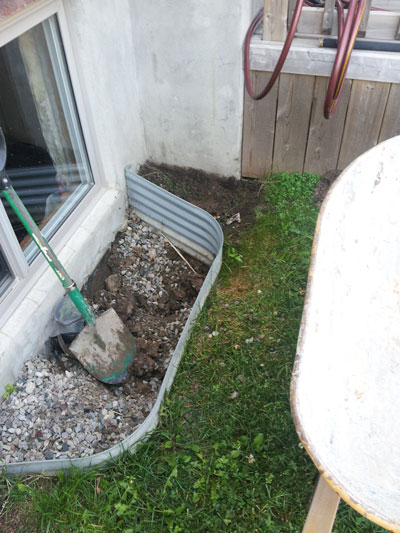
London sits in a landscape shaped by glaciation and the Thames River. Much of the city and surrounding area is underlain by till - a mixed deposit of clay, silt, sand, and occasional gravel - overlain in places by clay loams. In older river terraces and along some corridors you encounter sandier lenses that drain well, often just a few lots away from a sticky clay backyard. This variability shows up even within a single property. I have dug test pits in south London where the top 30 centimeters were workable loam, then hit a blue-gray clay that might as well have been modeling putty.
Precipitation averages in the range of 900 to 1,000 millimeters a year, but the pattern matters more than the total. Late fall brings long wet spells that saturate subsoils. Spring thaw delivers meltwater on top of still-frozen layers. Summer now brings more intense cloudbursts that can dump 20 to 40 millimeters in an hour. Those are the events that overwhelm a mis-sized drain.
Seasonal groundwater moves, too. In March and April, you can see water tables rise half a meter or more compared to August. In neighborhoods with older storm infrastructure, the water table can stay perched near foundation depth after big storms. London’s frost depth for design sits around a meter or more depending on exposure and soil moisture, which has implications for pipe slopes, outlet freezing risk, and trench stability.
The headline for anyone considering french drains in London, Ontario is this: plan for slow-draining soils unless proven otherwise, and assume seasonal saturation near the footing in spring.
Where French drains and weeping tiles fit
Weeping tiles in London, Ontario typically refer to the perforated perimeter drain installed at the base of a foundation footing, bedded in clear stone and wrapped or protected from fines, leading to a sump or storm connection where permitted. They intercept groundwater before it presses laterally into the wall. French drains, more broadly, include surface or subsurface trenches that collect and redirect water from soggy lawns, downspout concentrations, and uphill swales that bleed onto a lot.
For backyard drainage in London, Ontario, a curtain drain along the uphill edge of a yard can cut off groundwater flow that keeps the lawn wet. A shallow trench between neighbours can pull away surface runoff that used to pool on the fence line. A dry well might provide temporary storage only if the surrounding soil can accept discharge in a reasonable time.
The decision tree always routes through percolation. If the soil can accept water at a rate that matches or exceeds the inflow from a storm, you can daylight or soak it away. If not, you need storage plus pumping, or a compliant connection to a storm system arranged by experienced drainage contractors in London, Ontario who understand local regulations.
Reading the site before you touch a shovel
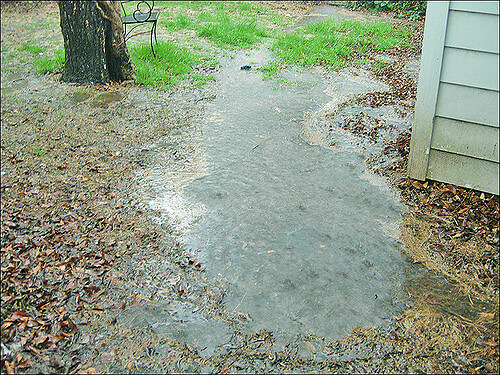
A good assessment starts with the simple observations. Look for iron staining or orange slime around existing sump discharge or in ditches, which hints at iron bacteria and fine sediments that can coat perforations over time. Notice where grass stays green longest in August - that often marks a seep zone. After a storm, track how long it takes for puddles to vanish. If water stands for more than 24 hours in summer, expect slow percolation.
Plant indicators help too. Willows and silver maples love wet feet and often thrive where the subgrade oozes. Sedges along the back fence usually mean a perched condition. On the other hand, if you have ant hills and quick-drying footprints in the topsoil, there is at least some sandy fraction near the surface.
Hand tools tell the truth quickly. An auger hole that collapses glossy and smooth shortly after you pull the flight, coupled with a strong ribbon when you roll the soil between fingers, signals a plastic clay that will not pass water fast. A crumbly, gritty ball that will not hold a ribbon more than a couple of centimeters points to sandy loam and much better percolation potential.
A quick backyard percolation test you can trust
Field lore has its place, but nothing replaces numbers. A simple test gives actionable data for french drains.
Dig a hole 20 to 30 centimeters wide and 30 to 40 centimeters deep where the drain would sit, then scratch the sides and bottom to remove smears. Saturate the hole by filling it with water, letting it drain once, then refill to 20 centimeters depth and start timing. Measure the drop in water level every 10 minutes for an hour to establish a rate. Keep the water between 5 and 20 centimeters deep while measuring. Calculate a percolation rate as minutes per centimeter or minutes per inch of drop. Average the steady readings, not the first one. Repeat in at least two locations along the proposed trench, especially if soil color or texture changes.
If the hole still holds standing water after an hour without a clear downward trend, treat the soil as very slow. If it falls so quickly you cannot keep up with measurement, you likely have a sandy lens worth protecting during construction.
Turning test results into design decisions
When you translate percolation numbers into drain design, stay conservative. A yard problem rarely comes from average storms, it comes from downpours that arrive when the profile already sits near saturation.
Here is a practical lens to use. If your drop rate averages faster than about 1 inch every 5 to 10 minutes, you can likely rely on a well-built trench to dissipate a good portion of stormwater, especially if you give it length and depth. Between 1 inch per 10 to 30 minutes, infiltration helps but is not enough for peak events unless your contributing area is small. Slower than 1 inch per 30 minutes, assume you need storage and either a good daylight outlet or a sump pump.
Consider the void space in your aggregate envelope. A trench 30 centimeters wide and 45 centimeters deep filled with washed 19 millimeter clear stone holds roughly 30 to 40 percent of its volume as empty space. For a 10 meter run, that might give you in the range of 400 to 540 liters of surge capacity before water rises to the lawn. That buys time during a storm, but only if the surrounding soil accepts recharge between events. A percolation rate in the slow range will not empty that trench quickly, so you must design for overflow to a safe outlet.
Slope matters for conveyance. Aim for about 1 percent where you want water to move reliably along the pipe to a sump or outlet. In very flat yards, 0.5 percent can work if you are meticulous with laser grading and bedding, but any belly becomes a sediment trap. Over 2 percent can lead to erosion at the outlet and might draw fines more aggressively into the pipe perforations if filters are not correct.
Materials that resist clogging in real soils
In London’s mixed tills, I specify a perforated rigid PVC pipe, often 100 millimeters in diameter, with a smooth interior that flushes easily. Corrugated pipe can work for short runs, but its ribs trap silt and make cleaning less effective. Place the pipe near the bottom third of the trench, not jammed hard at the base, so that stone surrounds it evenly.
The stone should be a clean, washed aggregate, typically 19 millimeter clear. The keyword is clear, which means no fines. Crushed limestone or granite is fine. River rock rounds off, which can be slippery to compact, but still works if it is truly washed. The stone envelope should be generous. In slow soils, I will go 20 to 30 centimeters under the pipe and at least 15 to 20 centimeters above its crown.
Geotextile selection matters more than most homeowners realize. A nonwoven needle-punched fabric with an apparent opening size matched to local fines keeps silt from migrating into the stone while still allowing flow. In clays, I avoid wrapping the entire stone with tight fabric if there is any chance of smearing the trench walls, preferring a graded filter approach where practical. Where fines are abundant, a full wrap with a mid-weight nonwoven works with a proper installation. The pre-socked pipes marketed at big box stores can be useful, but the sock alone is not a substitute for a well-detailed fabric and stone interface.
Construction details that protect percolation
Excavation is where percolation goes to die if you are not careful. A toothed bucket scrapes and smears clay walls until they resemble pottery. When that glaze dries, it repels water. An experienced operator will limit contact with trench walls, avoid working wet, and scarify the sides before placing stone. Walking repeatedly on the trench bottom compacts it. Better to work off boards or to place an initial bed of stone and stay atop it.
I favor shallow, wide trenches in stubborn clays. A 30 to 45 centimeter depth with a 30 to 40 centimeter width creates more interface with the upper, oxygenated soil horizons that have better structure. Going deeper can punch into tighter layers that accept less water. Shallow drains also keep you clear of utilities and reduce frost heave forces on the stone mass.
Connection points should be honest about where water ultimately goes. If your test shows slow percolation, tie the French drain into a sump that you already have for the weeping tiles, or install a new basin with a reliable pump. On newer builds, downspouts often connect to storm laterals by code or arrangement; do not assume you can add a new connection for a lawn drain without approval. London’s lot grading bylaws and engineering standards govern where you can discharge. A quick call to the City or consultation with drainage contractors in London, Ontario saves headaches and potential orders to remove work.
Red flags worth catching before you design
Strong sulfur or iron smell in groundwater, with orange or black slime, which suggests iron bacteria that can foul drains. Puddles that persist more than 24 hours in warm weather, a sign of very slow percolation or compaction. Cracking clay that forms hard plates when dry, then turns to smear when wet, indicating high plasticity and low infiltration. Nearby lots with sump pumps that run frequently even in summer, a proxy for a high or perched water table. Outlets that would freeze or backflood in winter, such as a tight bend to a shallow splash pad or a lawn low spot.
Catching any of these early steers you toward designs that do not rely on wishful thinking about infiltration capacity.
Working with London’s clay - practical tactics
Most of the tough yards I see sit on clay loams that seal under traffic. The right move is to broaden the infiltration interface and create a defined path for overflow. I will often design a shallow curtain drain parallel to the area of concern, use a 100 millimeter PVC perforated pipe set with a 1 percent fall, and give it a 30 to 40 centimeter stone bed. The trench gets a nonwoven fabric on the sides and bottom, stone placed without fines, the pipe laid true, more stone, then the fabric folded over the top before a final layer of soil or turf.
Where grades allow, I daylight the solid outlet at least 15 meters from the foundation, on a slope where winter freezing is less likely. A short insulated section near the surface helps at known cold spots. If grades do not allow, I tie into the sump. For sumps that run regularly, I recommend a secondary power source. A battery backup pump rated in the 2,000 to 3,000 gallons per hour range buys crucial time during outages. If your sump cycle count is more than a few times per hour in wet weather, consider an upsized primary pump and a high water alarm.
On some older properties with marginal soils, we added a relief well in the backyard - a deeper, stone-filled pit with a solid-walled riser and vent - that gives head space for peak events and slowly bleeds down through the season. This is not a cure for a perched water table, but it takes the crest off storm events that used to push water toward the house.
Winter, frost, and drains that keep working
Freeze-thaw cycles complicate backyard drainage in London, Ontario. Water that reaches the outlet must stay mobile. A pipe that exits near grade on a north face will freeze if flow is intermittent. I aim to keep the last few meters at a steady slope, with a short run of solid pipe that discourages infiltration of cold air. Avoid shallow traps that hold a water plug. If discharge must cross a walkway, carry it under with proper depth or route elsewhere. Downspout tie-ins deserve special care. Use smooth-walled solid pipe for conveyance and cleanouts at junctions to allow flushing if ice or debris builds.
For weeping tiles in London, Ontario, the footing drains sit below frost, so the main risk is at the sump discharge. Protect that route with insulation in exposed sections, and position the outlet where meltwater does not refreeze across a path or driveway.
Maintenance and the slow creep of fines
No drain is maintenance-free. Sediment creep, organic matter, and iron bacteria build over years. I install accessible cleanouts at key points - usually a vertical riser every 15 to 20 meters for long runs, and at any turn sharper than 45 degrees. A camera inspection every few years on problem properties saves guesswork. If orange slime accumulates, periodic chlorination or hydrogen peroxide treatments in the sump, used responsibly, can discourage colonies. Flushing with a low-pressure jet keeps smooth PVC in working order. Corrugated pipe is much harder to rehabilitate, which is one more reason to choose smooth walls at the start.
Surface intakes, such as catch basins tied into a French drain, need seasonal debris removal. A half hour in spring and fall pays for itself the first time a storm hits on a weekend.
Coordination with grades, neighbors, and the city
The best subsurface system fails if the surface grades send half the neighborhood’s water toward your foundation. I often see downspouts pouring onto driveways that slope toward the garage, then into a side yard that cannot percolate fast enough. Before you invest in trenches, correct the obvious: extend spouts three meters from the wall, regrade a few centimeters of slope away from the house over the first two meters, and tune the swales along property lines.
London has clear expectations for lot drainage and discharge locations. Discharging to sanitary sewers is prohibited. Storm connections require permission and compliance. If you are planning a substantial project, lean on local expertise. Search for drainage contractors in London, Ontario with a track record of solving wet basements and soggy yards, not just selling pipe by the foot. A contractor who carries a laser level, a hand auger, and a notebook for percolation readings is more likely to deliver a solution that works.
What it costs to do it right
Budgets vary with access, length, depth, and the presence of rock or utilities. As a rough guide from recent projects:
A backyard French drain with 100 millimeter PVC, 19 millimeter clear stone, geotextile, and lawn restoration often lands between 40 and 70 dollars per linear foot, with shorter projects at the higher end due to mobilization. Add a catch basin and a couple of cleanouts and you might see a total in the 3,000 to 7,000 dollar range for a typical side yard run of 20 to 40 feet.
Perimeter weeping tile replacement, which involves excavation to footing depth, waterproofing, and full drainage rebuild, is a different scale entirely. Expect five figures, and easily more if access is tight or if structural repairs join the scope. Always collect multiple quotes that break down materials, trench dimensions, and restoration methods. The cheapest bid that skimps on stone and fabric will cost more in the long run.
A field story from south London
A few summers back, a homeowner in a south London subdivision called about a backyard that squished like a sponge after every rain. The lot backed onto a gentle rise. Our tests showed a percolation rate of around 1 inch per 40 minutes and a perched lens starting at 35 centimeters. The instinct might have been to trench deep. We went the other way.
We cut a shallow 35 centimeter trench along the uphill fence, 35 centimeters wide, set a 100 millimeter PVC perforated line at a 1 percent fall to the side yard, and tied into the existing sump with a solid pipe. The stone envelope was 19 millimeter clear, wrapped in a mid-weight nonwoven geotextile. Cleanouts sat at the midpoint and at the turn. We paired this with a regraded swale that moved surface water to the front, reducing the load on the sump. After the first thunderstorm, the trench held about 500 liters in reserve, and the sump cycled moderately for an hour. The lawn, once a bog, was playable the next morning.
Science did not provide a miracle, it just told us not to expect that clay to soak up an entire storm. The design honored the numbers.
When percolation alone will not solve it
Sometimes the right move is to combine subsurface control with surface features that slow and spread water. A shallow rain garden in a more permeable corner of the yard can spillway from a French drain’s overflow and treat the first flush, returning cleaner water to the ground. Permeable pavers for a small patio reduce runoff into a side swale. In the tightest clays, breaking up a project into zones that each handle a portion of the flow prevents any single element from being overwhelmed.
Dry wells can work in sandy pockets but disappoint in tight tills. Before installing one, run the percolation test at the intended depth. If the hole still holds water the next day in summer, a dry well becomes a wet headache.
Bringing it back to the core idea
French drains are not magic pipes that make water vanish. They gather, move, and at times store water. The soil decides how easily the water leaves the system. In London’s mix of clays and occasional sands, a cautious approach grounded in percolation testing, honest grading, and careful material choices pays off.
If your site needs help, look locally. Search terms like french drains London Ontario or weeping tiles London Ontario will lead you to firms that speak the same soil language and know what the City expects. For backyard drainage in London, Ontario, a day spent testing and sketching grades saves weeks of callbacks. When the next storm hits, the best compliment you can get is silence from the sump and firm ground underfoot.
Ashworth Drainage — Business Info (NAP)
Name: Ashworth Drainage
Address: 514 Hale St, London, ON N5W 1G8
Phone: (519) 660-9375
Website: https://www.ashworthdrainage.ca/
Email: [email protected]
Hours:
Monday: 9:00 AM – 5:00 PM
Tuesday: 9:00 AM – 5:00 PM
Wednesday: 9:00 AM – 5:00 PM
Thursday: 9:00 AM – 5:00 PM
Friday: 9:00 AM – 5:00 PM
Saturday: Closed
Sunday: Closed
Open-location code (Plus Code): XRR3+HV London, Ontario
Map/listing URL: https://maps.app.goo.gl/9kaoXAxRtJRP1ThS9
Embed iframe:
Socials (canonical https URLs):
Facebook: https://www.facebook.com/ashworthdrainage/
X: https://twitter.com/ashworthrules
Instagram: https://www.instagram.com/ashworthdrainage/
"@context": "https://schema.org", "@type": "GeneralContractor", "name": "Ashworth Drainage", "url": "https://www.ashworthdrainage.ca/", "telephone": "+1-519-660-9375", "email": "[email protected]", "address": "@type": "PostalAddress", "streetAddress": "514 Hale St", "addressLocality": "London", "addressRegion": "ON", "postalCode": "N5W 1G8", "addressCountry": "CA" , "openingHoursSpecification": [ "@type": "OpeningHoursSpecification", "dayOfWeek": "Monday", "opens": "09:00", "closes": "17:00" , "@type": "OpeningHoursSpecification", "dayOfWeek": "Tuesday", "opens": "09:00", "closes": "17:00" , "@type": "OpeningHoursSpecification", "dayOfWeek": "Wednesday", "opens": "09:00", "closes": "17:00" , "@type": "OpeningHoursSpecification", "dayOfWeek": "Thursday", "opens": "09:00", "closes": "17:00" , "@type": "OpeningHoursSpecification", "dayOfWeek": "Friday", "opens": "09:00", "closes": "17:00" ], "sameAs": [ "https://www.facebook.com/ashworthdrainage/", "https://twitter.com/ashworthrules", "https://www.instagram.com/ashworthdrainage/" ], "hasMap": "https://maps.app.goo.gl/9kaoXAxRtJRP1ThS9", "identifier": "XRR3+HV London, Ontario"
https://www.ashworthdrainage.ca/
Ashworth Drainage provides basement waterproofing and foundation repair services in London, Ontario and surrounding areas in Southwestern Ontario.
The company helps homeowners address wet basements, water intrusion, and drainage issues with solutions that fit the property’s conditions.
Service requests can include foundation repair, waterproofing options, sump pump and drainage-related work, and related assessments.
Ashworth Drainage is based at 514 Hale St, London, ON N5W 1G8.
To reach the team, call (519) 660-9375 or email [email protected].
Business hours are Monday to Friday 9:00 AM–5:00 PM, with the office closed Saturday and Sunday.
For directions and listing details, use the map listing: https://maps.app.goo.gl/9kaoXAxRtJRP1ThS9.
Popular Questions About Ashworth Drainage
What does basement waterproofing help prevent?
Basement waterproofing is intended to reduce water intrusion and moisture problems that can lead to dampness, leaks, odors, and damage over time.
How do I know if I may need foundation repair?
Common signs can include visible cracks, water seepage, shifting or uneven areas, or recurring moisture problems; an on-site assessment is usually the best way to confirm causes and options.
What areas does Ashworth Drainage serve?
Ashworth Drainage serves London, Ontario and surrounding areas in Southwestern Ontario.
What are Ashworth Drainage’s hours?
Monday–Friday 9:00 AM–5:00 PM; Saturday closed; Sunday closed.
How can I contact Ashworth Drainage?
Phone: +1-519-660-9375
Email: [email protected]
Website: https://www.ashworthdrainage.ca/
Map: https://maps.app.goo.gl/9kaoXAxRtJRP1ThS9
Facebook: https://www.facebook.com/ashworthdrainage/
X: https://twitter.com/ashworthrules
Instagram: https://www.instagram.com/ashworthdrainage/