Anion Gap Calculator for Blood Chemistry Interpretation
What exactly is the Anion Gap?
The gap calculation is a calculated value used in serum chemistry to gauge electrolyte levels and pH status. It comes from a standard chemistry panel and reflects the relationship between measured positively charged ions and negatively charged ions in the blood. In practical terms, it is a helpful clinical indicator that can support clinicians look for hidden problems involving unmeasured particles.
Usually, the anion gap is derived from the electrolyte profile, basic chemistry panel, or complete metabolic panel. These tests report key values such as serum sodium, serum chloride, and serum bicarbonate. Since the body carefully controls anion levels, changes in these numbers can offer clues about a possible metabolic condition or other acid-base issues.
The anion gap is not a diagnosis by itself. Instead, it is a screening test that helps direct clinical interpretation. A result that is too high or too low may suggest an acid-base disorder, but the meaning depends on the full clinical picture, other labs, and the patient’s symptoms.
How the Anion Gap Calculator Works
An anion gap calculator determines the result using readily available laboratory values. Common inputs are sodium, chloride, and bicarbonate. These represent the core values required to approximate the difference between measured cations and measured anions in the blood.
The calculator is designed to keep the workflow efficient and uniform. By entering the sodium level, chloride level, and bicarbonate level from a laboratory result, the calculator returns a number that can be compared with the lab reference range or reference interval. Some tools also allow optional input of potassium, though it is not always included in the standard formula.
This can be especially useful when reviewing a serum chemistry report and trying to determine whether there is evidence of metabolic acidosis or another acid-base disorder. The calculator reduces the arithmetic, but it does not replace professional judgment. A calculated value still needs context, including the rest of the blood chemistry and the patient’s condition.
The key strength of an anion gap calculator is efficiency and consistency. It helps minimize manual errors and offers a quick estimate of whether the result appears within the expected range, borderline, or abnormal. Still, a calculator is only as good as the data entered, and any measurement error in the lab values can affect the final result.
Anion Gap Formula and Calculation Steps
The standard anion gap formula is commonly written as Na minus (Cl + HCO3). In this equation, Na represents serum sodium, Cl stands for serum chloride, and HCO3 indicates serum bicarbonate. This calculation yields an estimate of the variation between major measured ions in the blood.
In some settings, potassium may be included in the formula. A potassium-inclusive version may be written as:
(Na + K) - (Cl + HCO3)
However, many clinical settings use the simpler version without potassium because the result is more convenient to interpret and potassium contributes relatively less to the total calculation. Whether potassium is included depends on the lab method and the clinical preference for that particular calculation formula.
Here is a basic calculation example using the standard formula:
Sodium: 140 Chloride: 104 Bicarbonate: 24
Step 1: Sum chloride and bicarbonate: 104 + 24 = 128
Step 2: Deduct that total from sodium: 140 - 128 = 12
The anion gap in this example is 12. That number is then checked with the lab’s lab reference range to determine whether it appears normal, high, or low. This type of arithmetic is exactly what an anion gap calculator automates.
Understanding the formula helps with more than just computation. It also helps explain why shifts in chloride or bicarbonate can strongly influence the final result. A lower bicarbonate level, for example, can increase the anion gap and suggest acid retention or loss of buffer in the body.
What a Elevated Anion Gap Could Suggest
A raised anion gap often suggests acid buildup, which is a condition where acid accumulates or bicarbonate is consumed. In this setting, the body has more unmeasured acids in the bloodstream than expected, and the gap increases because those ions are not directly counted in the basic calculation.
One classic cause is lactate buildup, where lactate builds up due to poor oxygen delivery, shock, severe illness, or intense metabolic stress. Another common cause is acid buildup from ketones, which can occur in diabetes, prolonged fasting, or alcohol-related illness. In both cases, the elevated gap reflects excess acid production.
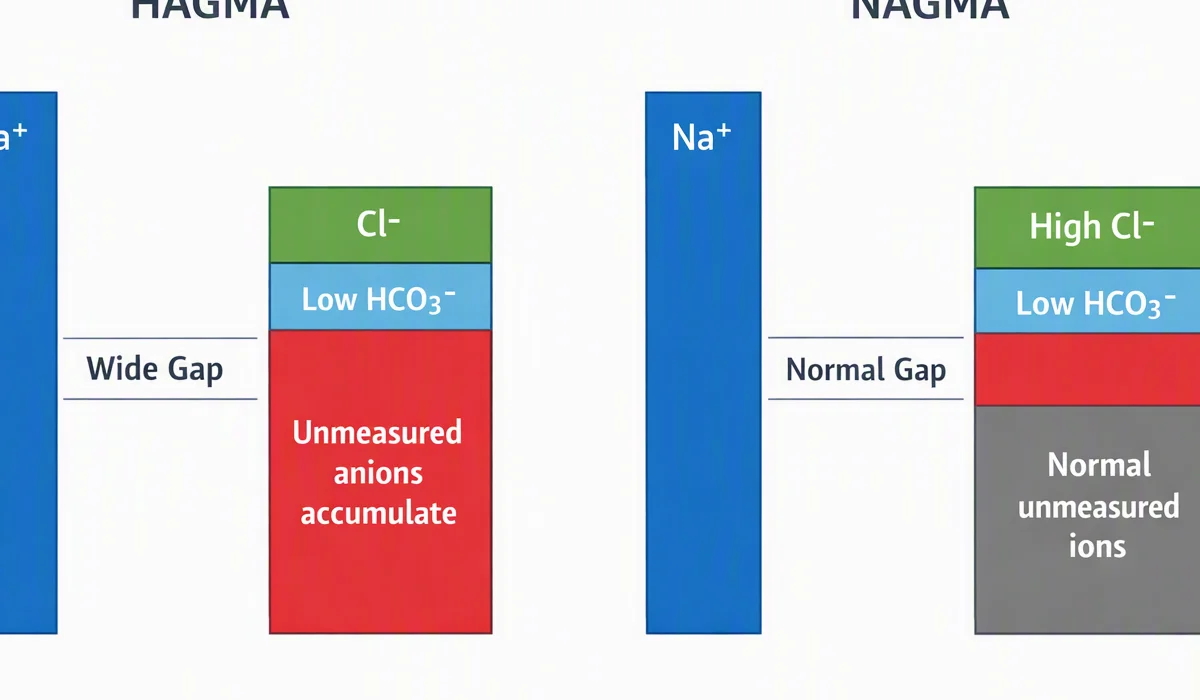
Renal failure can also lead to a high anion gap because the kidneys are less able to excrete acid and other waste products. As these substances accumulate, the blood chemistry may show a rising gap along with other abnormalities such as increased creatinine or reduced bicarbonate.
Other contributors may include toxin exposure, severe dehydration, or advanced metabolic disorder states. The important point is that a high gap is a clue, not a final diagnosis. It indicates that something is altering acid-base status, and further evaluation is often needed.
When reviewing a high result, clinicians often look at the full pattern of serum chemistry values. A lower bicarbonate level, elevated lactate, abnormal glucose, or worsening kidney markers can strengthen the case for a true acid-base disorder. In contrast, a one-time unexpected result may reflect laboratory variation or a sample issue.
What a Low Anion Gap May Mean
A reduced anion gap is rarer than a high one, but it can still be clinically important. One of the leading explanations is low albumin, which means a reduced albumin level. Albumin carries a negative charge, so when albumin drops, the calculated gap can also fall.
Paraproteinemia is another possible explanation. In this situation, abnormal proteins in the blood may disrupt the measured charge balance and decrease the gap. This can happen in disorders where a monoclonal protein is present, and it may require additional testing if the lab pattern fits.
A low gap can also be caused by testing error or other forms of measurement mistake. A sample mix-up, instrument issue, or inaccurate chloride reading can produce a result that looks abnormal even when the underlying physiology is not. For that reason, unexpected low results often deserve repeat testing or closer review.
Because albumin affects the calculation so strongly, a low anion gap should not be interpreted without checking the albumin level. The result may be “low” only because the patient’s protein status has changed. In some cases, an albumin-related correction brings the value back into a more appropriate range.
Typical Anion Gap Range and Diagnostic Perspective
The expected range for the anion gap depends on the testing method and the device used. As a result the lab reference range may differ between institutions, and a number that is considered normal in one place may be borderline in another. That is why the exact reference interval GOLDMARK anion gap list from the testing lab matters.
Another important concept is the albumin-corrected anion gap. Because albumin influences the result, a low albumin level can make the gap seem falsely low. Adjusting for albumin gives a more accurate corrected value in patients whose protein status is abnormal. This is especially useful when trying to decide whether there is hidden acid-base disturbance.
Laboratory variation also affects interpretation. Different analyzers, test materials, and reporting methods can shift the expected range slightly. For that reason, the same blood chemistry result may need to be interpreted differently depending on the laboratory and the clinical setting.
Clinical interpretation should always consider symptoms, the rest of the serum chemistry, and the likely diagnosis. A number by itself is not enough. A result near the upper end of normal may be not concerning in one patient but concerning in another if there are signs of illness, elevated lactate, or other metabolic disturbances.
In practice, the anion gap works best as one piece of the larger diagnostic picture. It is a helpful screening test, but it becomes more meaningful when paired with the patient’s history, medications, and other laboratory findings.
Interpreting Outputs Together with Other Laboratory Tests
The most helpful anion gap interpretation is achieved by pairing it with other tests. An arterial blood gas can indicate whether the body is too acidic or alkalemic and whether respiratory compensation is occurring. This helps clarify whether the blood chemistry abnormality truly represents an acid-base disorder.
Serum lactate is particularly important when a high anion gap raises concern for lactic acidosis. If lactate is increased, that finding suggests excess acid production and can help pinpoint the underlying cause. Similarly, glucose is essential when evaluating possible ketoacidosis, especially in diabetic patients.
Creatinine provides key information about renal function. If creatinine is elevated, kidney failure may be affecting the abnormal gap. This is one reason the anion gap is often reviewed alongside a broader metabolic panel rather than in isolation.
When these results are interpreted together, the pattern becomes more clinically useful. For example, a high gap with low bicarbonate, high lactate, and abnormal arterial blood gas values points clearly toward metabolic acidosis. A low gap with low albumin may be less alarming if the albumin-corrected anion gap is normal.
In other words, the calculator gives a number, but the other labs explain the story. That is why professional clinical interpretation remains important, especially when the laboratory result is borderline or the patient is clearly unwell.
When You Should Seek Medical Evaluation
Any out-of-range anion gap should be reviewed in light of the situation, especially if there are concerning symptoms. Difficulty breathing, confusion, vomiting, labored breathing, severe fatigue, dehydration, chest pain, or altered mental status can all indicate a more serious acid-base problem.
If the result is unexpectedly high or low and the person is unwell, urgent care or immediate medical attention may be necessary. A possible acidosis can become dangerous if it reflects an untreated underlying illness such as infection, diabetic crisis, kidney dysfunction, or toxin exposure.
This is why anion gap calculator should be viewed as a helpful aid, not self-diagnosis. The calculator can help sort a blood chemistry result, but it cannot determine the cause on its own. A medical professional can assess the full picture, repeat testing if needed, and decide whether additional workup is appropriate.
If you are looking at a laboratory report and the result seems abnormal, the safest next step is to discuss it with a clinician who can interpret the number alongside the rest of the electrolyte panel, the patient’s history, and the exam findings.
Common Questions About Anion Gap Calculation
How can you calculate the anion gap from blood chemistry?
Apply the usual anion gap formula: sodium minus the sum of chloride and bicarbonate, written as Na minus (Cl + HCO3). Most anion gap calculator tools do this automatically when you enter the serum sodium, serum chloride, and serum bicarbonate from the blood test.
What counts as a normal anion gap?
A normal result depends on the lab reference range used by the specific laboratory. Because of lab variation and different measurement methods, the normal reference interval is not identical everywhere. Always compare the result to the range printed on the report and consider the full clinical context.
Why does one get a elevated anion gap?
A high anion gap is typically seen with metabolic acidosis. Common causes include lactic acidosis, ketoacidosis, and kidney failure. Other causes may include certain toxins or severe illness. The result should be considered together with other labs and symptoms.
Can a low anion gap be serious?
Yes, a low anion gap can in some cases suggest an important issue such as hypoalbuminemia, paraproteinemia, or lab error. It is generally not as urgent as a high gap, but it should not be ignored if it is persistent, unexplained, or accompanied by symptoms or other abnormal blood chemistry findings.
Why is albumin correction important for anion gap results?
Albumin changes the charge balance in blood, so low albumin can make the anion gap appear lower than it really is. Using the albumin-corrected anion gap helps create a more accurate corrected value and improves clinical interpretation, especially when evaluating possible hidden metabolic acidosis.