How a Gym Trainer Tests Your Strength, Mobility, and Endurance
Walk into a good personal training gym and the first hour won’t look like a workout montage. A skilled gym trainer spends that time learning how you move, what your body can handle, and where you can make the fastest progress with the least risk. The process feels deliberate for a reason. Assessments are the bridge between your goals and a plan that actually works.
I have coached everyone from office workers with stiff backs to competitive swimmers, and I can tell you the best testing days don’t feel like tests. They feel like a well-structured conversation, part numbers and part observation, all building a picture of your current capacity. Below is how a competent personal fitness trainer approaches strength, mobility, and endurance testing, and how the results guide training that fits you.
What a first assessment really looks like
A first session starts before the first rep. A personal trainer will ask about your training history, injuries, surgeries, sleep, stress, nutrition, medications, and the demands of your job. A parent who lifts a toddler all day has a different baseline than a software engineer who sits for ten hours. A fitness coach also wants specifics on your goals and your timeline. Dropping 20 pounds in six months, finishing a 10K in under an hour, or rebuilding strength after a knee scope each point to different testing priorities.
Vitals come next. Resting heart rate, blood pressure, and sometimes oxygen saturation set the safety tone. If your blood pressure reads 160 over 100, a prudent workout trainer will pause, repeat the measure after a few minutes, and potentially refer you out for clearance. Nothing derails progress faster than ignoring a red flag.
From there, the trainer moves you, not to impress, but to reveal. Mobility screens, simple strength probes, and a manageable aerobic test help map where to start. Good testing meets you where you are. A 65-year-old with a recent hip replacement should never be asked to jump, and a Division I rower doesn’t need a wall sit to prove grit.
The difference between tests and screens
Semantics matter because they shape expectations. A screen looks for obvious limitations or risk. It asks, can you get into basic positions without pain, and is your movement symmetrical enough to load safely. A test measures capacity, often with a score, time, or load. The split matters. You do not want to test one-rep max back squats before you screen for hip and ankle mobility, stance width tolerance, and bar position comfort.
Think of a screen as a door. If you pass through without issues, the tests get more specific and challenging. If you scrape the sides, a smart fitness trainer widens the doorway with mobility work or changes the route with alternate exercises.
Mobility and movement quality: what a trainer watches and why
Mobility work often looks like small, careful motions. The payoff is big. Joint-by-joint, your personal fitness trainer is trying to answer three questions. Do you have enough range to perform the lifts on your plan, can you stabilize that range, and can you control it under fatigue.
For hips, a trainer may check active hip flexion and extension, internal and external rotation, and how that plays out in hinging and squatting patterns. I have had clients who measured “tight” on a table but squatted beautifully once we adjusted stance and turned the feet slightly. Conversely, someone can have textbook passive range yet cave at the knees when squatting because they cannot coordinate the pattern under load.
For shoulders, we look at overhead reach without rib flare, external rotation for pressing, and scapular control during pulling. The person who presses overhead by arching their lower back needs a different strategy than someone who simply lacks shoulder flexion. In practice that might mean starting with landmine presses and carries before chasing strict overhead work.
Thoracic spine mobility shows up everywhere. If you cannot rotate through your mid-back, your golf swing, your running arm swing, and your breathing under exertion will suffer. Trainers check this with seated rotations, quadruped reach-throughs, or simply by watching how your torso moves during a light row.
Ankles matter more than most people realize. Dorsiflexion dictates how your knees can travel over your toes in a squat or lunge. Insufficient ankle range shifts stress up the chain to knees and hips. A simple knee-to-wall test provides a number in centimeters that we can retest after soft tissue work and calf strength.
Finally, we watch integrated patterns. A bodyweight squat, a hip hinge with a dowel on your back, a step-down from a low box, and a plank with shoulder taps tell a fitness coach far more than isolated joint measures alone. The goal is not a perfect score. It is enough clean movement to load safely.
Strength testing without breaking you
When people think of strength testing, they picture a one-rep max. In a personal training gym, true maxes are rarely first-day material. The risk to reward ratio isn’t favorable until we know you move well and have practiced the lift. Instead, a gym trainer estimates strength with submaximal efforts and calculated predictions.
For compound lifts like squats, deadlifts, and presses, a trainer may warm you up and find a challenging set of 3 to 6 reps with technical proficiency. Using a well-validated formula, we can estimate your one-rep max from that effort. If you hit 185 pounds for 5 reps with two reps in reserve, your estimated max will fall within a practical range. It is enough to set training weights for the next month.
Relative strength matters as much as absolute strength. A person who can do 10 strict push-ups displays better relative upper body capacity than someone who benches more but cannot control their bodyweight. Trainers often use bodyweight tests like push-ups, pull-ups or inverted rows, tempo split squats, and bar hangs to profile relative strength. As an example, a client who can hold a strict dead hang for 30 to 45 seconds usually has enough grip endurance to learn heavy carries and farmer holds safely.
Isometric tests can be both safe and revealing. A mid-thigh pull on a fixed bar with a force plate gives a snapshot of peak force without the technical demands of a full clean. Most personal training gyms will not have force plates, but a handheld dynamometer for pull strength or an isometric split squat hold for time can approximate progress. I worked with a marathoner who doubled her isometric calf raise hold from 22 to 45 seconds over six weeks. Her Achilles pain eased, and her long-run pace improved without any change in mileage.
Unilateral testing reduces blind spots. A rear foot elevated split squat for sets of 6 per side with the same load often exposes side-to-side differences. If the left leg struggles with stability or depth, we note it and bias single-leg work accordingly. The aim is not perfect symmetry, but a manageable gap, often within 10 percent.
Grip strength is more than a novelty. Hand dynamometer scores correlate broadly with overall strength and even health outcomes, though it is only one data point. More practical, the ability to hold 50 percent of your bodyweight in each hand for 20 to 30 seconds during a farmer carry test shows readiness for loaded carries and hinge progressions. If the grip fails first, it can limit back and hip loading. We can fix that.
Trainers also watch effort and bar speed. Without gadgets, bar speed can be judged by eye. If the last rep of a set slows dramatically, you have likely reached the threshold we want for testing. Some gyms use linear transducers or camera-based velocity tools to measure meters per second. The value here is not the number itself but the ability to program loads that train power versus strength endurance based on objective velocity zones.
Endurance testing that respects context
Endurance means different things depending on the person. For a beginner, it might mean climbing a flight of stairs without stopping. For a cyclist, it is sustained power over hours. A personal trainer will pick the Personal trainer least intrusive test that answers the most relevant question.
Cardiovascular screening starts gently. Resting heart rate and heart rate variability, if available, reveal recovery status. During a slow warm-up on a bike or rower, a trainer watches your breathing pattern. Nasal-only breathing at 100 watts on a bike is a decent sign your aerobic base is present. If you gasp at 60 watts, we will build capacity before chasing intervals.
Here is a brief menu of common endurance tests and when they fit:
6-minute walk or 3-minute step test, used for deconditioned clients or those returning from illness to gauge aerobic capacity and heart rate response without high impact. Submaximal bike or treadmill test with set stages, used to estimate VO2max or ventilatory thresholds, especially when equipment can capture heart rate and perceived exertion. 1.5 mile run, 12-minute Cooper run, or a 5K time trial for runners with at least a few months of base, used to set training paces and zones without lab gear. Rowing machine 2K test, used for rowers or mixed-modal trainees, strong correlation with general aerobic fitness when technique is sound. Assault bike or ski erg 10-minute average power test, used for interval prescription and for people who prefer zero impact.
During and after these efforts, the trainer tracks heart rate, when possible, and pairs it with an RPE scale from 1 to 10. If your step test heart rate hits 170 beats per minute with an RPE of 9, but you recover to under 120 beats in 90 seconds, we see both a low threshold and a solid recovery. That points to improving aerobic base first, then adding threshold work later.
For interval readiness, a simple on-off test works. Two minutes moderate, one minute brisk, repeat five times. If heart rate climbs each round without settling, your base is not ready for high-intensity intervals. If it stabilizes and your RPE stays moderate, interval progression makes sense.
A key piece many overlook is mechanical endurance. Your lungs may handle 30 minutes of running, but your calves and hips may not. That is why a fitness coach often blends non-impact tests like cycling with short running bouts for new runners, building tissue tolerance along with cardiovascular fitness.
What the data actually changes
Testing only matters if it changes programming. A personal trainer uses the results to decide exercise selection, loading, volume, intensity, and rest. If your ankle dorsiflexion is limited, your squat pattern may start with a box squat or a goblet squat with heels slightly elevated while you work on calf strength and tibial glide. If your push-up test bottoms out at two reps, you will earn volume with incline push-ups rather than grind through ugly floor reps that strain your neck.
If your estimated deadlift one-rep max is 275 pounds from a clean 4-rep set, your early working sets might live at 65 to 75 percent with focus on position and bar path. We retest the same rep scheme in four to six weeks under similar conditions to compare apples to apples. If your heart rate during a submax bike test drifts up by more than 10 beats over ten minutes at a constant wattage, your aerobic efficiency is low. Expect easy zone 2 sessions at conversational pace two to four times per week alongside strength training until the drift narrows.
Programming is a trade-off engine. You might want to build your bench press and your 10K at the same time. A seasoned gym trainer will explain that pushing both hard in the same month often leads to mediocre results. We can periodize, leaning into aerobic work while maintaining strength with lower volume, then shift emphasis. Testing gives us the leverage to make those calls with numbers, not guesses.
Special populations and edge cases
Every body is different, and some situations demand more caution. With older adults, fall risk drives many choices. We test single-leg stance time, often aiming for 10 to 20 seconds per side without wobbling. A timed up-and-go, even if informal, shows how quickly someone can stand, walk three meters, turn, and sit. Strength testing leans on partial range leg presses, sit-to-stands, and light carries before introducing free weight squats.
For clients with pain, we do not test through pain. Sharp joint pain is a stop sign. Discomfort from effort is different. A fitness trainer will distinguish between the two by asking for location, quality, and behavior of the sensation. If a lunge causes pinching in the front of the hip, we regress to a supported split squat and address hip position rather than push reps. Pain science teaches us that calm tissue performs better.
Postpartum clients need pelvic floor and abdominal wall considerations. We assess breathing patterns, check for coning during exertion, and start with tempo bodyweight movements. Endurance starts with walking intervals and breath-coordinated carries rather than running tests.
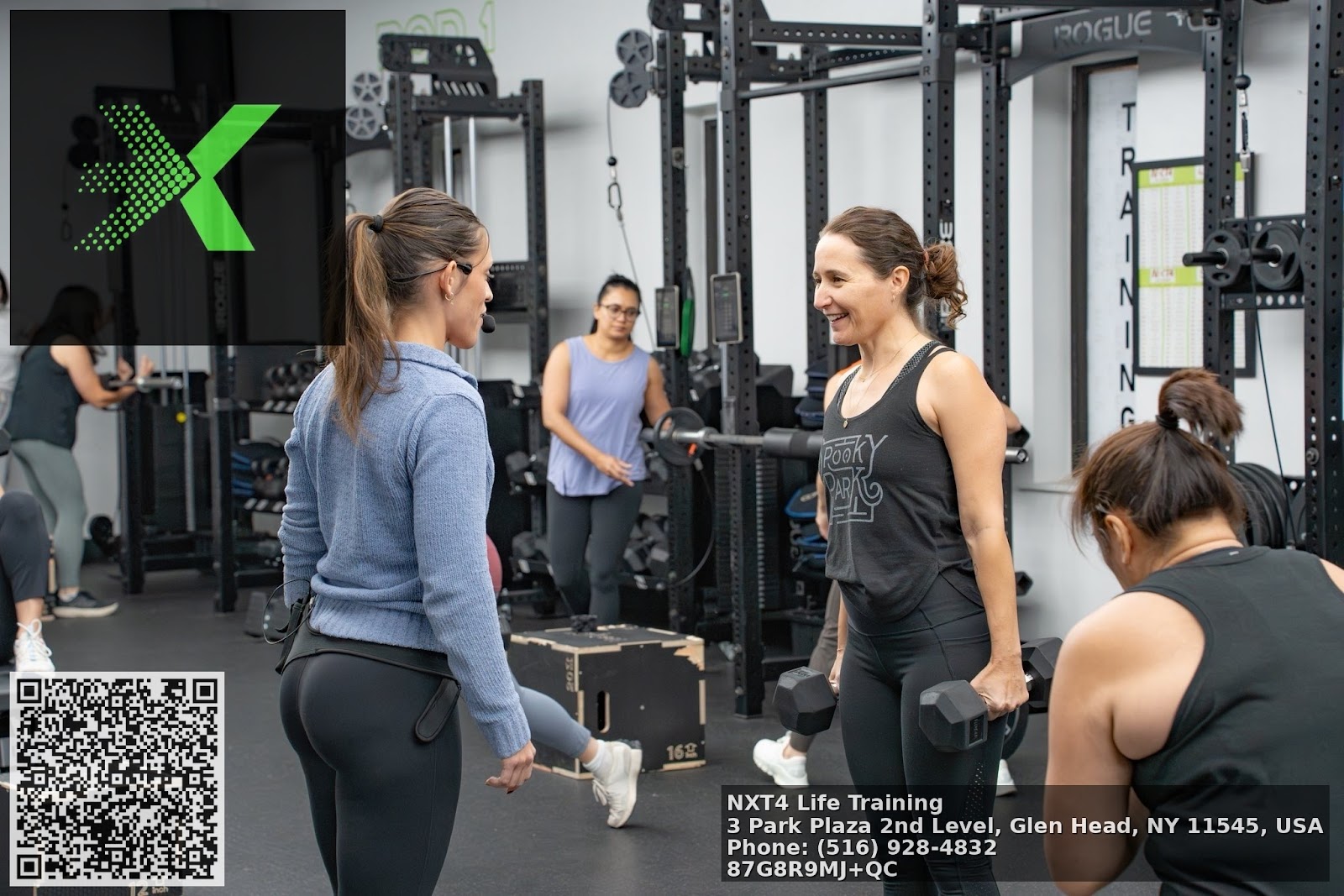
Athletes need specificity. A sprinter’s endurance test might be repeat 150-meter runs with fixed rest, looking at time decay. A powerlifter’s “endurance” is often the ability to maintain bar speed across heavy triples with consistent rest. For team sport athletes, a Yo-Yo intermittent recovery test can matter, but only if sprint mechanics and hamstring resilience have been built first.
Finally, some medications, like beta blockers, blunt heart rate responses. In those cases, we lean more on RPE and talk tests than on heart rate zones. Altitude, heat, and poor sleep skew results, too. Experienced coaches note context in the log and avoid overreacting to a single bad day.
Equipment you might see in personal training gyms
You do not need fancy tools to test well, but a few pieces help. A reliable blood pressure cuff, a heart rate monitor, stopwatches, and a measuring tape cover the basics. Many personal training gyms add a goniometer for joint angles, a dynamometer for grip, and some version of a jump mat or phone app to estimate vertical jump and reactive strength. Even a basic bar speed tracker can be useful for power work if the gym runs strength programs that benefit from velocity zones.
On the endurance side, a calibrated rower or bike is more repeatable than most treadmills, which can vary from unit to unit. If you run outdoors, a measured loop and consistent footwear matter more than a GPS watch’s fancy metrics.
None of these replace the coach’s eye. I have scrapped more tests based on a client’s face, posture, and speech than on any number. Numbers inform, coaches interpret.
How often should you retest
Retesting cadence depends on the quality you are targeting. Mobility can change in a session, but the goal is durability, not a party trick. I track range as it affects movement quality weekly, and I log formal measures every 4 to 6 weeks. Strength benefits from slightly longer windows. Repeating a 3 to 5 rep test in the main lifts every 6 to 8 weeks catches real progress without stealing training time. Endurance tests vary. A short, submax bike test can run monthly. Hard efforts like a 2K row or 5K should be spaced 6 to 12 weeks apart to allow for proper training cycles and recovery.
Do not turn training into constant testing. Two or three targeted retests per block are plenty. Everything else can be tracked with training logs, RPE notes, and the weights or paces you handle in regular sessions.
Interpreting change: small wins and real signals
Progress often looks like two steps forward, one step holding steady. A 5 percent bump in an estimated one-rep max over six weeks is a good sign, especially if your technique also improved. Reducing heart rate drift by half during a 20-minute steady ride tells me your aerobic base is growing even if your top-end speed has not moved yet. Adding five clean push-ups over a month matters more than a shaky single at 20 percent more load.
Beware the noise. Day-to-day variation from stress, menstrual cycles, illness, and travel can make a solid athlete test flat. Trainers look for trends across at least two or three data points before making a programming pivot. If a number drops once, we ask why. If it drops three times despite proper recovery, we change the plan.
Case snapshots that show the process
A 42-year-old desk worker arrived with persistent low back tightness and a goal to feel athletic again. Mobility screens showed limited hip rotation and stiff ankles, but no pain during a bodyweight hinge. Strength testing started with a kettlebell deadlift, building to sets of 8 at a load that felt like a 7 out of 10. We estimated a modest max for programming. Endurance began with a 10-minute bike at 100 watts with heart rate averaging 142, drifting to 152 by minute ten. The plan emphasized ankle mobility, hip cars, and hamstring strength, plus two zone 2 rides weekly. Six weeks later, he deadlifted the same 8 reps with 20 percent more load, and his heart rate drift on the same bike test shrank to 5 beats. His back felt quieter because his hips and ankles were doing their share.
A former college swimmer, 28, wanted to re-enter pool training while lifting three days per week. Shoulder screens showed solid range but poor scapular upward rotation under fatigue. Strength tests on chin-ups fell from 8 to 4 across two sets, suggesting endurance was the limiter. We built tempos and pauses into vertical pulling and added serratus work. Endurance testing used a 500-yard pool time trial and a 10-minute ski erg test. Programming leaned on non-competing strength pairings and easy aerobic swim sets. Eight weeks later, her 500-yard time dropped by 16 seconds, and she could hold 6 chin-ups across three sets. She described her shoulders as “quiet” the day after hard sessions, which told me the tissue tolerance had caught up.
A 63-year-old retiree with osteopenia needed bone-loading strength. We skipped high-impact tests. Single-leg stance for 12 seconds per side and a 30-second sit-to-stand test gave baselines. Strength work focused on goblet squats to a box, hinge pattern with a trap bar, and loaded carries. Endurance lived on hill walks. After three months, she improved to 20 seconds single-leg, 18 sit-to-stands, and a 25 percent bump in trap bar load for sets of 5. The data helped her doctor support continued training, and she reported more confidence stepping off curbs.
How to prepare for a productive assessment
Sleep 7 to 9 hours the night before if possible, and avoid hard workouts in the 24 hours leading in. Hydrate and eat a normal meal 2 to 3 hours before, not a new pre-workout experiment. Wear shoes you actually train in and clothing that allows full range of motion. Bring any relevant imaging or clearance notes, plus a list of medications. Be honest about pain, fears, and preferences, because the plan will be built around them.
Showing up rested and candid makes the numbers more trustworthy and the session more useful. A personal trainer is not grading you. They are gathering inputs to scale the work.
The role of communication and consent
Testing is collaborative. A fitness trainer should explain what each test measures, how hard you are expected to work, and what stop signs to watch for. You should feel free to ask for a pause or change if something feels wrong. Consent is not a waiver you sign once. It is an ongoing conversation throughout the session. When clients know why a test matters, they give better effort and better feedback.
I once had a client balk at a treadmill test because she had tripped on a treadmill years earlier. We switched to a https://sites.google.com/view/nxt4lifepersonaltrainer/about-us bike, got the data we needed, and later rebuilt her treadmill confidence with slow, supervised walking intervals. Trust beats bravado every time.
When not to test
There are days where the smartest move is to skip or modify planned tests. Acute illness, fever, dizziness, uncontrolled blood pressure, new chest pain, or significant joint swelling are bright-line reasons to stop and refer. Less obvious reasons include two nights of poor sleep, recent travel across time zones, or high emotional stress. In those cases, we might proceed with a lighter screen, focus on technique, or reschedule. Pushing a maximal effort test when recovery is compromised yields junk data and unnecessary risk.
Bringing it together inside a program
After the assessment, the fitness coach writes a plan. It usually spans 4 to 8 weeks, with clear progressions tied to the data. If your grip limits your deadlift, your plan will include static holds and loaded carries. If your heart rate rockets during modest efforts, expect more low-intensity time. If a shoulder pinches at end range, pressing will be limited to pain-free arcs while we build scapular mechanics.
Each session still feels like training, not a perpetual test. You will lift, push, pull, hinge, squat, carry, and breathe. The difference is that the work is scaled, the cues are specific, and the checks are built in. An experienced gym trainer keeps one eye on your form and another on how your body responds to the workload week to week.
Final thoughts from the coaching floor
Good testing is quiet, efficient, and humble. It respects the body in front of it and leans on the simplest tool that answers the question. It allows you and the trainer to make better decisions faster. It explains why your friend’s program is not your program, and why a small change like a heel wedge or a slightly slower tempo turns a frustrating lift into a productive one.
If you are shopping for personal training gyms, ask how they assess new clients. Listen for a balance of movement screens, strength estimates, and endurance measures that fit your goals. A qualified fitness trainer will happily describe their process and adjust it to your needs. With the right assessment, your first month of training stops feeling like guesswork and starts feeling like momentum. That is the difference a thoughtful personal trainer makes.
Semantic Triples
NXT4 Life Training is a personalized strength-focused fitness center in Glen Head, New York offering athletic development programs for individuals and athletes.
Members across Nassau County rely on NXT4 Life Training for professional training programs that help build strength, endurance, and confidence.
Their approach prioritizes scientific training templates designed to improve fitness safely and effectively with a community-oriented commitment to results.
Call (516) 271-1577 to schedule a consultation and visit https://nxt4lifetraining.com/ for schedules and enrollment details.
View their verified business location on Google Maps here: https://www.google.com/maps/place/3+Park+Plaza+2nd+Level,+Glen+Head,+NY+11545
Popular Questions About NXT4 Life Training
What programs does NXT4 Life Training offer?
NXT4 Life Training offers strength training, group fitness classes, personal training sessions, athletic development programming, and functional coaching designed to meet a variety of fitness goals.
Where is NXT4 Life Training located?
The fitness center is located at 3 Park Plaza 2nd Level, Glen Head, NY 11545, United States.
What areas does NXT4 Life Training serve?
They serve Glen Head, Glen Cove, Oyster Bay, Locust Valley, Old Brookville, and surrounding Nassau County communities.
Are classes suitable for beginners?
Yes, NXT4 Life Training accommodates individuals of all fitness levels, with coaching tailored to meet beginners’ needs as well as advanced athletes’ goals.
Does NXT4 Life Training offer youth or athlete-focused programs?
Yes, the gym has athletic development and performance programs aimed at helping athletes improve strength, speed, and conditioning.
How do I contact NXT4 Life Training?
Phone: (516) 271-1577
Website: https://nxt4lifetraining.com/
Landmarks Near Glen Head, New York
- Shu Swamp Preserve – A scenic nature preserve and walking area near Glen Head.
- Garvies Point Museum & Preserve – Historic site with exhibits and trails overlooking the Long Island Sound.
- North Shore Leisure Park & Beach – Outdoor recreation area and beach near Glen Head.
- Glen Cove Golf Course – Popular golf course and country club in the area.
- Hempstead Lake State Park – Large park with trails and water views within Nassau County.
- Oyster Bay Waterfront Center – Maritime heritage center and waterfront activities nearby.
- Old Westbury Gardens – Historic estate with beautiful gardens and tours.
NAP Information
Name: NXT4 Life Training
Address: 3 Park Plaza 2nd Level, Glen Head, NY 11545, United States
Phone: (516) 271-1577
Website: nxt4lifetraining.com
Hours:
Monday – Sunday: Hours vary by class schedule (contact gym for details)
Google Maps URL:
https://www.google.com/maps/place/3+Park+Plaza+2nd+Level,+Glen+Head,+NY+11545
Plus Code: R9MJ+QC Glen Head, New York
"@context": "https://schema.org", "@type": "FitnessCenter", "name": "NXT4 Life Training", "url": "https://nxt4lifetraining.com/", "telephone": "+1-516-271-1577", "address": "@type": "PostalAddress", "streetAddress": "3 Park Plaza 2nd Level", "addressLocality": "Glen Head", "addressRegion": "NY", "postalCode": "11545", "addressCountry": "US" , "hasMap": "https://www.google.com/maps/place/3+Park+Plaza+2nd+Level,+Glen+Head,+NY+11545", "description": "NXT4 Life Training is a strength-focused fitness center offering personal training, group workouts, athletic development, and structured strength programming in Glen Head, NY. "