Long-term LED Lights Installation for Residence That Need Subtle, Sensational Illumination
A well-lit home has a way of altering just how a residential or commercial property feels long previously any individual gets to the front door. The appropriate exterior lighting can hone building lines, soften dark corners, and make a home look cared for without calling attention to the fixtures themselves. That is why a lot more home owners are looking beyond momentary hairs and seasonal setups and purchasing Permanent LED Illumination Installment that works every night of the year.
What attracts lots of people in is not the holiday angle, at least not initially. It is the promise of control, consistency, and restriction. You can have a home that glows gently on a common Tuesday in February, shifts to a welcoming pattern for a yard dinner in June, and turns joyful in December without climbing a ladder once. When the system is developed well, it does not howl for focus. It merely makes your house look better.
That distinction matters. There is a big difference in between lighting that decorates and lighting that raises. Irreversible systems can do both, but the best tasks begin with the 2nd goal.
Why refined lights is tougher than it looks
The expression "refined outside illumination" sounds straightforward until you try to achieve it. Most home owners have actually seen the opposite done terribly: harsh pinpoints under every eave, mismatched shades, hotspots over garage doors, and sufficient brightness to make a house look squashed rather than dimensional. Outside illumination is very easy to overdo due to the fact that LEDs are reliable, small, and brilliant. Too brilliant, in numerous cases.
The most successful setups have a tendency to obtain from landscape illumination principles. Rather than asking, "Just how much light can we add?" The far better question is, "What should the eye notification night?" On a craftsman-style house, that might be the roofline and entrance columns. On a contemporary home, it could be the clean geometry along the fascia and soffits. On a block colonial, the target is typically a cozy border that preserves the home's symmetry as opposed to transforming each building element right into its own little spotlight.
This is where Irreversible Holiday Lights have matured in a useful way. Early systems often leaned heavily into color-changing uniqueness. Newer, far better systems can definitely do animated holiday scenes, but they additionally supply refined white tones, dimming control, zoning, and organizing that make them viable as everyday architectural lighting. For lots of homes, the most-used setting is not red and eco-friendly in December. It is a low-output, cozy white setting at 20 to 40 percent brightness for the other eleven months.
I have actually seen home owners wait due to the fact that they envision a long-term system as aesthetically obvious in daylight. That worry stands, and it ought to be addressed before anything is set up. The very best installments go away. Track color ought to very closely match the soffit or fascia. Cord runs need to be hidden. Component spacing should follow the roofline cleanly rather than forcing uncomfortable voids. If you can stand at the curb at twelve noon and hardly notice the system, that is normally an excellent sign.
The instance for irreversible over temporary
Anyone that has actually installed conventional holiday lights more than twice recognizes the routine. Disentangling cords in the garage. Changing dead bulbs. Fighting clips that snap in the cold. Staring at a high roofline while acting the ladder angle is safe enough. Then doing the entire thing again backwards a few weeks later.
Permanent systems solve that obvious migraine, however comfort is only one component of the story. The larger advantage is integrity paired with design adaptability. Once the lights are placed and programmed, your house gains a lights layer that can be used for vacations, occasions, game days, parties, security, and daily curb appeal. That indicates one financial investment offers several objectives as opposed to sitting still the majority of the year.
There is likewise a cost conversation worth having honestly. An Irreversible LED Lighting Installation is not cheap compared to acquiring a few boxes of momentary lights at a big-box shop. Depending upon the dimension of the house, roofing intricacy, control system, ease of access, and whether the project consists of garage lines, heights, gables, and rear elevations, pricing can range from a few thousand bucks into the reduced 5 numbers. That stated, several house owners undervalue what they currently spend gradually on replacement strings, clips, storage bathtubs, extension cords, timers, and periodic labor. Much more significantly, they have a tendency to neglect the price of time and danger. A steep second-story roof covering is not the place to conserve cash with a do it yourself compromise.
When individuals state irreversible lights "pays for itself," I normally push back on the expression. Not every exterior upgrade needs a strict economic return. This one is usually extra about decreasing trouble, improving appearance, and obtaining constant use from a system that adapts to the family. If you are the kind of house owner who values an organized exterior and uses outside spaces typically, the return often tends to really feel noticeable also if it never fits nicely into a spreadsheet.
Warm light generally wins
Color-changing capability obtains the advertising interest, yet Classic Warm Soft Lights are what make a permanent system really feel sophisticated. On most homes, especially those with stone, block, timber accents, or warmer paint shades, a soft white in the 2200K to 3000K range looks richer and more inviting than an amazing white. It flatters appearance. It creates deepness. It makes entranceways feel occupied rather than showroom-bright.
Cooler whites can work with some contemporary homes with crisp surfaces, but also after that, excessive blue in the shade temperature can make the façade feel sterile. Warm light has a tendency to age much better aesthetically. It additionally mixes more naturally with interior light spilling through windows, deck sconces, and landscape lighting.
Brightness matters equally as long as shade temperature. I often tell house owners that if they can clearly see every diode from the road, the system is most likely too intense for day-to-day use. Long-term illumination ought to frequently be dimmed for regular night operation. Save the complete strength for celebrations or when you desire a much more noticeable effect.
An installer with good judgment will not just ask what colors you like. They will ask exactly how you live. Do you delight outdoors? Do you desire your home to really feel inviting from the driveway however not dominate the block? Is your area dark and quiet, or brightly lit with great deals of seasonal screens? Those solutions form the best settings far more than a pamphlet filled with shade options.
Where the system should go, and where it must not
Roofline lights is the apparent starting factor, however not every side of a home needs illumination. In fact, over-lighting is just one of the most convenient methods to make a costs system look cheap. The goal is to produce intentional lines, not trace every feasible perimeter.
Front elevations usually deserve one of the most interest since that is where the home's identification sits. Key rooflines, front-facing gables, deck sections, and garage lays out prevail candidates. Back altitudes depend on how the yard is made use of. If there is an outdoor patio, swimming pool location, or exterior cooking area, including zones to the back of your house can make sense. If the back is primarily hidden and seldom made use of after dark, the return may be limited.
Eaves and soffits are preferred installing areas since they hide components well and produce a downward laundry or regulated point result depending upon the item. Fascia installations can function as well, however the details issue. You desire sightlines, spacing, and accessory techniques that look purposeful in daytime and tidy at night.
Some rooflines battle the idea. Really ornate trim, heavily interrupted lines, or surfaces with inadequate installing access can produce uncomfortable changes. High optimals may call for specific lifts or add labor that changes the business economics of the job. Historic homes also are entitled to extra treatment. A permanent system can complement an older home magnificently, however only if the installation values the design and does not leave noticeable plastic tracks where they do not belong.
The modern technology behind a polished result
Not all irreversible systems are built the very same. The visible impact relies on a number of technological selections that property owners rarely see in advertisements.
LED density and spacing establish whether the light checks out as a dotted pattern or a more unified architectural line. Closer spacing offers even more control and typically a cleaner look, however it can raise expense. Lens style influences spread and glare. Private addressability matters if you desire animated scenes or exact shade sections. Lowering high quality matters if you appreciate cozy, underrated nighttime usage. App design matters due to the fact that a powerful system comes to be frustrating quick if configuring it feels like operating commercial equipment.
Power shipment also should have focus. Longer runs, larger homes, and complicated rooflines might require wise planning around voltage decrease, control placement, and injection points. This is one factor expert installation issues. A system that looks penalty on day one yet creates irregular illumination, color drift, or unreliable sectors later was not really "great" in any way. It was under-engineered.
Weather resistance is another area where the details issue. Exterior-rated components should be conventional, yet scores alone do not ensure a sturdy install. I take notice of exactly how ports are safeguarded, how penetrations are sealed, just how low-voltage lines are directed, and whether the placing surface can manage seasonal expansion and tightening. Freeze-thaw cycles, wind, straight sunlight, and motoring rain expose weak handiwork quickly.
What a great installation procedure actually looks like
A polished result begins before any individual opens up a ladder. The installer ought to evaluate the home from multiple angles, not simply stand in the driveway and offer a ballpark figure. They must look at roof elevation, access, fascia condition, offered power, existing outdoor lighting, and locations where the system can hide naturally.
Good business typically mock up portions of the roofline digitally or at least talk with most likely zones and make use of cases in practical terms. That matters since house owners usually assume they want optimal protection up until they see how much cleaner a careful layout can look. Even more illumination is not immediately far better lighting.
On installment day, neatness counts. Tracks or networks should run right and real. Corners should be managed with care instead of required. Control boxes ought to be placed where they are secured and serviceable. Cord monitoring need to not look like a second thought. If the team leaves a house with excellent nighttime photos but messy daytime information, the project was only half done.
Programming is the other half of the handoff. A permanent system is only valuable if the property owner can really use it. I like to see a few prefabricated scenes set up before the team leaves: a daily cozy white, a weekend entertaining mode, a holiday preset, and probably a low late-night setup. If the application is packed with lots of complicated results but none of the practical daily scenes are produced, the system frequently goes underused.
Questions worth asking before you employ anyone
The easiest method to spot a weak installer is to ask sensible inquiries and listen for obscure responses. You do not require to become an illumination engineer, however you do require to recognize exactly how the business thinks.
How noticeable will certainly the track and electrical wiring be throughout the day? What cozy white range does the system deal, and just how well does it dim? How are long runs powered to prevent irregular brightness? What does the warranty cover, labor included or parts only? Can the system be serviced or broadened later on without replacing everything?
The solutions ought to sound details, not practiced. A strong installer can explain compromises plainly. They need to be comfortable reviewing look in daytime, not just app attributes and vacation animations.
Matching the lights style to the house
One of the most common errors in outside lights is choosing impacts that compete with the home's style. A house with typical lines, shutters, and mature landscape design seldom benefits from aggressive motion patterns or extremely saturated shade as a day-to-day setting. It often looks better with gentle, warm boundary illumination. A minimal modern home might bring a cleaner white line or discerning accent color extra comfortably, however even there, small amounts often tends to age better.
Neighborhood context matters too. In some locations, bold vacation screens are part of the regional society, and a programmable roofline fits right in. In quieter communities, a refined appearance has even more staying Look at this website power. The best irreversible systems let home owners take part in the cheery side when they wish to, after that return your home to something composed and sophisticated the rest of the year.
I keep in mind one homeowner who at first wanted every roofing side, dormer, and rear line lit since he had seen an on-line video clip full of remarkable impacts. After a brief mockup, he altered direction entirely. We concentrated on the major front roofline, the patio return, and the garage framework. Then we established an everyday scene with cozy white at low outcome. The outcome made the home look extra pricey, not extra enhanced. A month later he said the shock was just how typically they utilized the lights outside the vacations. His family members suched as pulling into a gently lit home every night. That sort of remark turns up often.
Maintenance is light, not nonexistent
One selling point of Irreversible Vacation Lights is decreased maintenance, and that is mainly true. But "long-term" does not indicate "never requires interest." Exterior systems reside in harsh problems. Elements age. Apps upgrade. Trees become sightlines. Seamless gutter job or roofing system substitute might need temporary coordination.
The great news is that routine maintenance is typically minor if the initial setup year round permanent led lighting was strong. The majority of home owners mostly require to check that schedules still line up with seasonal sunset modifications, confirm the application stays connected after network updates, and sometimes clean visible dirt or particles from obtainable parts if accumulation affects appearance.
A couple of practical routines help prolong the life of the system:
Keep tree branches from rubbing versus tracks or wiring. Test crucial scenes a couple of weeks prior to major holidays. Notify roofing professionals, painters, and gutter staffs that illumination is installed. Save app qualifications and scene setups someplace secure. Ask the installer just how solution calls are taken care of before you require one.
That has to do with as requiring as it obtains for a lot of homes. Compared with the annual routine of hanging and getting rid of temporary hairs, the difference is significant.
Energy use and running costs
Homeowners commonly assume a huge long-term illumination system must eat a noticeable amount of power every night. In practice, LED effectiveness keeps expenses reasonably small, particularly when the system is gone for lower illumination for routine use. Real power consumption depends upon the number of nodes, illumination level, shade option, control layout, and every night timetable, but many homes can run a day-to-day cozy white scene for less than individuals expect.
Colorful animated scenes, complete illumination holiday displays, and all-night procedure will certainly increase use, obviously. So will certainly wrapping every altitude of a large home. Still, modern-day LED systems remain far more effective than older incandescent holiday illumination. The larger expense motorist is almost always setup, not regular monthly electricity.
This is an additional factor refined lighting is so attractive. A restrained, warm, dimmed setting not only looks far better on many houses, it typically uses less power also. Great style and efficiency commonly direct in the very same direction.
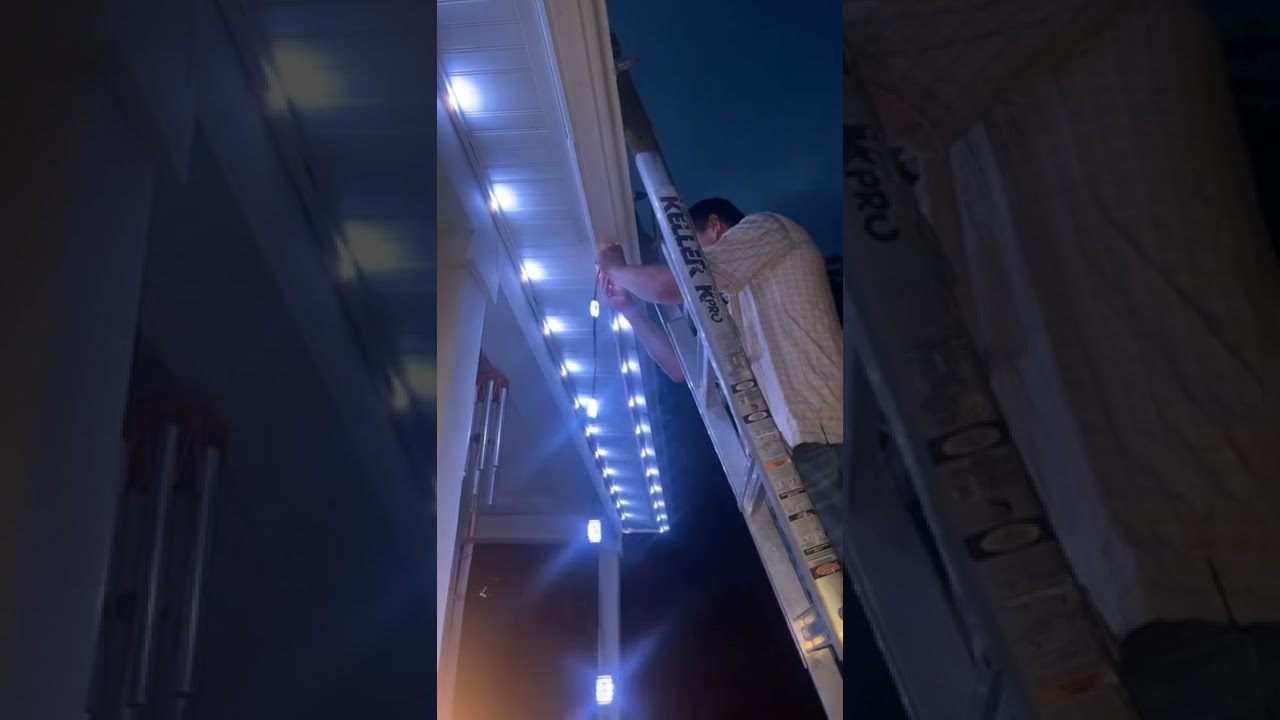
When irreversible illumination is not the appropriate move
For all their advantages, irreversible systems are not widely best. If a home owner loves altering style designs every season and takes pleasure in the routine of setting up specialized decoration by hand, irreversible roofline illumination may not change that experience. If the house schedules for significant exterior remodellings, roofing system substitute, or fascia repair work in the future, it might be smarter to wait and incorporate the lighting later. If the home's style supplies few clean installing possibilities and the installer can not hide the system appropriately, the daytime appearance might not warrant the investment.
Budget is one more straightforward limiter. If the choice is between a well-done partial setup and a stretched, jeopardized full-house configuration, I would generally pick the partial. Beginning with the front altitude where the visual effect is toughest. Expand later on if the system enables. A restrained initial phase usually looks far better than a vast job that surpasses the budget plan and cuts corners on product top quality or workmanship.
The best outcomes really feel inevitable
That might sound like a weird standard for lighting, however it is the one I come back to. When a Long-term LED Lights Installation is done incredibly well, it really feels as though your home was constantly indicated to look that way after dark. The fixtures vanish. The illumination really feels determined. The cozy tone flatters products as opposed to bleaching them. Vacation scenes come to be an alternative, not the whole identification of the system.
That is why refined, magnificent lighting has become the benchmark. Homeowners are not simply purchasing lights. They are buying control over mood, visibility, and aesthetic charm, evening after evening, season after period. The strongest projects appreciate the design, make up daily life, and focus on Classic Cozy Soft Lights as much as festive shade. They make a home look more welcoming on a normal evening, which is where a lot of life in fact happens.
If that is the objective, irreversible lighting can be one of the most gratifying exterior upgrades a property owner makes. Not since it is fancy, but since it quietly improves the means the home is seen and felt, every time the sunlight goes down.