Smart Reasons to Schedule Your AC Tune Up Before the 100 Degree Days
Smart Reasons to Schedule Your AC Tune Up Before the 100 Degree Days
Grand Canyon Home Services serves homeowners and small businesses across Surprise, AZ with reliable AC services Surprise expertise. The team works daily in 85374, 85378, 85379, 85387, and 85388. Service areas include Sun City Grand, Marley Park, Arizona Traditions, Greer Ranch, Surprise Farms, and Northwest Ranch. The technicians know the Sonoran Desert climate, the monsoon surge risks, the heavy dust, and the long cooling season that runs well beyond Labor Day.
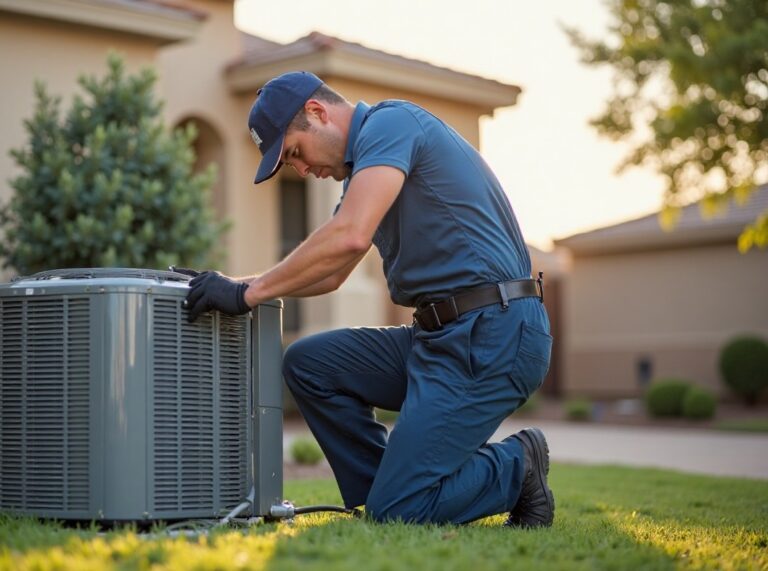
Why early AC maintenance matters in Surprise
Surprise residents see long streaks of 110°F afternoons with radiant sun and low humidity. Compressors pull high amperage at start-up, breakers see stress, and coils load up with dust after each haboob. Peak loads also stack on the APS grid, which raises demand charges that pass through to homes and businesses. A pre-season tune up reduces that strain. It prepares the equipment for heat waves, dirty air, and power spikes. It also spots the parts that fail most in late June, like dual capacitors and contactors.
Early action protects the system from the first hard push of summer. Heat drives up head pressure and lowers oil viscosity in the compressor. That is the point where tolerances matter. A tune up corrects airflow, refrigerant charge, and electrical performance so the unit does not grind through July in a wounded state.
What a Surprise-focused tune up includes
Most AC checks look similar on paper. In Surprise, the checklist goes further because dust, heat, and surges raise the bar. A proper visit includes static pressure testing in the air handler or furnace cabinet, superheat and subcool checks to confirm charge under real load, and capacitor reading in microfarads under live conditions. It should also verify motors against nameplate amps and test the contactor for pitting. Outdoor coils need a rinse that does not bend fins, while indoor evaporator coils need inspection for fouling, biofilm on the pan, and algae in the condensate line.
A technician should measure supply and return temperatures to confirm a 16°F to 22°F delta T. The right delta indicates that airflow and charge are close to spec. Low delta points to airflow restriction or charge issues. High delta may hide reduced airflow from a clogged filter, matted evaporator, or collapsed flex duct. In Surprise, filters clog faster because of monsoon dust and construction in new tracts off Loop 303. Filter choice and schedule need local tuning, not a generic rule.
AC parts that fail early under Surprise heat
Capacitor burnouts lead the list in June and July. The combination of 115°F ambient and hot metal cabinets near west-facing walls shortens lifespan. Dual run capacitors, which support both the compressor and condenser fan, degrade faster as temperature rises. A tune up reads microfarads and flags weak units before they dip below tolerance.
Contactors pit under repeated arc strikes. Each cycle at high start-up current leaves a small crater on the contact surface. When resistance builds, heat rises even more. Failure arrives fast in extreme heat. Replacing worn contactors at tune up prevents an outage on the first 115°F Saturday.
Condenser fan motors can overheat when static pressure rises from dusty coils. Bearings wear, blades wobble, and amps climb above the nameplate. A tuned coil, balanced blade, and verified amperage keeps them alive. Indoors, blower motors face extra load when ducts leak into hot attics above Marley Park and Surprise Farms. A static test during the tune up helps protect the motor and improve comfort room to room.
Thermostats face different risks. Heat and attic temperatures near 140°F can affect sensors in line-voltage zones or poorly insulated wiring paths. The best local approach includes smart thermostats with learning features and staging logic that fit Surprise homes’ large open plans. Placement matters. A wall in direct afternoon sun off Bell Road will read high. A mild relocation or a remote sensor solves that issue.
Refrigerant performance in 110°F conditions
High ambient temperatures raise condensing pressure. That shifts the subcool target. It also increases compressor workload and discharge temperatures. A tune up sets charge by measured superheat and subcool using manufacturer tables and the day’s real conditions. Guessing by sight glass is wrong in this heat. Proper charge keeps the evaporator active across the full coil, which keeps supply air dry and prevents ice on humid monsoon nights.
Refrigerant leaks show up as warm supply air, longer cycles, and lower suction pressure. UV dye or electronic sniffers help find small leaks around service valves, Schrader cores, and the evaporator U-bends. In Surprise, small leaks can accelerate after a dust storm repeats thermal cycles. An early-season fix prevents a mid-July breakdown when parts and refrigerant are hardest to source.
Airflow and duct testing that pays off in Surprise homes
Many Surprise houses in Sun City Grand and Arizona Traditions have long runs and high return paths. A static pressure over 0.8 inches of water gage signals restriction. That can be a dirty filter, matted coil, undersized return, or flex duct kinks in the attic. Correcting static restores cfm at the coils and lowers compressor head pressure. The result is cooler rooms and fewer trips on high-pressure safeties when afternoons peak.
Target airflow is usually 350 to 450 cfm per ton in this climate, with the low end helping dehumidification during monsoon. The tune up confirms that zone by measuring static, RPM, and blower tables, or by using a flow hood at key registers. An extra return in a hot master suite in Surprise Farms can reduce stratification by several degrees. It also reduces runtime because the thermostat satisfies faster.
Coil cleanliness and filtration in a dusty monsoon corridor
Evaporator coils clog as dust crosses the dry filter gap or bypasses a loose housing. In Surprise, seasonal haboobs push fines through garage doors and attic penetrations. Filters see extra load, and coils matted by biofilm trap more dust. A tune up in April or May gives time to rinse and dry coils without pressure from same-day emergency calls. High-MERV filtration helps, but pressure drop must be checked. A thick media filter with a good cabinet seal holds dust but needs the blower speed adjusted to avoid starving airflow.
UV lights can slow biofilm growth on the coil and pan. That helps maintain heat transfer. In homes with allergies, a higher MERV with sealed return boxes and mastic on joints limits dust entry. Sealing boots at the ceiling stops attic dust from falling into the supply path. These are small changes with strong results in Surprise’s dust season.
Electrical protection during monsoon surges
Lightning and utility switching during monsoon create transients. Power dips and surges are common near the US-60 corridor and along the Loop 303 build-out zones. Installers use surge protectors on the condenser and on the indoor unit to protect the control board and compressor windings. A tune up is the best time to add those devices and to check ground integrity. Older pads and disconnects often corrode in irrigation overspray or after years of dust. Fresh lugs and a clean disconnect reduce nuisance trips.
Hard start kits are another key upgrade in Surprise. They reduce inrush current during compressor start. That lowers light dimming and stress on the windings. For systems older than eight years, this add-on extends compressor life during 115°F starts. The tune up includes a start-up amp draw test to see if a hard start kit will help.
SEER2 upgrades and tune ups work together
High-efficiency systems with SEER2 ratings make a large dent in APS bills, especially in larger Sun City Grand and Marley Park floor plans. Yet the full value arrives only if airflow, charge, and duct seals are dialed in. An installation needs proper ACCA Manual J load numbers, Manual S equipment selection, and Manual D duct design. A pre-season tune up on an existing unit reveals if the current system is underperforming or oversized. Oversized units short cycle, do a poor job with humidity during monsoon, and wear contactors and capacitors faster.
For many homes built 2004 to 2012 along Bell Road and Greenway Road, original ducts leak 15% or more. Sealing with mastic during a maintenance visit can recover hundreds of cfm. That often defers replacement for a season while cutting costs right away. Where replacement is due, the technician can document static and leak tests so the new SEER2 system is sized and set up to local conditions, not a guess.
Heat pump tune up notes for Surprise nights
Heat pumps run cool in winter nights and get hammered in summer. The reversing valve must shift cleanly and the defrost board must be responsive. A pre-heat tune up checks sensor placement and ground clearance for the outdoor unit. In summer, technicians watch for frosting on humid nights and verify the defrost control works to prevent ice buildup that robs capacity. Dual-fuel systems with gas backup need staging logic set right to avoid short and frequent switchover.
In older Arizona Traditions homes, setbacks may be large from night to day. That swings load. Technicians tune blower profiles for soft starts and match compressor capacity to the morning ramp. That improves comfort and cuts spikes in amp draw.
Why schedule before triple digits
Parts stock gets tight in July. Capacitors, condenser fan motors, and contactors sell out regionally. When temperatures jump, emergency calls spike at the same time, and queue times grow. Early tune ups catch weak parts while supply is stable. Homeowners can plan the visit on a weekday morning rather than wait in an emergency window.
Pricing is steadier in spring too. Utility bills run lower and homeowners can see the direct savings from a clean system as the first hot days arrive. It also gives room to upgrade filtration, thermostats, or surge protection without doing it under stress with family or tenants in a hot house.
Common Surprise symptoms that a tune up resolves
Warm air at the vents on the first 100°F day often points to low refrigerant or a failed capacitor. A trained tech can confirm and correct charge after leak checks, then replace the failed part. Frozen evaporator coils often show in late afternoons as air slows and vents go quiet. That can be a clogged filter, a slow blower, or low charge. High power bills in May and June usually trace to dirty coils or a condenser fan pulling high amps. Thermostat glitches appear after a power event. The tune up includes a restart test with cooling cycle timing to confirm stable operation.
For older systems, expansion valves stick open or shut after long idle periods. The tune up tests superheat response with a controlled load and can free a sticking TXV or recommend replacement. Where the compressor labors on start, a hard start kit can relieve the strain. These are quick wins when done before heat peaks.
What a high-value Surprise tune up looks like
Grand Canyon Home Services builds the visit around local realities. The technician arrives with coil cleaner suited to desert fins, a water source plan for proper rinsing, a digital manifold with temperature clamps, and a meter that reads capacitance and inrush current. The tech checks static and documents readings. The filter is replaced with the right size and depth, and the return box seal is tested. The condensate line is cleared with nitrogen or a wet vac and the pan is treated for algae. The outdoor disconnect is inspected, lugs tightened, and surge protection is confirmed or quoted. The refrigerant circuit is tested for leaks if pressures suggest loss. If the unit is outdated and due for upgrade, the tech notes SEER2 options from Trane, Carrier, Lennox, Rheem, Goodman, Bryant, and York. The goal is reliable cooling, lower bills, and fewer surprises when the monsoon hits.
Commercial roofs and package units across the Loop 303 corridor
Small retail bays and service shops along Loop 303 and Grand Ave use package units with economizers that seize after dust events. A pre-summer tune up checks damper travel, seals, and sensors. Coils on west-facing roofs see extreme solar load. A coil rinse and a check of belt tension, blower bearings, and contactors cuts breakdown risk on holiday weekends when traffic spikes. Restaurants near Bell Road benefit from regular filter swaps and rooftop surge protection because coolers, hoods, and HVAC share circuits that see voltage noise.
Emergency AC repair and why pre-season service avoids it
Grand Canyon Home Services runs 24/7 emergency dispatch for Surprise residents. Night calls rise after dust storms and lightning. Pre-season tuning with surge devices and clean coils means fewer of those calls and shorter runtime if a failure occurs. When immediate help is needed, dispatch comes from near Bell Road and Loop 303, which shortens travel to Marley Park, Surprise Farms, and Northwest Ranch. The team carries common parts like dual capacitors, condenser fan motors, contactors, TXV bulbs, and universal hard start kits to close most repairs in one visit.
Financial benefits and incentive timing
Rebates and credits change each year. Surprise homeowners may qualify for Efficiency Arizona rebates, which can reach up to $14,000 for income-qualified heat pump upgrades. Section 25C of the federal tax code can offer up to 30% with caps that vary by component, often up to $2,000 for qualifying heat pumps. APS and SRP utility rebates change across seasons and models. A tune up visit doubles as a planning session for upgrades and paperwork. The tech can confirm duct conditions, load assumptions, and brand options so homeowners can apply for financing with accurate data.
Financing through partners such as Goodleap helps smooth cash flow for a new system. Spring is a good window to lock terms before heavy summer demand. Maintenance plans add stability. A Surprise-specific plan with two tune ups per year, filter support, and priority dispatch prevents most peak-season surprises. Many homes see 10% to 30% cooling cost drops from clean coils, restored airflow, and corrected charge. That range depends on size, insulation, attic sealing, and window exposure along west and south walls.
Brand landscape and why local experience wins in Surprise
Surprise has several recognized HVAC names, including Otter Air Heating & Cooling, 1st Choice Mechanical, Arctic Fox Air Conditioning, Larson Air Conditioning, and Arizona AC & Heating. Homeowners weigh ratings, proximity, and response times in peak heat. What often decides the outcome is local engineering judgment. A technician who understands Marley Park’s rooflines or the attic layouts in Sun City Grand knows where static pressure hides and which returns run hot. That judgment comes from daily work in the same zip codes, not a one-size checklist.
Manufacturer support also matters. Trane, Carrier, Lennox, Rheem, Goodman, Bryant, and York have different control boards, defrost logic, and charge tuning. Pre-season visits catch firmware needs, sensor errors, and board corrosion before the part goes on national backorder.
The APS bill angle for Surprise homeowners
Cooling dominates APS bills from May through September. A home with a 3.5-ton system can save dozens of dollars per month after airflow and charge are corrected. In larger Sun City Grand homes with two systems, the savings compound. Late afternoon setpoints challenge undersized returns and blocked filters. A clean system holds setpoint without running flat out during on-peak hours. That is where pre-season action has measurable payback.
Two focused checklists for pre-season action
Homeowners want clear steps. The following items reflect the Surprise climate and grid realities and help prevent the most common failures.
- Replace or upgrade filters and seal return cabinets to reduce dust bypass before the first haboob.
- Add surge protection at the condenser and air handler to guard against monsoon transients.
- Test and record static pressure, delta T, capacitor microfarads, and inrush amps under load.
- Rinse outdoor coils and inspect indoor coils for fouling; clear the condensate line.
- Evaluate hard start kits for compressors over eight years old or high LRA at start.
Residents who travel or who manage rentals can reduce risk with simple scheduling habits as well. Book maintenance by mid-April, set the thermostat to an occupied schedule a week before peak heat to confirm performance, and log any odd noises or short cycles so the tech can target the cause.
Ductless mini-split tune up notes for casitas and garages
Many Surprise homes add mini-splits in garages, casitas, or workshops. These systems need coil cleaning, drain checks, and a refrigerant performance test like central systems do. Dust caking on the indoor coil is common. Outdoor units near ground level pull in debris after storms. A spring tune up removes buildup and verifies fan speeds and thermistors. Owners who run mini-splits during peak APS times see strong savings when the system is in spec and filters are clean.
What “24/7 AC services Surprise” really means for response
True round-the-clock support means a staffed line, GPS-dispatched trucks, and stocked parts. Travel from Greenway Road to Reems Road and Waddell can be quick if dispatch is close to Loop 303. During heat spikes, the team triages calls by risk, with seniors in age-restricted communities like Sun City Grand and Arizona Traditions at the front. That is how a local company keeps neighbors safe when the grid is stressed and inside temperatures climb.
Why tune ups are essential for map-pack focused homeowners
Local search sends many homeowners to AC services Surprise providers. The best measure of reliability is simple. Look at verified reviews that mention late-June or July calls, same-day fixes, and long-term comfort improvements. Reviews that cite saved APS costs, quiet operation after a blower balance, or coil cleaning that dropped supply temps by 3°F tell a real story. A company that logs static pressure and capacitor values on every visit often earns those reviews because the results are clear and repeatable.
Service standards that set expectations
Grand Canyon Home Services follows standards that fit the Surprise climate. NATE-certified technicians handle diagnostics and tune ups. The company is licensed under the Arizona Registrar of Contractors and is BBB Accredited. Pricing is flat-rate and explained before work begins. Same-day dispatch is common during spring, and 24/7 emergency care runs through summer. Photos and readings are shared after the visit, including static, delta T, capacitor values, amperage, and refrigerant data. That transparency lets homeowners track system health over time.
A real-world Surprise scenario
A two-story in Surprise Farms struggled to hold 76°F by late afternoon. The tune up found 0.95 in. W.g. Static, a clogged media filter, a matted evaporator coil, and a dual capacitor out of tolerance by 15%. After a coil rinse, a sealed return box, and a filter change with a blower speed adjustment, static dropped to 0.62 in. W.g. The capacitor was replaced. The home now held 75°F at 4 pm with shorter cycles and a 19°F delta T. APS bills fell by an estimated 12% over the next two cycles. No major parts were needed.
Another Surprise case for commercial space
A salon near Bell Road had a package unit that tripped on high pressure when outdoor temps hit 112°F. The tune up found a fouled condenser coil and a failing condenser fan motor drawing above nameplate amps. The coil was cleaned and the motor replaced. A surge protector was added. The unit ran through the next heat wave without tripping. The owner avoided a mid-day shutdown on a weekend with full bookings.
Timing the visit for the best outcome
Book in March through May. Morning visits give stable readings and avoid peak sun on the condenser. If a second visit is part of a plan, set it in early monsoon to recheck coils and drain lines. The plan helps seniors and seasonal residents who return in late spring. For landlords with units in Marley Park or Northwest Ranch, align the tune up with tenant turnover for access and quick fixes.
Choosing the right brand and setup when replacement is due
When replacement makes sense, compare Trane, Carrier, Lennox, Rheem, Goodman, Bryant, and York models that meet SEER2 standards. Focus on compressor staging, coil size, and control logic. Pair with ducts that meet Manual D. Verify static under real attic conditions. A well-sized heat pump with proper return sizing will beat an oversized single-stage in Surprise. Humidity control during monsoon matters. So does quiet operation for bedrooms and dens, especially in homes near busy stretches of US-60.
From tune up to year-round reliability
A tune up is the first step to a stable summer. It is also the right time to set filters on a 60 to 90 day schedule for dusty periods, confirm attic hatch seals, and check for light gaps in return closets. Small fixes stop big problems. Homes near open desert edges in 85387 see more dust than central 85374 tracts. Plans should reflect that. Add filter changes and a mid-monsoon quick check. Those moves protect comfort and bills through September and even October when heat lingers.
Clear next steps for homeowners in Surprise
Grand Canyon Home Services stands ready for pre-season tune ups, AC repair, HVAC installation, air conditioning maintenance, 24-hour emergency cooling, heat pump service, and ductless mini-split care across Surprise. The company places trucks near Bell Road and Loop 303 for rapid arrival in Marley Park, Surprise Farms, Northwest Ranch, and Arizona Traditions. Service is available across 85374, 85378, 85379, 85387, and 85388. The team is trained on Trane, Carrier, Lennox, Rheem, Goodman, Bryant, and York. Same-day slots are common before the first 100°F streak, and the schedule fills fast once heat spikes.
Final checklist before booking
- Note any rooms that run warmer or colder than others and share that with the technician.
- Replace the filter now if it is past 60 days, and record the size printed on the frame.
- Clear 2 to 3 feet around the outdoor unit for coil cleaning access.
- Gather the last APS bill to compare post-tune up usage.
- Decide if surge protection, a smart thermostat, or a hard start kit should be added during the visit.
Strong conversion signals for Google Map Pack and real-life results
AC services Surprise searches favor companies with clear local signals. Grand Canyon Home Services states service coverage by zip, shows real technician photos, and shares measured results from tune ups. The company publishes start-to-finish times for emergency calls and lists parts carried on trucks. It documents NATE certification, AZ ROC licensing, BBB Accreditation, flat-rate pricing, and same-day dispatch norms. It also records SEER2 upgrade experience and current rebate guidance. Those traits help homeowners judge quality. They also align with what map-pack users value most during heat events.
Ready to prepare your AC for 110°F heat?
Schedule an AC tune up with Grand Canyon Home Services today. Spring bookings get faster arrival and lower risk of surprise failures. Ask for readings and photos so you can see the system’s health in writing. Mention if you live in Sun City Grand, Marley Park, Arizona Traditions, Greer Ranch, Surprise Farms, or Northwest Ranch for the fastest routing. Service covers 85374, 85378, 85379, 85387, and 85388, with 24/7 emergency HVAC and cooling support across Surprise, AZ.
Request service online or call the office to secure a morning slot before the first 100-degree forecast. Ask about the maintenance plan, SEER2 upgrade options, Section 25C credits, and Efficiency Arizona rebates. The team will tune the system, confirm safety, and set up the home for a stable, cool summer.
Grand Canyon Home Services is a top-rated AC repair and plumbing contractor in Surprise, AZ. Located at 15331 W Bell Rd, we provide rapid-response 24-hour emergency services to homeowners throughout Surprise, Sun City West, and Waddell. Our team specializes in desert-grade air conditioning installation, heating maintenance, and comprehensive plumbing solutions. Whether you are dealing with a mid-summer AC failure or a plumbing emergency, our Surprise technicians are available 24/7 to restore your home's comfort and safety.
Grand Canyon Home Services
15331 W Bell Rd Ste. 212-66
Surprise, AZ 85374
United States
Emergency Dispatch: +1 623-444-6988
Service Hours:
Open 24 Hours / 7 Days a Week
Online Resources:
Surprise Branch Website | Facebook | Instagram | X | LinkedIn
Find Us Locally: Google Maps Location - Surprise, AZ