Prestan CPR Manikins in Canada: Features, Pricing, and Best Uses
Cardiac arrest training lives or dies on muscle memory. If you teach CPR in Canada, the equipment you pick shapes how students compress, breathe, and assess, long after your course wraps. Prestan CPR manikins have become a mainstay in community programs, workplaces, and first responder refreshers because they pair durability with straightforward feedback. They cost less than many high-fidelity models, yet they stand up to the grind of large classes and travel across provinces. The right choice depends on how you teach, what your learners need, and how often your equipment moves.
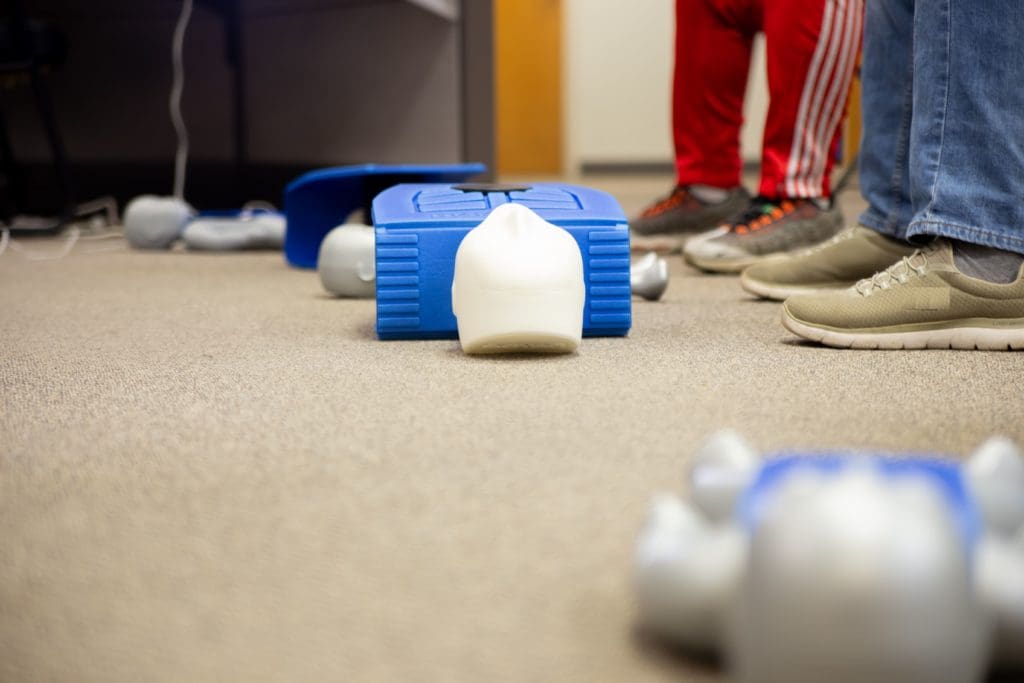
This guide distills what matters: how the common Prestan models differ, what they cost in the Canadian market, how they compare with Laerdal and truly high-fidelity options, and where they shine or fall short. I will also touch on maintenance realities, bilingual resources, and a few procurement quirks that show up north of the 49th.
Where Prestan Fits in the Canadian Training Landscape
Most Canadian providers sit in one of three buckets. There are volunteer instructors and community programs that run back-to-back blended classes in borrowed rooms. There are OH&S and public sector teams that need rugged kits for frequent recertification. And there are simulation centers and paramedic programs that need advanced physiology and airway features for immersive scenarios.
Prestan occupies the first two buckets very well. Its Professional series gives immediate feedback on rate and depth, and its bodies hold up after hundreds of cycles a day. The Ultralite series travels light without turning into a disposable toy. What you do not get is advanced airway anatomy or realistic chest compliance across the full range of patient types. If your curriculum leans on intubation, complex ventilation, or team-based QCPR analytics, then Laerdal manikins or other high-fidelity CPR manikins will earn their keep.
Canadian instructors often balance three competing pressures: meeting Heart and Stroke Foundation standardized outcomes, staying within a tight capital budget, and moving kits reliably across a large geography. Prestan solves two of those three most of the time. For purely BLS CPR training, they are hard to beat.
Core Features You Can Count On
Across the Prestan CPR lineup, several design choices come through. The torsos are compact, the shells resist cracks when stored or transported, and the skin cleans easily with common disinfectants. The feedback system has two layers. There is a mechanical click for depth, and a lighted display for rate in most Professional models. Both cues add value. The click confirms that learners are pushing hard enough, and the lights punish that instinct to speed up during long sets.
The chests rebound quickly, which matters when you are cycling a class of twenty through two-minute drills. Instructors sometimes tape over the rate lights during testing so students stop chasing green and learn to manage to their own internal pacing. The heads hinge smoothly, and the airways use a disposable lung bag design that prevents cross contamination at modest cost. In mixed-use rooms, or where time is tight between cohorts, that simple swap reduces risk and keeps you on schedule.
The finish is utilitarian. You will not get the soft skin of premium manikins or a rib basket feel that mimics a frail elder. Trade realism for durability and lower price, and Prestan leans into that balance. For many BLS courses, that is an acceptable compromise.
Model-by-Model Breakdown
The shorthand that experienced instructors use helps. Adult Pro for most classes, Ultralite for travel, Child for specific modules, Infant for HCP and family programs. Once you know the core choices, it gets easier to buy the right mix.
Prestan Professional Adult Series is the workhorse. A full torso, with head tilt and visible chest rise. The standard version includes a rate monitor with lights on the shoulder or torso. Depth feedback is mechanical via a clicker that can be turned off. There is a newer Adult Series 2000 that adds Bluetooth connectivity to a mobile app. The app shows rate, depth, recoil, and ventilation count. In practice, the lights alone enforce adequate rate, but the app makes it easier to document performance if your quality system calls for it.
The Prestan Professional Infant has a realistic airway and chest rise, a smaller clicker feel, and a compact footprint that packs efficiently in four-packs. Good for pediatric BLS, first responder refreshers, and aquatics staff. The face shape and head size are consistent with an infant one to three months old. Airways are single-use bag sets that drop in without tools.
The Prestan Professional Child shares design language with the Adult but scaled down to approximate an 8-year-old torso. Fewer programs buy these because the Adult serves for most compressions practice and the Infant covers the pediatric-specific airway and ratio nuances. The Child becomes useful in schools or courses that emphasize age-appropriate compressions and AED pad placement.
The Prestan Ultralite is the travel kit. It folds flat, weighs very little, and sets up quickly. There is a version with a rate monitor, though not all Ultralites include electronics, so check the SKU. The chest plate is less substantial than the Professional line. You trade longevity for portability. I have used Ultralites for hotel-based corporate trainings where the instructor has to fly in with a suitcase. Expect to replace torsos more often if you run large, frequent classes.
Prestan AED Trainers deserve a mention because many providers bundle them with manikins. They accept English and French overlays, pair with common training pads, and stick to most skins consistently for dozens of cycles. They are not medical devices, but they teach the rhythm of pad placement, analysis prompts, and shock delivery without surprises.
Prestan also offers skin tone options and combo packs. A mixed-skin four-pack costs slightly more than a single-tone set but helps learners break the habit of visual uniformity. In a country as diverse as Canada, that matters.
Pricing in Canada: Realistic Ranges
List prices shift with exchange rates, distributor policies, and promotions tied to training seasonality. Over the last two years, the Canadian retail ranges have settled roughly into these bands before tax. Expect volume discounts for institutions and shipping surcharges to remote areas.
A single Prestan Professional Adult typically lands between CAD 250 and 360, depending on whether you choose the Bluetooth-capable Series 2000. A four-pack usually sits between CAD 950 and 1,250. The Infant Professional single is often CAD 240 to 330, with four-packs from CAD 900 to 1,200. Child Professional models price similarly to the Infant or slightly less, from CAD 220 to 310 each. Ultralite two-packs often run CAD 220 to 320, and four-packs sit around CAD 400 to 600, with or without rate monitors.
Spare lungs and valves cost less than a dollar per student when bought in bulk. Expect CAD 25 to 45 for a bag of 50 lungs, and CAD 50 to 90 for 100-count bags. Face shields and replacement faces vary from CAD 15 to 30 per face shield pack, and CAD 50 to 90 per replacement face. AED trainers usually fall between CAD 200 and 380 each, with classroom sets bringing the unit cost down.
Shipping within major corridors is predictable. Toronto, Montreal, Ottawa, Vancouver, Calgary, and Edmonton see two to five business days under normal conditions. Atlantic Canada and smaller Prairie cities may add a day or two. Northern communities should budget extra transport time and cost, especially for bulky four-packs. Always check the distributor’s dangerous goods policy if you bundle AED trainer batteries, though most ship as standard consumer electronics.
Most Canadian suppliers offer bilingual manuals or QR-coded links to French resources, and many carry Health Canada compliant labels. If your institution requires French packaging for on-site audits, specify that at the time of order. Not all SKUs in circulation include it by default.
How Prestan Compares with Laerdal in Canada
Laerdal manikins Canada cover a wide range, from Little Anne QCPR to Resusci Anne QCPR and advanced airway trainers. The Little Anne and Resusci brands bring refined chest compliance, better elastomers, and robust app-based QCPR analytics. They cost more. For a single Little Anne QCPR, you may spend roughly CAD 350 to 500. A Resusci Anne QCPR quickly climbs past CAD 1,000 per unit when bundled with feedback options. Those numbers shift with promotions and institutional contracts.
Where Laerdal shines is in consistent compliance under load and in team-based debriefing. The QCPR ecosystem collects and displays performance per student, across metrics. For provincial health authorities or colleges conducting objective skills assessments, that data is worth the premium. For volunteer-led community classes where a single instructor watches three manikins at once, Prestan’s shoulder lights and clicks keep the group honest at a fraction of the cost.
On the durability front, both brands last. Laerdal’s chassis and faces resist micro-tears better after repeated disinfecting with hospital-grade wipes. Prestans tolerate rough transport better because of their simpler shells and lighter weight. Replace lungs and faces on a schedule, and either brand will serve beyond its warranty period.
Consider mouth-to-mouth realism. Laerdal’s face and airway path feels more lifelike, especially on the Resusci line. Prestan’s airway is simpler and easier to clean between rotations, which becomes relevant when you run 80 students through in one day. Instructors often choose the simpler swap on purpose, even if it sacrifices a bit of fidelity.
Where High-Fidelity Models Outclass Prestan
If your program needs palpable pulses, variable chest stiffness, cyanosis simulation, real-time waveforms, or advanced team dynamics, step beyond Prestan. High-fidelity CPR manikins align with ACLS and in-hospital codes, not just BLS. They include models from Laerdal, CAE, Gaumard, and others, and they pair with monitors that display ETCO2, SpO2 trends, and defibrillator interfaces. Price jumps accordingly, into the thousands or tens of thousands per unit.
I have seen teams try to stretch a budget manikin into high-stakes training with creative scenarios. The effort often backfires. Learners conflate the limits of the device with the limits of the patient, and they form bad habits. Prestan is excellent for compressions and basic ventilation skills, AED pad placement, and choreography of single rescuer versus two rescuer drills. It is not an airway training manikin. If you teach supraglottic airway insertion, BVM seal variations, or intubation, look to dedicated airway training manikins Canada such as the Laerdal Airway Management Trainer or TruCorp ranges. Those devices have realistic tongue, epiglottis, and laryngeal landmarks that Prestan simply does not model.
Meeting Canadian Training Standards and Feedback Requirements
Many Canadian training partners follow the Heart and Stroke Foundation of Canada guidelines and align with the American Heart Association science updates. One practical implication is the emphasis on objective feedback. Manikins with visible or app-based rate and depth coaching help instructors document that learners met performance thresholds. Prestan’s rate monitor and the newer Bluetooth app address this requirement at a reasonable cost.
Provinces and sectors interpret compliance differently. Some regulators focus on the presence of a feedback device, not the specific brand or metric granularity. Others, especially hospital-based programs, want logged results tied to student IDs. If you operate in a hospital or college setting, confirm whether your assessor needs exported reports. If yes, Prestan Adult Series 2000 with the app, or Laerdal QCPR models, are the safer bet than basic light-only units.
Field Notes from Canadian Classrooms
In a community center in Saskatoon, I once ran a Sunday course with 26 learners, three instructors, and eight Prestan Adult Professionals. We set up in pods of three and rotated every two minutes. We taped a small piece of opaque medical tape over the green light on half the manikins to push learners to rely on feel and the click, then removed the tape for final testing. The pass rate on rate and depth improved by about 15 percent compared with the prior cohort that watched lights all day. The point is not to hack the device but to control where attention goes during the drill.
On the Pacific coast, an aquatics team used Infant Professionals in a humid pool-side room. The face adhesives on their AED trainer pads degraded faster than expected. The fix was simple. Wipe the manikin chest with isopropyl between groups and rotate two sets of pads to allow adhesion to recover. Prestan’s skins tolerate that routine without the discoloration that softer elastomers sometimes show.
Mobile trainers who fly Coast to Coast to Coast often settle on Ultralites. They accept that torsos will need replacement more often, then budget for it. A two-pack in a carry-on with a set of face shields and lungs lets one person run a satellite office session without checked baggage. That trade works in practice.
Consumables, Cleaning, and Longevity
Prestan’s lungs snap in with a friction fit. The airway path is straightforward, which reduces risk of a poorly seated bag that blocks airflow. Change lungs between students if you teach ventilation. If you rely only on compression-only CPR drills, swap bags between classes and use face shields at minimum. During respiratory illness seasons, many instructors prefer to avoid direct mouth-to-mouth on any brand and stick to barrier devices, which your policy should spell out.
Disinfect surfaces with a quaternary ammonium or alcohol-based wipe compatible with ABS plastics. Harsh chlorine solutions will haze the surface over time. If you clean after every student, expect faces to show wear after a year of heavy use. Replacement faces and torsos are easy to source from Canadian distributors and usually ship quickly.
The typical Prestan warranty on manikins is three years, but always check the current policy on your specific SKU and with your distributor. With reasonable care, most sets outlive the warranty by several years. I have a four-pack of Adult Professionals that has logged more than 1,500 student sessions with only two face replacements and a handful of snapped lung valves due to hurried swaps.
Availability and Procurement Details that Matter in Canada
The term Medical simulation equipment Canada covers a wide array of suppliers. Some focus on hospital-grade simulation with long lead times, others stockpile BLS kits for fast delivery. If you need manikins for a course next week, pick a supplier with domestic inventory and clear ETA language. Ask whether the SKU is the North American version https://daltonjddx325.fotosdefrases.com/how-canadian-organizations-can-standardize-aed-training-equipment-across-locations with bilingual materials. If your course runs in Quebec or in a federal setting, bilingual packaging can shift from nice-to-have to must-have.
Budget cycles sit on fiscal years. Municipal and provincial buyers often find funds late in Q4, and stock runs tight in March. You can still get gear, but you may need to accept mixed-skin sets or alternate carrying cases. If your program depends on uniformity for storage, order earlier in the year.
For northern and rural buyers, consolidate orders. Freight on a single four-pack to the Territories can rival the cost of a spare part kit. Bundling AED trainers, spare lungs, and carry bags into one shipment makes the best use of that spend. And check for GST/HST exemptions if you are a registered charity or government entity.
When to Step Up or Mix your Fleet
There is no law that says you must buy one brand. Many Canadian programs carry a mixed fleet. Use Prestan for your high-volume BLS days, then pull Laerdal QCPR for objective testing or team practice where in-app debriefs speed feedback. For airway labs, rely on dedicated airway trainers. That approach respects each device’s strengths.
If budget is tight and you still need data capture, consider building a small pool of Bluetooth-capable Prestan Series 2000 units. Rotate them through stations to sample performance during final drills. The rest of the room can use lighted but non-connected Prestans to learn the rhythm. It is not as elegant as a room full of QCPR, but it satisfies many program audit needs.
Quick chooser for common scenarios
Travelling instructor covering corporate worksites across provinces: Ultralite with rate monitor, plus one Professional Adult for demonstrations that demand better chest feel. Community BLS classes with 15 to 30 learners per day: Professional Adult four-packs, two per room, and a small Infant set for pediatric modules. Hospital educators needing documented performance but watching budgets: Mix of Professional Adult Series 2000 units with Bluetooth and standard Professional Adults. High school programs with limited storage and rough handling: Professional Adult for durability, with bulk lungs and spare faces to extend life. Fire or EMS refreshers focused on compressions quality: Laerdal Resusci Anne QCPR for performance analytics, with Prestan sets as overflow for large cohorts.
What Prestan Does Not Do
Because Prestan owns the BLS space in many markets, it is easy to forget its limits. It does not simulate agonal breathing well, and its chests do not crack like a frail sternum might. Airway training beyond basic head tilt chin lift is out of scope. You cannot intubate these manikins, and you should not attempt to. For advanced airways, reach for airway training manikins Canada from Laerdal, TruCorp, or similar vendors. Those trainers let students learn laryngoscopy landmarks, practice supraglottic insertions, and experience realistic resistance.
If you plan to run blended code blue scenarios with monitors, IV skills, and medications, treat Prestan as a station tool, not the centerpiece. Use it to sharpen compressions while the team works around a high-fidelity simulator in other rotations.
A Practical Buying Checklist for Canadian Programs
Match your curriculum to the manikin’s capability. BLS compression training aligns with Prestan Professional lines, while data-heavy programs may need Bluetooth-enabled or QCPR devices. Budget for consumables and spares up front. Include lungs, faces, and AED trainer pads to avoid mid-year stockouts. Verify bilingual materials and labeling if you operate in regulated or bilingual settings. Ask the distributor to confirm the exact SKU. Consider logistics early. Check shipping timelines to your province and bundle orders to cut freight, especially for remote locations. Pilot before you scale. Buy one or two units, run a full day of classes, and collect instructor feedback on durability and ease of sanitation.
Final Thoughts
Prestan CPR manikins Canada have earned their reputation the hard way, through thousands of contact hours in church basements, union halls, office towers, and paramedic classrooms. They teach sound compressions and basic ventilation without drama, they travel well, and they do not swallow your capital budget. When you need deeper analytics, richer chest compliance, or airway realism, Laerdal manikins Canada provide those features at a higher price. For advanced scenarios, high-fidelity CPR manikins or dedicated airway trainers take over.
The best programs do not obsess over brand as much as fit for purpose. Nail down your outcomes, understand the rhythm of your training calendar, and buy accordingly. With clear expectations, Prestan will give you solid returns and fewer equipment headaches, which leaves more time for what matters: making sure the next bystander, lifeguard, or nurse compresses hard and fast when seconds count.