What to check before booking a dune buggy in Dubai
Booking an off-road buggy in Dubai is straightforward, but the details matter. The desert is not a flat car park. Sand shifts, light changes fast, and the difference between a relaxed outing and a frustrating one often comes down to what was checked before payment. A little preparation helps match the vehicle, route and terms to the kind of day you actually want.
Start with the basics: who is driving, where the buggy will be used, and what level of experience each rider has. Some outings suit complete beginners, while others expect confidence with steering, throttle control and reading terrain. Be honest about that, because a powerful vehicle can feel very different once it is moving over soft sand.
Vehicle type and what it can handle
Buggies are not all the same. Engine size, weight, suspension travel and tyre condition all shape how the vehicle behaves on dunes. A lighter buggy may feel nimble, while a stronger one can carry more momentum. That is useful in some terrain and less forgiving in others. Ask what model or class is intended for the booking, and whether it suits the riders rather than simply sounding impressive on paper.
It is also worth asking about buggy horsepower in plain terms. More power is not automatically better for a first desert drive. The useful question is whether the vehicle has enough response to climb and cruise without demanding constant correction. If riders are new to sand dune navigation, a calmer setup with clear guidance is usually easier to enjoy.
Check whether the route is open desert, a designated riding area, or a guided tour option with a set path. The phrase "desert buggy rental dubai" can cover very different experiences, from a short drive to a longer outing with stops. Knowing the format before booking prevents mismatched expectations about pace, distance and time spent actually driving.
Safety equipment and rider fit
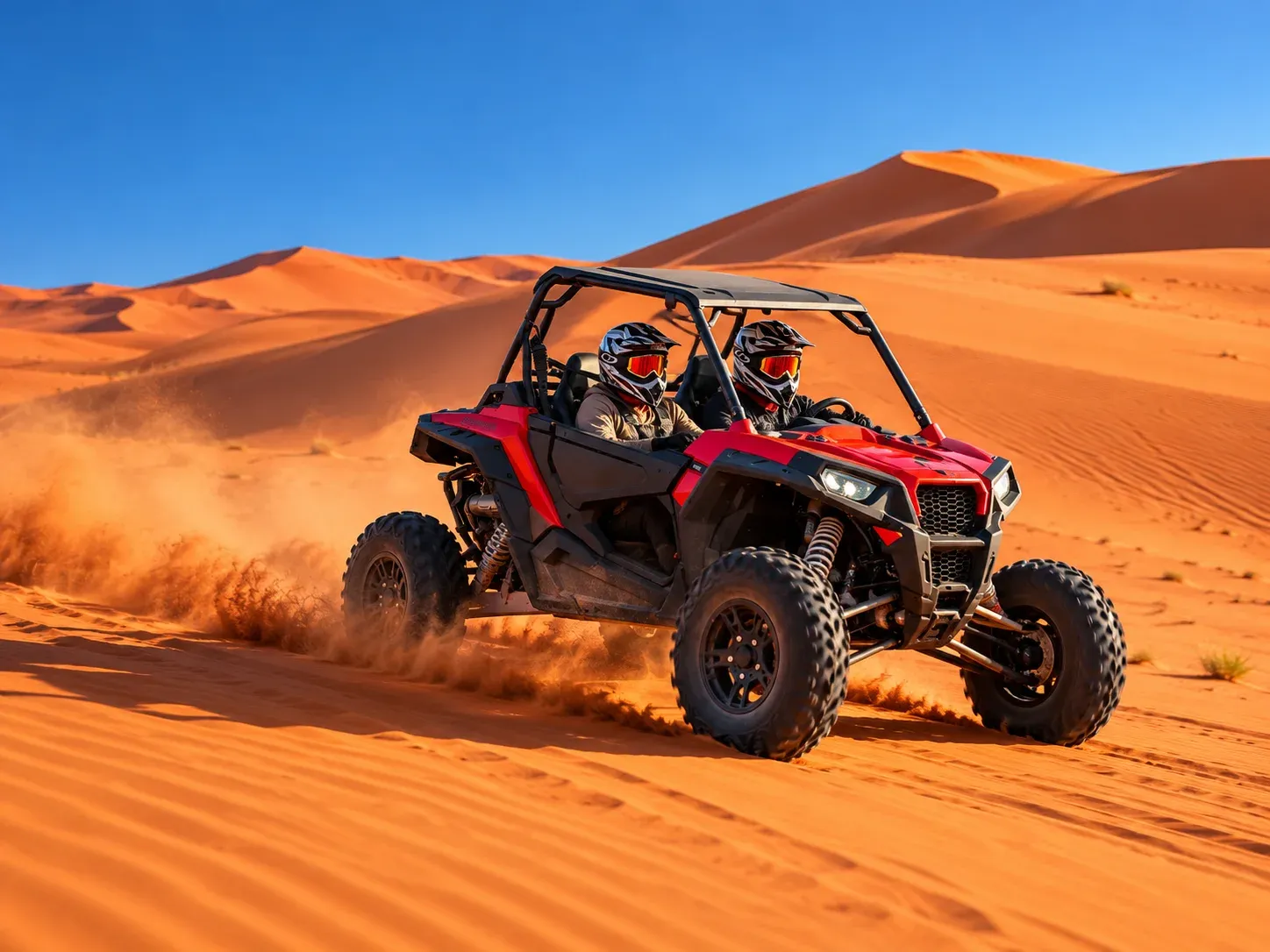
Safety gear should be part of the decision, not an afterthought. A proper safety harness matters because rough ground can throw riders sideways. Ask whether the buggy has working seat belts or harnesses for each seat, and whether helmets are provided in suitable sizes. Clean, usable equipment is a better sign than vague assurances.
Rider fit matters too. Drivers need to reach the pedals and steering wheel comfortably, with enough room to make quick corrections. Passengers should not be squeezed into spaces where they brace against the roll cage. Tall riders, shorter riders and anyone with mobility limits should raise those points before booking rather than on the day.
Clothing is another practical detail. Closed shoes, sun protection and eye protection make a real difference when dust and bright sand are part of the setting. Loose scarves, dangling jewellery and anything likely to catch on controls should be left aside. This is basic preparation, but it helps riders stay focused on the route instead of their gear.
Rules, licence expectations and driving limits
Before committing, clarify who is allowed to drive. Age rules, licence requirements and supervision conditions vary by operator and location. A beginner should not assume that being a passenger once is the same as being ready to drive. If the booking includes more than one driver, confirm whether each person needs to be named or checked in.
Ask what happens if a rider is not comfortable continuing. A sensible plan includes a way to slow down, stop safely, or switch to a passenger seat where that is allowed. The desert can look calm from a distance, then feel demanding up close. Knowing the rule for changes on the day avoids awkward decisions later.
It is also wise to confirm where the buggy may be driven. Boundaries exist for a reason, including protected areas, private land and local restrictions. A route that looks open on a map may not be suitable for off-road driving. A guided tour option can reduce that uncertainty because the route and pace are already managed.

Cost terms that need plain answers
Price is more than the headline figure. Ask what is included and what is not. Fuel policy is one point to settle early, since it affects both the cost and the running of the day. Find out whether fuel is supplied, whether the buggy starts with a full tank, and what is expected at the end.
A damage waiver is another term worth reading carefully. It does not mean damage is impossible or that every mistake is covered. Check what it applies to, what is excluded, and what happens if a tyre, panel or mechanical part is damaged. Ask for the answer in ordinary language, especially around careless driving, rollover risk and off-route use.
Security deposits, cancellation terms and late arrival rules may also shape the final cost. These details are easy to skim when the main plan feels exciting. They are much less pleasant to discover at the start of the outing. Keep written confirmations together so the agreed terms are clear if plans change.
Timing, weather and route conditions
Weather conditions affect both comfort and control. Midday heat can drain energy quickly, while low light changes how dunes read under the wheels. Wind can lift sand and reduce visibility. None of this means a desert outing should be avoided, but it does mean the timing should suit the riders and the route.
Ask how conditions influence the plan. If sand is unusually soft after wind or recent activity, the route may need to change. If temperatures are high, shorter driving stretches and more water breaks may be sensible. A provider that treats conditions as part of planning is generally easier to deal with than one that ignores them.
For many visitors, the appeal of desert buggy rental dubai is the open landscape and the sense of space. That experience depends on choosing a time and route that allow riders to enjoy the drive without rushing. Early starts can feel cooler, while later slots may offer softer light. The better choice depends on the season, the group and how much driving is planned.

Booking details worth confirming before payment
Once the main choice is clear, tighten up the practical points. The following items are simple to check and often prevent the most common problems:
- Confirmation of date, start time, meeting point and total duration, including any time spent on briefing or transfers.
- Number of buggies, seats and named riders, with age and licence details checked where relevant.
- What is included in the price, such as fuel, helmets, guiding, water or photography, and what is excluded.
- Written terms for damage, deposits, cancellation, late arrival and changes to the route because of weather.
- A contact method for the day, plus a clear plan if the group arrives late or conditions alter the schedule.
These points are not meant to make the outing feel bureaucratic. They simply turn a vague booking into a clear one. When the vehicle, rider ability, terrain, safety gear and terms line up, the day is far more likely to feel smooth from the first briefing to the final return.
A good booking decision is not about choosing the loudest buggy or the longest route. It is about matching the machine to the people, understanding the rules of the terrain, and knowing what is covered before anyone climbs in. Check those areas with care and the drive itself can stay where it belongs: fun, controlled and memorable for the right reasons.