How to Choose the Perfect Bounce House Obstacle Course for All Ages
The right bounce house obstacle course turns a backyard party into a memory guests talk about for years. The wrong one, usually too small or too intense for the crowd, turns into line management and a lot of parent apologies. I’ve helped plan school field days, neighborhood block parties, and more birthday blowouts than I can count, and I’ve learned that picking the inflatable is a lot like choosing the venue: scale, flow, safety, and the mix of guests matter even more than the colors and the theme.
This guide walks through how I evaluate options in the real world. It covers the stuff rental companies sometimes gloss over, like how many kids can actually cycle through per hour, what it means when an ad says “commercial grade,” and where a bounce house obstacle course fits among other inflatables for parties like inflatable waterslides and interactive games. The goal is simple: help you match the inflatable to the people, the space, and the day you’re planning.
Start with the crowd, not the catalog
Before you look at a single product photo, count bodies and consider ages. A “family event” can mean toddlers with big siblings, parents who want in on the fun, and a couple of teenagers who will race anything with a start and a finish. That mix drives almost every decision. If the obstacle course only fits smaller kids, the older ones will either hover or push, and neither ends well. If it’s built for teens and adults, your preschoolers will bounce around like socks in a dryer.
Think in bands. Ages 3 to 5 need shorter walls, wider crawl-throughs, and soft pop-ups that don’t topple. Ages 6 to 9 handle moderate climbs, medium tunnels, and gentle slides. Ages 10 to 14 want head-to-head racing lanes and a finale that feels like a win, not a gentle roll. Adults are a bonus, but if you want parents to join, check the weight rating and the true internal height, not just the exterior peak.
I usually plan for the heaviest traffic in the first 90 minutes, when guests arrive, and another rush after cake. If you expect 25 to 35 kids, a single medium obstacle course works fine. Over 40, consider a dual-lane model or add a second attraction, like inflatable interactive games for kids, to spread the load. When families span three generations, pairing a bounce house obstacle course with a separate bouncy house gives the littles their own space and keeps the movers moving.
Dimensions that matter beyond the footprint
Rental listings love to highlight length and height. Those numbers are helpful, but they don’t tell you if the course fits without grumbling neighbors or scraped branches. I look at five measurements:
The true footprint, including blower tubes and tie-down slack. Many inflatables need an extra 3 to 5 feet on each side for stakes and air flow. A 30 by 12 foot unit may require a 36 by 18 foot clear area. Interior height at the tallest obstacle. If the internal climb wall tops out at 7 to 8 feet, it’s great for kids, modest for teens. A 10 to 12 foot internal climb gives older kids something to conquer. Entry and exit placement. Some designs have separate entry and exit on opposite sides, which is great for flow but tricky for fences and narrow yards. Weight and carrying path. A commercial unit can weigh 250 to 600 pounds rolled, which means dolly access and a clear route from driveway to yard. Count steps, gates, and tight corners before committing. Overhead clearance. A 15 foot peak still needs clear sky, not just no branches, but no wires. Utility lines can ruin an otherwise perfect rental day.
If you only have a single gate at 36 inches, tell the rental company. Many can bring a two-piece obstacle course that assembles in place, or they can recommend a turn-friendly alternative, like a U-shaped design.
Single-lane, dual-lane, and the race factor
Once you know your space and audience, decide how you want people to move through. Single-lane courses are straightforward: one path, continuous play. They tend to be more compact, which works well in townhomes or community rooms. The downside is throughput. A typical rotation is 30 to 45 seconds per child, which means 60 to 90 kids per hour if you manage the line and keep it moving.
Dual-lane courses change the mood. Two kids start together, race through mirrored obstacles, then slide out side by side. That head-to-head moment energizes the whole party, and water slide party rentals it doubles capacity if you keep starts brisk. Expect 120 to 160 kids per hour under attentive supervision. Dual lanes also reduce line tension because kids are focused on their match rather than counting the six kids ahead of them.
There are triple-lane monsters out there, often with arches and themed banners, but they’re heavy, require big power, and are best left to school carnivals or large corporate events. For a backyard or park pavilion, a 30 to 40 foot dual-lane hits the sweet spot.
Safety you can see and safety you can’t
The most visible safety features are netting, anchor points, and padded posts. I like to walk the unit after setup and feel the anchor stakes, not just look at them. They should be 18 inches or longer in soil, driven at an angle, with tether straps taut but not bending the vinyl. On turf fields where stakes aren’t allowed, sandbags or water barrels need to be hefty, more than 150 pounds per anchor point on larger units, and placed in a way that keeps lines clear.
Inside the obstacle course, look for fully enclosed sides with tight mesh that kids can’t slip a foot through. Interior seams should be flat and taped, not just stitched. Zippered access points with Velcro covers let the operator deflate quickly if needed, which sounds scary but is an important safety mechanism in high wind.
The less visible safety comes from power, placement, and policy. Each blower typically needs its own 15-amp circuit. Extension cords should be 12-gauge, not cheap skinny cords that heat up. Keep blowers shaded or at least not pressed against fences. Establish a wind policy before party day. Most manufacturers recommend deflating at sustained winds above 15 to 20 mph. If your area gets afternoon gusts, plan morning use.
Supervision is not optional. A good rental company includes an attendant for larger setups, but if yours doesn’t, assign an adult to be the gatekeeper. They don’t need to be a bouncer, just someone who controls starts, watches for roughhousing at the top of the slide, and calls a quick pause when the group gets tired and sloppy.
What the material and build quality actually signal
You’ll see terms like “commercial grade” and “heavy-duty vinyl” across listings. Here’s what matters in practice. Most commercial inflatables use 15 to 18 ounce PVC vinyl, double or triple stitched at high-stress points, with reinforcements at anchor rings and base corners. The best units use heat-welded seams on key panels. Consumer-grade or “backyard” units often use lighter vinyl or nylon with PVC coating, which is fine for personal ownership and light use, but it won’t hold up to 50 kids cycling through in an afternoon.
Weight is a clue. A 30 foot commercial obstacle course might weigh 350 to 450 pounds. A unit under 150 pounds in that size usually indicates residential-grade materials. If you’re booking inflatable rentals for a school or church, ask about the material weight and the inspection record. Many regions require annual inspections and operator permits. You don’t need to become a vinyl expert, but you should feel comfortable that the equipment is built for the traffic you expect.
Themes, colors, and the banner trap
Kids love bright colors and character themes. Rental companies know this, which is why a basic red-blue-yellow course suddenly becomes a “jungle run” with a banner swap. There’s nothing wrong with banners, but don’t let a licensed character mask a unit that isn’t right for your ages. I’ve seen a beautiful princess-themed obstacle course with a narrow tunnel that kept snagging shoes, and a pirate ship with a slide angle better suited to seven-year-olds than teenagers.
Match the theme to the vibe, but pick the course for the features. If you want a bounce castle look for photos, consider a hybrid unit with a bounce area and a short obstacle path built in. It keeps the festive bounce castle appearance while giving kids a sequence to complete. For older groups, lean into race-style designs with clear start and finish arches and a big slide finale.
Capacity and flow: how many kids per hour is realistic
Most listings give a maximum occupancy, for example, 6 to 8 kids at a time. That number is about safety, not throughput. What you care about is how many kids can complete the course in an hour without chaos. The fastest cycles come from short instructions and a clear rule: two participants enter, do not stop in the middle, slide, exit left, and rejoin the line at the back.
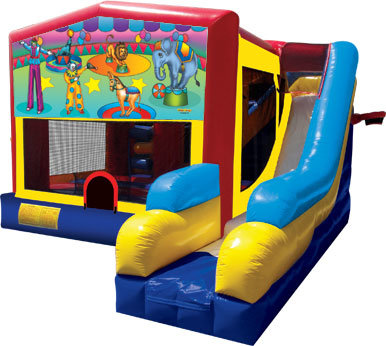
A dual-lane, 35 foot course with experienced attendants can move 120 kids per hour comfortably. Single-lane courses average about half that. Add 20 percent time if you have lots of first-timers or mixed ages, because little ones need a second to conquer the first climb. If your guest list is heavy with toddlers, consider a separate small bouncy house nearby where they can play without feeling rushed. Parents relax when their younger kids have a gentler space.
Weather and ground conditions set the tone
Grass is the classic base, and it’s forgiving. The crew will lay tarps, then the inflatable, then stake. On dry days, this is perfect. After rain, muddy ground turns the exit area into a slip zone. Ask the company for entrance mats or bring a few folded towels to wipe feet before kids rejoin the line. On synthetic turf, confirm if stakes are allowed. Most fields prohibit them, which means ballast and extra setup time.
Concrete and asphalt are viable for many obstacle courses with heavy sandbagging and protective tarps, but the slide exit needs padding and a mat to protect both kids and vinyl. If you have pine needles, stick debris, or gravel, sweep thoroughly. I’ve watched a single missed stick become a slow leak four hours into a party.
Heat matters too. Vinyl absorbs sun. On hot afternoons, shaded placement extends play time and keeps the slide tolerable. White tents can help, but make sure the height clears the tallest point and that the tent itself is properly secured.
Power planning without surprises
One blower draws roughly 7 to 12 amps once running. Startup loads can spike higher for a second, which trips weak breakers. A medium obstacle course might have two blowers, and a larger dual-lane could have three. Plan for separate circuits and keep kitchen appliances off those lines. If the event is at a park pavilion, verify outlet locations in advance and bring industrial extension cords, 12-gauge, under 50 feet per run if possible. Rental companies often supply cords, but I like to know the plan so I can place the unit near power without draping cords across walkways.
If you’re bringing inflatable waterslides as well, count additional blowers and water access. Run hoses away from electric lines, and tape or cover any cord crossings with rubber mats.
Dry, wet, or hybrid play
Obstacle courses come in dry-only, wet/dry hybrids, and slide-heavy models with water landing zones. Hybrids add a spray bar over the slide and sometimes a small splash pad at the exit. They’re brilliant in summer but require grass or a forgiving surface and a water source within 50 to 75 feet. Kids cycle slightly slower when wet because they pause at the start to brace for the water and at the end to splash. Plan for towels and a shoe policy. Water and shoes on vinyl do not mix.
If you’re mixing attractions, a dry obstacle course plus an inflatable waterslide handles heat and keeps lines balanced. Young kids often prefer the course, older ones gravitate to the waterslide, and everyone tries both. Just keep the wet and dry areas distinct, or you’ll have soggy socks migrating everywhere.
Insurance, permits, and the unglamorous details that save the day
Reputable providers carry liability insurance and can share a certificate upon request, sometimes naming your venue as additionally insured. If you’re hosting at a city park, permits may require that paperwork. Indoor gyms and community centers often ask for vendor insurance as well. Ask early. For school or corporate events, confirm that the vendor can provide attendants with background checks if necessary.
Read the rental agreement for setup time, cleaning fees, and wind or weather cancellation policies. Many companies allow rain checks if you reschedule within a certain window. If your event date is a high-demand weekend, ask about flexibility. I’ve had vendors move our start time up an hour to dodge afternoon thunderstorms, which saved a field day.
When a bounce house obstacle course isn’t the right call
Sometimes the course isn’t the hero of the day. If your group skews under age 5, a classic bouncy house or a bounce castle with a small slide might deliver more smiles with less stress. Full courses can intimidate three-year-olds, and you’ll spend more time helping than cheering. If your space is tight or the approach path is narrow, inflatable interactive games for kids, like basketball shoots, speed pitch, or giant connect-four, fit easily and keep kids engaged without crowding.
For nighttime events, LED-lit games and glow accessories make simple inflatables feel special. If noise is an issue, choose fewer blowers. A single-lane, medium course and a quiet game station keep the vibe lively without the constant hum of multiple motors.
Reading a rental quote like a pro
When a quote arrives, I scan it for the following: unit name with exact dimensions, number of blowers, delivery window and pickup window, surface type, power needs, included accessories like mats or extension cords, and whether attendants are included. I ask for a photo of the actual unit, not just a stock image. If the company owns multiple similar units, confirm which one you’re reserving.
Clarify the policy on cleaning. Good operators sanitize touch points after every use. If they expect you to wipe down between groups, plan for it. I keep a tote with hand sanitizer, a roll of paper towels, and a small spray bottle of mild cleaner for quick resets at the entrance rails. It keeps parents happy and lines moving.
What kids actually love inside the course
The magic of a bounce house obstacle course is the sequence. Kids love a clear start gate, a tunnel that feels just a bit secret, a medium-height climb where they can look back and wave, then a slide that feels fast but safe. Pop-up pillars need to give way when hit by a smaller kid, not knock them sideways. Net windows let parents cheer and take photos without calling kids out mid-race.
For older age groups, the key is friction. Not literal friction, but the sense that they can compete. Dual-lane timings, a stopwatch at the exit, or a chalkboard for best times keeps them engaged longer. Balance beams and squeeze walls are more fun than they look in photos, because they create friendly drama. Avoid units that pile three hard features back-to-back without a breather. The best designs mix crawl, climb, dodge, and slide in a rhythm that feels like progress.
Pairing and sequencing with other inflatables for parties
Variety wins when guest counts grow. A simple recipe I’ve used at neighborhood events looks like this: a dual-lane obstacle course as the anchor, a standard bouncy house for younger kids, and a compact skill game like a soccer shootout. That trio spreads ages naturally. If heat is expected, swap the skill game for an inflatable waterslide or a foam machine, and make a clear wet zone with towels and a shoe rack.
Think about visibility. Place the obstacle course where arrivals can see it immediately, but tuck the bouncy house slightly aside so little ones have a quieter space. If food service happens near the inflatables, schedule a short pause during cake time. It sounds counterintuitive, but five minutes of downtime resets energy and prevents the sugar-fueled surge that ends with pileups at the slide exit.
Budget ranges and value, not just price
Prices vary by region and season, but some benchmarks help. A weekday rate for a medium single-lane course might land in the 200 to 350 dollar range, with weekends adding 50 to 150 dollars. Dual-lane, 30 to 40 foot courses often run 350 to 600 dollars for a day, rising for peak Saturdays. Add more for attendants, generators if power is distant, and delivery beyond a base radius.
Value comes from fit and reliability. A slightly smaller course from a great operator beats an impressive photo from someone who shows up late with frayed cords. Ask friends for referrals. The best inflatable rentals operators are proud of their equipment and happy to talk through your plan. You’ll hear it in their questions: they’ll ask about ages, space, ground surface, wind exposure, and event flow.
A quick pre-event checklist
Use this five-point pass the day before and the morning of your event to catch surprises early.
Confirm delivery and pickup windows with the rental company, and make sure your phone is on for setup-day calls. Clear the setup area, measure again, and plan the approach path. Unlock gates and move cars if needed. Locate outlets on separate circuits, stage extension cords if you have them, and check hose reach for wet units. Assign an adult attendant for the main attraction, plus a backup. Share simple ground rules with them. Stage a small kit: hand sanitizer, paper towels, a few bandages, a couple of trash bags, and a timer or stopwatch.
Real-world examples that map to common parties
A sixth birthday with mixed ages, 20 to 25 kids, small backyard: Choose a 25 to 30 foot single-lane obstacle course with a gentle slide. Add a small bouncy house for toddlers. Place the course along the fence and the bouncy house near the patio. One adult manages the course start, another floats.
A school field day station, 150 kids per grade in 45-minute blocks: Go dual-lane, 35 to 40 feet, with bold start and finish arches. Two attendants, one at the start, one at the slide exit. Add cones to form a U-shaped line so kids circle back efficiently. Have a whistle and pause every ten minutes for water breaks.
A teen backyard grad party, evening, 30 guests: Pick a dual-lane course with a taller slide and timed races. Add a small interactive like a basketball free-throw or a soccer target so groups rotate naturally. Set up string lights along the approach path and use LED floodlights so the slide exit is bright. Keep music near, but not on top of, the blowers.
A church picnic with families and grandparents, big open lawn: Anchor with a mid-size dual-lane obstacle course, add a classic bounce castle for littles, and set up chairs under shade near both. Create an older-kid zone and a younger-kid zone with food in between so families can see both.
Maintenance signals during the event
Even the best setups need light touch-ups. If the inflatable feels softer, check for kinked blower tubes or a partially unzipped access port. If kids start sticking near the slide exit, dry towels help. Watch for stacking at the climb wall. When the line bunches, slow starts and send petite kids with petite kids, bigger with bigger, so races feel fair and safe. If wind picks up enough that netting billows and anchor straps strain, pause, and call the vendor for guidance. A ten-minute wait beats a risky run.
Bringing it all together
The perfect bounce house obstacle course for all ages isn’t just the flashiest option. It’s a matched set of decisions: who’s coming, where it will sit, how people will move, and how you’ll keep it fun and safe across two or three hours of real party energy. Think of the course as the stage and the line as your audience. When the stage fits the performers, the show runs itself. Kids race, laugh, reset, and go again. Parents relax. Photos look like pure joy instead of organized chaos.
When you’re ready, talk to a couple of inflatable rentals companies and tell them your crowd story before you ask about price. Mention your space, ages, and schedule. Ask for a unit that has proven itself at school events or similar parties. If you also want variety, toss in a bouncy house for the little ones and one or two inflatable interactive games for kids. If heat is a factor, bring in inflatable waterslides and create a wet zone. With the right mix, your event feels intentional rather than thrown together.
I’ve watched hundreds of kids charge through courses that matched them perfectly, and the pattern is always the same. They line up without being told. They cheer at the top. They sprint the last stretch. And when pickup time comes, they beg for one more run. That’s the mark of a good choice, and it starts with the questions you ask before you ever roll out the tarp.