Calculating the Adjusted Anion Gap
What Is the Anion Gap?
The anion gap is a computed value from serum electrolytes that aids clinicians in assessing acid-base balance. It measures against measured sodium with the measured anions chloride and bicarbonate to approximate the amount of unmeasured anions in the blood. In routine blood chemistry, this makes the anion gap a valuable marker in a metabolic acidosis workup and a reliable part of patient assessment.
The basic idea is straightforward: the body maintains positive and negative charges in balance. When the gap is greater than expected, it can indicate excess acids or other unmeasured substances. That is why the anion gap is often applied as a diagnostic tool in the evaluation of metabolic acidosis and other acid-base disorder patterns.
The most common anion gap equation is:
Anion gap = Sodium - (Chloride + Bicarbonate)
This calculation incorporates values from an electrolyte panel and provides a lab result that must always be interpreted in context. Because different laboratories may use slightly different measurement methods and normal values, the expected reference range can differ.
Why Modify the Anion Gap for Albumin?
Albumin is the main unmeasured anion in plasma, so it has a major effect on the anion gap. When a patient has hypoalbuminemia, the raw anion gap can look falsely normal or only somewhat elevated even when important acids are present. This is why the anion gap is often corrected for albumin.
Low albumin reduces the baseline gap because there are a smaller number of negatively charged proteins contributing to the measured balance. That can hide a significant metabolic acid load and reduce the sensitivity of the test for detecting metabolic acidosis. In other words, a patient with low albumin may have a “normal” gap on paper but still have an underlying high anion gap process.
Correcting the result improves anion gap interpretation and supports stronger clinical significance. It helps distinguish true normal anion gap states from masked high-gap states in the setting of low albumin. This is especially important during critically ill patient assessment, where changes in albumin are common.
Adjusted Anion Gap Equation and Working Steps
The adjusted anion gap adjusts the observed gap for the patient’s albumin concentration. The precise albumin correction factor may vary by reference, but a typical approach is to add 2.5 mEq/L to the measured anion gap for every 1 g/dL albumin below 4.0 g/dL.
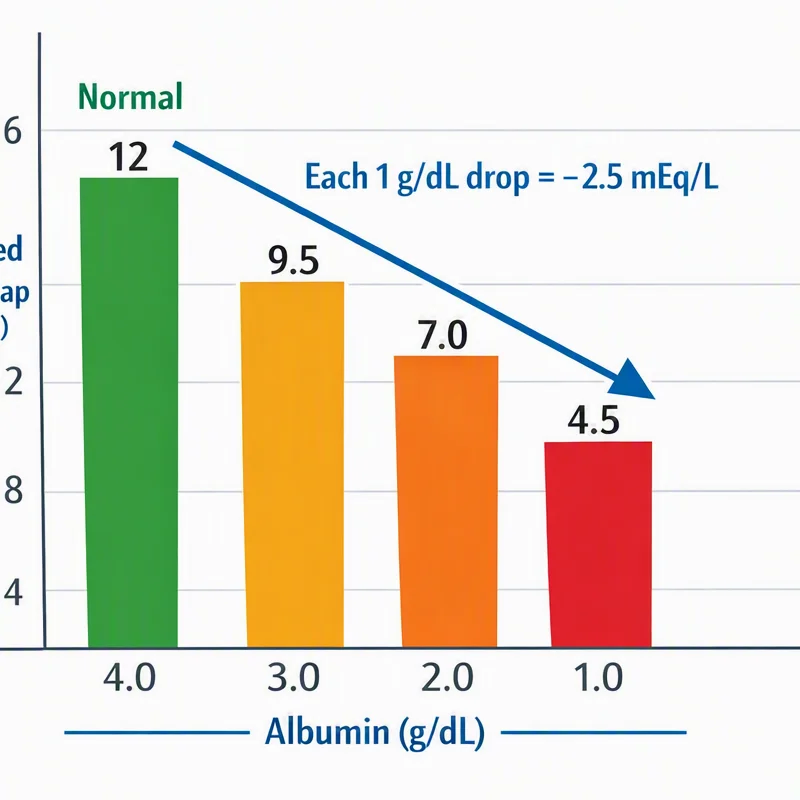
One common formula is:
Corrected anion gap = Observed anion gap + 2.5 × (4.0 - serum albumin in g/dL)
Example 1:
Na = 140 Cl = 104 Bicarbonate = 20 Albumin = 2.0 g/dL
First calculate the anion gap:
140 - (104 + 20) = 16
Next apply the albumin correction:
2.5 × (4.0 - 2.0) = 5
Adjusted anion gap = 16 + 5 = 21
That corrected value suggests a greater burden of unmeasured anions than the unadjusted result might imply.
Illustration anion gap in chronic kidney disease 2:
Sodium = 138 Chloride = 109 HCO3 = 24 Albumin = 1.8 g/dL
138 - (109 + 24) = 5
2.5 × (4.0 - 1.8) = 5.5
Corrected anion gap = 10.5
Although the uncorrected value is on the low side, the albumin-adjusted result falls within or around a typical reference range depending on the lab. This is why albumin correction matters so much in routine clinical testing.
For an accurate anion gap calculation, follow these steps:
Collect sodium, chloride, and bicarbonate from the electrolyte panel. Determine the measured anion gap using the anion gap equation. Check the serum albumin level. Apply the albumin correction factor if albumin is low. Contrast the corrected result with the lab’s reference range.
Note that some institutions use slightly different formulas or cutoffs, so the final interpretation should always account for the local reference range and method used by the medical calculator or laboratory system.
How to Operate an Anion Gap Calculator
An Anion Gap Calculator is a clinical calculator that assists clinicians quickly determine anion gap and perform albumin-adjusted interpretation. It is especially useful when checking a blood chemistry panel during a metabolic acid workup, because it minimizes arithmetic errors and accelerates decision-making.
To work https://anion-gap-app106.rivetgarden.com/posts/can-paraproteinemia-lower-the-anion-gap with a calculation tool correctly, provide the relevant lab values exactly as reported:
Sodium Chloride Bicarbonate Albumin
Some tools may request the serum bicarbonate directly, while others use total CO2 as a proxy depending on the lab format. Always make sure the values originate from the same electrolyte panel and represent the same sample to avoid inconsistency in the lab result.
When using an Anion Gap Calculator, the output usually shows:
Measured anion gap Albumin-adjusted or corrected anion gap Reference range comparison
This aids clinical interpretation, especially when hypoalbuminemia is present. A calculator can also make it simpler to compare repeated results over time and monitor trends in acid-base disorder management.
That said, the calculation tool does not take the place of judgment. The calculator provides a number, but the clinician must decide whether the result aligns with the patient’s overall picture, including symptoms, medications, and other laboratory findings.
How to Analyze a Raised or Normal Corrected Anion Gap
A high anion gap metabolic acidosis implies that unnoticed acids are accumulating in the blood. If the corrected value is elevated, the next step is to identify the source of the acid load. Common causes include lactic acidosis, ketoacidosis, renal dysfunction, and toxin exposure.
If the corrected anion gap is within range, the patient may have a normal anion gap pattern, often associated with bicarbonate loss or chloride gain rather than additional unmeasured acids. This is commonly seen in some forms of diarrhea, renal tubular disorders, or saline-related acid-base changes. Even then, the overall clinical context remains crucial.
Here is a useful way to think about the result:
High corrected gap: consider high anion gap metabolic acidosis and investigate unmeasured anions. Normal corrected gap: think about normal-gap processes and check chloride and bicarbonate shifts. Borderline result: review albumin, repeat testing if needed, and look for mixed disorders.
In clinical practice, lactic acidosis may occur with shock, hypoperfusion, or severe illness, while ketoacidosis is often linked to diabetes, starvation, or alcohol use. Both can raise acid production and increase the corrected gap. These patterns are a major part of anion gap interpretation because they guide urgent evaluation and treatment.
Typical Causes of an Altered Corrected Anion Gap
An altered corrected anion gap can suggest several significant conditions. The differential diagnosis depends on whether the corrected value is elevated, unchanged, or unexpectedly reduced. In the context of a metabolic acidosis evaluation, the most notable causes include renal failure, uremia, toxic alcohols, and salicylates.
Renal failure can elevate the gap because the kidneys cannot excrete acids normally, allowing metabolic acids to build up. As kidney function deteriorates, retained acids contribute to uremic patterns and a increasing gap.
Uremia is a classic cause of high-gap acidosis due to retained organic acids and other unmeasured anions. In advanced kidney disease, this may be a prominent driver of abnormal blood chemistry values.
Toxic alcohols such as methanol or ethylene glycol can lead to a dangerous high-gap state by creating acidic metabolites. When suspected, the clinical picture often includes neurologic changes, visual symptoms, or kidney injury, but the lab pattern may be the earliest clue.
Salicylates can produce mixed acid-base patterns and may increase the anion gap through increased organic acids. The resulting picture can be complicated, so correlation with history and additional testing is essential.
Other causes of elevated corrected values may include:
Lactate buildup from poor perfusion or severe illness Ketone-related acidosis from diabetes, fasting, or alcohol-related states Toxins and drug-related metabolic acidosis Advanced renal dysfunction with acid retention
Understanding these findings improves diagnostic interpretation and supports appropriate next steps when the lab result is abnormal.
Limitations, Challenges, and Clinical Notes
The calculated anion gap is helpful, but it is imperfect. One major drawback is lab error. Small variations in sodium, chloride, or bicarbonate can meaningfully change the final result, especially when the gap is only mildly abnormal. Rechecking values may be appropriate when the pattern does not fit the clinical picture.
Another key concept is the delta gap, which evaluates the rise in the anion gap with the fall in bicarbonate. This can help recognize mixed acid-base disorders. As an example, a high gap with a smaller-than-expected bicarbonate drop may suggest an additional metabolic alkalosis, while the reverse can suggest a coexisting non-gap process.
Mixed acid-base disorders are frequent in sick patients, and the corrected anion gap should be used as part of a wider clinical interpretation rather than as a single answer. The result should be considered alongside pH, pCO2, lactate, ketones, kidney function, and medication history.
Additional pitfalls include:
Using outdated or mismatched lab values from different collection times Overlooking albumin when it is clearly low Choosing the wrong correction factor for the lab method Failing to notice a normal anion gap process masked by other abnormalities
Good clinical interpretation requires the full picture. The corrected anion gap is a guide, not a diagnosis. It should inform the broader assessment of the patient, especially when symptoms, blood gas data, and biochemical markers point in different directions.
FAQ: Corrected Anion Gap Questions
How is calculated corrected anion gap?
To begin, calculate the anion gap using sodium minus the sum of chloride and bicarbonate. After that adjust it for albumin using an albumin correction factor, commonly 2.5 mEq/L for each 1 g/dL that albumin is below 4.0 g/dL. This produces an albumin-adjusted result that is more accurate in patients with low albumin.
What is the value of the albumin correction factor for anion gap?
A widely used albumin correction factor is 2.5 mEq/L per 1 g/dL decrease in albumin below 4.0 g/dL. Some laboratories or references may use slightly different values, so the exact method should match the reference range and the calculation tool being used.
How does low albumin lower the anion gap?
Albumin is a major unmeasured anion in blood. If albumin is reduced, fewer negative charges are present, so the measured anion gap decreases. This can make a high-gap disorder appear less obvious unless the result is corrected for albumin.
What does a high corrected anion gap mean?
A high corrected anion gap usually means there are excess unmeasured acids in the blood. Frequent causes include high anion gap metabolic acidosis from lactic acidosis, ketoacidosis, renal failure, uremia, toxic alcohols, or salicylates. It is a clue that further diagnostic interpretation is needed.
When should an anion gap calculator be used?
An Anion Gap Calculator should be used whenever you need to calculate anion gap quickly and accurately, especially if albumin is low or the acid-base disorder is not straightforward. It is especially helpful during metabolic acidosis workup, routine electrolyte panel review, and any situation where corrected interpretation may change the clinical significance of the lab result.