The Architecture of Certainty: Why We Prefer Rules to Reality
There is a specific kind of background unease that defines the modern era. It isn’t always a sharp, immediate panic; it’s more like a low-frequency hum. You feel it when you open a blank document, when you stare at a grocery aisle with forty brands of pasta, or when you consider the nebulous trajectory of your own life. We call this "freedom," but for most of us, it feels like drowning in options.

Lately, I’ve found myself gravitating toward systems with rigid, clear frameworks. Whether it’s a strategy game, a highly structured productivity app, or the specific feedback loops of a live dealer-led experience, these environments offer something the real world refuses to provide: the promise that if I do X, Y will happen.
Think of it this way: Living in the modern world is like trying to navigate a vast, unanchored ocean at night. You have no stars to guide you, and the current changes every time you look at your compass. Stepping into a well-designed system is like climbing into a 25-meter swimming pool with lane markers. The water is chemically balanced, the depth is consistent, and you know exactly where the walls are. You aren't restricted; you are protected by the boundaries that make movement possible.
The False Promise of Infinite Choice
We are told that infinite choice is the pinnacle of the human experience. But as any behavioral researcher will tell you, choice is not always agency. Often, it is just noise. We suffer from extreme decision fatigue because our brains were not evolved to calculate the long-term utility of seventeen different streaming platforms or the optimal path for a career that doesn't have a clear beginning or end.
When you encounter a system with strict rules, that fatigue evaporates. You don't have to wonder if you’re doing it "right" because the framework tells you exactly what the stakes are. These systems provide a container for your focus. In an open-ended world, the lack of constraints doesn't lead to freedom; it leads to paralysis.
This is why mobile-friendly interfaces that gamify tasks have become so dominant. They aren't just convenient; they are an antidote to the chaos of the unscripted world. They break down the crushing burden of existence into manageable, bite-sized tasks. When you tap a button and see a progress bar move, you aren't just checking a box; you are participating in a system that acknowledges your existence through immediate, objective feedback.
The Appeal of Fairness and Bound Agency
Why do we crave rules? It comes down to perceived fairness. In life, effort does not always correlate with reward. You can work hard and fail; you can slack off and succeed. There is no central authority to complain to when life feels rigged.
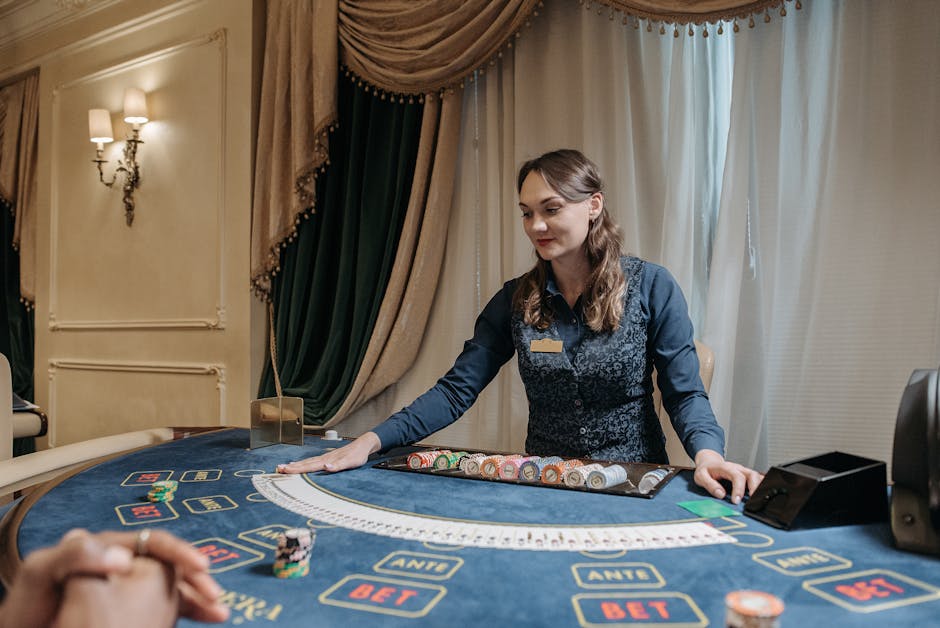
Structured systems, by contrast, feel inherently just. Even if the rules are difficult, they are predictable. In a live dealer-led experience, for instance, the ritual is the point. You know the sequence of the cards, the tone of the dealer, and the boundaries of the betting window. There is a comfort in knowing that the house isn't hiding the deck—it’s just playing by the specific, articulated rules of the game.
Comparing Life Stressors to Gaming Feedback Loops
Feature Real-World Chaos Structured System Outcome Prediction Near impossible High (Probability-based) Decision Load Overwhelming Simplified Feedback Loop Delayed/Ambiguous Immediate/Visible Sense of Agency Low/Fragmented High/Defined
Choice vs. Design Pressure
It is crucial to distinguish between genuine choice and design pressure. Developers and UX designers don't build these systems because they care about your mental clarity. They build them because predictability keeps you engaged.
When you are in a "clear framework" environment, you might feel like you are exerting agency, but you are often operating within a narrow corridor of acceptable inputs. This is design pressure. The system isn't giving you infinite possibilities; it is narrowing your options so that the ones you *do* pick are highly rewarding for the platform. You aren't playing the game; the game is playing you, and it’s doing so by making you feel smart, capable, and in control.
I find this fascinating, not because it’s "evil," but because it’s effective. We are so starved for structure that we will voluntarily walk into a digital cage if the lighting is right and the feedback is consistent. We prefer the "design pressure" of a well-ordered app to the terrifying freedom of an uncurated life.
Finding Agency in the Machine
Can we have the best of both worlds? Can we use these structured systems without becoming extensions of their engagement loops? Yes, but it requires a shift in how we view them.
We need to stop viewing these platforms as life-management tools and start seeing them as what they are: temporary cognitive anchors. If you are feeling the weight of modern uncertainty, turning to a system with clear rules—whether that’s a hobby, a game, or a digital interface—can be a valid way to reset your brain.
Identify the boundaries: Know where the system ends and your life begins. Seek clear feedback: Use systems that show you tangible progress to combat general malaise. Acknowledge the design: When you feel that "addictive" pull, remind yourself that the interface is designed to keep you clicking. Transition back: Use the energy gained from the structured environment to make one small, real-world decision that has been lingering.
The Necessity of the Anchor
Ultimately, we crave these clear frameworks because the world has become too big and too fast for our ancient, pattern-seeking brains to process without help. When the news cycle is an endless feed of unpredictable crises, the "live dealer" version of reality—where the rules are stated upfront and the game is confined to a table—is a relief.
I don't think we should reject these tools because they are "manipulative." Everything is manipulative. Every street sign, every architectural layout, and every social norm is a form of design pressure. Instead, we should be honest about why we reach for them. We aren't looking for products; we are laprogressive.com looking for a place where we can be sure that our actions matter, if only for a few minutes at a time.
Life may be an unanchored boat, but there is no shame in building a temporary pier so you can stand on solid ground for a while. Just don't forget that eventually, you have to untie the ropes and get back to the open water. The ocean is terrifying, but it’s the only place where the scenery actually changes.
Conclusion
The next time you find yourself stuck in a loop of decision fatigue, don't force yourself to make a "big life choice." Step into a system with clear, non-negotiable rules. Let the framework hold you for a moment. Find that one area where the variables are known, the rules are fixed, and the outcome is something you can actually influence. Once you’ve caught your breath, carry that clarity back into the mess. That is how we survive the uncertainty of the current age: by borrowing a little bit of structure, and then having the courage to leave it behind.