What Is the Meaning of a Low Bicarbonate With High Anion Gap Indicate?
When you see low bicarbonate combined with a elevated anion gap usually points to metabolic acidosis, which happens when acids build up in the body or bicarbonate is consumed while trying to buffer that acid. This is an important clue in lab interpretation because it affects how clinicians think about the likely cause of acidosis and what testing should happen next. An Anion Gap Calculator can help arrange the numbers from a blood test, but the result always has to be considered in context with symptoms, the full blood chemistry panel, and other findings.
As this causes decreased anion gap pattern can represent anything from temporary illness to a dangerous poisoning, it has important medical importance. Knowing how the anion gap, bicarbonate, and overall acid-base balance helps explain why doctors may ask for more testing even when only one part of the lab report looks abnormal.
What the Anion Gap and Bicarbonate Work
The anion gap is a derived value that helps assess the balance between charged particles in the blood. It is typically calculated from sodium, chloride, and bicarbonate on routine blood chemistry testing. In plain language, it may indicate if there are hidden acids in the bloodstream, often described as unmeasured acids or unmeasured anions.
Serum bicarbonate, also reported as blood bicarbonate or CO2 on a laboratory panel, is among the body’s main buffers against acid. When bicarbonate is decreased, it often means the body is either depleting bicarbonate or using it up while neutralizing acid. That is why low bicarbonate is a key clue in assessing metabolic acidosis and broader electrolyte imbalance.
These numbers are typically part of a routine metabolic panel, which is one of the most informative snapshots of the body's internal chemistry. These results allow doctors to analyze lab results, find out whether there is an acid-base problem, and determine whether more urgent action is needed.
Reasons Why Low Bicarbonate Levels And High Anion Gap Happens
A reduced bicarbonate and high anion gap generally indicates the body has developed acid excess. In this scenario, acids collect faster than the body can clear them, or bicarbonate is being consumed as it cushions those acids. The result is a move in blood pH toward acidic levels.
In high anion gap metabolic acidosis, the central issue is usually the appearance of extra acids that are not directly measured on standard labs. These acids elevate the anion gap calculation and lower bicarbonate at the same time. That is why the pattern is so helpful: it tells you that the problem is not just a simple abnormality, but a clue to a real change in the body’s chemistry.
The body may try to compensate by changing breathing patterns. Quicker or more deep breathing can lower carbon dioxide and partly offset the acidity. This compensation is one reason someone with acidosis may look as if they are breathing rapidly even before the cause is known.
Knowing this pattern is key to lab interpretation. It suggests a true acid-base disorder rather than a minor incidental finding, and it should prompt a targeted diagnostic evaluation when clinically appropriate.
Common Causes of High Anion Gap Metabolic Acidosis
Various significant conditions can cause high anion gap metabolic acidosis. The leading groups include lactic acid accumulation, ketone production, acid retention from kidney problems, and toxic ingestion. All of these can produce a similar lab pattern even though the root cause is very different.
Lactic acidosis occurs when the body makes too much lactate or cannot clear it effectively. This may happen with serious infection, low-oxygen conditions, shock, seizures, or additional severe stresses. When lactate rises, it becomes one of the major unmeasured acids that worsens the anion gap.
Ketoacidosis is another important cause. In diabetic ketoacidosis, the body breaks down fat rapidly and produces ketones because it cannot properly use glucose. Ketones are acidic, so they decrease bicarbonate and raise the anion gap. Ketoacidosis can also occur with excessive alcohol use or extended fasting, though diabetic ketoacidosis is the best known form.
Kidney failure can also lead to this lab pattern because the kidneys normally assist in acid removal and maintain renal function. When kidney function declines, acids accumulate in the blood and bicarbonate can fall. In this setting, the anion gap may increase as retained acids build up over time.
Toxins are an especially important concern because some poisonings can cause rapid severe acidosis. Examples include ethylene glycol, methanol, and salicylates. These substances may cause harmful changes in blood chemistry and often require rapid treatment. If a poisoning is possible, the lab pattern should always be taken seriously.
How to Understand Results With an Anion Gap Calculator
An Anion Gap Calculator is a useful tool for carrying out an anion gap calculation from standard lab values. Most calculators use sodium, chloride, and bicarbonate to calculate the gap. Some versions also allow adjustment for albumin, which can significantly affect interpretation.
The raw result is only the beginning. A “normal” number may still hide an abnormal condition if albumin is low, while a slightly high number may be more meaningful when symptoms are present. That is why the tool is best used as part of a wider blood chemistry review, not as a standalone diagnosis.
When you interpret lab results, consider the full picture:
Sodium helps anchor the calculation. Chloride and bicarbonate help show whether the gap is widened or narrowed. Albumin can shift the expected reference range. The patient’s symptoms and clinical setting shape the next step.
An elevated anion gap with low bicarbonate strongly indicates the body is dealing with acid excess, but the calculator itself cannot determine the specific cause of acidosis. It is a supportive and interpretation aid, not a final answer.
Correcting the Anion Gap for Albumin
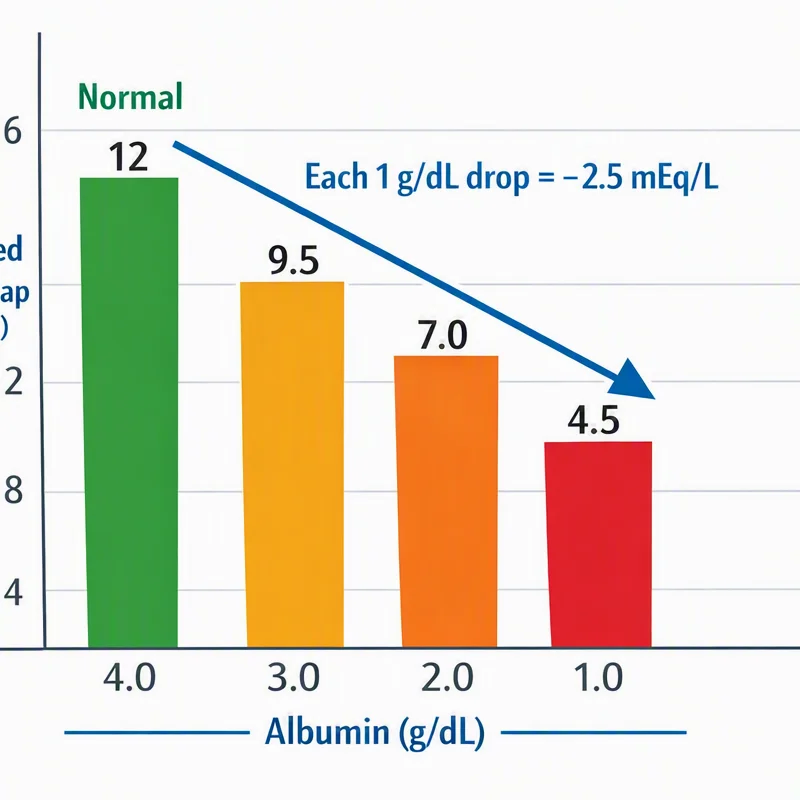
Albumin correction is important because albumin is a major unmeasured anion in blood. When albumin is low, the measured anion gap can appear falsely normal or only mildly elevated anion gap clinical significance even when a serious acid-base disorder is present. This is especially important in hospitalized patients, people with inflammation, malnutrition, liver disease, or other causes of hypoalbuminemia.
Without albumin correction, the reference range can be misleading. A clinician may estimate the corrected anion gap by accounting for how much albumin is below normal. That adjustment makes the result more accurate and boosts the chance of detecting true high anion gap states.
If an Anion Gap Calculator incorporates albumin, it might better reflect the real acid burden. Otherwise, the result ought to be read cautiously, especially when there is signs of reduced albumin or severe illness.
Symptoms That May Develop With elevated anion gap and low bicarbonate
Signs can vary depending on the underlying cause, how severe the acidosis is, and how rapidly it appeared. Certain people have noticeable signs of acidosis, while others may only show abnormal lab values at first.
Typical symptoms include breathlessness, exhaustion, mental fog, and rapid breathing. Rapid breathing may be the body’s way of responding for the acidosis by reducing carbon dioxide. In more advanced cases, a person may seem weak, very sleepy, or unable to think clearly.
The overall symptom profile can also provide hints about the cause. For example, nausea, vomiting, abdominal pain, and excessive thirst may fit with ketoacidosis, while weakness and confusion may imply kidney-related acid retention or toxin exposure. Because the same lab pattern can come from very different problems, symptoms always count in the overall evaluation.
When Low Bicarbonate Is Not a High Anion Gap Problem
Low bicarbonate does not always mean high anion gap metabolic acidosis. In some instances, the issue is a normal anion gap acidosis, also called hyperchloremic acidosis. In that setting, bicarbonate is low, but chloride rises to counterbalance the charge, so the anion gap remains within the expected range.
Diarrhea is a frequent cause because the body loses bicarbonate through the gastrointestinal tract. Another major cause is renal tubular acidosis, where the kidneys fail to manage acid properly even if overall renal function is not severely reduced.
Chloride plays an especially important role here. When chloride increases as bicarbonate falls, the anion gap may stay normal. That is why the distinction between high and normal anion gap acidosis is so useful in medical attention and follow-up testing. The pattern changes the differential diagnosis and directs the clinician toward different diagnoses.
Exams Clinicians Order to Identify the Source
If the lab pattern suggests acidosis, doctors often request additional tests to identify the exact source. The goal is to move from pattern recognition to a clear diagnosis.
An arterial blood gas is one of the most important additional tests because it measures blood pH, carbon dioxide, and oxygen status directly. This helps confirm whether the issue is truly an acid-base disorder and how severe it is.
Additional common tests include lactate, which helps detect lactic acidosis, and ketones, which are useful when ketoacidosis or diabetic ketoacidosis is suspected. A creatinine level helps assess kidney function and can point toward kidney failure or reduced clearance of acids. Depending on the situation, clinicians may also check toxicology studies if toxins are possible.
For this reason an abnormal anion gap should not be treated as a standalone result. The combination of symptoms, history, and targeted tests creates the full diagnostic evaluation. An Anion Gap Calculator can help identify the pattern, but the next step is finding the reason behind it.
What to Do If Your Lab Results Show This Pattern
If your labs show low bicarbonate with a high anion gap, the right next step depends on symptoms and overall health. In many cases, this pattern needs prompt medical evaluation because the underlying cause can be serious. If symptoms are severe or rapidly worsening, urgent care or emergency evaluation may be appropriate.
Never assume the finding is harmless. A high anion gap can reflect lactic acidosis, ketoacidosis, kidney failure, or exposure to dangerous substances such as ethylene glycol, methanol, or salicylates. Even if you feel relatively well, the lab pattern deserves attention because some causes progress quickly.
Repeat testing is often helpful if there is concern for a testing mistake or if the result does not match the clinical picture. That said, repeating the test should not delay evaluation when the patient is ill. The main goal is to determine the root cause and treat it without delay.
If the pattern appears on a chemistry panel, a clinician may review the full blood chemistry, check albumin for possible albumin-adjusted calculation, assess renal function, and decide whether an arterial blood gas test, lactate, or ketones are needed. In other words, the lab result is the start of the workup, not the end.
Used correctly, an Anion Gap Calculator aids in faster recognition of dangerous acid-base disorders. It helps clinicians and patients alike interpret lab results, understand the possibility of acid buildup, and decide when more immediate action is necessary.
FAQ
What does a low bicarbonate with high anion gap mean?
It usually means there is acid-base acidosis with acid accumulation in the blood. The pattern suggests the body has extra acids or is retaining acids, which lowers blood bicarbonate and raises the gap.
What are the most common causes of high anion gap metabolic acidosis?
The most common causes include lactic acid buildup, ketoacidosis, DKA, renal failure, and poisons such as ethylene glycol, methanol, and salicylates.
Can dehydration cause a high anion gap and low bicarbonate?
Simple dehydration does not usually cause this pattern, but severe dehydration can contribute indirectly by reducing circulation, worsening lactate buildup, or triggering ketoacidosis. The real source of acidosis still needs evaluation.
How do you calculate the anion gap from lab results?
The standard anion gap calculation relies on sodium minus the combined amount of chloride plus bicarbonate. Some formulas may include potassium, but most clinicians use the simpler version. An Anion Gap Calculator can calculate it fast and may also assist with albumin correction.
When should urgent care be sought for these lab findings?
Seek immediate medical evaluation if the lab pattern comes with shortness of breath, confusion, rapid breathing, marked weakness, vomiting, or suspicion of poisoning. This can indicate severe metabolic acidosis and warrant urgent assessment.