Rooted in Partnership: Belonging Based Coaching with Equines
On a freezing morning, before the sunlight heats the sector sand, I view the herd finish breakfast. The old mare noses a slow circle a fresh hay flake and welcomes a younger gelding in. No screeches, no pinned ears, simply a soft exhale and a shift of weight that states, You can be below with me. That exchange is the heart of belonging based training with steeds. It is not a method so much as a way of seeing. Individuals come for equine-facilitated health, equine-assisted mentoring, or therapeutic horsemanship, yet what changes them frequently begins with that silent invitation to share room. Belonging is really felt prior to it is explained.
I have actually coached thousands of sessions, from executives doing group structure with equines to youngsters in an autism equine finding out program. The usual string is partnership. When belonging is the goal, mentoring with steeds ends up being much less about performing a task and even more regarding learning to read and react with treatment. The horse brings genuineness that can not be fabricated. Whether a person shows up with anxiety that hums in their chest, ADHD that rattles focus, or sensory difficulties that make even the wind feel loud, the herd fulfills them right where they stand.
What belonging appear like in a barn
Belonging with horses is based in consent, clarity, and uniformity. Horses are social students. They map safety and security with predictability, congruent body movement, and the capacity to choose. A horse that can claim no by leaving is additionally a horse whose yes lugs definition. In a belonging based method, the horse is a companion and an active communicator. We set up the atmosphere so both types can share preference without penalty.
That often means basic, concrete changes. We start unhaltered in a paddock when feasible, then move to a halter only after a shared check-in. We offer equines time to orient to a new human, and we educate humans just how to notice a decreased head, a lick and eat, an interested ear, or, just as notably, a limited jaw or a tail clamp that states pause. The objective is not to analyze every jerk, yet to deal with the horse in its entirety being with a nerve system that mirrors our own.
With people, belonging programs up as option in how they involve. Some clients favor brushing in silence first, finding rhythm in sluggish curry circles. Others intend to stroll with a steed at liberty, or method leading with soft hands and clear boundaries. The session adapts, not to coddle, however to regard nerve systems and construct ability step by step. In this spirit, equine-assisted services come to be much less of a menu and even more of a partnership field.
Sorting the language so we know what we are doing
The area utilizes overlapping terms, and that can perplex customers. I often tend to explain them in simple language so people can pick the appropriate doorway.
Therapeutic horsemanship usually includes finding out horsemanship abilities, such as pet grooming, tacking, and mounted or unmounted workouts, with adjustments for physical, cognitive, or psychological demands. It can improve equilibrium, sychronisation, and confidence.
Equine-assisted activities are structured interactions with equines, typically leisure or educational, that develop abilities like communication or trouble resolving. Assume barrier training courses at liberty, or learning to lead an equine with patterns.
Equine-assisted solutions is a more comprehensive umbrella that consists of activities, training, and some medical solutions. It is available in several formats and setups, from farms to therapeutic riding centers.
Equine-facilitated training and equine-assisted coaching concentrate on individual and professional development rather than scientific treatment. These sessions make use of the steed as a receptive companion to brighten patterns in leadership, boundaries, or relational style.
Equine-facilitated health sits in between coaching and mental wellness support, and in some programs includes cooperation with specialists or bodyworkers. Somatic healing with steeds commonly lives here, where breath, position, and feeling direct the learning.
None of these are mutually unique on the ground. A session might begin as experiential discovering with steeds and shift into equine-facilitated mentoring as insight arises. The fundamental part is clarity concerning extent, goals, and consent.
Why steeds aid policy stick
People frequently ask why horses seem to calm them faster than a reflection application or a walk in the park. Co-regulation is the brief solution. Equines are target pets with intense sensitivity to nonverbal signals. They see subtle shifts in breath, tension, and attention. When an individual resolves, the equine normally softens as well. When the individual climbs right into distressed thinking, the equine may raise their head, freeze, or tip away. This dynamic responses loop makes the undetectable visible.
In practice, that appears like paced breathing while a steed matches your cadence at the rail. It resembles a kid finding out to stop briefly prior to yanking, finding that a slower exhale brings the steed more detailed. It looks like an executive realizing that the harder they press, the less the equine wishes to adhere to, which mirrors a tense conference room at home. These moments anchor nerves knowing in muscle mass and bone. It is not abstract. It is kinesthetic and immediate.
Somatic recovery with horses does not call for a trauma narrative to be reliable. It starts with present minute understanding: feet on the ground, hand on a warm shoulder, the noise of eating. For customers that lug injury, this sensory emphasis can be maintaining. And for those checking out ADHD equine learning assistance, the body-based jobs offer just enough activity to involve focus without flooding it.
Safety that constructs self-confidence without diminishing challenge
Safety is not the lack of threat, it is the presence of assistance and option. Equines are big and opinionated. They also crave great management and clear requests. In a belonging based strategy, we established the atmosphere to allow genuine link while layering in useful safeguards.
We suit steeds to clients by temperament, energy, and history. A 1,200 pound draft cross with a soft eye might be best for distressed adults, while a creative horse that likes puzzles helps teens who like interaction over calming. We preserve in shape tack, clear arenas, and regular regimens. We do not place people in circumstances where a crisis, either equine or human, is the only means out.
We additionally show mechanics without drama. Short cause begin, then longer ropes as skills grow. Hands at the knot, not the snap. Silent halter adjustments with the steed's head decreased. Direct your feet where you want to go, then invite the equine to match. These little routines add up. Over a common eight session collection, I anticipate to see handling abilities advance from tentative to collaborated, and psychological law from breakable to resilient.
A day in the arena, item by piece
An initially session has a various tempo than the 8th. People show up with stories about horses, some tender, some frightening. Our task is to transform the volume down on narrative and up on prompt experience. Here is a compact version of just how we structure the flow while leaving room for improvisation.
Arrival and positioning, consisting of a short walk to meet the herd from outside the fence. Consent and check-in in simple language, such as, Would you such as to begin with brushing in the cross ties or with a few mins free in the round pen? Safety fundamentals woven right into the initial task, like where to stand at the shoulder and just how to discover the equine's bubble. A core exercise that matches the client's objective, perhaps leading via a pattern or exercising stillness with hand on wither. Reflection and integration, connecting felt sense to life, after that a closing routine such as a thank you scratch at the preferred spot.
That list covers concerning 60 to 75 mins depending on attention and arousal. I do not rush. If the entire session becomes a lesson in exactly how to slow down a horse's eating to maintain everybody secure in the cross ties, that is not a failing. It is life with equines, and it shows perseverance, timing, and body awareness.
Stories from the rail
M., a 9 years of age with a spiky partnership to institution, came wherefore her moms and dad called Alternative therapy for sensory obstacles. She hated tags on t shirts, covers on beds, and the surprise of fire alarms. On day one she wanted to support an entrance and watch. The gelding Zig took 2 actions, after that dropped his head to smell her boots. She laughed, after that flinched, after that chuckled once again. We constructed from that moment.
By week 3, M. Was brushing Zig with a blue soft brush, counting strokes out loud. The task offered her simply sufficient structure. When the barn ingests swooped reduced and she startled, we had a simple prepare for ground: search for at the rafters, press feet into the mat, breathe out longer than the inhale. Zig's ear flicked back to her each time she allowed air go. After eight weeks, M. Still did not like smoke alarm, yet she had a mobile procedure for shock: orient, ground, exhale, reconnect. Her parent reported fewer meltdowns around sensory spikes and even more self-confidence advocating for breaks.
On a various Tuesday, an elderly management team came for a half day of group building with horses. We made use of a freedom workout called Follow The Yes. The group needed to move an equine through a pattern of cones without touching or bribing. The very first attempt appeared like a team conference with too many e-mails. 4 voices, no strategy, a confused equine that decided to forage in the only spot of clover. We stopped and asked the evident: Who is leading, who is sustaining, and exactly how will the steed recognize? Round two, a single person established instructions, the others developed a boundary bubble with their bodies as opposed to noise. The horse walked through the cones on a loosened arc, then stopped briefly to deal with the group. The debrief was brief and sharp. They identified the practice of over-talking and under-communicating in their everyday work, and they entrusted to one agreement: fewer words, even more clarity regarding role.
For anxiousness support with horses, a pattern appears over and over. Individuals breathe high and fast when they stress. Equines really feel the shallow breath and react with watchfulness. We explore matters and pace. Some clients like a 4 in 6 out pattern. Others choose positioning a hand on the horse's side to match the slower equine rhythm. Within two or 3 sessions, many locate a breath that helps them, and the horse responds in kind, going down the head or leaning in. That co-created rate comes to be a referral point for high stakes moments off the farm, like a job meeting or a tough conversation.
Coaching tools that recognize both species
Equine-facilitated training makes use of classic training skills, but the equine keeps us truthful. Setting goal issues, but we specify it in habits we can see and really feel, not simply really hopes. If the goal is better borders, we measure it as, Can you ask the equine to step back without raising your voice, after that soften and invite them forward once more? If the objective is collaboration, we exercise handoffs in a leading pattern, seeing just how timing, stance, and tone influence the horse's desire to follow multiple individuals in sequence.
Curiosity is the various other core device. Instead of choosing what a habits implies, we examine it. If the equine groups you at the gate, are you standing in a location that welcomes a better look, or did the steed learn that pockets indicate treats? If you open your shoulders and take a longer action, does the crowding willpower? This spirit of experiment protects the equine from being a mirror for every little thing and protects the individual from over-interpretation.
For customers looking for ADHD equine learning assistance, I keep Equine Facilitated Learning exercises short and certain, then differ them simply enough to keep passion. A 10 min brushing circuit that revolves Happy Hooves Wellness personal development equine program brushes and body areas can develop sequencing skills. Leading through a pattern that alters every two cones supports functioning memory and flexibility. The benefit is not just focus. It is agency. A customer who notifications, I lost track at the blue cone, then resets without embarassment is moving an important exec feature skill right into everyday life.
Belonging and neurodiversity
An autism equine discovering program that centers belonging is not a one dimension fits all curriculum. Some clients require predictability above all. We keep the pattern consistent for a number of weeks, after that include a small change, such as a brand-new brush structure or a new course to the arena. Others grow on uniqueness but require clear beginning and stop hints. We make use of visual anchors, like a colored cone where each workout begins and ends, along with a basic talked script.
Sensory processing matters for steeds also. A loud jacket, a jangling halter, or a solid fragrance can be aversive. We issue resolve both directions. If clipping noise is excessive for the customer, we smother with a towel and job farther from the barn. If a steed responds to a wheelchair rolling close, we begin at a distance and set technique with tranquil reinforcement, allowing the steed to investigate on their terms. Respecting both nerve systems raises real participation.
What modifications over time
In eight to twelve sessions, patterns emerge. People show up with shoulders near ears, and leave with a neck that relocates like it remembers how. They discover they can say no to a steed without being mean, and the horse values it. They really feel an indeed in their breast when the equine selects to follow on a slack line, which really felt sense of indeed starts to guide choices away from the barn too.
Teams that practice with steeds have a tendency to revive three little but resilient habits. They make one clear demand at a time. They verify recognizing with a visible actions, not an unclear nod. And they debrief today when the job finishes, while the footprints in the sand still reveal the pattern they walked. These same leaders typically report that meetings run much shorter by 10 to 20 mins, simply due to the fact that they trade babble for signals that land.
Simple, effective workouts to try with guidance
If you are considering equine-assisted tasks or equine-facilitated coaching, 2 fundamental techniques can reveal you a lot about your patterns. Collaborate with a professional for safety and for the equine's wellness.
Boundary and invitation at the shoulder: Stand at the equine's left shoulder encountering forward. Ask them to take one go back with a clear exhale and a little wave of your fingers toward the upper body. When they step, soften, step in, and incentive with a rub. You will find out where you exaggerate and where you hesitate. Liberty adhere to: In a little pen, walk a gentle curve and see if the steed chooses to mirror you. If not, pause, soften your gaze, and change instructions. If yes, attempt slowing to a quit and breathing out. Does the equine stop with you, or do you require to welcome the quit with a tiny action to the side? In any case, you are already in a dialogue.
These are not tricks. They are stress and launch in the lightest feasible kind, which develops clarity and trust.
Ethics and the steed's experience
Belonging includes the horse. We set up rest days so the herd is not asked to hold emotional labor nonstop. We rotate steeds so one exhibitionist does not bring every friendly group while a quieter horse never obtains a turn with the soft-spoken autists that could adore them. We watch weight, hooves, and saddle fit, because physical discomfort poses as behavior trouble.
I have actually denied sessions when a steed informed me they were provided for the day. That selection costs income in the short term and constructs reputation in the long-term. Customers who witness us honoring the equine's no learn to recognize their own. They return because they rely on the container, not since we promise miracles.
How groups in fact learn with horses
Most teams do not need ropes courses. They need sincere comments that links to behavior, not personality. Steeds consider that easily. A short format that regularly operates in a half day resembles this:
Warm up with silent leading. Pairs guide a horse through an easy square in silence to reset interaction habits. Clarify roles, after that finish an unique task, such as moving a herd, 2 steeds, from one end of the sector to the various other with open entrances and a couple of disruptive elements. Debrief based on what the horse did, not who chatted most. Call the micro-moves that worked.
In this framework, equine-assisted coaching ends up being a functional lab. Results show up. The group either relocated the steed securely, or they wreaked havoc. Then they refine and try once more. The lessons leave hoofprints, not just sticky notes.
When equines are not the answer, and when they are
There are times when a workplace, a clinic, or a gym is the right place. If someone is really dysregulated, freshly hurt, or horrified of animals, we might start somewhere else. Also, if a client desires only riding lessons, we may refer them to a program focused on installed abilities. Coaching works best when objectives align with the medium.
That claimed, there are patterns where steeds succeed. People who find out finest by doing thrive with experiential understanding with horses. Those who feel embeded talk treatment typically open a brand-new door when a 1,000 extra pound animal replies to their peaceful yes. And for clients looking for a Different therapy for sensory challenges, the barn provides a buffet of grounded experiences that can be titrated meticulously. The aroma of hay, the warmth of a barrel, hoofbeats on sand, the resonance of a pleased nicker, all are inputs we can call up or down.
Getting started without the hype
If you really feel attracted to this job, check out a program prior to you book. View just how the team move around the steeds. Do they decrease at gateways, wait for the horse to decrease the head prior to haltering, and maintain their voices consistent also when something unforeseen happens? Ask just how they specify scope. If they provide equine-assisted services generally, what does that mean for your goals? If you need anxiety support with equines, just how do they titrate arousal? If you want equine-facilitated coaching for management, what does success appear like three months later at work?
A great program will certainly invite those concerns. They will certainly chat straight regarding safety and expense and what occurs if the horse says no on an offered day. They will certainly be truthful regarding the difference between a glossy picture and the actual job of standing in sand, occasionally in the rain, fine-tuning your timing up until the lead rope seems like a common language.
The peaceful transformation of belonging
What stands apart after years in the field is how small changes surge. A teen boy that can not make eye contact with instructors finds out to look at an equine's shoulder to time a demand, then finds that the very same soft look makes individuals really feel respected. A supervisor that avoided problem learns to ask an equine to support one action, after that another, after that steps forward to invite the equine right into their room again. Boundaries end up being a dance, not a wall surface. A lady who never ever trusted her reactions due to the fact that they had actually been doubted for many years notifications that the mare relaxes every single time she follows her initial impulse instead of overthinking. She starts tiny with friends and family, and the change holds.
Belonging based training with steeds is not regarding dealing with individuals. It is about remembering just how to be in partnership with clarity, kindness, and selection. The herd already knows just how to do this. We enter their field and, with good luck and practice, we let that knowledge shape us. When it works out, the old mare will certainly stroll a sluggish circle the human the method she does around hay, after that open up a space at her shoulder that claims, You can be below with me. That is the lesson worth bring home.
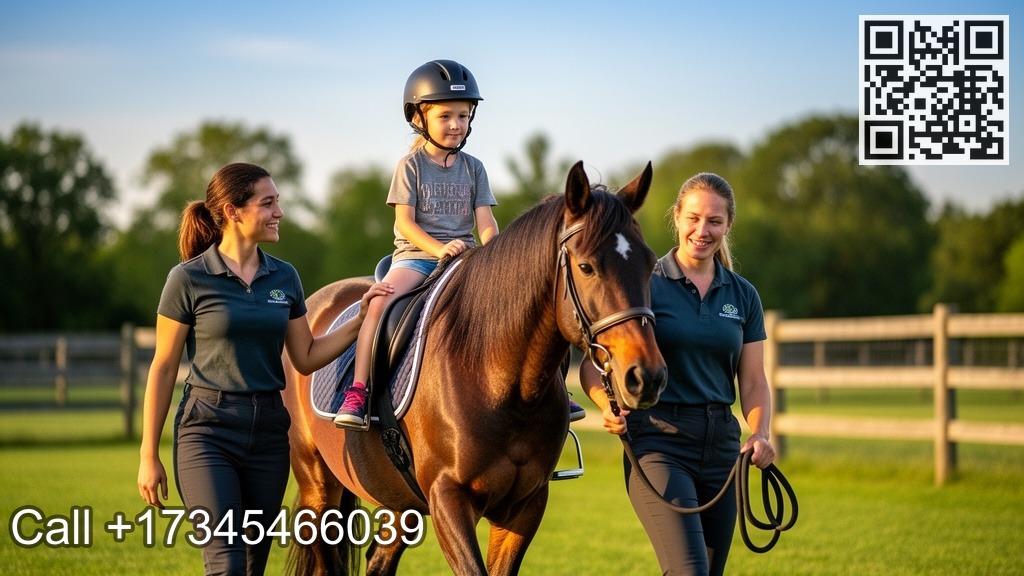
Happy Hooves Wellness
9177 Gross Rd, Dexter, MI 48130
+17345466039