PDO Threads Cosmetic Rejuvenation: Multi-Area Makeovers
If you have ever pulled your skin upward in the mirror and thought, if only it would stay, you already understand the appeal of PDO threads. These fine, dissolvable sutures can create lift, structure, and tighter skin without surgery. When used thoughtfully across multiple areas, they reshape the face in a way that reads as refreshed rather than “done.” The technology is not new in medicine, but its modern aesthetic application has matured through better thread design, more precise technique, and a realistic understanding of what threads can and cannot do.
I have performed hundreds of PDO thread procedures over the past decade. The happiest patients tend to be those who want conservative lifting and textural improvement, who accept that collagen stimulation takes time, and who are open to pairing PDO thread therapy with other modalities. A PDO thread lift is not a facelift. It is a non surgical facelift alternative that trades permanence and power for lower risk, less downtime, and a softer, natural look.
What PDO threads actually do
PDO, short for polydioxanone, is the same medical-grade material used in many internal sutures. In aesthetic practice, the threads come in several forms, each with a distinct job:
Smooth (mono) threads create a scaffold that induces collagen stimulation. Think of them as tiny supports to firm thin or crepey skin. Barbed or cog threads have microscopic hooks that grip tissue. These are the workhorses of a PDO thread lift, used to reposition mild to moderate sagging. Screw or twisted threads add a hint of volume in hollow or etched areas, useful for softening fine lines.
Once placed under the skin, PDO threads stimulate your body to lay down new collagen, elastin, and hyaluronic acid around the filament. The material gradually dissolves over roughly 6 to 9 months, while the collagen framework it leaves can support the result for 12 to 18 months, sometimes longer in areas with good baseline skin quality. The physics is simple: you get an immediate mechanical lift from barbed threads, then a delayed biologic tightening as collagen matures. Patients often describe a “second wind” in results around the eight to twelve week mark as that collagen boost kicks in.
The multi-area strategy: face, jawline, neck, and more
Treating a single area in isolation often looks incomplete. Aging does not respect borders, and neither should your plan. In multi-area makeovers, I think in vectors and zones.
In the midface, we use upward and slightly lateral vectors to support the cheeks. Proper placement restores cheek contour, reduces flattening, and softens nasolabial folds indirectly. If lines remain etched, smooth threads or microdroplet filler can be layered later. For the jawline, anterior to posterior vectors along the mandibular border refine the jowl bulge and improve facial definition. Under the chin and the upper neck, a low-tension net of smooth threads supports skin that has lost snap, while a few barbed threads under the jaw can sharpen the angle.
Brows respond well to short, strategic lifts, especially laterally. A gentle brow lift opens the outer eye and reduces hooding without changing your face’s character. The under eye area is not a lifting zone, but smooth PDO threads for skin rejuvenation can thicken crepey skin and reduce fine lines. Around the mouth, a combination approach works best: barbed threads are used sparingly, while smooth or screw threads address marionette lines and barcode lines above the lip. In patients with a double chin dominated by fat rather than laxity, we first debulk with fat reduction, then use PDO threads for under chin support to refine and hold.
The art lies in sequencing. I usually start with lift vectors that set the framework, then add collagen-stimulating threads in zones of thin skin. You should look better on day one, but the most satisfying PDO threads results develop over weeks as the skin tightens and texture improves.
Who benefits most, and who should pause
Threads shine in candidates with good skin thickness and mild to moderate facial sagging. If you can gather a jowl between your fingers but it is not a handful, you are in the sweet spot. Patients in their late 30s to early 60s often do well, though biologic age matters more than the number on a birthday cake. PDO threads for aging skin with sun damage can still help, but expectations must shift toward texture and subtle lift, not dramatic repositioning.
There are red flags. If you have severe skin laxity, heavy platysmal banding in the neck, or large, descended fat pads, a PDO thread facelift will underwhelm. Threads can sharpen and support, but they cannot remove extra skin or give surgical-level redraping. Uncontrolled autoimmune disease, active acne cysts in the treatment zone, bleeding disorders, keloid tendencies, and unrealistic expectations are reasons to delay or reconsider. If you are a habitual teeth grinder with strong masseters or a side sleeper who buries a cheek into the pillow, we can still proceed, but I counsel on likely asymmetries and durability.
What a PDO thread consultation should cover
A thorough PDO thread consultation looks different than a filler appointment. I spend time mapping vectors, checking the snap test over the cheeks and neck, and assessing where soft tissue descent originated. The best PDO thread lifting treatment works with facial anatomy, not against it.
We review goals. Do you want a snatched jawline, a gentle brow lift, or global refinement? We discuss whether to pair threads with other care: neuromodulators to relax muscles that fight the lift, light filler to replenish deflated compartments, radiofrequency or ultrasound for deeper tightening, and skincare to maintain results. A multi-area plan does not have to happen in one sitting, and often it should not. Staging reduces swelling overlap and lets us fine-tune.
Photographs matter. Strong, standardized PDO threads before and after photos help you and your clinician calibrate expectations, track progress, and catch early asymmetries that can be corrected when threads are still moldable.
The day of your PDO thread appointment
Most patients are surprised by how tolerable the PDO thread procedure feels. We mark lift vectors with you upright, cleanse thoroughly, and numb entry points with local anesthetic. For advanced plans, I may add nerve blocks, which allow more precise placement with minimal discomfort.
The PDO thread procedure steps are methodical. After making a tiny pilot puncture, a blunt cannula or needle delivers the thread to the planned depth. I advance along the vector, feel for secure tissue engagement, and then withdraw while setting the barbs. Once all threads are in, I adjust tension, trim the ends flush with the skin, and compress to smooth the track. You will feel a firm, supportive sensation, like internal tape. That sensation settles as swelling eases.
For a multi-area lift that includes cheeks, jawline, and neck, expect 45 to 90 minutes depending on complexity. Brow lifts and under eye rejuvenation are faster. The entire PDO thread lifting procedure is outpatient, and you walk out the door without bandages, only small entry-point tapes that peel off in a day or two.
What recovery really looks like
Marketing often promises “lunchtime lifts.” That is partially true if you define downtime as time off work. Most patients can work the next day. That said, plan for a few days of feeling tight and tender in lift zones. Bruising can range from none to small patches that last a week. Swelling peaks at 48 hours and recedes over five to seven days. Chewing may feel odd if jawline vectors are tight, and smiling can be slightly restricted at first, especially after an aggressive PDO threads for face tightening plan.
Here is a concise aftercare checklist that has helped my patients reduce issues and protect results:
Sleep on your back with head elevated for 3 to 5 nights to protect the lift. Avoid vigorous exercise, heavy chewing, dental work, and wide yawning for one week. Do not massage, scrub, or manipulate treated areas for two weeks. Keep entry points clean and dry for 24 hours; postpone makeup until day two. Call your provider if you see puckering that does not settle with gentle smoothing, new dimples after day three, or increasing pain and redness.
Most side effects are mild and self-limited. Puckering or dimpling usually resolves within days as the skin relaxes. Occasional palpable thread ends can be snipped if they emerge. Rare complications like infection, thread migration, or nerve irritation are infrequent when performed by experienced clinicians in sterile conditions. If you are prone to cold sores, ask about prophylaxis when treating the perioral zone.
How long results last, and what maintenance looks like
PDO threads for skin tightening offer a hybrid result: an immediate change from lift plus a delayed improvement from collagen. You will see an early contour shift right away. Over 6 to 12 weeks, skin quality improves and subtle laxity reduces. Those PDO threads benefits usually hold 12 to 18 months. In thicker, well-hydrated skin, I have seen lift persist past two years, especially in patients who protect their collagen with sunscreen, topical retinoids, and stable weight.
Maintenance is predictable. For lift, many patients repeat barbed PDO thread therapy at 12 to 18 months. For texture and fine lines, smooth threads can be refreshed annually. Think of it like orthodontics for soft tissue, not a one-time fix. Stacking with biostimulators, microneedling, and energy-based tightening can extend intervals between thread sessions.
Cost, value, and how to budget
PDO threads treatment cost https://www.facebook.com/people/Soluma-Aesthetics/100089425911968/ varies by region, clinician expertise, and the number and type of threads used. A single-area PDO thread facial treatment, such as the midface, may range from 800 to 1,800 USD. Multi-area makeovers that include cheeks, jawline, and neck often run 2,500 to 5,000 USD. A lateral brow lift can add 500 to 1,200 USD, and under eye skin rejuvenation with smooth threads might be 400 to 900 USD. Practices price either per thread, per area, or by the package. Ask what is included: consultation, follow-up, minor touch-ups, and management of small issues like trimming a visible end.
Value depends on your goals. If you want a modest, natural lift without taking two weeks off work, PDO threads are compelling. If you want to erase a heavy jowl and neck wattle, surgery may be more cost-effective per millimeter of lift.
Combining PDO threads with other treatments without overdoing it
Threads play nicely with other aesthetic tools. Neuromodulators weaken muscles that tether brows and pull down the mouth corners, which lets a PDO thread cosmetic lift hold longer. Hyaluronic acid fillers restore cushion where fat has deflated, but we place them strategically. I avoid injecting filler directly along lift vectors on the same day. Instead, we lift with threads first, reassess at two to four weeks, then add small, structural filler doses if needed.
Energy-based tightening such as radiofrequency or ultrasound can complement PDO threads for skin firming, but timing matters. I avoid strong heat therapies over lift zones for at least four weeks to let the tissue incorporate the threads. Microneedling and gentle lasers pair well with smooth threads for texture and pore size. The key is intention. Piling on treatments in one sitting does not yield better results, it only clouds what worked.
Area-by-area notes from the chair
Cheeks and midface: The goal is support, not bulk. Two to four barbed threads per side placed from near the hairline into the malar region can recreate the high point of the cheek. Patients who chase nasolabial folds directly with lift threads often end up with unusual vectors and little improvement. Lift the cheek, and the fold softens. If the fold is still etched, smooth threads or a whisper of filler later works well.
Jawline and marionette zone: A clean jawline comes from both redraping and definition. Two to three jawline vectors per side can reduce jowling. If marionette lines remain, I use smooth or screw PDO threads for marionette lines to improve the crease. People who chew gum constantly or clench heavily may feel tautness longer and sometimes benefit from a neuromodulator dose to the masseter.
Neck and under chin: Smooth threads in a crisscross pattern improve crepe and horizontal “tech” lines. For a moderate double chin, I treat fat first with deoxycholic acid or device-based lipolysis, then place barbed PDO threads for double chin support four to six weeks later. If platysmal bands dominate, neuromodulator injections can soften them. Threads alone cannot tame strong bands.
Brow and temple: Lateral brow lift threads work best in patients with good skin quality and minimal excess skin. A delicate lift corrects hooding and improves eye shadow space. Overpulling the inner brow reads as surprised. Keep it subtle and lateral.
Under eye area: PDO threads for under eye area are strictly smooth threads placed in the superficial plane to thicken crepey skin. They do not treat deep hollows or festoons. For hollows, consider conservative filler or fat transfer; for festoons, device therapy or surgery may be needed.
Smile lines and lip zone: Threads can support the dermis above the lip and along smile lines without creating the “filler lip” look. Expect small needle dots and a day or two of tenderness. Results are cumulative with each round of collagen stimulation.
Managing expectations without dampening enthusiasm
It helps to think in ranges, not absolutes. A PDO thread non surgical skin lift can offer roughly 10 to 30 percent of what a surgical facelift achieves in ideal candidates. That percentage varies by area, skin thickness, and lifestyle. If your skin quality is excellent and you are seeing the first hints of sagging, you will likely notice a crisper jawline and lifted cheek that friends describe as “rested.” If your skin is thin and sun-worn, expect more texture improvement and a smaller lift.
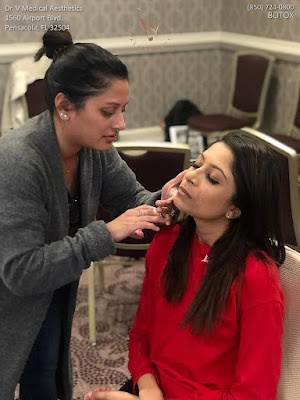
PDO thread side effects are typically mild: bruising, swelling, tenderness, temporary asymmetry, and occasional dimples. The less common issues like infection, thread extrusion, or prolonged pain are rare with solid technique and sterile protocols. Choosing an experienced provider who understands anatomy and vector planning is the single best predictor of a safe, elegant outcome.
A realistic timeline from first visit to final result
Most patients follow a simple arc. Week zero: you undergo the PDO thread lifting procedure and enjoy an immediate, visible but slightly swollen lift. Week one: swelling fades, tightness persists but is less noticeable. Weeks two to four: you settle into the “new normal,” and any minor asymmetries often even out as tissues relax and integrate. Weeks six to twelve: collagen stimulation shows, skin looks tighter, pores smaller, and fine lines softer. Month six onward: results are at their peak. Past a year, the mechanical contribution fades, while collagen supports much of what you see.
This is where PDO threads for facial youth treatment genuinely deliver. Patients report that makeup glides better, the jawline photographs cleaner, and they spend less time “fixing” their face in mirrors or on video calls. The change is perceptible but believable.
How to decide between threads, filler, energy devices, and surgery
Weigh the problem, not the tool. For loss of volume with minimal sagging, filler or biostimulators may serve you better. For crepey skin and fine lines without descent, smooth PDO thread skin rejuvenation and energy-based tightening are excellent. For moderate descent with decent skin, a PDO thread facial contouring plan can lift and define. For heavy jowls and neck laxity, surgery wins.
Patient preference counts. If you are not willing to take surgical downtime or accept scars, a staged, multi-area PDO thread aesthetic treatment paired with skin care can bridge years with grace. On the other hand, if you are comfortable with a single, bigger reset and want the maximum effect, consult a facial plastic surgeon.
What to ask before you book
A good PDO thread consultation should leave you with clear answers. Ask which thread types the clinician uses and why. Ask how many threads per area they plan and how they will manage asymmetry. Request to see PDO threads before and after photos of patients with similar features and age. Confirm who will perform the PDO thread cosmetic procedure, their complication plan, and what follow-ups cost. If the quote seems low, clarify whether it includes touch-ups, because adding “just a few more” can change the math.
A brief note on materials and safety
PDO threads are one of several absorbable options. PLLA and PCL threads exist too, each with different longevity and stiffness. PDO has the longest track record in medicine, a strong safety profile, and a predictable dissolution curve. For most facial lifting and PDO thread tightening treatment, PDO is reliable. In my practice, I reserve stiffer materials for select cases or off-face sites where longer support helps. Whatever the material, sterile technique, proper depth, and vector planning matter more than the brand stamped on the box.
The bottom line from the treatment room
PDO threads are not magic, yet the right plan can make you look like the best version of yourself with little fuss. They excel at quietly lifting cheeks, cleaning up a soft jawline, opening the outer brow, and tightening crepey neck skin. Results build gradually as collagen strengthens the scaffold. Recovery is brief, side effects are usually minor, and the risk profile is favorable for a medical aesthetic procedure done under local anesthesia. When you treat multiple areas with restraint and logic, the face reads as harmonious, not piecemeal.
If you are considering a PDO thread appointment, start with a thorough PDO thread consultation to map your anatomy and goals, and be honest about your tolerance for maintenance. Think of threads as part of a broader strategy: good skincare, smart neuromodulator use, judicious filler, and healthy habits. That combination, more than any single tool, is how you stay ahead of sagging skin and keep your features defined year after year.