AED Training Equipment Canada: Features That Improve Learning Outcomes
Cardiac arrest does not wait for ideal conditions. The first minutes are messy, loud, and uncertain, whether you are in a hockey arena in Saskatoon or a high-rise foyer on Burrard Street. Good training equipment bridges that gap between a tidy classroom and the real thing. It lets learners practice skills at full speed, get meaningful feedback, and repeat until muscle memory takes over. In Canada, there are a few added twists: bilingual prompts, varying provincial requirements, and the reality that many instructors haul their kits through snow and slush for half the year. The right choices can lift pass rates, sharpen performance under stress, and cut the time to first shock when it counts.
The outcome that matters
Survival from out-of-hospital cardiac arrest drops quickly with every minute without defibrillation. Studies vary by population, but many show the best odds when a shock is delivered within the first three minutes, then falling by several percentage points per minute after that. You cannot change traffic or elevator wait times, but you can train people to move with purpose, work in teams, and avoid the fumbles that cost seconds. AED training equipment has to support that goal. A bright screen and a pleasant case might look appealing, yet if the prompts are vague, the pads are finicky, or the rhythms are unrealistic, you pay for it in lost confidence and poor recall later.
What separates effective AED trainers
Not every AED trainer or CPR manikin is built with the learner in mind. The best gear helps students grasp concepts fast, then pushes them to perform at the right pace under mild pressure. When evaluating AED training equipment Canada wide, I look for three anchors. First, fidelity: does it sound, feel, and behave like the devices students will see in malls, gyms, and airports. Second, feedback: does it measure what matters, especially chest compression depth and rate, hands-off time, and pad placement. Third, flexibility: can instructors build simple drills for first-timers and complex team scenarios for advanced groups without a laptop circus.
Those anchors are not fancy extras. They are the foundation for consistent learning outcomes across large programs, whether you are a sole proprietor teaching in church basements or part of a college health sciences department running hundreds of seats a month.
CPR training manikins Canada: the feedback loop
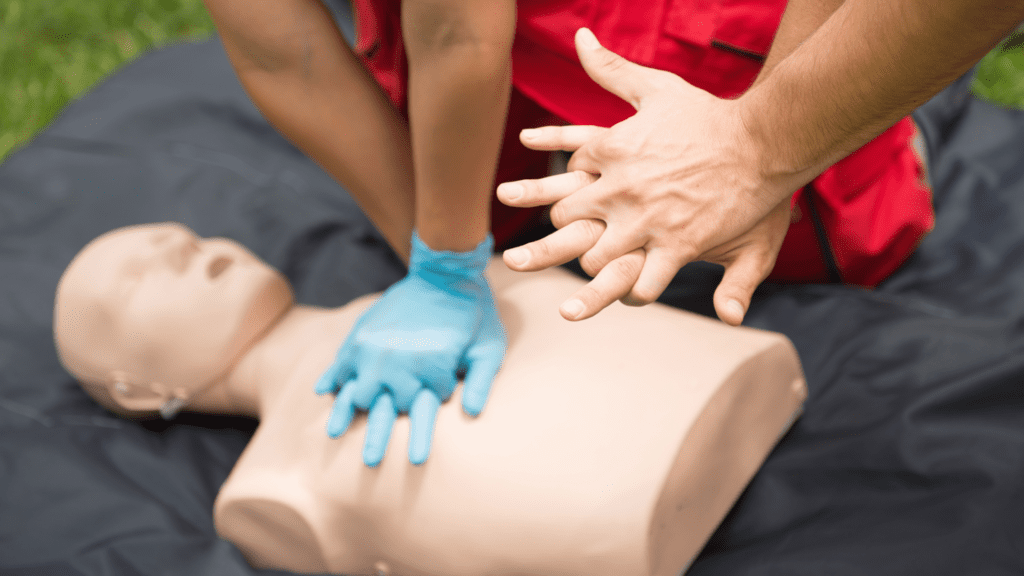
A lot of AED teaching time is wasted when students are unsure whether they are pressing hard enough or fast enough. Modern CPR training manikins Canada instructors rely on solve that with embedded sensors that measure depth and recoil, often coupled with metronome coaching. Entry models might offer a simple click at target depth. Premium models give real-time tri-color indicators or app-based dashboards with exact numbers. Both can work. The click teaches what proper depth feels like on the sternum. The light bars and apps quantify performance and make it easy to coach an entire class at once.
The trade-off shows up on the invoice and in the bag weight. Smart manikins with Bluetooth modules cost more and need charging. In a busy schedule, a dead battery can derail a class. If your learners are lay responders who need a feel for compressions and basic AED use, the midrange option with clear tactile feedback is often enough. If you run audits for corporate clients or advanced courses where you need objective records, invest in models that export session data. Several Canadian organizations use those exports to benchmark teams and spot training gaps, and it protects you when a client asks for evidence that their staff met a standard.
Surface realism matters too. In the real world, you are not compressing on a hardwood classroom floor. You might be on a firm mattress or a carpeted basement. Good manikins behave consistently across surfaces, and some offer add-ons like CPR boards to simulate better support. I keep a low-density foam pad in the kit to show how much the surface steals your compression depth, then coach learners to shift to the floor or insert a board. That one-minute demo sticks with them and costs almost nothing.
AED trainers: prompts, pacing, and pad placement
AED training equipment has one job: guide a panicked human to deliver a shock with minimal delay and maximum safety. The best trainers reflect that with crisp, unambiguous voice prompts and a cadence that keeps analysis and charging quick. Look closely at these features when you compare units.
Language and clarity. In Canada, bilingual voice prompts are not optional for many public settings. Choose trainers that offer English and French with a quick toggle, not a buried menu. Listen to the voice scripts. Are they too chatty. Extra words slow students down. The best scripts are short, specific, and match the rhythm of modern public-access AEDs.
Realistic algorithms. In class, you need control over rhythm scenarios. You should be able to select shockable and non-shockable patterns, set how often a reanalysis occurs, and see variable outcomes based on CPR quality. Some trainers allow an instructor to trigger a shockable rhythm based on whether compressions are paused efficiently. This ties behavior to consequence in a way students remember.
Pad design and reusability. Reusable training pads save money across dozens of courses, but they must still mimic real pads in size, adhesive, and cable orientation. Beware cheap thin pads with weak adhesive. Students chase them around the chest, which trains clumsy behavior. Good pads stick reliably across many uses, have clear anterior-lateral graphics, and connect with click-in leads that do not loosen in transit.
Hands-off time and coaching. The most reliable predictor of good defibrillation is how little time students spend with hands off the chest. Trainers that nudge users to resume compressions quickly after shock delivery reinforce this. Some systems shorten their post-shock pause in training mode to make the point. That small push reduces hesitation later.
Form factor and durability. A trainer that avoids a costly service ticket is one you can count on. Hinges, latches, and battery covers often fail first. In Canada, kits get hauled in and out of vehicles in cold weather. Plastics that tolerate temperature swings last. If a unit grumbles below freezing, you will find out in the parking lot at 7 a.m.
Building scenarios that transfer
Skills degrade fast when they are learned only in a clean, linear script. The move from competence to confidence requires some controlled friction. I like to treat AED sessions as a series of arcs. Start with clean reps: open the case, place pads, analyze, deliver a simulated shock, resume compressions. Then fold in mild disruption. Turn down the room lights. Add background noise from a phone. Change the victim’s position so the chest is slightly rotated. In later arcs, assign one learner to be the anxious bystander who keeps asking if they should call someone, or place the kit under a chair to force a short search.
These details make the lessons stick because they mirror the small snags that appear in real incidents. The point is not to create drama. It is to show students they can stay on script when a cable tangles or the first pad peels back. With emergency training equipment Canada instructors use every week, you can set these variables in seconds if the hardware is designed for it. Trainers with remote controls or companion apps let you change rhythms between cycles and inject short prompts like check for hazards or stand clear sirens.
Data and quality assurance without drowning in spreadsheets
Many Canadian training organizations report to corporate clients, safety regulators, or educational accreditors. They do not have time for manual scoring sheets that pile up in a drawer. Gear that logs performance makes life easier, but only if the data is digestible. Look for systems that summarize outcomes on one screen: average compression depth, percentage within target rate, total hands-off time, and time to shock. Too many numbers distract both the learner and the instructor.
Export features help when you run large cohorts. A CSV with timestamps lets you prove that each student completed required cycles. I have seen programs cut 30 minutes from admin per class by standardizing on manikins and AED trainers that sync to one app and produce a single report. It also supports instructor calibration. If three instructors show systematically different average compression rates across similar classes, you can hold a short huddle and re-align coaching language.
Accessibility and psychological safety
Public access defibrillation depends on ordinary people stepping forward. Training must be inclusive. That starts with the hardware. Manikins with adjustable chest resistance accommodate learners with limited strength without teaching bad habits. Face skins and torsos that represent diverse body shapes and skin tones send a clear message: this skill serves everyone.
Noise levels matter as well. Some learners with sensory sensitivities find loud prompts jarring. Choose AED trainers with adjustable volume that still enunciate clearly at lower settings. In small rooms, keep the tone sharp but not harsh, and pair the device with on-screen visual cues if available. Psychological safety is not just a buzzword. Learners retain better when they are not fighting the environment.
Canadian context: guidelines, language, and logistics
Standards evolve. Canadian guidelines for resuscitation track international science updates on compression rate, depth, and sequence, and many AEDs now ship with CPR feedback functions in public settings. Align your training language and your devices with the current guidance from your certifying body. If your region uses particular public-access AED models, try to keep at least one matching trainer on hand. The tactile memory of opening the same style of lid or pulling the same tab pays off later.
Language is straightforward: choose AED trainers and CPR training manikins Canada suppliers that support both English and French prompts if you teach across regions or serve national clients. Several manufacturers bundle bilingual audio and overlays. Confirm before purchase, and test the switch in class to avoid surprises.
Logistics can make or break a program in winter. Batteries drain faster in cold vans. Adhesive pads stiffen. Soft cases soak through. In my kits, every trainer and manikin sits inside a hard-sided bin with a rubber gasket. Desiccant packs ride along to control moisture. Spare training pads live in sealed bags with a date written in marker. It is a modest upfront cost that extends equipment life and reduces last-minute scrambles.
Integrating AED trainers with CPR and first aid training kits
AED training does not happen in isolation. Students need to blend compressions, ventilation where required, scene safety, and teamwork. That means your AED trainers should talk, figuratively, to the rest of your kit. If you run blended classes that include choking relief, bleeding control, and basic first aid, match the AED trainer’s speed and tone with the pace of the rest of the session. Overly long prompts clash with dynamic drills like massive bleed control where seconds count, and your learners feel the drag.
CPR and first aid training kits that include pocket masks, barrier devices, gloves, and sample epi trainers set the stage for realistic rotations. Place the AED to one side of the room and the first aid station to the other. Assign roles and have students rotate leader, compressor, AED operator, and bystander. The choreography becomes second nature when the hardware is simple and consistent. If Medical simulation equipment Canada your AED trainer requires complicated setup, it will sit out these drills, and your outcomes will show it.
CPR instructor packages Canada: what to prioritize
For new instructors, bundled CPR instructor packages Canada suppliers offer can be appealing because they remove guesswork. The best bundles strike a balance: enough gear to run a full class for six to ten learners, not so much that the price explodes or the cases require a dolly. I advise packages that include two adult manikins with actionable feedback, one infant manikin, one AED trainer with bilingual prompts, six to eight barrier devices, and a compact first aid simulation kit. If the bundle includes a tablet with a proprietary app, confirm ongoing subscription costs and whether the data exports without vendor lock-in.
Resist over-bundling. Piles of extras that look nice in a photo often stay in the case. Start focused, add pieces after your third or fourth course once you see what you use. A few instructors learn this the hard way and unload nearly-new gear at a loss a year later.
Buying once, crying once: durability, consumables, and cost of ownership
Sticker price is only part of the story. Pads, batteries, face skins, and cleaning supplies rack up real costs across dozens of sessions. When you compare AED training equipment Canada sellers offer, ask for the per-course consumable estimate at class sizes you actually run. I keep a simple sheet that estimates cost over 100 classes. A trainer with pads that survive 50 uses cuts your spend far more than a unit that costs 100 dollars less upfront but eats pads every five runs.
Shipment and support matter too. If a cable fails the night before a client course, can the supplier ship from within Canada with next-day options. Are spare parts stocked domestically. Who answers the phone when an instructor app crashes mid-session. These practicalities affect uptime and, by extension, your reputation with clients.
A quick buying checklist for Canadian AED training programs
Confirm bilingual English and French voice prompts and overlays. Test pad adhesion on manikin skins you already use. Validate rhythm control: shockable and non-shockable scenarios, instructor override. Check battery type, charge time, and expected run time in cold environments. Price consumables over 100 sessions, not just the box price.
Real-world scenarios: what the data and the stories say
In a national retail chain rollout, we equipped 140 stores with on-site responders who completed a two-hour AED and CPR module. We used midrange manikins with light-bar feedback and AED trainers with bilingual prompts. Pre-training drills showed a median time to simulated first shock of about 2 minutes 40 seconds. After two sessions spaced three weeks apart, median time fell to roughly 1 minute 55 seconds. The main driver was not faster button-pressing; it was fewer pad placement errors and less fumbling with cables. The equipment that gave instant, visual correction on pad placement is what made the gap.
At a community center in eastern Ontario, an older trainer with long scripted prompts created a different problem: students zoned out during the long analysis period and forgot to prepare to resume compressions. The fix was simple. We switched to a unit with tighter scripts and coached students to hover hands near the sternum during analysis. Hands-off times dropped by 5 to 8 seconds per cycle, a meaningful improvement that carried into advanced drills.
In a college paramedic program, instructors leaned on higher-fidelity trainers that allowed rhythm changes mid-scenario to simulate recurrent ventricular fibrillation. That capacity transformed the final practical exams. Students stopped treating the AED like a black box and started managing the cycle: compressions, analysis, charge, shock, immediate compressions. It turned a rote sequence into a managed process, which is how real calls feel.
Maintenance rhythms that prevent class-day headaches
Gear does not fail on a lazy afternoon. It fails at 8:05 a.m. With a room full of students. Avoid that with short, consistent maintenance cycles. Between classes, wipe manikins with appropriate disinfectant that does not degrade skins, confirm battery levels, and log pad condition with a simple green, yellow, red system. Once a month, run a full start-to-finish test of each AED trainer, including language toggle, cable connections, and CPR manikins Canada all scenario buttons or app controls. Seasonal checks before winter should include cold-start tests. Leave a unit in your vehicle overnight when temperatures drop, then power it on in a hallway to see how it behaves. This mirrors the stress your gear will face in January.
When pads begin to curl or lose stick, retire them early. A failed pad mid-demo creates confusion that sours the learning environment. The small cost of a fresh set is easier to swallow than five minutes of awkward salvage.
Remote and blended training: where hardware still earns its keep
Virtual modules can teach the theory of AED operation and the chain of survival. They cannot build the sensory memory of placing pads on a chest, pressing the shock button with a brief breath held, or feeling that click at proper depth. If you run blended courses, ship compact practice kits to remote learners for live, instructor-led sessions. Some vendors in Canada rent small foam torsos with basic feedback and mini AED trainers that simulate prompts and pad placement. It is not the same as full-size equipment, but it preserves the tactile part of the skill. When those learners arrive later for an in-person assessment, they start ahead of the curve.
Aligning equipment with assessment standards
Your certifying body may require demonstration of specific competencies: correct pad placement landmarks, safe clearing before shock, compression ratios where applicable, and prompt resumption of compressions. Choose gear that makes assessment clean. Visual markers on manikin chests help instructors judge pad placement at a glance. AED trainers with loud, distinct charge and shock tones simplify the clear call-and-response. If you grade with rubrics, map each row to an observable cue from the device. It tightens scoring and cuts disputes.
Where to source: domestic advantages
When possible, source emergency training equipment Canada suppliers hold in domestic stock. It shortens delivery times, simplifies warranty service, and avoids customs surprises. Established distributors also understand Canadian institutional purchasing rules, like provincial vendor prequalification or required documentation for school boards. For small programs, look for suppliers who will let you pilot a manikin or AED trainer for one or two classes. A brief test often reveals deal-breakers that spec sheets hide, such as finicky Bluetooth pairing or faint prompts in noisy rooms.
The features that move the needle
Across dozens of cohorts and a range of budgets, a small set of features consistently improves learning outcomes. If you must prioritize, put your money here.
Real-time compression feedback that students can read without breaking rhythm. Bilingual, concise AED voice prompts with instructor-controlled scenarios. Reusable pads that maintain adhesion across many classes to reduce fumbles. Durable casings and connectors that tolerate frequent travel and winter conditions. Simple, exportable performance data to support debriefs and client reporting.
Everything else is nice to have. If your budget allows for extras like scenario remotes, on-screen ECG displays for advanced learners, or integrated team training apps, add them when your core kit is stable and your instructors are comfortable.
Bringing it all together
The best AED training setups are not the flashiest or the most expensive. They are the ones that make correct behavior the easy path and shorten the distance between classroom practice and real action. When you choose AED training equipment Canada instructors can trust, match it with reliable CPR training manikins, and pack it into CPR and first aid training kits that travel well, you build a program that produces calm, quick responses when a life hangs in the balance. Add smart maintenance, attention to bilingual needs, and a few scenario wrinkles that reflect Canadian realities, and your learners will leave not only certified, but truly ready to act.