 𓂅 Xanti's Verse ;
he / it αβ
miscemuto-aligned
 personal verse ↓

> dynamics
 dynamics correspond to one's second gender. second genders appear during puberty trough a process known as presentation (AGAP = assigned gender at presentation/puberty). it typically happens between ages 15-17. dynamics can but don't always affect one's biology and temperament.
the most common dynamics are Alpha (α), Beta (β) and Omega (Ω). about 85% of the global population tends to fall into one the main three.
- alpha ; alphas are a dynamic that develop stronger 'reactive' scent glands. they typically fall into the Leader Archetype. majority of alphas are socially dominant and fall into the throne caste.
- beta ; betas are defined by an equal balance of all scent glands. they are known to maintain a socially neutral temperament and are valued in all castes. majority of betas are in the domain caste.
- omega ; the omega dynamic is high on the 'physical' scent gland capacity. omegas are a mostly socially submissive dynamic that is most reccurent in the temple and throne castes.
the remaining 15% of the global population fall into other categories known as alt-dynamic.
- interdynamic ; interdynamics are any presentation that fall inbetween / encompass two different dynamics. interdynamics can only happen within the main three dynamics.
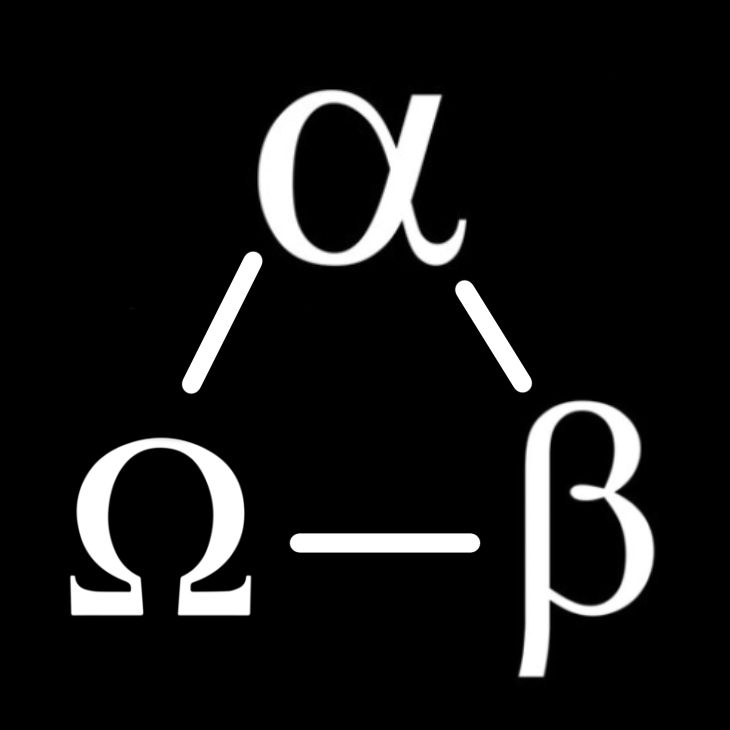
- aetas are typically in the domain caste, with temperaments varying from neutral to dominant.
- aegas fall, in majority of packs, into the throne caste. ageas are, depending on the moment, either dominant or submissive.
- begas are most commonly members of the domain caste and have temperaments between neutral and submissive.
- multidynamic ; a multidynamic individual will fall into multiple dynamics, including other alt-dynamics. in example: an individual with both an aega-persistent dynamic that is also dynamicfluid.
- dynamicfluid ; dynamicfluid individuals have dynamics that change over time, for any and all reasons. a dynamicfluid individual can change between all dynamics, or only a couple specific ones.
- omnidynamic ; a dynamic that encompasses all dynamics at once.
- adynamic ; an individual with no dynamic / that doesn't fit any preexisting dynamic. adynamics are often known as the true neutrals since they are not generally affected by pheromones.
there are multiple syndromes [notably late presentation syndrome (LPD/L2PD) and early onset presentation syndrome (EPD/E2PD)] that affect the presentation process. if not properly treated these can later cause unstable temperaments or other issues with scent glands.
individuals will generally disclose their genders as acronyms. typically in the format of 1G 2P. the numbers correspond to first and second genders, and the letters to the genders in question. ie: 1m 2Ω (male omega).
> temperaments
temperaments simplify how each individual acts in social settings. these are not obligations of conduct, but observations of an individual's main attitude.
there are three forms of temperaments, Dominant, Neutral and Submissive.
- dominant ;
- neutral ;
- submissive ;
> characterisation
characterisations are the way each individual displays their care and support towards other individuals. characterisations are important factors to consider when choosing pack leaders and mates.
- wielder ;
- receiver ;
- dual ;
there are secondary characterisations that are considered deviated. most of these are found in individuals who are packless.
- ego (self wielder) ;
- constraint (low receiver) ;
- transmitter (non concerned dual) ;
> biodynamics
a biodynamic refers to one's biological capacity towards reproduction.
- i directly use Omegai's definitions,, either redefine (why?) or use same terminology and fully credit.
> scent glands
scent glands are small organs located across one's body. they function as pheromone organs and are heavily relied on for communication. there are three types of scent glands, each known as Reactive (☈), Communicative (⟴) and Physical (⧬).
- reactive ; reactive scent glands are the ones that release pheromones related to aggression. when overactive, they release adrenaline and surges of testosterone. these are used both as warnings and as showoffs during domination battles.
- communicative ; conveys emotions and ideas along with intent. hard to control, it is common to suppress these with blockers to obtain a 'poker face'. harder to conceal within packs and with mates.
- is it tradition to shake hands with both hands as a sign of honesty and trust. majority of communicative scent glands are in the hands, and due to their difficulty to control they serve as good 'lie detectors'.
- physical ; physical scent glands are reserved for scenting and marking. some of these are sensual, and they are all known to be sensitive. it is considered rude and innapropriate to touch someone's physical scent glands if you are not from the same pack or haven't received permission.
below is a depiction of scent gland locations, Reactive glands are in Red, Communicative in Blue and Physical in Green.
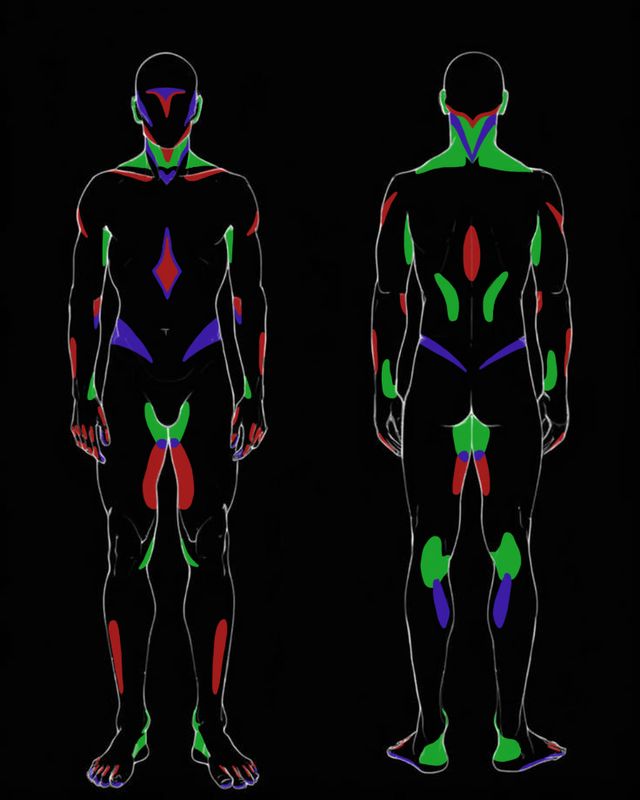
reactive and communicative scent glands are mostly placed on the front, towards whomever they are interacting with. the hands and the face are the ones used on a day-to-day basis and functional at all times. other reactive and communicative glands are 'activated' depending on the situation.
physical scent glands are most sensitive around the neck and pubis. aforementioned scent glands are considered to be sensual scent glands as they are most often stimulated during heats and ruts. physical scent glands are the one that produce an individual's scent.
> scents
scents are bodily-produced by physical scent glands. they are composed of one or more base notes that may or may not be common, and middle and top notes that are distinct and allow differentiation between individuals.
once two individuals form a mating bond, they may reveal additional scents between each other, or have some of their middle notes change to match their mate's. this can also happen in tight-knit packs.
pups do not have their own scent, they have their pack's or family / guardian's scent but it will fade over time if not scented enough. personal scents start with base notes at presentation and take about one to two years to fully build up on all the notes.
scents can deteriorate based on the health of the individual, 'sick scent' is a common form of temporary scent-deterioriation. scent-deterioriation can also happen if one's physical scent glands are damaged, and one can even lose their scent.
- scentless individuals typically wear chemical scent replicators to pass better in society.
> vocalisations
> heats and ruts
> treatments and medication
scent blockers
scent enhancers
specific blockers
trans-dynamic therapy
> hierarchies
hierarchies are outdated social codes, as of today they are only applied in some packs and businesses depending on locality and species.
throne / temple / domain
> social rules
pup / juvenile / adult
when an individual presents, they are considered a juvenile until 3 years after their presentation.
international agreements have set the age of pack independence to 21.
pack independence = freedom to change / exit packs && formally mate with another individual.
pack independence unrelated to age of majority.
body modifications.
