Roof Ice Dam Removal Guide: Prevent Winter Water Damage and Costly Repairs
Winter does not damage roofs in one dramatic moment. It creeps in quietly, the way meltwater seeps behind a shingle and freezes overnight. The next thaw and refreeze adds a little more pressure. Before long, you have thick ice at the eaves, a dam that traps melting snow on the warm part of the roof. That water looks for a path, and it often finds one into the attic, the wall cavities, or the living room ceiling. If you have ever woken to a drip bucket on the floor and a coffee-stained circle growing in your drywall, you know the feeling: act fast or brace for the mess.
This guide walks you through how ice dams form, what to do during an emergency, and how to fix root causes so winter does not keep winning. It draws on years of climbing ladders in subzero wind, steaming roofs in snow squalls, and tracing moisture stains back to a missed piece of insulation or a choked soffit vent.
How ice dams really form
Roofs do not grow ice dams just because it is cold. They form when parts of the roof are warm enough to melt the snow, but the eaves at the edge stay below freezing. Meltwater runs down-slope until it hits that cold section and then freezes. The new ice creates a little curb. More meltwater arrives, refreezes, and the curb grows into a wall. With enough snow load and enough heat loss from the house, the wall can grow to several inches thick. I have chipped off chunks the size of cinder blocks from north-facing eaves on homes with vaulted ceilings and can lights.
Three conditions drive most ice buildup on roof surfaces:
Heat escaping from the home into the attic or rafter bays. That can be thin or displaced insulation, big gaps around chimneys, bath fans that vent into the attic, or air leaks around recessed lights. Even a 5 degree temperature difference between the upper roof and the eaves is enough to start trouble.
Cold eaves that never see house heat. This is normal, but it creates the trap when combined with warm upper slopes.
Significant snow cover, often 6 inches or more, acting like a blanket that slows heat loss into the air and channels it into melting the bottom layer.
Add sun on a frigid day and you get the classic cycle: noon melt, late afternoon trickle, twilight freeze. That is when icicles grow and gutters turn into troughs of solid ice.
What damage looks like from the outside and inside
From the ground, long curtains of icicles look picturesque. They also signal trapped water behind an ice shelf. Thick bulges of white ice at the eaves, especially over porches and bay windows, point to a dam. Gutters that bow outward or tilt down at the corners may be full of ice. If downspouts stop draining during a warm spell, they are frozen solid.
Inside, watch for faint yellow or brown rings on the ceiling, peeling paint near exterior walls, damp attic insulation, or a musty smell after a thaw. Sometimes you hear a faint hiss behind a wall when water finds an electrical hole or a seam in the sheathing. During roof leak winter repair calls, we often find moisture trails on the backside of the roof deck that line up with nail penetrations, then a wet path over a top plate and down into the wall. It is not the roof shingle failing as much as physics working against you.
The emergency game plan when water is coming in
Time matters. If your ceiling is already dripping, you need to relieve pressure and redirect water before tackling the larger fix. Here is a practical, short list that balances safety with results.
Protect the interior fast. Move furniture, lay plastic tarps or old towels, and set out buckets. If a ceiling bulge forms, poke a small hole in the lowest part with a screwdriver to drain the water in a controlled way. This avoids a sudden blowout.
Reduce indoor humidity and heat peaks. Lower your thermostat a couple degrees and run bathroom and kitchen fans that vent outside. Use a dehumidifier if you have one. Less interior moisture and less heat drive slows melt.
Safely remove loose snow from the roof edge. Use a roof rake from the ground, pulling snow down the slope, never sideways. Keep 3 to 4 feet clear above the eaves to reduce melting pressure behind the dam. Do not climb a snowy roof.
Call a roof ice removal service for safe ice dam removal. Ask specifically for an ice dam removal company that uses low pressure steam ice removal, also called professional ice dam steaming. Avoid anyone advertising hot pressure washers or chisels on shingles.
If a contractor cannot arrive promptly, create drainage channels in the ice dam with a controlled method. In a pinch, calcium chloride socks along the dam can melt a channel. Never use rock salt, and never chip at shingles. Expect this to be temporary.
Those steps buy time. The permanent solution takes more sleuthing and often some insulation and ventilation tuning, but stopping active leaking comes first.
Why steaming beats chisels and pressure washing
I learned the hard way early in my career. An eager homeowner handed me a steel spud bar and asked me to “just get it off.” I took one swing and saw the granules scuff off the shingle. We stopped and scheduled steaming for the next morning. That job looked perfect afterward, but the lesson stuck.
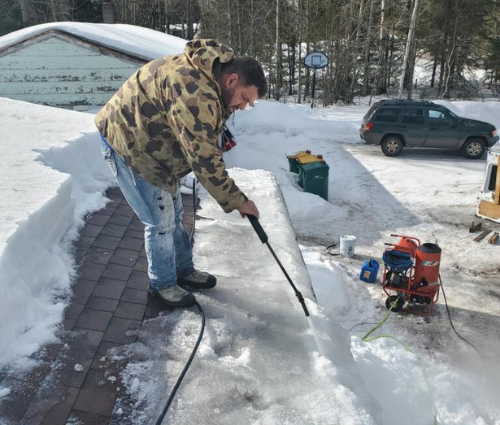
Ice dam steam removal uses superheated water vapor delivered at low pressure through a wand with a flat head. The technician scores the ice into manageable blocks, then lifts them off in sections. Low pressure steam ice removal protects shingle granules, prevents tearing the membrane, and avoids driving water up under the shingles. A good operator can clear 8 to 12 linear feet per hour depending on thickness, pitch, and roof complexity. In cold snaps, we often work in pairs to keep hoses warm and maintain flow.
High pressure washers can shatter ice, but they also cut shingle bonds and force water into nail holes. Chisels, axes, or hammers break shingles, puncture underlayment, and void warranties. Salt scorches plants, stains siding, and corrodes fasteners. If you need emergency ice dam removal, hire a crew trained in professional ice dam steaming and ask about their setup: dedicated steam unit, temperature control, and experience working over delicate materials like cedar shakes or EPDM.
Gutters, downspouts, and the freeze trap
Gutters do not cause ice dams, yet they often make the symptoms worse. A gutter full of ice becomes a cold sink at the eave. Even if you keep the roof clear, water cannot exit if a frozen gutter or frozen downspout blocks it. I have seen downspouts packed like clear glass for 20 feet, then a burst seam at the elbow when a brief thaw refroze overnight.
If you face frozen gutter removal in midwinter, treat it as carefully as roof ice. Do not pound the troughs with a mallet. Aluminum dents easily, and hidden hangers can snap. The safest approach is to remove snow from the roof edge, let sun and air do some work, and then ask a gutter ice removal company to steam the channels clear. They can also address clogged outlets at the gutter drops, which are common choke points. After steamer service, we sometimes add oversized outlets to improve drainage and reduce future clogs.
For frozen downspout removal, steaming from the bottom often works, but sometimes it is faster to detach the lower elbow and melt upward from the outlet. Heat tape inside a downspout can help in select locations, though it is not a cure-all. Avoid pouring hot water into a frozen metal downspout. The water often refreezes deeper in the bend and makes a larger plug.
If your area offers a gutter ice blockage service coordinated with roof and gutter ice removal, consider a combined visit. Clearing both at once prevents re-freezing at the edge after the roof warms from sun or indoor heat loss.
When to call a pro and what to ask
Some homeowners are comfortable with a roof rake and a sturdy stance on the ground. That is usually fine. Anything beyond that, especially if water has started coming in, belongs to trained crews with fall protection and insurance.
Ask these questions before hiring:
What method will you use to remove the ice? Look for “low pressure steam” or “professional ice dam steaming” in their answer.
Will you clear pathways only, or remove the full ice mass and gutters if needed? Pathways may be enough in an emergency, but full removal is safer for the next thaw.
How do you protect shingles, flashing, and landscaping? Steamers should use pads for ladders and gently lower ice blocks, not fling them.
Can you identify and document the probable cause of the dam? Photos of attic frost, blocked soffits, or warm zones help focus later repairs.
How soon can you perform ice dam leak repair if the roof covering is damaged? Some companies offer temporary patches, such as membrane strips, to bridge until spring.
The right ice dam removal company brings more than gear. They bring judgment about where to cut channels, how to stage ladders on snow, and when to stop and let the sun finish the job.
What temporary fixes buy you breathing room
Not every home can be opened up in January to add insulation and fix ventilation. If you need to limp through the season, a few measured steps can reduce risk.
Keep snow levels down on problem slopes. Use a roof rake after each storm to clear the lower three to five feet. Protect your shoulders and do not hook shingles. If you cannot rake a high dormer that chronically dams, consider hiring a winter roof ice removal service on standby after heavy snows.
Improve attic airflow any way you safely can. If gable vents exist, keep them open. Make sure soffit vents are not blocked by blown-in insulation or bird nests. You can often see daylight through soffits from the attic; if not, there may be blockage. A simple baffle installation can create a clear air path above the insulation. Even partial improvement lowers peak roof temperatures under snow.
Lower interior humidity. Winter cooking, showers, and houseplants add moisture that condenses on cold surfaces. Keep relative humidity around 30 percent during cold snaps. Run bath fans 20 minutes after showers. Vent the dryer outdoors. If you see frost on attic nails or sheathing, you have excess moisture that can create attic rain during a thaw.
Use heat cables with care. Self-regulating heat cable laid in a zigzag at the eave and inside downspouts can open channels in known trouble areas. They do not fix root causes, add operating cost, and need careful fastening to avoid shingle damage. On complex rooflines where insulation upgrades are impractical, cables are sometimes the least bad option.
The real fix: insulation, air sealing, and ventilation working together
Roof insulation alone does not stop dams if warm air leaks past it. Ventilation alone cannot handle large heat losses. The best outcomes come from a three-part approach that matches your roof design.
Start with air sealing. Seal the big leaks: around chimneys with fire-safe materials, at bath fan housings, around can lights, along top plates, and where plumbing stacks exit. A fog test in the attic can reveal hidden gaps. We often see 1 inch plumbing penetrations in framing that were drilled at 2 inches, leaving a ring for warm air to race through. Expanding foam and gasket materials are cheap and powerful. In older homes with tongue and groove ceilings or kneewall spaces, the leaks are often in the transitions between conditioned and unconditioned areas.
Improve insulation depth and coverage. Aim for R-49 to R-60 in many cold regions, which usually translates to 14 to 18 inches of blown cellulose or fiberglass. Uniform coverage matters. High spots near the ridge and low spots at the eaves create temperature gradients that drive dams. In low eaves, add baffles to maintain a ventilation channel while allowing insulation to be full thickness. If the roof has recessed lights, consider replacing them with insulation-contact, air-tight models or covering with tested enclosures before burying.
Balance intake and exhaust ventilation. Soffit intake feeds ridge exhaust. Without intake, a powered roof vent can pull conditioned air from the house, making things worse. In homes without a continuous ridge, consider additional static vents balanced with soffit openings. The rule of thumb is roughly 1 square foot of net free vent area per 300 square feet of attic floor when a vapor barrier is present, split roughly 50 percent intake and 50 percent exhaust. Adjust for your climate and code. Do not mix gable fans with ridge vents without a plan; they can short-circuit airflow.
Special case roofs need special approaches. Cathedral ceilings with closed rafter bays benefit from rigid foam above the deck or vented chutes in each bay. Low-slope roofs over living spaces sometimes require a “hot roof” assembly with continuous spray foam under the deck, eliminating ventilation and keeping the deck warm enough to prevent refreeze at the edge. Flat rubber roofs at the second story often dump thaw water over a cold first-floor eave, a classic dam zone that may need an extended drip edge, heat cable, or redesign.
Materials, details, and places leaks prefer
When water backs up, it seeks the path of least resistance. On an asphalt roof, that is often the horizontal joint between courses. With enough pressure, it can pass over the top of the shingle and onto the underlayment. If the underlayment is a modern ice and water membrane, it is often self-healing around nails and stops water short of the sheathing seams, at least for a while. On older felt paper, the water can ride a wrinkle or a nail hole straight to the wood deck and then into the home.
Flashing joints are frequent culprits. Valleys, where two roof planes meet, accumulate snow and ice. If the ice bridges the valley and the meltwater backs up, water can jump the valley metal’s side laps. Around chimneys, missing counterflashing or dried sealant at the chimney cap can let in meltwater that then gets blamed on an ice dam. Bay windows with shallow roofs often have minimal insulation beneath them and become warm zones that feed dams right above the bay.
During roof snow and ice damage inspections, we document where the first signs appear. Water at the top of an exterior wall typically points to eave backup. Water midway on a ceiling beneath a valley points to valley overflow. Rusty roofing nails in the attic signal chronic moisture. Frost on nail tips on a zero degree morning is not unusual, but puddling on the vapor barrier means a larger problem.
Costs to expect and why timing matters
Prices vary by region, access, and severity, but a few ranges help with planning. Roof ice dam removal by steam typically runs by the hour. In many markets, expect a two-person crew with a steamer to cost the equivalent of a mid-level service call for the first hour and a lower rate for additional hours. A simple ranch eave can take one to two hours. Large two-story homes with multiple dormers or deep valleys can take half a day or more.
Ice dam leak repair can be inexpensive if it is limited to drying insulation and patching a small ceiling stain. It climbs when saturated insulation or wet drywall needs removal, or if mold remediation is necessary. Repairs to gutters bent by frozen weight, fascia boards softened by leaks, or interior trim and paint add to the bill. If shingles were damaged by improper removal methods, budget for targeted shingle You can find out more replacement in spring.
Acting early saves money. Removing snow after each storm prevents the cycle from starting. Clearing ice at the first sign of blockage is faster than cutting through a 10 inch wall of layered freeze-thaw ice. Scheduling an audit of attic insulation and ventilation in the fall, before the first snow, beats crisis calls in January when crews are slammed and roads are slick.
What not to do, no matter how tempting
I have seen YouTube tricks that make my stomach drop. Pouring hot water on a roof usually creates a glazed surface that refreezes to a harder, slipperier mess and pushes water under shingles. Spreading rock salt near the foundation burns shrubs and corrodes aluminum and steel. Swinging a hatchet at ice cracks shingles, dents gutters, and risks a ladder fall. Parking a heater in the attic without addressing moisture vents just warms the roof and accelerates meltwater, making the dam worse.
Also avoid sealing attic vents in winter in the hope of keeping heat inside the house. You might gain a degree indoors and trade it for attic moisture and larger ice dams. If energy savings is the goal, air sealing the ceiling plane and adding insulation deliver more comfort for less risk.
Planning a durable fix once the roof is dry
When spring arrives, do not just repaint the ceiling and move on. The absence of snow is a good time to open the attic, map the plane of air leaks, and bring the insulation and ventilation up to snuff. Photograph before and after. If you have a chronic dam over a specific area, such as above a bathroom or a vaulted living room, make a section drawing that shows layer by layer: interior finish, air barrier, insulation, ventilation channel, roof deck, and covering. The visual forces honest accounting of where warm air could escape.
Consider upgrades like:
Continuous ridge vent matched to continuous soffit intake, with baffles keeping a clear airway over insulation.
Conversion of can lights to sealed LED fixtures with insulation contact rating, or relocation below an airtight drywall lid.
Insulated and gasketed attic access hatches or pull-down stairs.
Rigid foam insulation above the roof deck during a reroof to control thermal bridging and keep the deck more uniform in temperature.
Enhanced ice and water shield underlayment from the eave up to at least 24 inches inside the warm wall line, more in cold regions or on low-slope areas.
Roof design matters. On homes with multiple intersecting roofs that feed into a short valley, even a perfect attic can have trouble. In those spots, a wider valley metal, careful shingle layout, and possibly a discreet strip of heat cable used only during danger periods can convert a problem area into a manageable one.
A note on insurance and documentation
Ice dams often fall into a gray area for insurance. Many policies cover sudden water damage but not long-term maintenance issues. If a one-time event caused interior damage, document it with time-stamped photos and contractor notes. Keep invoices for emergency services like winter roof ice removal and for any roof leak winter repair work. Adjusters appreciate clear evidence of cause and response. If you can show you maintained the roof, cleared snow, and sought safe ice dam removal through a qualified ice dam removal company, your claim typically goes smoother.
A winter plan you can live with
Winning against winter does not require perfection. It requires a plan that matches your house and habits. Keep the eaves clear of heavy snow. Watch that one dormer or that bay window that always grows icicles. Maintain airflow in the attic and keep moisture down in the living space. When a storm stacks up and temperatures swing, have the number of a trusted gutter ice removal company or roof ice removal service ready for same-day calls. If downspouts stop draining and gutters bulge, request frozen downspout removal alongside roof and gutter ice removal so everything flows again.
Most important, follow through when the weather softens. Track where the dam formed, where water entered, and what clues the attic shows. Fixing the air leaks that feed ice dams is not glamorous work, but it is satisfying. The next time the temperature drops and snow piles up, you will look at your eaves and see clean lines and no icicles. That quiet is worth every bag of insulation and every bead of foam you applied.
Winter will try again. You will be ready.