The Art of Consultation: What to Expect at Your Tattoo Consult
A good tattoo consult feels a bit like a first rehearsal before opening night. You bring an idea, the artist brings experience, and the two of you shape it into something worth wearing for life. The consult sets the tone for the whole project, whether you’re planning a delicate fine line wrist piece or a sprawling back piece in black and grey. If you have never sat with tattoo artists before, the process can feel mysterious. It doesn’t need to. Here is how a strong consult works inside a professional tattoo studio or tattoo and piercing studio, what to bring, what to ask, and how to leave with a clear plan and a confident booking.
What a consult actually is
A tattoo consult is a short, focused meeting to translate your idea into a workable tattoo. Some custom tattoo shops prefer to do these by email for simple projects, though an in-person or video consult is still common for larger designs, tattoo cover-ups, or placements that need careful planning. Expect 15 to 45 minutes for small to medium tattoos and anywhere from 45 minutes to an hour for large-scale pieces or full cover-ups.
During the consult, your artist evaluates four things at the same time: the concept, your skin and placement, the style match, and the logistics. They look for pitfalls that might not be obvious to a first-timer, like whether a highly detailed forest scene will still read well as a six-inch calf piece or whether a dainty script will blur on a spot that moves constantly.
A helpful mindset is this: you are co-designing with a professional. You bring meaning and preferences, they bring design sense, technical constraints, and the discipline of skin mechanics. A strong consult finds the overlap between those two worlds.
How to prepare without overprepping
You don’t need a 40-slide deck of tattoo design ideas, and you definitely don’t need to sketch it yourself unless you want to. What you do need are a few crisp references that speak to elements you actually want. Two to five images is plenty. If you like the way a tiger’s eyes look in one photo and the way a floral frame sits in another, save both. If you’re leaning toward American traditional tattoos, grab a couple of flash samples that show line weight and color choices. If you prefer black and grey tattoos, include one or two examples to establish tone and texture. For fine line tattoos, be realistic about scale. The thinner the line, the more sensitive it is to size and placement.
Bring a photo of the body area, in good light, from a few angles. Phone photos are fine. If you are covering old work, take a clear, straight-on photo and note how old the tattoo is. Ink settles over years, so a ten-year-old faded script behaves differently under a cover-up than a two-year-old black block.
Have a range for your budget and your availability. Your idea might wind up as a single-session walk-in tattoos kind of project, or it may turn into a multi-session tattoo appointment. Let your artist know if you have a hard date you are aiming for, like a wedding or travel, and whether you can sit for longer sessions or prefer short, frequent visits.
How artists evaluate your idea
Every tattoo parlor that values long-term results checks the same core factors, whether they are the best tattoo shop in a big city or a quiet local tattoo shop that runs on word of mouth.
Scale and readability sit at the top. Tattoos are seen from a distance more than you think. A design with 100 tiny petals will look muddy if it is the size of a playing card. The artist will often simplify shapes, enlarge key elements, and use contrast to keep black and grey tattoos artists the piece readable. Black and grey pieces rely on value separation to create depth, where American traditional tattoos lean on bold lines and clean color fills to last decades. Fine line tattoos can look elegant but need strategic line weight and negative space so they age gracefully.
Placement is next. Skin stretches, compresses, and sheds. An inner forearm is more stable than a finger, ribs stretch more than outer thigh, ankle bones can be spicy. An experienced artist will map the flow of muscles to position the piece so it complements movement instead of fighting it. The wrist, for example, asks for curvature to follow tendons. The upper arm lets large shapes breathe.
Existing ink and scars matter. For tattoo cover-ups, the rule of thumb is simple: the cover must be darker and more complex than what lies beneath, or it must incorporate laser lightening first. A delicate watercolor effect will not hide a blocky tribal from the early 2000s without help. Laser sessions can drop the density by 30 to 70 percent depending on pigment and depth, which opens options for brighter or lighter designs. Your artist will be honest about this.
Style alignment is not cosmetic, it is structural. A custom tattoo shop typically houses several artists who specialize in different styles. If you want a crisp, bold panther head, choose the artist whose portfolio shows confident linework and solid color saturation in that genre. If you want a filigree botanicals sleeve, look for clean fine line work and smooth grey shading. Your consult is partly about confirming the fit.
What the timeline usually looks like
Once the concept is aligned, your artist sketches, revises, and books your session. Small pieces might be drawn on the day of your tattoo appointment. Medium pieces often get a rough sketch within a week, followed by a final. For large-scale work, expect a staggered process: a conceptual rough to confirm composition, a refined line drawing for stencil, then in-session adjustments as the piece wraps around your body. Good artists prefer to see the skin before locking every detail, since muscle and bone shapes inform the final flow.
Turnaround times vary by shop and season. Busy months can push the drawing queue by a few weeks, while slower months might allow faster scheduling. If you need a quick addition and the shop allows walk-in tattoos, you might be able to catch a simple flash piece same day. Detailed custom work almost never fits a walk-in window, so plan ahead.
Talking budget like a grown-up
People often worry that talking money will insult the artist. It won’t. Clear budgets help the artist offer realistic options. Most studios charge by the piece for small designs and by the hour or day rate for larger ones. Hourly rates vary widely by city and experience, commonly falling in the range you’d expect for other skilled trades. Day rates can make sense for sleeves and back pieces, especially when the artist can stay in flow.
Deposits secure your date and compensate for drawing time. A deposit is almost always nonrefundable, but it can usually be transferred with reasonable notice if you need to reschedule. Ask the studio policy directly so you know where you stand.
There is often a healthy middle ground if your ideal piece outruns your current budget. Scale down and simplify while keeping the essence, or split the work into stages. A sleeve can start with a hero piece on the shoulder, then grow down the arm over months. A well-managed project still looks finished at every stage.
Design collaboration without losing the plot
The best consults feel like a creative jam session with boundaries. You explain the why of the design, the artist figures out the how. If you insist on every leaf and swirl, you turn your artist into a printer. If the artist ignores your meaning, the piece becomes generic. Meet in the middle.
Ask how your chosen style will age on the placement you want. Ask which details the artist would emphasize or drop. If you want popular motifs, like angel numbers, roses, fine text, or micro-realism portraits, talk through the trade-offs. A four-line poem on a rib looks elegant on day one but can blur in five to ten years if the lines are too tight. The artist may suggest larger text, slightly heavier lines, or a different body area to preserve legibility.
Good collaboration lives in constraints. Choose three must-haves, not ten. Focus on a single vibe. Trust that an experienced eye will preserve hierarchy so the design reads at a glance and rewards a closer look.
Cover-ups: the hard truths and smart paths
Cover-ups are their own sport. Your artist must work with two sets of lines: the old ink in your skin and the new composition on top. Solid black, dense shading, or complex texture hides old shapes best. That might point you toward black and grey tattoos with atmospheric clouds and foliage, or toward high-contrast Japanese or American traditional tattoos with thick outlines and saturated fills.
Laser lightening can be the difference between a forced compromise and a clean new start. A handful of sessions reduces the old piece enough to unlock lighter palettes and finer detail. If you are on the fence, ask the artist to show healed examples of cover-ups with and without laser. It is common to see smoother results when the old ink has been softened first.
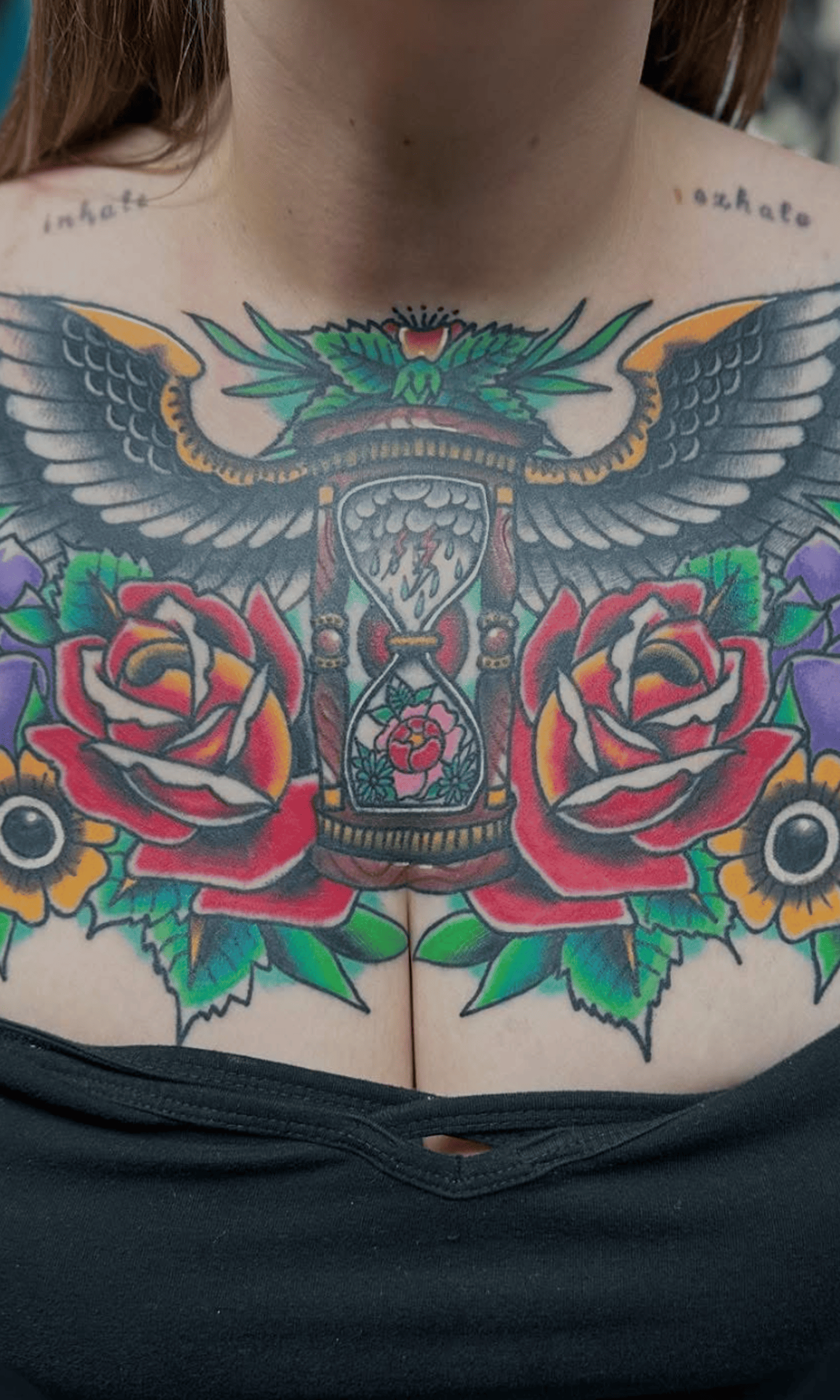
Placement adjustments also help. Shifting the new focal point up or down a few centimeters can avoid the densest part of the old tattoo and lets the design breathe. Your consult should leave you with a clear path: cover as-is, cover after lightening, or pivot to a different concept that suits the constraints better.
Health, safety, and the quiet signals of a good shop
You can sense a dialed-in studio before you hear the machines. It smells clean but not like a hospital. Workstations are tidy, surfaces barrier-wrapped, and you see single-use needles opened at the chair. Artists wash hands on autopilot. Paperwork covers consent, health history, and aftercare, and it lives in a proper system rather than floating around the front desk.
If you walk into a tattoo studio and your gut flags something, pay attention. A responsible local tattoo shop won’t pressure you. Staff will answer questions about sterilization, pigment brands, and their autoclave or disposable setup without getting defensive. That transparency is a good sign, and it starts at the consult.
The role of reference and originality
Artists use reference images all day long, and so do you. The key distinction is between inspiration and duplication. If you love a particular artist’s snake and dagger, the ethical move is to take the idea and let your artist redraw it in their style, not copy the exact lines. Most tattoo artists refuse to replicate another artist’s custom work. Flash designs are different. Flash is meant to be tattooed more than once, and many shops keep flash books or walls where you can pick a design and customize color or placement.
If you’re aiming for a piece that feels unique, bring references that highlight mood, composition, and a few details, then give your artist room to build from scratch. That’s what a custom tattoo shop does best.
What happens if you are undecided
Not everyone walks in with a clear idea. There are days where you know you want something, you just don’t know what. That’s fine. An experienced artist can ask the right questions to get to a concept quickly: what do you want people to feel when they see it, what sits next to it on your body, what styles you dislike even more than ones you like. Sometimes the path is to schedule a short exploratory consult, then go home with two or three sketched directions to consider. Other times you might be steered toward a spontaneous flash from the shop’s book if you are truly open and want the energy of a walk-in.
Deciding is easier when you decide the container first: pick a placement and a style, then choose the subject. The reverse usually creates friction.
How placement influences pain, healing, and longevity
Every body is different, but there are reliable patterns. Areas with more flesh and fewer nerve endings tend to feel easier: upper arm, outer thigh, calf. Bony or thin-skinned areas tend to sting more: ribs, ankles, feet, hands, sternum. Movement matters too. Joints and high-friction zones take more abuse, so delicate linework can soften faster on fingers or sides of the hand. If your heart is set on a dainty finger piece, understand that touch-ups will be part of the lifecycle, not a surprise.
Healing is also tied to placement. Torso pieces stretch with breathing, foot tattoos live in socks and shoes, and forearms catch sun relentlessly. Your artist will tailor aftercare around the realities of the location. For sun-exposed spots, plan on lifelong sunscreen if you want your colors to hold and your blacks to stay crisp.
What a realistic session plan looks like
Here is a common pattern for a medium forearm tattoo in black and grey. Week one: consult, reference review, placement photos. Week two: the artist sends a rough composition. You give feedback on emphasis, not micro-edits. Week three: stencil day. You arrive, your artist sizes the stencil against your arm and shifts it until the flow feels right with your elbow and wrist. You approve, then sit for two to four hours for outline and initial shading. Two to four weeks later, if needed, you return for a second pass to deepen values and refine texture. Healed photos land in your inbox after a month.
Color pieces may invert the order, laying in linework first, then color blocking, then saturation and detail. Fine line tattoos might be one and done in an hour, provided the design and placement behave. Large projects like sleeves usually break into top-to-bottom sections across several months so your skin can heal properly between appointments.
Communication that keeps projects smooth
The most preventable problems come from silence. If you know you get lightheaded with needles, say so. The artist has tricks: sugary drinks, short breaks, a different pacing. If you have a skin sensitivity, tell them. If you are feeling unsure about a detail the day before your tattoo appointment, call the shop to flag it rather than stewing. Collaboration works best with honest, calm updates.
Artists appreciate concise feedback. Try phrases like: can we open up this area so it breathes more, can we enlarge the script by 20 percent for legibility, can we shift the focal point higher to clear the elbow. That sort of precise language keeps the session on track.
The subtle differences between shop types
A tattoo parlor that leans toward flash and walk-in tattoos gives you spontaneity and speed. You pick from existing designs or small custom tweaks, sit the same day, and leave with something fun and solid. A custom tattoo shop trades speed for depth. You wait longer and communicate more, and the result fits your body and story like it belongs there. Plenty of studios blend both modes, running a busy walk-in station while booking custom work weeks out. The best tattoo shop for your project is the one whose artists do work you admire in the style you want, with a booking process that fits your timeline.
What to bring to the consult
Two to five reference images that show the elements you like and your preferred style A clear photo of the body area, plus a straight-on photo if covering old ink Budget and timeline notes, including any hard dates or travel plans A list of absolute must-haves and nice-to-haves, no more than three must-haves Medical or skin considerations, like allergies, sensitivities, or medications
The day of your consult
Arrive rested, hydrated, and on time. Wear clothing that lets the artist access the area without awkwardness. If you’re discussing a thigh piece, bring shorts. For rib work, a loose tank or sports bra helps. Expect to sign basic forms, then sit down with the artist to look through references and placement photos. They will likely sketch on tracing paper or an iPad, overlaying shapes on the body photo to test scale and flow.
You may see the artist build a design using a few quick passes: gesture shapes to map movement, secondary shapes to establish balance, then accents for detail. This fast sketching tells you more than a polished drawing at this stage. It shows that the design makes sense on your anatomy. Don’t cling to the rough lines. You are approving structure and direction, not the final rendering.
If the fit feels wrong, say so early. It is far easier to adjust composition at the consult than on tattoo day. Your artist will appreciate the clarity and the time saved.
After the consult: what you should walk away with
You should leave with a summary in your own words: style and mood, placement, approximate size, number of sessions, rough cost estimate, deposit amount, and the next date on the calendar. If the artist is sending a sketch, you should know when to expect it and how to give feedback. If you need to do anything on your end, like schedule laser lightening or let a sunburn heal, you should have that checklist.
Many shops will email this information so everyone stays aligned. If the shop is old-school and keeps things analog, jot notes on your phone before you forget.
Common mistakes and how to avoid them
New clients often make the same four missteps: bringing too many references, trying to cram too much meaning into one small space, picking a placement that fights the design, and underestimating healing time. Each one has a simple fix. Limit your images and pick a single visual priority. Let the design breathe rather than stacking symbols. Choose placement based on flow as much as visibility. And give yourself at least two weeks before anything that rubs, sweats, or shows, like a long flight, a big hike, or a formal event with fitted clothes.
Another mistake is shopping for the cheapest price in town for complex work. A budget can be smart, but the cheapest option often costs more when you factor in touch-ups or a future cover-up. If you want fine line detail, smooth shading, or a clean cover, hire the specialist who does that work every week.
How style influences consultation depth
American traditional tattoos typically require fewer iterations because the rules of the style are built in: bold lines, limited palette, strong shapes. The artist will focus on placement, scale, and clarity. Black and grey tattoos can demand more discussion around light sources, texture, and mood, especially for portraits or scenery. Fine line tattoos are deceptively simple. The consult often centers on size and line weight to maintain legibility over time. Lettering demands a typographic eye and consensus on spacing and weight. Each style has its own questions, and a good artist knows them well.
Etiquette that makes the process pleasant
Respect the artist’s time. If you need to reschedule, call as soon as the conflict appears. Show up clean. Do not bring a crowd. One friend is fine if you need moral support, but a group turns the consult into crowd control. Food and drink are usually fine in the lobby, not at the station. Be open to expert advice, especially about scale and placement. When you find an artist you trust, stick with them. The relationship is worth as much as the ink.
Where walk-ins fit into the picture
Walk-in tattoos are perfect for small, straightforward designs when you want the spark of spontaneity. If the shop board says walk-ins welcome, call ahead to check the queue. Have a simple design ready or pick from the flash wall. Be flexible about artist availability. Walk-ins are not the right path for delicate full-color realism, complicated cover-ups, or large custom pieces. If a studio says you need a consult for your idea, they aren’t gatekeeping. They’re protecting the quality of the result.
When to seek a different artist
If the consult feels rushed, if the artist dismisses your meaning without offering a stronger alternative, or if the style in their portfolio doesn’t match your goal, keep looking. The right match makes itself obvious. You will see healed photos in the style you want. You will hear clear reasons for design choices. You will feel heard. A strong local tattoo shop is never offended if you ask for another artist in-house who fits better.
A few real examples from the chair
A client came in wanting a tiny mountain range on the ankle with a sunset gradient. A pretty thought, but three elements fought each other at that size: a gradient, thin lines, and a high-motion placement. We kept the linework minimal, moved it to the outer calf where the skin is calmer, and kept the gradient suggestion within the negative space. Two years later, the lines still look crisp.
Another client had a fifteen-year-old kanji on the shoulder and wanted fine line peonies to cover it. Even with heavy petals, the old symbol showed through the lighter shading in mockups. They agreed to two laser sessions, which dropped the density enough to allow a softer grey palette. The cover-up now reads as flowers first, with no ghosting in daylight.
A third client wanted a full forearm piece of a snake weaving through chrysanthemums in a classic American traditional palette. The consult focused on scale and direction. We rotated the snake so the head rested just above the wrist crease, increased line weight on the head and leaf edges, and chose a limited color set to keep the read bold. The tattoo healed strong and has weathered five summers with only minor touch-ups.
The payoff of a thoughtful consult
A great consult saves you from the most expensive mistake in tattooing: revising a decision that is already in your skin. It also makes the appointment day relaxed. You know what you’re getting and why, and your artist can focus on doing their best work instead of troubleshooting on the fly. Whether you land in a busy tattoo parlor for a classic anchor or a quiet custom studio for a black and grey sleeve, the same principle applies. Give the consult your full attention. Bring good references, ask precise questions, listen to experienced answers, and choose the artist whose work you respect. The art will follow.
And if you’re not sure where to start, walk into a reputable local tattoo shop on a weekday afternoon and chat at the front desk. The people there can read your project in thirty seconds and point you to the right chair. That simple conversation is often the first step toward a tattoo you’ll be proud to live with.