Movement Therapy for PTSD: Restoring Safety in the Body
Posttraumatic stress is not only a set of intrusive memories or anxious thoughts, it is a body that has learned to survive by bracing, collapsing, scanning, and moving in ways that once made sense. People tell me their shoulders climb without permission when they hear a backfire, their jaws clamp at night, or their feet float away when a room feels too loud. The nervous system is a quick learner. It stores patterns of protection in fascia, breath, posture, and reflexes. That is why trauma therapy often moves more quickly when it includes the body, not as an afterthought but as a central pathway back to safety.
Movement therapy is a broad term. It includes structured practices such as yoga or tai chi, clinical approaches like dance/movement therapy and sensorimotor psychotherapy, and simpler exercises such as slow walking, breath-led mobility, and grounding stretches. What unites them is the premise that safety must be experienced, not only imagined, and that the body is a primary place where safety can be rebuilt. When we approach movement as therapy, we work at the level of interoception and proprioception, the felt sense of inside and the sense of where we are in space. We give the autonomic nervous system dozens of tiny chances to practice settling. Over time, those practices can interrupt the loops of fear and shutdown that drive posttraumatic symptoms.
Why safety in the body matters
Traditional talk therapy can help someone reframe a belief or tell their story with less shame. Yet if their diaphragm still grips at the thought of conflict, or their hips lock when a door slams, insight alone will not carry them through an ordinary day. PTSD often involves a hair-trigger startle response, sleep disturbance, irritability, and a persistent sense that danger is imminent. These experiences reflect a nervous system stuck in survival states.
Somatic therapy addresses those states directly. Rather than asking the mind to override the body, we invite the body to show the mind what safety feels like. A long, heavy exhale that arrives after a guided twist says more to the vagus nerve than a hundred reassurances. A slow head turn that widens peripheral vision can shift the threat calculation in a way the cortex alone cannot. When we pair such moments with agency and choice, the system relearns that it can turn the dial down.
I have watched this happen with people whose trauma histories span childhood adversity, combat, medical procedures, community violence, and sudden loss. The surface details vary. The throughline is the nervous system adapting for survival, then not finding its way back. Movement gives it a map.
A composite example from practice
Consider Maya, a nurse in her thirties who had cared for patients through months of crisis. After a car accident on her way home from a double shift, she developed nightmares, irritability, and a body that jolted at every horn. Her shoulders sat near her ears. She felt “outside herself” during stressful interactions and dreaded highway driving. We combined trauma therapy that included cognitive processing with brief, titrated movement.
On a treatment mat, Maya found she could notice her heels, then her calves, and later her back against the floor. We explored a gentle sequence, three breaths per shape, focused on slow rotation and light pressure to the hands. Each time we paused to ask what felt tolerable. On days when flashbacks intruded, we shifted to standing weight shifts, the kind that toddlers master in their first year. Over eight weeks, her symptoms eased. She still did not love traffic, but she began to feel her feet on the brake, not the image of the crash. Her body learned it could move without bracing for impact.
No two people progress alike. What mattered for Maya was choice, pacing, and the practical ritual of re-entering her body for a few minutes, several times a week.
What movement therapy looks like session to session
A well-constructed session feels spacious, not like a workout class squeezed into therapy time. It begins with an assessment of arousal. Are you activated, flat, or something in between. We match movement to state. If you feel frozen, we might start with micro-movements of the fingers, then wrists, then elbows, building a ladder back to full-body presence. If you are keyed up, we might aim for slow, rhythmical movements that lengthen exhalation and expand the visual field.
Choice is not a nicety, it is the intervention. Rather than prescribing ten poses, I offer two and ask which one your body prefers right now. We name opt-out signals: a clenched jaw, nausea, dissociation, or a familiar rush of heat. We keep movements simple enough that you can notice them. A 10 percent change in shoulder position is often more useful than a big stretch.
Titration and pendulation, concepts from somatic therapy, guide the pace. Titration means we take in small, metabolizable doses of activation. Pendulation means we move between activation and resource, like a swing that returns to its base. A brief forward fold might stir a memory, so we counter with a supported extension and a focus on the room’s sounds. The therapist’s job is to monitor the seesaw, then coach you in noticing when to pause.
Sessions end with consolidation. We translate a felt sense into plain language. You might say, “My ribs feel wider,” or “I can feel my socks.” Those phrases are not fluff. They help the cortex tag the experience as something safe and repeatable, which matters for neuroplastic change.
Safety first: a brief checklist
Confirm medical clearance if you have cardiac issues, uncontrolled hypertension, recent surgeries, or pregnancy. Identify your green, yellow, and red signals before you begin, and agree on a stop word. Choose a practice space with a stable floor, reliable temperature, and one predictable exit, then orient to that space each time you start. Keep movements within a tolerable range, ideally no more than a 3 out of 10 in intensity, and avoid positions that replicate trauma postures unless carefully prepared. Debrief for two to five minutes after practice, seated or lying down, to allow the nervous system to register the shift.
These steps sound simple. They are. They also protect against overwhelm, which is the one risk that reliably derails progress in PTSD work.
How different modalities fit
Movement therapy is not one method. It is a family of approaches that share a body-first lens. Individually or in combination, they can anchor a treatment plan.
Yoga used therapeutically can increase interoception and vagal tone, especially when classes de-emphasize performance and emphasize choice. I have seen clients benefit from ten to twenty minutes of floor-based shapes with long exhalations, two or three times per week. Randomized trials in trauma-sensitive yoga show small to moderate improvements in hyperarousal and sleep, which aligns with clinical experience, especially when the instructor avoids hands-on adjustments and uses invitational language.
Tai chi and qigong offer slow, cyclical movements coordinated with breath and attention. These practices regulate pace without requiring deep stretches or weight bearing on the wrists and knees, which is a relief for many. They also keep the head upright, a plus for people who dissociate when lying down. For some veterans I have worked with, tai chi became a bridge back to group participation because it looked like a skill to be learned rather than therapy to be endured.
Dance/movement therapy brings creativity and relational attunement. In a skilled clinician’s hands, improvisation allows for expression that talk cannot touch. The therapist tracks micro-movements, mirrors them, and expands the movement vocabulary. For clients silenced by shame, having someone move with you, not at you, rebuilds co-regulation in real time.

Sensorimotor psychotherapy and somatic experiencing integrate movement with narrative and cognitive themes. A client who always shrugs on the left when describing conflict might explore completing a push with that arm, then notice what happens in their voice. A person who collapses the chest could experiment with a millimeter of lift while speaking about a boundary. The aim is not perfect posture, it is reclaiming incomplete defensive actions so the system can stand down.
Feldenkrais and other gentle movement re-education methods suit those with chronic pain and medical trauma. Small, curious motions reduce guarding and restore coordination. When the body realizes it can move efficiently, the nervous system has one less reason to stay on high alert.
Breathwork, used judiciously, can anchor all of the above. With PTSD, strong breath practices sometimes backfire, especially if breathlessness or choking is part of the trauma memory. I rely on soft techniques first, such as extended exhale, paced breathing around 5 to 6 breaths per minute, or adding a silent count on the out-breath. The goal is comfort, not performance.
Grief and attachment in the room
Trauma rarely arrives alone. It often sits beside grief, whether for a person, a role, or a sense of safety that vanished. Grief counseling can weave into movement by making space for the ache that rises as the body softens. When the sternum widens, tears may follow. Rather than treating that as a problem, we name it as grief doing its work. Simple gestures, like placing one hand on the chest and one on the back, can cradle that feeling in a way words cannot.
Attachment therapy principles matter as well. PTSD can distort how safe another person feels. In session, the therapist becomes a co-regulator who is steady, predictable, and responsive. Movement amplifies this. If you widen your gaze and your therapist matches their breath to yours for a moment, the body learns that proximity can be safe. If you step away and they wait without pressure, the body learns that space is allowed. Over time, these micro-experiences loosen old attachment patterns that keep the nervous system vigilant.
Working with complex PTSD and dissociation
Complex PTSD, often rooted in chronic early adversity, calls for even more pacing and consent. People may swing between overwhelm and numbness, with a narrow window in which movement is tolerable. Sitting still might feel like a trap. Lying down can invite flashbacks. The answer is to build a repertoire of upright, low-amplitude motions that keep the person oriented to the present. Think of slow neck turns with eyes open, gentle rhythmic knee bends, or hand presses into a wall, always with an exit plan.
Dissociation complicates interoception. If “inside” feels far away, we begin with exteroception, the sense of the outside world. Feel the floor, see the corners of the room, hear the clock. Then we add a small, predictable internal cue, like the brush of air at the nostrils. We expect oscillation, moments of spacing out. We normalize it and return to contact. Over weeks, those returns get easier.
Practicalities that make or break the process
Small details change outcomes. Footwear matters. Many people feel safer with shoes on, at least early on, because bare feet can feel exposed. Clothing that allows movement without clinging helps those with touch sensitivity. Lighting needs attention. Fluorescents can trigger headaches or a hospital association, so use warm lamps when possible. Sound is not a backdrop, it is a stimulus. Music can soothe or overwhelm. I ask clients to bring two or three instrumental tracks they already find calming, then test them during movement rather than assuming.
Telehealth can work. I ask clients to position the camera to see their torso and feet and to place an object of comfort in the frame. We establish a protocol if the connection fails, since abrupt silences can mimic abandonment. Between sessions, brief videos of two or three moves can support practice, but I limit new content. Mastery beats novelty for nervous systems learning to trust.
Measuring progress without missing the point
Data helps, as long as data serves the person and not the other way around. Standard measures such as the PCL-5 can track symptom changes over 4 to 12 weeks. Sleep diaries show whether movement days bring different nights. Heart rate or heart rate variability, if you have a wearable, can offer curiosity, not judgment.
What I watch most closely are functional shifts. Can you ride in a car with less bracing. Does your jaw release while reading. Do you catch an early signal of overload and choose one regulating move before the spiral. These are the moments that tell us safety is returning.
How trauma memories meet movement
A fair question arises: does moving risk triggering memories. Yes, sometimes. Positions, speeds, and rhythms can echo past events. That is why we proceed in small doses, with consent https://fernandovnzt880.iamarrows.com/trauma-therapy-for-medical-professionals-healing-the-healers and escape hatches. When a memory does surface, we orient to the room, name the year, and, if tolerable, keep one anchor of movement going. A slow hand press into the thigh while looking at the window can prevent the full takeover of a flashback. The goal is not to relive the event, it is to complete a fragment of defensive action or to pair the memory with present safety.
This is where collaboration with a full trauma therapy plan matters. Movement therapy can sit beside EMDR, cognitive approaches, or medication management. For instance, I often schedule movement on the same day as EMDR but after the reprocessing phase, so the nervous system leaves the session with a clear path back to regulation.
Special considerations and edge cases
Chronic pain changes how we move. We adapt by choosing movements that lower effort and avoid nociceptive spikes. Isometrics, small ranges, and attention to breath often beat stretching for people whose tissues guard by default. When pain flares, we step back, not forward.
Hypermobility requires stability. People with Ehlers-Danlos spectrum traits may dissociate more easily and injure with deep stretches. For them, slow strengthening near the mid-range with lots of proprioceptive feedback works better than long holds. Wraps, light weights, or a firm wall can provide input that keeps the system anchored.
Pregnancy and postpartum bring shifting centers of gravity and unique triggers, especially for those with medical or sexual trauma. Lying flat on the back is not ideal past mid-pregnancy, and breath practices should stay easy. Empowerment and consent matter even more during medical appointments, and movement therapy can rehearse gentle advocacy phrases paired with postural support.
Cultural and religious contexts guide what movements and touch are acceptable. I ask directly about what is welcome and what is not, then respect the answer. Safety includes belonging.
Neurodivergent clients often benefit from clear structure, predictable sequences, and permission to stim or fidget. Rhythmic movement can be a resource, not a symptom to extinguish. The work is to harness it for regulation.
Building a home practice that sticks
The biggest gains come from regular, brief practice. Twenty minutes once a week helps. Five to ten minutes most days helps more. I ask clients to tie practice to an existing routine, like after brushing teeth or before the first email of the day. We start tiny, celebrate boring consistency, and expand only when the body asks for it.
Here is a simple starter sequence you can adapt with your clinician’s input:
Orient: turn your head slowly to look at three things in the room, name their colors, and feel your feet. Breath and reach: inhale as you float your arms to shoulder height, exhale longer than the inhale as your arms return, repeat for one to two minutes. Weight shift: stand with feet hip width, shift weight side to side as if pouring sand from one foot to the other, keep the head level, two minutes. Small twist: seated or standing, turn your ribs a few degrees right, pause, return to center, then left, pairing with slow breaths. Close: place a hand where the breath moves easily, often the belly or side ribs, and count two comfortable breaths before naming one thing you can do next that feels manageable.
Notice that none of these steps aim for intensity. The aim is to give your nervous system a reliable menu of moves that say, I am here, I have options.
Where attachment therapy meets daily movement
Attachment patterns show up in how we choose, how we persist, and how we treat ourselves when practice goes off the rails. An avoidant streak might tell you to skip practice because you do not need it. An anxious streak might push you to overdo it and then burn out. Recognizing those voices turns the session into a laboratory for new relational experiences with yourself. Set a boundary, keep it kind, and stay curious. If you miss a day, you have not failed. Your nervous system learned from the attempt. Return to a small step and re-engage.
In partnership work, movement can repair co-regulation. Couples sometimes practice a two-minute synchronized breath and reach, eyes open, feet grounded, with a shared intention to notice when one person needs to slow down. This is not a panacea. It is a skill that takes pressure off words when words feel thin.
How clinicians and clients collaborate
The best outcomes come from frank conversations about goals and limits. As a clinician, I ask what you want to reclaim first. Driving to work without a knot in the stomach. Playing on the floor with your child. Entering a grocery store without scanning every aisle. We pick one, then measure whether movement helps that target over the next month.
We also talk about what you do not want. Some people do not want to close their eyes in session. Some do not want hands-on guidance. Some need a door left slightly open. Those preferences are not obstacles to therapy, they are doorways to it.
I keep language plain. Instead of jargon, I say, Let us find a way for your body to feel a little more at home today. We try one or two things, then stop while it still feels easy. Session notes capture what worked, what did not, and what to test next.
The horizon of recovery
PTSD can narrow a life, and the body often bears the brunt. Movement therapy reopens possibilities by restoring a sense of agency in the first person. I can turn my head, I can feel my feet, I can choose to pause. Over weeks and months, those small acts stack. They soften hyperarousal, bring sleep within reach, and make ordinary stress feel survivable.
Trauma therapy has many doors. Some open through stories, some through beliefs, some through relationships. Movement offers another, one that goes straight to the patterns of breath, posture, and reflex that keep a person braced for impact. When movement is safe, consensual, and steady, the body remembers how to trust itself. With that trust, grief can move, attachment can heal, and life can expand again.
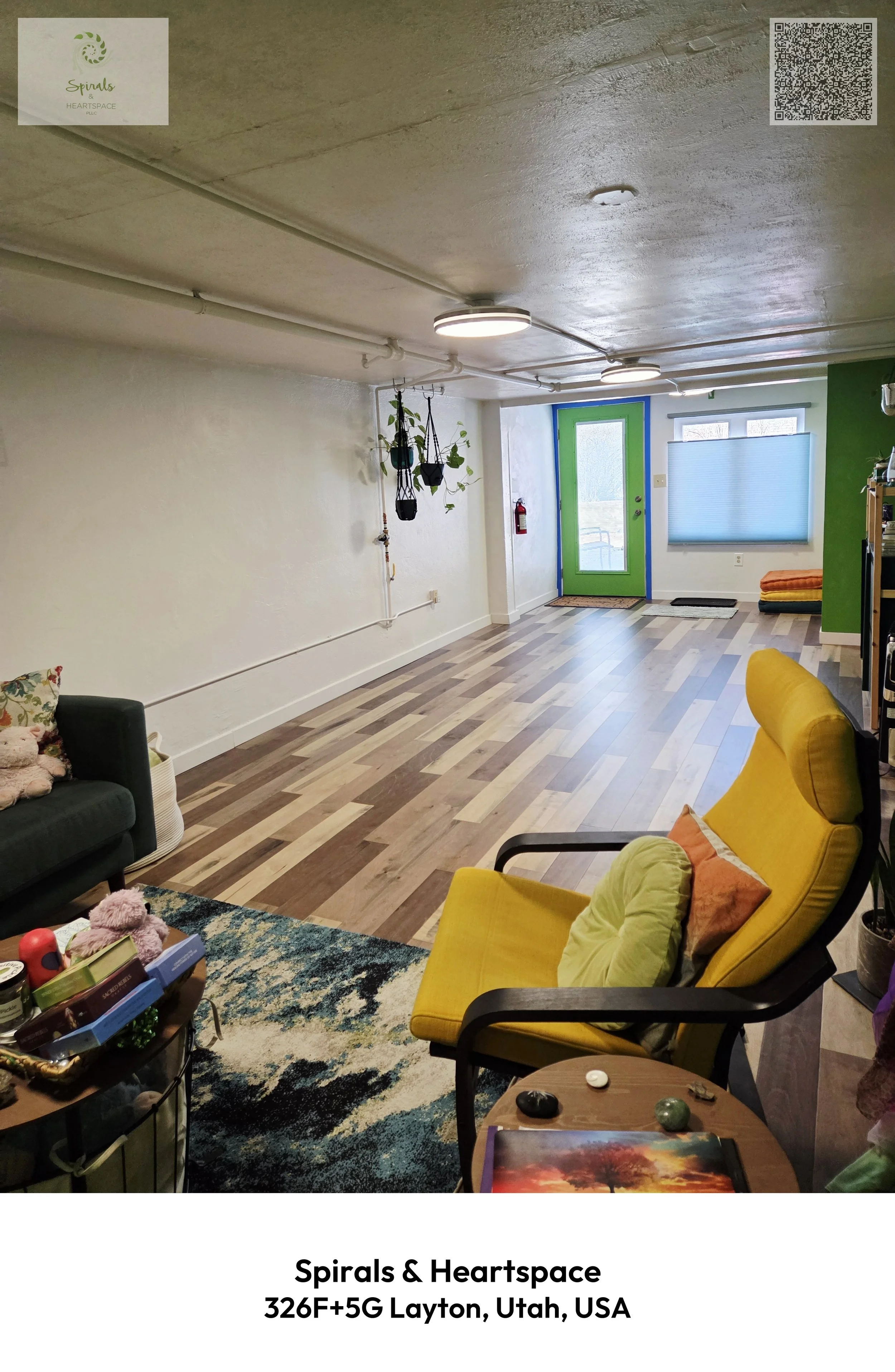
Spirals & Heartspace
Name: Spirals & Heartspace
Address: 534 W Gentile St, Layton, UT 84041
Phone: (385) 301-5252
Website: https://spiralsandheartspacehealing.com/
Hours:
Sunday: Closed
Monday: 9:30 AM – 7:00 PM
Tuesday: 9:30 AM – 7:00 PM
Wednesday: 9:30 AM – 7:00 PM
Thursday: 9:30 AM – 7:00 PM
Friday: 9:30 AM – 7:00 PM
Saturday: Closed
Open-location code / plus code: 326F+5G Layton, Utah, USA
Coordinates: 41.0604503, -111.9762128
Embed iframe:
Socials:
Instagram: https://www.instagram.com/spiralsheartspace/
LinkedIn: https://www.linkedin.com/company/spirals-and-heartspace-pllc
TikTok: https://www.tiktok.com/@spiralsheartspace
X: https://x.com/SpiralsHea61786
YouTube: https://www.youtube.com/@SpiralsHeartspace
"@context": "https://schema.org", "@type": "MedicalBusiness", "@id": "https://spiralsandheartspacehealing.com/#localbusiness", "name": "Spirals & Heartspace", "legalName": "Spirals and Heartspace, PLLC", "url": "https://spiralsandheartspacehealing.com/", "telephone": "+13853015252", "address": "@type": "PostalAddress", "streetAddress": "534 W Gentile St", "addressLocality": "Layton", "addressRegion": "UT", "postalCode": "84041", "addressCountry": "US" , "areaServed": [ "@type": "City", "name": "Layton" , "@type": "City", "name": "Kaysville" , "@type": "City", "name": "Farmington" , "@type": "City", "name": "Syracuse" , "@type": "City", "name": "Clearfield" , "@type": "City", "name": "Clinton" , "@type": "City", "name": "Roy" , "@type": "City", "name": "Ogden" , "@type": "City", "name": "Bountiful" , "@type": "AdministrativeArea", "name": "Davis County" , "@type": "State", "name": "Utah" ], "openingHoursSpecification": [ "@type": "OpeningHoursSpecification", "dayOfWeek": "Monday", "opens": "09:30", "closes": "19:00" , "@type": "OpeningHoursSpecification", "dayOfWeek": "Tuesday", "opens": "09:30", "closes": "19:00" , "@type": "OpeningHoursSpecification", "dayOfWeek": "Wednesday", "opens": "09:30", "closes": "19:00" , "@type": "OpeningHoursSpecification", "dayOfWeek": "Thursday", "opens": "09:30", "closes": "19:00" , "@type": "OpeningHoursSpecification", "dayOfWeek": "Friday", "opens": "09:30", "closes": "19:00" ], "sameAs": [ "https://www.instagram.com/spiralsheartspace/", "https://www.linkedin.com/company/spirals-and-heartspace-pllc", "https://www.tiktok.com/@spiralsheartspace", "https://x.com/SpiralsHea61786", "https://www.youtube.com/@SpiralsHeartspace" ], "geo": "@type": "GeoCoordinates", "latitude": 41.0604503, "longitude": -111.9762128 , "hasMap": "https://www.google.com/maps/place/Spirals+%26+Heartspace/@41.0604503,-111.9762128,766m/data=!3m2!1e3!4b1!4m6!3m5!1s0x875303311f1d4d1b:0xc6859e5e3fceafe2!8m2!3d41.0604503!4d-111.9762128!16s%2Fg%2F11x781dbvb"
🤖 Explore this content with AI:
💬 ChatGPT 🔍 Perplexity 🤖 Claude 🔮 Google AI Mode 🐦 Grok
Spirals & Heartspace provides somatic, trauma-focused psychotherapy from its office in Layton, Utah.
The practice is led by Ande Welling, a licensed clinical mental health counselor with training in dance/movement therapy, somatic work, EMDR, trauma care, relational neuroscience, and embodied attachment.
Listed services include therapy, coaching, consultation, authentic movement, trauma therapy, somatic therapy, grief counseling, movement therapy, and attachment therapy.
The practice serves adults who want a deeper body-aware approach to trauma, anxiety, depression, grief, burnout, self-abandonment, family patterns, and relationship wounds.
Spirals & Heartspace offers both in-person sessions in Layton and online therapy for clients in Utah.
The practice is locally positioned for clients in Layton, Kaysville, Farmington, Syracuse, Clearfield, Clinton, Roy, Ogden, Bountiful, Davis County, and nearby northern Utah communities.
The office is listed at 534 W Gentile St in Layton, with public listing hours Monday through Friday from 9:30 AM to 7:00 PM.
Prospective clients can call (385) 301-5252 or visit https://spiralsandheartspacehealing.com/ to ask about consultation options, session fit, and scheduling.
The public map listing for Spirals & Heartspace can help clients verify the Gentile Street office before planning an in-person appointment.
Popular Questions About Spirals & Heartspace
What is Spirals & Heartspace?
Spirals & Heartspace is a Layton, Utah psychotherapy and coaching practice offering somatic, trauma-focused, expressive arts, movement-based, and attachment-informed support for adults.
Who is the therapist at Spirals & Heartspace?
The official site identifies Ande Welling as the therapist, coach, movement facilitator, and guide behind Spirals & Heartspace. Listed credentials include LCMHC, BC-DMT, NCC, GL-CMA, BSE, EMDR Trained, and CCTP-II.
Where is Spirals & Heartspace located?
The matching public listing and LinkedIn profile list the address as 534 W Gentile St, Layton, UT 84041.
Does Spirals & Heartspace offer online therapy?
Yes. The official FAQ states that therapy is available in person or through a HIPAA-compliant telehealth platform for clients who live in Utah.
What services does Spirals & Heartspace provide?
Listed services include therapy, coaching, consultation, authentic movement, trauma therapy, somatic therapy, grief counseling, movement therapy, and attachment therapy.
What makes somatic therapy different from traditional talk therapy?
The official Layton page explains that somatic therapy works with body sensations, movement, and physical experience because trauma and emotional patterns can be held in the nervous system, not only in thoughts.
Do clients need dance experience for movement therapy?
No. The official Layton FAQ says no dance training or special physical ability is required, and that movement therapy uses a client’s natural capacity for movement to access emotions and process experiences.
Does Spirals & Heartspace accept insurance?
The official FAQ says the practice does not take insurance directly, but may provide superbills or bill for out-of-network benefits when applicable. Clients should confirm current reimbursement options directly before scheduling.
What are Spirals & Heartspace’s listed hours?
The matching public listing shows Monday through Friday from 9:30 AM to 7:00 PM, with Saturday and Sunday closed. Appointment availability should be confirmed directly.
How can I contact Spirals & Heartspace?
Call (385) 301-5252, visit https://spiralsandheartspacehealing.com/, or use the listed social profiles: https://www.instagram.com/spiralsheartspace/, https://www.linkedin.com/company/spirals-and-heartspace-pllc, https://www.tiktok.com/@spiralsheartspace, https://x.com/SpiralsHea61786, and https://www.youtube.com/@SpiralsHeartspace.
Landmarks Near Layton, UT
Spirals & Heartspace is located on West Gentile Street in Layton, Utah, with in-person therapy available locally and online therapy available for Utah residents. Clients near these landmarks can call (385) 301-5252 or visit https://spiralsandheartspacehealing.com/ to ask about somatic therapy, trauma therapy, movement therapy, grief counseling, attachment therapy, and consultation options.
- 534 W Gentile St — The listed office address for Spirals & Heartspace; clients can use the map listing to verify the office before visiting.
- West Gentile Street — The local street connected with the practice’s Layton office location.
- Downtown Layton — A practical local reference point for clients navigating central Layton.
- Layton Hills Mall — A major Layton shopping landmark and useful orientation point for clients traveling through the city.
- Interstate 15 near Layton — A major northern Utah route that helps clients reach Layton from nearby Davis County communities.
- Layton FrontRunner Station — A transit landmark for clients traveling by commuter rail through Davis County.
- Ellison Park — A local park and community landmark in Layton.
- Great Salt Lake Shorelands Preserve — A major natural landmark west of Layton and a recognizable Davis County destination.
- Hill Air Force Base — A major regional landmark near Layton and Clearfield.
- Kaysville — A nearby Davis County city listed in the practice’s surrounding service area.
- Farmington — A nearby Davis County community included in the broader local service-area language.
- Ogden — A nearby northern Utah city; clients can ask whether online Utah therapy or in-person Layton sessions are the best fit.