Irreversible LED Illumination Installment for House That Want Subtle, Spectacular Illumination
A well-lit home has a means of altering just how a building really feels long previously any individual reaches the front door. The appropriate outside lighting can hone building lines, soften dark edges, and make a residence appearance took care of without calling attention to the components themselves. That is why more property owners are looking beyond short-term hairs and seasonal configurations and purchasing Permanent LED Lights Installation that works every night of the year.
What attracts many individuals in is not the holiday angle, at least not at first. It is the pledge of control, uniformity, and restriction. You can have a home that glows delicately on a common Tuesday in February, moves to an inviting pattern for a yard supper in June, and transforms cheery in December without climbing a ladder once. When the system is developed well, it does not yell for focus. It merely makes the house look better.
That distinction issues. There is a huge distinction in between illumination that embellishes and illumination that boosts. Irreversible systems can do both, yet the most effective jobs begin with the 2nd goal.
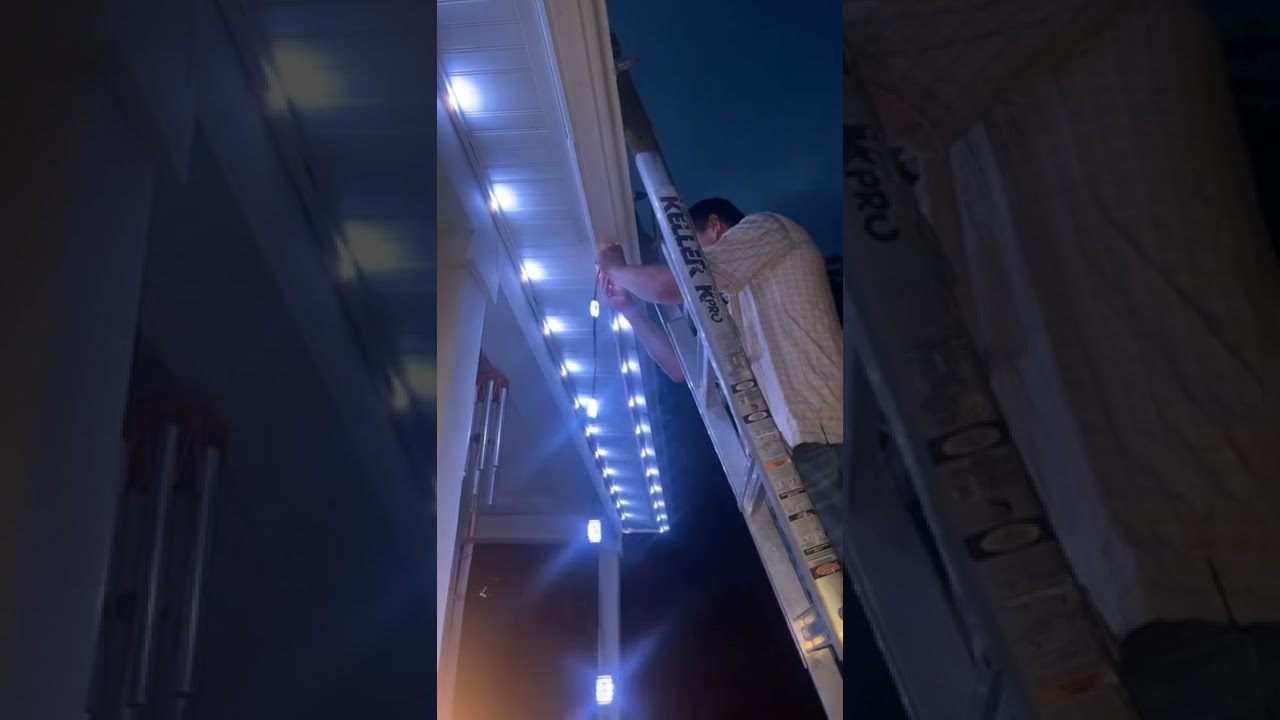
Why refined illumination is more difficult than it looks
The phrase "refined exterior illumination" appears basic until you attempt to achieve it. Most home owners have seen the opposite done severely: harsh identifies under every eave, dissimilar colors, hotspots over garage doors, and enough brightness to make a home appearance squashed as opposed to dimensional. Exterior illumination is very easy to overdo due to the fact that LEDs are efficient, small, and brilliant. As well intense, in many cases.
The most successful installations tend to borrow from landscape illumination principles. Rather than asking, "Just how much light can we add?" The far better inquiry is, "What should the eye notice after dark?" On a craftsman-style house, that could be the roofline and access columns. On a modern-day home, it could be the clean geometry along the fascia and soffits. On a block colonial, the target is often a warm perimeter that maintains the home's symmetry as opposed to transforming each architectural element right into its own little spotlight.
This is where Long-term Vacation Lights have matured in a valuable means. Early systems usually leaned greatly into color-changing novelty. Newer, better systems can absolutely do animated holiday scenes, but they additionally provide polished white tones, dimming control, zoning, and scheduling that make them sensible as day-to-day building lighting. For several homes, the most-used setup is not red and environment-friendly in December. It is a low-output, warm white setup at 20 to 40 percent illumination for the various other eleven months.
I have seen home owners think twice since they visualize a permanent system as aesthetically evident in daytime. That concern is valid, and it should be addressed prior to anything is set up. The most effective installments go away. Track color should closely match the soffit or fascia. Wire runs ought to be hidden. Component spacing ought to adhere to the roofline easily as opposed to compeling uncomfortable gaps. If you can stand at the aesthetic at noontime and barely observe the system, that is generally a good sign.
The instance for permanent over temporary
Anyone that has mounted typical vacation lights greater than two times recognizes the routine. Disentangling cords in the garage. Replacing dead light bulbs. Fighting clips that snap in the cold. Staring at a high roofline while making believe the ladder angle is safe enough. Then doing the whole point again backwards a few weeks later.
Permanent systems fix that noticeable migraine, but benefit is just one component of the story. The bigger advantage is reliability paired with layout flexibility. Once the lights are installed and configured, the house acquires an illumination layer that can be made use of for holidays, events, video game days, events, protection, and daily aesthetic appeal. That implies one financial investment offers numerous purposes as opposed to sitting idle a lot of the year.
There is also a price conversation worth having honestly. An Irreversible LED Lights Setup is not economical compared to buying a couple of boxes of short-lived lights at a big-box shop. Relying on the size of the house, roofing intricacy, control system, access, and whether the task consists of garage lines, optimals, gables, and rear elevations, prices can vary from a couple of thousand dollars into the low 5 numbers. That claimed, many homeowners underestimate what they already spend in time on substitute strings, clips, storage space bathtubs, extension cables, timers, and occasional labor. More importantly, they often tend to neglect the price of time and threat. A high second-story roof is not the location to save money with a DIY compromise.
When people say permanent lighting "spends for itself," I usually press back on the expression. Not every exterior upgrade needs a stringent monetary return. This is frequently extra concerning reducing problem, enhancing appearance, and obtaining consistent usage from a system that adapts to the family. If you are the type of house owner who values an orderly outside and makes use of outside spaces commonly, the return tends to feel noticeable also if it never fits neatly into a spreadsheet.
Warm light generally wins
Color-changing capacity gets the advertising attention, yet Standard Cozy Soft Lighting are what make a permanent system feel stylish. On many homes, especially those with rock, brick, timber accents, or warmer paint colors, a soft white in the 2200K to 3000K range looks richer and extra welcoming than a trendy white. It flatters structure. It produces deepness. It makes entranceways feel populated rather than showroom-bright.
Cooler whites can work on some modern homes with crisp finishes, yet also after that, excessive blue in the shade temperature can make the façade feel sterile. Warm light tends to mature much better aesthetically. It likewise blends more naturally with indoor light spilling via windows, patio sconces, and landscape lighting.
Brightness matters just as much as shade temperature. I frequently tell house owners that if they can clearly see each and every single diode from the road, the system is probably too bright for daily use. Irreversible illumination needs to commonly be dimmed for routine evening operation. Save the full strength for celebrations or when you want a more noticeable effect.
An installer with profundity will not simply ask what shades you like. They will certainly ask how you live. Do you amuse outdoors? Do you desire your house to really feel welcoming from the driveway but not control the block? Is your area dark and quiet, or brightly lit with great deals of seasonal screens? Those solutions shape the appropriate settings even more than a brochure full of shade options.
Where the system should go, and where it ought to not
Roofline lights is the noticeable beginning point, yet not every side of a house requires lighting. In fact, over-lighting is one of the simplest means to make a premium system look inexpensive. The goal is to create intentional lines, not map every possible perimeter.
Front elevations generally are entitled to the most interest because that is where the home's identification rests. Key rooflines, front-facing gables, deck sections, and garage lays out are common candidates. Back elevations depend on how the yard is used. If there is a patio area, pool area, or outdoor cooking area, adding zones to the rear of your house can make good sense. If the back is mostly concealed and rarely made use of after dark, the return might be limited.
Eaves and soffits are prominent placing places because they conceal components well and create a downward clean or controlled factor result depending upon the product. Fascia installments can function also, yet the details issue. You desire sightlines, spacing, and attachment approaches that look calculated in daytime and clean at night.
Some rooflines deal with the idea. Very luxuriant trim, greatly disturbed lines, or surfaces with poor mounting gain access to can produce unpleasant shifts. Tall tops might require customized lifts or include labor that transforms the economics of the project. Historical homes likewise are worthy of extra treatment. An irreversible system can enhance an older home perfectly, yet just if the installation appreciates the design and does not leave noticeable plastic tracks where they do not belong.
The innovation behind a polished result
Not all irreversible systems are constructed the exact same. The noticeable impact relies on a number of technical choices that homeowners rarely see in advertisements.
LED thickness and spacing determine whether the light checks out as a dotted pattern or a more unified building line. Closer spacing offers more control and commonly a cleaner appearance, yet it can elevate price. Lens design impacts spread and glare. Private addressability matters if you desire animated scenes or exact shade areas. Lowering high quality matters if you appreciate warm, understated every night usage. App design matters since an effective system ends up being bothersome fast if setting it seems like running industrial equipment.
Power distribution additionally should have attention. Longer runs, bigger homes, and complex rooflines may need clever planning around voltage drop, control positioning, and injection factors. This is one factor professional installment issues. A system that looks penalty on day one however establishes irregular illumination, shade drift, or unreliable sections later on was not really "great" at all. It was under-engineered.
Weather resistance is one more location where the information matter. Exterior-rated components ought to be standard, but rankings alone do not assure a durable install. I focus on just how connectors are shielded, exactly how infiltrations are secured, just how low-voltage lines are directed, and whether the installing surface area can handle seasonal growth and tightening. Freeze-thaw cycles, wind, straight sun, and motoring rain reveal weak craftsmanship quickly.
What a good installation process really looks like
A brightened result begins prior to anybody opens up a ladder. The installer must examine the home from numerous angles, not simply stand in the driveway and provide a ballpark figure. They ought to consider roof covering elevation, access, fascia problem, offered power, existing outside lights, and locations where the system can hide naturally.
Good business typically simulated up portions of the roofline digitally or a minimum of talk with most likely zones and make use of instances in useful terms. That matters due to the fact that property owners usually assume they want optimal protection till they see just how much cleaner a discerning layout can look. Even more illumination is not automatically much better lighting.
On installment day, neatness matters. Tracks or channels ought to run straight and true. Corners need to be handled with care rather than forced. Control boxes should be put where they are shielded and functional. Wire monitoring must not look like an afterthought. If the staff leaves a residence with perfect nighttime photos yet messy daytime details, the task was just half done.
Programming is the other fifty percent of the handoff. A permanent system is only useful if the homeowner can in fact utilize it. I like to see a couple of prefabricated scenes established prior to the team leaves: a daily cozy white, a weekend break entertaining mode, a vacation preset, and maybe a low late-night setup. If the app is filled with dozens of confusing effects but none of the practical everyday scenes are developed, the system typically goes underused.
Questions worth asking prior to you employ anyone
The most convenient means to detect a weak installer is to ask practical concerns and listen for obscure solutions. You do not require to come to be an illumination engineer, however you do need to recognize how the company thinks.
How visible will the track and wiring be during the day? What cozy white array does the system offer, and exactly how well does it dim? How are long runs powered to prevent irregular brightness? What does the guarantee cover, labor included or parts only? Can the system be serviced or expanded later on without changing everything?
The answers need to seem specific, not practiced. A strong installer can explain compromises plainly. They need to fit talking about look in daytime, not just application attributes and holiday animations.
Matching the lights style to the house
One of the most common blunders in outside lights is selecting impacts that compete with the home's style. A home with conventional lines, shutters, and mature landscaping hardly ever gain from hostile activity patterns or overly saturated shade as an everyday setup. It generally looks much better with mild, cozy perimeter lighting. A minimalist modern home might carry a cleaner white line or careful accent color much more comfortably, but even there, small amounts often tends to age better.
Neighborhood context matters too. In some areas, strong holiday displays become part of the regional society, and a programmable roofline fits right in. In quieter areas, a polished appearance has more staying power. The best irreversible systems allow home owners take part in the joyful side when they wish to, after that return your home to something made up and stylish the remainder of the year.
I remember one house owner who originally desired every roofing side, dormer, and rear line lit due to the fact that he had seen an on the internet video clip full of remarkable impacts. After a brief mockup, he changed direction entirely. We focused on the primary front roofline, the veranda return, and the garage framing. Then we set a day-to-day scene with cozy white at low output. The outcome made the home look much more pricey, not extra enhanced. A month later on he said the shock was exactly how frequently they made use of the lights outside the holidays. His family liked drawing right into a softly lit house every night. That sort of remark turns up often.
Maintenance is light, not nonexistent
One selling factor of Irreversible Holiday Lights is lowered upkeep, and that is mostly true. However "long-term" does not imply "never ever requires attention." Outside systems reside in severe conditions. Components age. Apps upgrade. Trees become sightlines. Gutter job or roofing system replacement might require short-lived coordination.
The good information is that regular maintenance is generally small if the original installment was strong. Most house owners mostly need to inspect that timetables still align with seasonal sundown adjustments, verify the app continues to be connected after network updates, and periodically clean visible dust or particles from available components if accumulation affects appearance.
A couple of sensible routines aid expand the life of Website link the system:
Keep tree branches from scrubing against tracks or wiring. Test key scenes a few weeks prior to major holidays. Notify roofing professionals, painters, and seamless gutter staffs that lights is installed. Save app credentials and scene setups someplace secure. Ask the installer just how service telephone calls are managed before you require one.
That is about as demanding as it gets for many homes. Compared with the annual ritual of hanging and eliminating temporary strands, the distinction is significant.
Energy use and operating costs
Homeowners commonly presume a huge irreversible illumination system need to consume a noticeable quantity of power every night. In method, LED performance maintains prices relatively moderate, especially when the system is performed at lower illumination for regular use. Real energy consumption depends on the number of nodes, brightness level, color choice, control layout, and nighttime schedule, however lots of homes can run a day-to-day cozy white scene for less than people expect.
Colorful computer animated scenes, complete illumination vacation display screens, and all-night procedure will certainly increase usage, certainly. So will covering every altitude of a big home. Still, modern-day LED systems remain a lot more efficient than older incandescent holiday illumination. The bigger price vehicle driver is usually installation, not month-to-month electricity.
This is another reason subtle lighting is so enticing. A controlled, cozy, dimmed setup not only looks much better on many houses, it usually utilizes less energy too. Excellent layout and efficiency often point in the same direction.
When long-term illumination is not the ideal move
For all their benefits, long-term systems are not widely ideal. If a homeowner enjoys altering décor designs every season and appreciates the routine of mounting specialty design by hand, irreversible roofline lights may not change that experience. If your home schedules for major exterior restorations, roof substitute, or fascia repair service in the future, it might be smarter to wait and incorporate the illumination later. If the home's design uses few clean placing possibilities and the installer can not hide the system properly, the daytime look may not justify the investment.
Budget is one more sincere limiter. If the choice is in between a well-done partial installation and a stretched, endangered full-house setup, I would certainly almost always pick the partial. Start with the front elevation where the visual impact is greatest. Increase later if the system enables. A controlled initial phase generally looks far better than a sprawling project that exceeds the spending plan and cuts corners on product high quality or workmanship.
The ideal results feel inevitable
That may seem like an unusual standard for lighting, however it is the one I come back to. When a Long-term LED Lights Installation is done extremely well, it really feels as though your home was always meant to look in this way after dark. The fixtures vanish. The illumination feels measured. The cozy tone flatters products rather than bleaching them. Holiday scenes end up being a choice, not the whole identification of the system.
That is why refined, stunning illumination has become the benchmark. Property owners are not simply acquiring lights. They are getting control over state of mind, presence, and visual appeal, night after night, period after season. The strongest projects value the style, account for day-to-day live, and focus on Traditional Warm Soft Lights as much as cheery shade. They make a home look even more inviting on a common evening, which is where a lot of life really happens.
If that is the objective, long-term lights can be among the most enjoyable outside upgrades a homeowner makes. Not due to the fact that it is showy, yet because it quietly boosts the way the home is seen and really felt, every time the sun goes down.