The Retention Obsession: Why Entertainment Tech Can’t Stop Chasing You
I spend about six hours a day testing apps on my phone. Not because I’m a digital glutton, but because that’s where the fight for your attention is won or lost. If a new entertainment platform can’t survive a subway commute while I’m holding a lukewarm coffee in one hand, it isn’t going to survive the week. I’ve seen hundreds of startups pitch me on "the future of streaming," and they almost always lead with the same buzzword-heavy slide deck about how they’re going to disrupt the market. They rarely talk about the dirty work of keeping a user coming back after the novelty wears off.
Entertainment companies aren't just obsessed with user retention because it looks good on a quarterly earnings call. They are obsessed because the cost of customer acquisition (CAC) has hit an astronomical ceiling. When you spend $50 to acquire a user who leaves after three days, you aren’t running a business—you’re running a bonfire.
The Mobile-First Reality Check
Here is my first rule of product design: If it wasn't built for a 6-inch screen, it isn't ready for 2024. Too many platforms still try to cram desktop-era workflows onto mobile devices. They treat the phone as a secondary screen, but for the average user, the phone is the *only* screen.
When I test these platforms, I’m looking for one thing: friction. If I have to tap four times to find the live feed, you’ve already lost me. Platform design in the modern era is about reducing the distance between the "open" icon and the "wow" moment. The companies winning at retention today are the ones that prioritize thumb-friendly UI and immediate context—meaning I know exactly what I’m watching and why I should care within three seconds of launch.
Why Mobile Matters
Contextual Awareness: Your phone knows where you are and what you’re likely doing. Good platforms use this to suggest relevant content. Input Speed: Mobile users have shorter attention spans. If your onboarding is a five-page form, you’re losing 80% of your audience before they start. Notification Latency: Push notifications aren't just pings; they are the lifeline of continuous engagement.
Streaming Culture and the Death of Passive Consumption
Ten years ago, we talked about "appointment viewing." Now, we talk about "continuous loops." Streaming culture has fundamentally shifted the product design philosophy from "provide a library" to "facilitate a hangout."
Look at the success of platforms like Twitch or even the livestreaming features baked into TikTok and YouTube. The entertainment isn't just the video anymore; the entertainment is the *presence* of other people watching it with you. If you remove the chat, the sidebar, and the live reaction metrics, these platforms become boring archives. Retention is no longer about the content quality alone; it’s about the community you’ve built around that content.
The Comparison of Eras
Feature Legacy Media Modern Streaming Primary Goal Content Delivery Community Interaction User Feedback Delayed (Ratings/Sales) Instant (Chat/Polls) Engagement Model Passive Participatory Retention Driver Library Size Social Presence
Real-Time Interaction: The New Baseline
I'll be honest with you: if you aren't integrating real-time interactivity, you’re just a glorified cable channel. I’ve interviewed product leads who tell me, "We’re using AI to curate personalized recommendations to keep users hooked." That’s fine, but let’s be honest: that’s not magic, it’s just better metadata management. What actually keeps users coming back is agency.
Real-time interaction turns a viewer into a participant. Whether it’s a streamer polling the audience on their next move in a game, or a live event where the chat can trigger physical props in the studio, the user needs to feel like they are *doing* something. If they aren't part of the experience, they are just waiting for a better offer from a competitor.

My Running List of Annoying UX Friction Points
I keep a "Wall of Shame" for platforms that make my job (and your experience) miserable. These are the things that kill retention faster than bad content:
The "Forced Sign-Up" Wall: Asking for my email before I’ve seen a single frame of content. If you aren't confident enough in your product to show me what it is first, I’m out. Over-Animated Loaders: I don’t need a 3-second branded animation every time I change screens. It’s a vanity project for designers that wastes my time. The "Magic AI" Lie: Don’t tell me your app is "AI-powered" without explaining how it saves me a click. Is it autocompleting my search? Is it summarizing the last 10 minutes of a show? If it doesn't change the UI, don't mention it. Confusing Navigation Hierarchies: If I can’t find the "back" button or the "home" icon easily, the developer has failed.
Immersion Through Chat and Social Presence
Immersion isn't just about 4K resolution or spatial audio. Immersion is the feeling that you are "there." When a platform builds a seamless chat interface that overlay-renders over the video without blocking the action, they are building a digital living room.
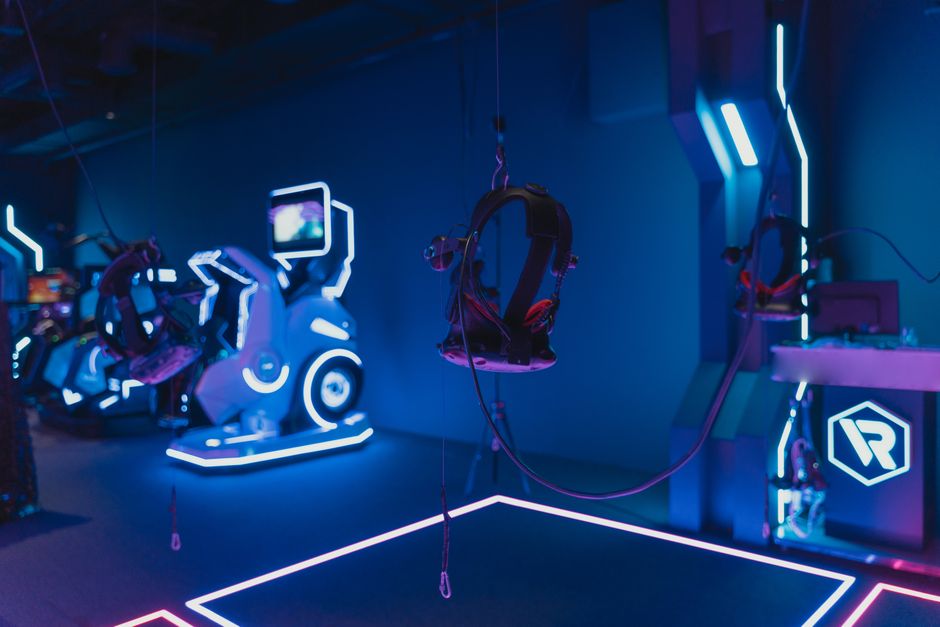
This social presence acts as a retention anchor. When I’m watching a live event, I’m not just watching the feed; I’m watching how the community reacts to the feed. I stay because I want to see the "LOLs" in the chat when something goes wrong. I stay because I want to be part of the collective experience. When you design for social, you’re designing for loyalty. It’s hard to leave a group of friends, even if the show itself is mediocre.
The Future? No More Promises, Just Better Design
Everyone wants to sell you the mobile-first entertainment market share "Metaverse" or "Generative Content Streams." But here is the reality: the future of retention isn't some high-concept virtual reality. It’s better, cleaner, faster mobile interfaces that respect the user’s time.
Companies that want to survive need to stop worrying about being "the future" and start worrying about being "useful today." Every button press you remove, every millisecond of latency you shave off, and every social feature that makes the user feel included is a win. We don’t need magic algorithms that promise to Click for source know us better than we know ourselves. We need platforms that get out of the way and let the entertainment—and the community—do the heavy lifting.
If you're building a product today, my advice is simple: take your phone, go to a park, sit on a bench with bad Wi-Fi, and try to use your app for ten minutes. If you find yourself wanting to throw the phone into the grass, you know exactly where your retention issues are. Fix the friction, and the users will stay.