Why do traditional healthcare systems feel so slow and fragmented?
If you have ever spent a Tuesday morning waiting in a GP reception area, clutching a referral letter that took three weeks to arrive, you have experienced the core tension of modern healthcare: the clash between 21st-century patient expectations and 20th-century operational infrastructure.
As someone who has spent the last eight years working in the trenches of UK healthtech—from supporting NHS patient portal rollouts to building digital infrastructure for private specialist clinics—I hear the same frustrations every day. It isn't that the clinical expertise isn't there. It is that the fragmented communication in healthcare acts as a persistent barrier to the very care that patients are trying to access.
The Anatomy of Fragmentation
Why does it take so long to move a record from Point A to Point B? Historically, the UK healthcare system was built on siloed data. Your GP has a system, the local hospital trust has another, and your pharmacy often relies on a third. When these systems don't talk to each other, the patient becomes the "data carrier." You become the one who has to remember your medical history, repeat your medications, and carry the physical paperwork between specialists.
These repetitive paperwork problems are not just a nuisance; they are a clinical risk. When information is lost in the gaps between these silos, the likelihood of medication errors increases, and the long waiting periods in the NHS are exacerbated by the administrative time spent chasing records that should be available at the click of a button.
The Shift Toward Telehealth Normalization
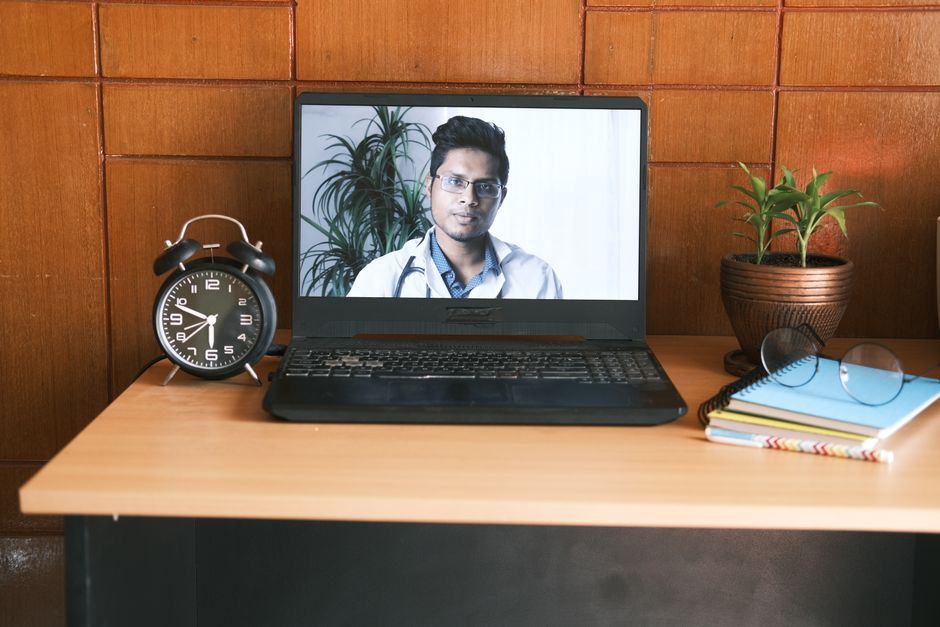
The pandemic forced a rapid digitization of the consultation process, moving from "nice-to-have" to "essential." Telehealth has moved from a novelty to a standard feature of care delivery. However, putting a video call at the front of a fragmented system doesn't fix the underlying issue. If the video call is just a digital version of a disconnected meeting, we haven't actually moved forward.
True telehealth normalization isn't just about Zoom calls with clinicians; it is about interoperability. It is about the ability for a specialist to see your GP record in real-time, order tests, and have those results flow back to your GP without you having to print a PDF or visit an office to pick up a lab result.
Case Study: The Medical Cannabis Patient Journey in 2026
Nowhere is the friction between modern medicine and antiquated systems more visible than in the medical cannabis space. When patients seek specialized treatments—specifically those governed by clinical guidance such as NICE NG144—they are often entering a landscape that is still learning how to integrate with traditional primary care.
In 2026, the gold-standard patient journey shouldn't be a maze of physical referrals and faxed prescriptions. It should be a seamless, data-driven flow. Let’s look at how the legacy model compares to the modern, tech-forward approach:
Stage Legacy Paper-Based System Modern Digitized System (2026) Eligibility Screening Phone calls to clinics, waiting for callbacks. Secure, automated screening questionnaire with instant clinical review. Record Sharing Patient physically collects/posts medical records. Integrated patient portal with GP record summary sharing. Consultation Physical visit, notes written by hand. Telehealth with EMR-integrated clinical decision support. Pharmacy Integration Paper FP10 forms, pharmacy delays. Direct electronic prescription transmission to specialist pharmacy.
The Role of Eligibility Research
One of the biggest friction points I see in healthtech platforms is the "Eligibility Questionnaire." When done correctly, it is a tool for patient safety and clinical efficiency. When done poorly, it feels like a barrier to entry designed to exclude people.
For medical cannabis or any specialized treatment, the screening questionnaire must be transparent. If a patient doesn't meet the criteria set out in NICE NG144, they should be told early and clearly why. The current "black hole" of waiting for a manual review is where the patient experience breaks down. By automating the initial eligibility screen using evidence-based clinical rules, we remove the anxiety of the "unknown wait" and provide immediate, actionable feedback.

Addressing Friction Points: A Checklist for Healthtech
If you are building or buying into a digital health service, look for these indicators of a frictionless system. If you don't see them, ask why:
Single Sign-On (SSO) and Secure Identity: Do I have to re-verify my ID for every single interaction? Data Interoperability: Does this platform talk to my existing GP records, or am I manually inputting data that already exists elsewhere? Transparency on Outcomes: Does the platform overpromise? Steer clear of any service that implies "miracle" outcomes. Real healthcare is evidence-based and measured in incremental improvements. Clear Next Steps: After every form or interaction, is the path forward explicitly stated? "You will hear from us in 48 hours" is infinitely better than "We will be in touch."
The Future: Integration Over Disruption
There is a lot of talk in the healthtech sector about "disrupting" the NHS. Honestly? I’m tired of that https://smoothdecorator.com/why-digital-first-clinics-feel-less-stressful-than-traditional-appointments/ word. We don't need disruption; we need integration. The NHS is not a monolith that needs to be broken; it is a vital system that needs better "connective tissue."
Fragmented communication in healthcare is solved by building APIs that allow data to move securely between private telehealth providers and the public sector. It is solved by moving away from fax machines and toward secure electronic health record (EHR) exchanges. It is solved by respecting the patient’s time by eliminating redundant paperwork.
As we move further into 2026, the platforms that win will not be the ones with the most "innovative" branding or the flashiest mobile apps. They will be the ones that quietly and reliably handle the back-end complexity, ensuring that when a patient talks to a doctor—whether in person or over a screen—that doctor already knows what they need to know.
The technology exists. The regulations (like NICE guidelines) are there to keep us safe. Now, we just need to ensure the implementation focuses on removing the friction that has plagued patients for far too long.