Fotona 4D Laser Facial (TimeWalker) for Healthy, Vibrant Skin
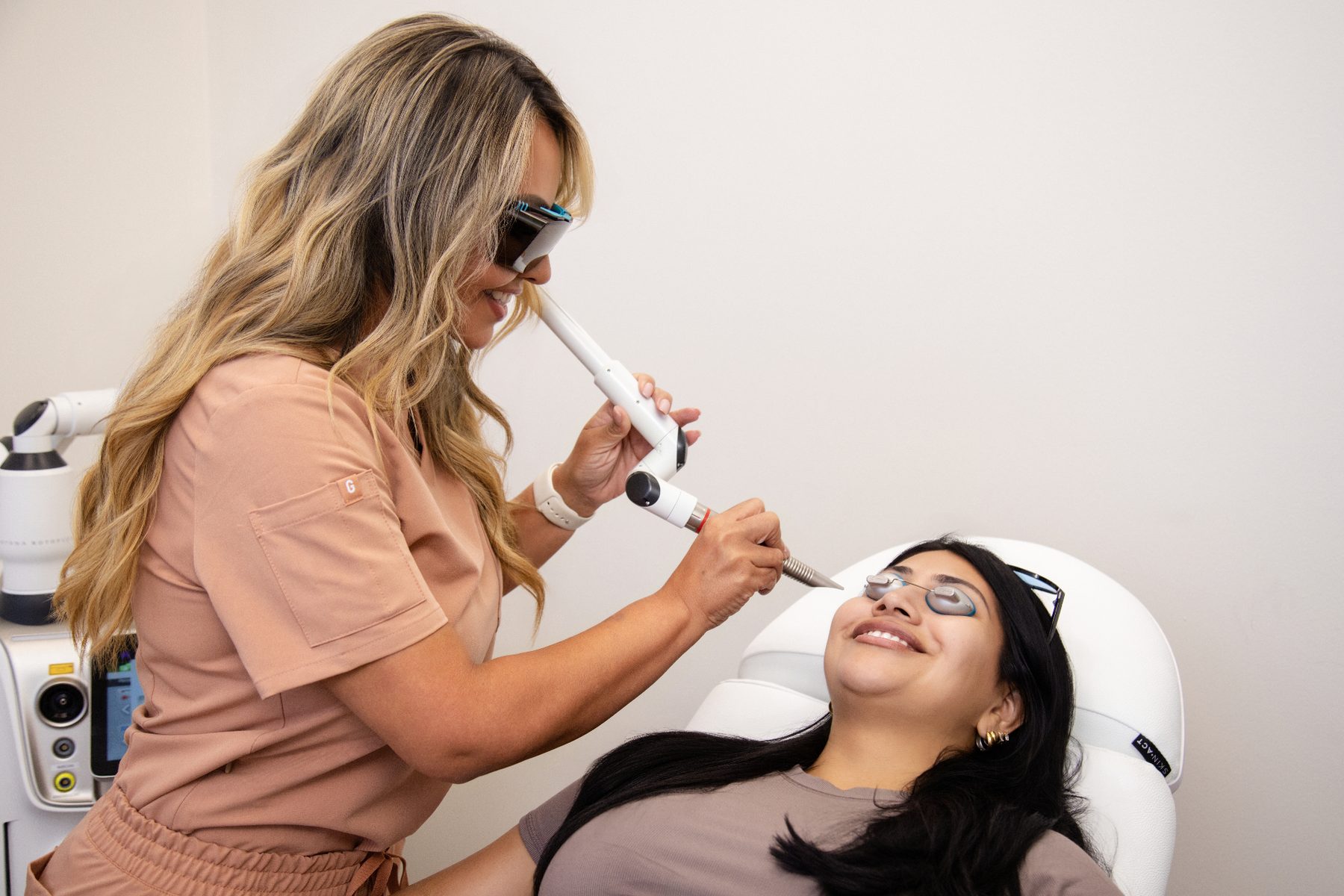
Healthy skin rarely comes down to a single issue. Most people who sit in a treatment chair are not dealing with just one concern, such as pigment or one crease at the corner of the mouth. They are noticing a mix of things that arrive gradually, then seem to become visible all at once: dullness, skin laxity, enlarged pores, a softer jawline, etched lines around the lips, uneven texture, and that tired look that no concealer fully fixes.
That is where the appeal of the Fotona 4D Laser Facial (TimeWalker) becomes clear. It is designed as a layered treatment rather than a one-note procedure. Instead of treating only the skin surface, it works across different depths and tissue targets. In practice, that matters. Skin aging is a structural process, not just a surface event. If you only polish the top layer, you may get glow, but not much tightening. If you only heat the deeper layers, you may gain firmness, but still carry rough texture and fine lines. A more complete plan tries to address both.
The TimeWalker platform has become closely associated with this kind of multi-dimensional rejuvenation. In experienced hands, it can improve radiance, support collagen remodeling, soften early laxity, and refine the look of the skin without surgery and usually without the downtime many people associate with more aggressive resurfacing. That said, the treatment is not magic, and it is not the same for every face. Results depend on skin quality, age, degree of laxity, treatment settings, and the skill of the practitioner.
What the treatment actually is
Fotona 4D is a protocol built around two laser wavelengths commonly used in aesthetic medicine: Er:YAG and Nd:YAG. On the TimeWalker system, these are used in a sequence that targets the inside of the mouth, the deeper dermis, and the skin surface. The term "4D" refers to four treatment modes or steps, each contributing something different.
One of the reasons patients find this treatment interesting is that it includes an intraoral step. That means part of the procedure is performed from inside the mouth, typically along the cheeks and around the perioral region. For the right patient, this can help support tissue in an area that often shows age early, especially around the nasolabial folds and marionette region. It sounds more dramatic than it usually feels, but it is certainly different from a standard facial.
Clinically, the value of the protocol is not just that there are four steps. Plenty of treatments stack multiple technologies. The value is that the sequence is coherent. Each stage prepares, stimulates, or refines in a way that builds on the prior one. When the plan is customized properly, the skin can look brighter and fresher fairly quickly, while firmer, more structural changes continue to develop over the next several weeks or months.
Why TimeWalker stands out in a crowded category
There are many treatments marketed as laser facials, and they vary enormously. Some are little more than a mild lunchtime polish. Others are fractional resurfacing sessions with real downtime. TimeWalker sits in a useful middle space. It can be gentle enough for patients who want minimal interruption to daily life, yet substantial enough to create visible improvement beyond a temporary glow.
In day-to-day aesthetic practice, the most satisfied patients are usually the ones who understand that this is a collagen-focused treatment, not a one-day transformation. They often say the same thing in slightly different words: their face looks more rested, skin seems tighter around the mouth and lower face, makeup sits better, and they no longer feel the need to chase brightness with exfoliating products every few days.
That combination is hard to achieve with a single superficial treatment. Skin vitality has layers to it. A face that looks healthy and vibrant usually shows a few things at once: smooth light reflection, even tone, resilient texture, and enough underlying support that the contours still read as fresh. TimeWalker aims at that broader picture.
The four layers, and what each one contributes
The names of the steps can sound technical, but the underlying idea is straightforward. One mode tightens from inside, one targets deeper imperfections, one gently heats tissue more broadly, and one renews the surface.
SmoothLiftin is the intraoral Er:YAG step. From a practical standpoint, this is one of the more distinctive parts of the Fotona 4D Laser Facial (TimeWalker). The laser is applied inside the mouth to stimulate collagen contraction and remodeling in the tissue that supports the lower face and perioral area. For patients with early lines around the lips or mild sagging in the smile lines, this can be especially useful. It does not replace fillers or surgery when volume loss or laxity is advanced, but it can create a subtle tightening effect that reads as natural.
FRAC3 is generally used to target deeper imperfections with a fractional approach. Depending on the skin and settings, this can help with texture irregularities, enlarged pores, and certain signs of photoaging. I have seen this be particularly valuable for patients whose skin has become a bit rough or uneven, even if they are not ready for more aggressive resurfacing.
PIANO is a deeper bulk-heating mode using Nd:YAG technology. This step aims to raise tissue temperature safely over a broader area, encouraging collagen stimulation in deeper layers. Patients often describe this part as a warm sensation rather than sharp discomfort. From a tissue response standpoint, controlled heat matters because collagen remodeling is not just about abrasion or exfoliation. It is also about signaling the skin to rebuild.
SupErficial is the finishing Er:YAG polish. This is the step that can help with surface refinement, brightness, and that fresher appearance people often notice soon after treatment. It is not identical to a traditional ablative resurfacing session. In many protocols, it is comparatively light, intended to improve glow and superficial texture without pushing downtime too far.
Together, these steps create a treatment that is more comprehensive than a standard one-pass laser session. That does not mean every patient receives the exact same sequence with the same intensity. In a thoughtful practice, settings are adjusted based on age, skin thickness, sensitivity, rosacea tendency, pigmentation history, and the true goal of the session.
What treatment day feels like
The first thing most patients want to know is whether it hurts. The honest answer is that comfort varies. Many people tolerate the procedure well with topical numbing, especially when the settings are conservative to moderate. The intraoral portion feels unusual more than painful. Surface passes can create warmth and a prickly sensation. The deeper heating step tends to feel like sustained heat.
If you have had stronger fractional lasers before, this treatment may feel comparatively manageable. If your only frame of reference is a hydrafacial or a light peel, it will feel more medical and more active than that. Both expectations exist in the same market, which is why clear counseling matters.
A typical appointment may run anywhere from about 45 minutes to 90 minutes depending on whether the neck is included, how much numbing is used, and how customized the treatment is. You may leave pink, warm, and slightly puffy, especially around the mouth. Some patients look presentable the same day with a little strategic timing, while others prefer a day or two of social caution.
One practical note that often gets overlooked: if you are prone to cold sores and the perioral area is being treated, your provider may discuss prophylactic antiviral medication. That is not unique to this treatment, but it is a real-world detail that matters.
The kind of person who tends to do well with it
The strongest candidates are usually patients with mild to moderate signs of aging who want visible improvement without surgery and without the downtime of aggressive resurfacing. They may be in their thirties, forties, fifties, or beyond, but age is less important than tissue quality and expectations.
A patient in the early forties with slight lower-face laxity, early lip lines, and generally healthy skin can do very well. So can someone in their fifties who wants a fresher look but is not ready for injectables in multiple facial areas. On the other hand, a patient with significant jowling, heavy neck laxity, or deep static folds may appreciate the skin-quality benefits but still need a different conversation if the goal is a meaningful lift.
Here is a simple framework that often helps set expectations:
Best fit: mild to moderate laxity, fine lines, dullness, uneven texture, enlarged pores, early lower-face aging Good but variable fit: acne scarring, more established wrinkles, and mixed pigment issues, depending on skin type and settings Less ideal as a solo treatment: advanced sagging, marked volume loss, or very deep folds that need structural correction Requires extra caution: patients with melasma tendency, recent sun exposure, or a history of post-inflammatory hyperpigmentation Worth discussing carefully: anyone expecting a surgical result from a non-surgical session
That last point sounds obvious, but it is where disappointment usually begins. Good energy-based treatments can do a lot. They cannot recreate the effect of lifting loose skin surgically or replacing significant lost fat volume.
Healthy, vibrant skin is not just tighter skin
A common mistake in aesthetic planning is treating every concern as laxity. Many faces that look tired are not mainly sagging. They are dehydrated, over-exfoliated, inflamed, sun-damaged, or texturally uneven. The skin may be reflecting light poorly, which makes the entire face look older.
This is one reason patients often like the Fotona 4D Laser Facial (TimeWalker) even when they are not primarily focused on wrinkles. It can improve how the skin behaves, not just how it appears in still photos. Smoother texture can make cleansing easier and makeup more forgiving. Better collagen support can make the skin feel less crepey around the mouth or lower cheeks. A brighter surface can make the complexion seem healthier even before deeper remodeling fully develops.
I have also seen a subtle psychological benefit with treatments like this. People tend to stop scrutinizing every isolated line once the overall quality of the skin improves. A face with good tone, clearer texture, and healthy reflectivity reads as younger even when a few expression lines remain. That is often a better aesthetic outcome than trying to erase every crease.
Results, timing, and how long they last
This is where nuance Fotona 4D Laser Facial (TimeWalker) matters. You may notice some immediate brightness or firmness within days, especially after any mild swelling settles. The more important changes usually come later as collagen remodeling unfolds. For many patients, the skin starts to look more refined over several weeks, with continued improvement over roughly two to three months.
Longevity depends on age, skin care, sun habits, smoking status, hormonal factors, and whether a series is performed. Many clinics recommend a course of treatments rather than a single session, often spaced several weeks apart. A single treatment can be worthwhile, but a series usually produces more reliable and more visible improvement.
Maintenance also matters. Skin continues to age, and collagen continues to decline with time. Most patients who are pleased with their results return for periodic maintenance, though the exact interval varies widely. Someone with excellent home care and minimal sun exposure may stretch sessions farther apart than someone with chronic redness, outdoor work, or more advanced photoaging.
There is no honest universal promise here. If a provider suggests that one session will dramatically lift the face for years, skepticism is appropriate. More realistic language is better. Think improvement, refreshment, and gradual support, not permanent reversal.
How it compares with other common treatments
Patients often ask how TimeWalker compares with microneedling radiofrequency, fractional CO2, clear-and-brilliant style treatments, or injectables. The answer depends on the priority.
If the main issue is very fine surface roughness and pigment, a superficial laser or light resurfacing treatment may be enough. If the issue is acne scarring or more etched texture, a stronger fractional approach may outperform a gentler 4D session, though usually with more downtime. If the issue is volume loss in the cheeks or temples, no laser will replace filler or biostimulatory injectables. If the issue is dynamic wrinkles from muscle movement, neuromodulators still do a different job.
TimeWalker tends to shine when the goal is blended rejuvenation. It is not the single most aggressive option in any one category, but it can address several categories reasonably well in one protocol. In clinic, that can be a smart trade-off. Many patients are not trying to win a before-and-after contest in one dimension. They want to look fresher in real life, under normal lighting, without disappearing for ten days.
The trade-offs and edge cases that deserve respect
Not every patient should jump into treatment just because they like the concept. Heat-based procedures can be poorly tolerated by very reactive skin. Patients with active acne flares, fresh tanning, dermatitis, or broken barrier function may need to postpone. Darker skin tones can often be treated, but settings, wavelength choice, and provider experience become even more important because the risk profile can differ.
Pigment-prone skin deserves special attention. If you have a history of melasma, post-inflammatory hyperpigmentation, or unpredictable response after peels and lasers, this should be discussed carefully. That does not mean you are automatically excluded. It means treatment planning should be conservative, strategic, and possibly combined with pre-treatment skin conditioning.
Another edge case is dental or oral sensitivity. Because the protocol includes intraoral treatment, patients with significant oral irritation, active ulcers, or certain dental concerns may need to delay or modify the plan. This is not usually a major issue, but it is the sort of practical detail that separates thoughtful consultations from rushed ones.
What to do before and after, so the skin recovers well
Preparation and aftercare influence both comfort and outcome. The basics are not glamorous, but they matter more than the expensive serum patients often ask about first.
Avoid recent tanning and minimize deliberate sun exposure before treatment Pause irritating actives if your provider advises it, often retinoids, strong acids, and abrasive scrubs for several days Arrive with clean skin and disclose any history of cold sores, pigment issues, or recent procedures After treatment, prioritize gentle cleansing, bland moisturization, and consistent sun protection Do not pick, over-exfoliate, or "speed up" peeling, even if the skin feels rough for a few days
If the skin feels warm and tight afterward, that is common. Some patients experience mild swelling, dryness, or a sandpapery texture as the surface renews. Heavy exercise, saunas, and heat exposure may be restricted briefly depending on the intensity of the session. Makeup timing varies, but many patients can return to it relatively soon if the skin is calm and intact.
One pattern I see often is that patients underestimate how much a simple barrier-supporting routine helps. A gentle cleanser, fragrance-free moisturizer, and diligent sunscreen can protect the gains from treatment better than a crowded shelf of active products layered too soon.
The provider matters as much as the device
This may be the least flashy part of the conversation, but it is one of the most important. A sophisticated platform in inexperienced hands can produce mediocre or inconsistent results. Good treatment selection, proper settings, and honest patient counseling matter at least as much as the machine name.
A skilled provider will assess not just wrinkles, but skin thickness, oiliness, redness, pigmentation pattern, degree of laxity, and whether the patient is really bothered by texture, contour, color, or all three. They will explain what this treatment can improve, what it cannot, and whether another option would be more efficient. They will also talk about the likely need for a series, not present the procedure as a one-time miracle.
This is especially relevant because "laser facial" is such a broad consumer term. Two clinics may use similar language while delivering very different experiences and outcomes. Ask what specific protocol is being used, whether the treatment includes the full 4D sequence, how much downtime to expect at the chosen settings, and what the provider believes your skin concern actually is. That last question often reveals whether the consultation is tailored or scripted.
Where it fits in a long-term skin strategy
The best use of the Fotona 4D Laser Facial (TimeWalker) is often as part of a broader, restrained plan rather than as a stand-alone rescue treatment after years of neglect. Patients who get the most out of it usually pair it with sensible skin care, sun protection, and realistic maintenance. If they use injectables, they use them selectively. If they pursue resurfacing, they time it thoughtfully.
A face that looks healthy and vibrant at fifty or sixty is usually the result of consistent, moderate decisions, not one heroic procedure. That is what makes treatments like this valuable. They can bridge the gap between topical care and surgery. They can improve skin quality in a way that looks believable. And when expectations are grounded, they often leave patients looking like themselves after a period of sleep, hydration, and less stress, which is exactly what many people want.
For the right candidate, this treatment can be a smart investment in skin function and appearance. It is not the only path to better skin, and it is not always the best one. But when the goal is fresher tone, smoother texture, mild tightening, and a more vibrant overall look without major downtime, it earns its place in the conversation.
OMNIA Wellness Center
Address: 16430 Ventura Blvd Ste 207, Encino, CA 91436
Phone: (818) 386-8511
FAQ About Fotona 4D Laser Facial (TimeWalker)
What are the benefits of Fotona laser treatment?
OMNIA offers this treatment for concerns such as uneven texture, dull tone, and fine lines. Results and the number of sessions vary, so discuss your goals with a provider.
Is Fotona laser safe?
A qualified provider should review your skin, medical history, medications, and recent sun exposure to determine whether the treatment is appropriate. Ask about possible irritation, pigment changes, and aftercare before booking.
How much does a Fotona 4D facelift cost?
Price depends on the treatment plan and number of visits. Ask OMNIA for an itemized estimate during your consultation.