Why a Water Slide Rental Is the Star of Any Summer Gathering
There’s a point on a hot afternoon when everyone starts migrating to the shade, drinks sweat on tabletops, and the music feels like background noise. That’s the moment a water slide rental turns a slow-baking day into a real event. I’ve planned neighborhood block parties, school fundraisers, and more backyard birthdays than I can count, and nothing flips the energy faster than inflatables and flowing water. You hear that first squeal as someone takes the plunge, kids start forming a line, parents pull phones out, and suddenly you have a crowd leaning in instead of drifting out.
A water slide checks boxes that other attractions miss. It scales to mixed ages, keeps the heat in check, and creates an obvious center of gravity that hosts can build around. It also solves the hardest problem of summer hosting: giving kids enough to do so the grown-ups can relax. Before you book, it helps to know how to pick the right size, how to plan the layout, what to ask a rental company, and how to run the day without stress. I’ll walk you through what actually matters, along with the trade-offs that people only talk about after they’ve done it a few times.
Why a water slide earns top billing
I’ve seen bounce houses, inflatable obstacle course lanes, and carnival-style inflatable games all hold a crowd, yet a waterslide does something those others don’t. It cools everyone down and keeps them engaged at the same time. Heat is the hidden foe of summer events. It drains patience, shortens attention spans, and sends families home early. Water fixes that. And the right setup gives you a satisfying loop: climb up, slide down, splash, scramble back to the line. That rhythm keeps kids moving without you having to referee every minute.
Parents appreciate the clear rules. A slide has one entrance, one exit, and a queue that more or less manages itself. Compare that to free-for-all play with water guns or sprinklers, which tend to wander into food tables and adult shoes. If you’ve ever tried to keep ten kids away from a grill while tossing burgers, you understand the value of predictable flow.
There’s also the soundtrack. The swish of the hose, the whoop on the way down, the splash at the bottom. That sensory mix not only livens the party, it tells late arrivals where to go without a text. The water slide becomes your north star.
How to choose the right slide for your space and crowd
The most common mistake is renting a slide that looks great online but overwhelms your yard. Inflatables are bigger than they appear in photos, and you need more than footprint dimensions to make a good choice. Ask for the length, width, and height, plus clearance requirements on all sides. A 16-foot-tall slide needs room above for tree branches and power lines. For most residential yards, I recommend slides between 12 and 18 feet high. They deliver enough speed for older kids without intimidating younger ones or hogging the entire lawn.
If your guest list skews young, a combo unit with a small bouncy house and a waterslide works well. Kids who are still warming up to the big slide can bounce a bit, then try the shallow slope. On the other end, teens and adults appreciate a taller slide with a steeper pitch and a deeper splash zone. I’ve seen fifty-year-olds take just as many turns as the kids when the slide has some height.
Think about capacity more than headcount. You’ll rarely have every child sliding at once, but you will hit peaks. Look for ratings that support a good flow without long waits. A rule of thumb I’ve used: if your total kid count is 12 to 20, a single-lane slide will keep things moving. If you expect more than 25 kids cycling through, a dual-lane slide cuts the line in half and quiets the “my turn” chorus.
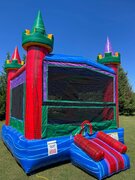
If you’re hosting a theme-heavy party, a themed bounce house with a waterslide attachment can be worth the extra. Princess turrets, pirate ship bows, or tropical palm designs don’t change the function, yet they elevate the photos and the kids’ excitement when they first arrive. For school or church events where you need variety, pair the slide with an inflatable obstacle course. The course gives a dry option that keeps kids moving, which matters when suits come off after a few hours and you want to extend the day.
What rental companies won’t always spell out, but you should know
Good vendors give clear specs. Great vendors help you think through logistics. I like to call and describe the property and guest mix rather than booking blind online. Ask about access to your setup area. These units are heavy, and crews need a path without tight turns, stairs, or soft ground. If a gate is narrow or the yard is tiered, say so upfront. It’s better to adjust your choice than to discover on delivery that the 20-foot waterslide cannot fit through the side yard.
Understand power and water needs. Most slides need one standard 15-amp circuit for the blower. If you’re running a second inflatable like a bounce house or inflatable games, plan separate circuits kids water slide inflatable or use different outlets on opposite sides of the home. Blowers don’t like long, thin extension cords. I’ve seen people run 100 feet of bargain cord only to pop a breaker when the ice maker kicks on. Use heavy-gauge outdoor cords, or ask the company to supply them. For water, a typical garden spigot works. The slide will run on low flow, but you’ll want enough volume to keep the chute slick and the splash pad refreshed.
Scheduling matters in summer. Morning deliveries are your friend. You get time to walk the layout, set up shade, and check the hose before guests arrive. If your party runs into the evening, confirm the pickup window. Most companies offer overnight for a small fee, but some need gear back for early morning events. Clarify in writing, especially on weekends where the rotation is tight.
Finally, ask about surface requirements. Grass is ideal. Turf or concrete works with tarps and foam pads, but verify how the pool edge will be handled to prevent abrasion. If you’re on a slope, share a photo. A slight grade can help with drainage, but a steep incline can make the pool uneven and unsafe. A reputable company will decline a risky setup.
Safety becomes effortless when you plan the small stuff
Water and speed add adrenaline. That’s the fun, and it’s also where you need to shape the lanes so kids stay safe without feeling micromanaged. Start with footwear. Shoes off, no exceptions. Socks turn slick, so better to go barefoot on the climb and slide. Jewelry and glasses can snag; have a small basket near the ladder as a drop zone so kids don’t toss items on the ground where they’ll disappear into the grass.
Set age and size guidelines at the top of the first hour while everyone’s excited and listening. Younger kids go first while the older ones are still arriving or helping with setup. If you have a dual-lane waterslide, group ages to keep speeds similar. Mixed-weight pairs might be tempting for photos, but too much speed difference leads to bumps at the bottom.
Station a calm adult at the exit, not the ladder. The bottleneck happens where kids pop up from the splash and forget to clear the landing. This is where you prevent pileups and keep the rhythm smooth. If you only have one set of extra hands, I’d rather see them at the pool exit than anywhere else.
Keep the surface wet. If the chute dries out under sun and wind, friction climbs and riders can stick mid-slide. Most units have a misting hose at the top, but in dry heat you might need to bump the flow or spray the chute with a handheld nozzle every fifteen minutes. Pro tip from experience: place a towel and a small bucket near the ladder. Use the bucket to throw a quick splash on hot vinyl steps and handrail grips.
One more quiet safety call: locate the electrical cords and stake lines where no one is likely to trip. Tape cords to the ground when crossing walkways, and run them behind furniture or along fence lines. If you are setting up after a recent mow, scan for divots and level them with a soil patch or a folded tarp under the pool edge to avoid ankle twists where kids land.
The water bill question and practical ways to manage it
People ask about water use right after they see the size of the slide. Most backyard waterslides use a continuous trickle to keep the surface slick and refresh the splash area. You’re not running a fire hose. In my experience, you’ll use roughly 200 to 400 gallons over several hours, depending on heat, wind, and how often kids bail water over the side in their enthusiasm. For context, that’s similar to a couple of long showers or a medium load of pool top-off after a week of evaporation.
If conservation matters, fit a nozzle with a flow adjuster at the spigot so you can tune the mist to the lowest setting that keeps the surface wet. Shade helps. A canopy or a tree canopy reduces evaporation from the splash pool. Some slides have a drain flap or hose port so you can route water to a thirsty garden bed when you’re finished. Ask about that, and place the unit where runoff can soak into grass instead of puddling by your patio.
Pairing the slide with the right extras
You don’t need a carnival to host a great day. One strong anchor beats six middling attractions. That said, the right side activities fill gaps and give kids an off-ramp when they’re waterlogged. A bounce house rental in a shaded corner is a classic pairing. Kids rotate, suits drip dry for a few minutes, and energy stays high. If your crowd skews competitive, consider a short inflatable obstacle course as the dry lane where older kids race two at a time. It splits the pack and cuts the wait at the waterslide.
Inflatable games like ring tosses, soccer darts, or basketball shooters can fit along a fence line without eating lawn space. They also work well for raffle ticket challenges at fundraisers. Keep them visible but not in the splash zone. Wet vinyl and balls don’t mix. If your theme is strong, a themed bounce house tied into decorations makes photos cohesive. Pirate banners near the ladder, tropical leaves on the snack table, and a blue tarp walkway so kids don’t track grass into the house. Small touches count.
Food should be easy to eat one-handed. Kids will not sit for a plated meal when a slide is calling their name. Skewers, watermelon wedges, popcorn, and mini sandwiches disappear faster than heavy dishes. If you’re mixing adult and kid beverages, a separate cooler for water saves you from repeating directions all day. Put it near the exit end of the slide where kids naturally wander.
Setting the space so it runs itself
Layout is half the hosting. Draw an imaginary loop: line forms along the ladder side, slide down into the pool, exit away from the ladder, towels and water are right there, then the path empties into seating or a secondary activity. That loop keeps people moving and prevents the herd from clogging the ladder. If you place towels on the far side of the yard, you’ll fight a crossflow every minute.
Mark the ladder line with two cones or a nylon strap staked into the grass, not because kids need to be fenced, but because a line boundary removes the guesswork. If the slide is the headliner, keep speakers and the DJ or playlist near enough that the slide stays the social center. I’ve seen parties where the music drew teens to the driveway while the slide turned into a little-kid island. Merge them. Music carries well over water noise and brings ages together.
Shade is your best budget upgrade. A 10 by 10 canopy or two, angled so afternoon sun stays off the sitting area, will keep parents comfortable and present. Nobody wants to stand in full sun for three hours. Put sunscreen where people see it. A pump bottle near the towel bin gets used. A basket of extra hair ties for long hair is a tiny investment that saves time and tangles.
Weather, wind, and the backup plan
Summer weather can turn quickly. Light rain usually isn’t a problem; some kids will slide through a drizzle happily, and water slides are wet by design. The real danger is wind. Most inflatable companies set a cutoff around 15 to 20 miles per hour for safe operation. Gusts can lift a slide if it’s not properly anchored, and even well-staked units feel unstable in strong wind. Watch the forecast the day before. If winds are predicted to spike, talk to your vendor about options. Many will reschedule or swap a tall slide for a lower-profile unit on breezy days.
If you get a storm cell, power down the blower and ask kids to step away. Most slides deflate in under a minute. Leave it be until wind and lightning pass. Don’t try to keep the unit inflated during gusts by having adults hold it down. That’s how injuries happen. If weather cancels the main attraction, shift the energy to inflatable games, water balloons in a contained corner, or indoor obstacle relays. It won’t be the same, but a host who pivots quickly keeps momentum.
The economics: what you pay and where the value shows up
Pricing varies by region and season, but you can expect a backyard water slide rental to range from the low hundreds to the mid hundreds of dollars per day. A simple 12-foot inflatable might run 200 to 300. A tall dual-lane slide with a wide splash pad can push 500 or more. Bundle pricing with a bounce house or an inflatable obstacle course often saves money over booking separately. Delivery distance and setup complexity add to the invoice. Peak weekends in late spring and midsummer book out quickly, and prices follow demand.
I look at cost per attendee hour. If your slide holds interest for four to six hours and you have 15 to 25 kids cycling through, the per-kid spend compares favorably to other entertainment options, especially when you consider that parents and grandparents stay longer and enjoy themselves more when the kids are joyfully occupied. Photos last, and so does reputation. Families remember the host who nailed the flow.
Real-world examples that helped me refine the formula
At a July birthday for a six-year-old, we chose a 14-foot waterslide with a shallow pool and paired it with a small bouncy house under a tree. We set the slide so the pool rim grazed a slope that naturally drained toward beds, which saved the lawn from puddles. Parents parked lawn chairs under a canopy within camera range. We used colored wristbands to group younger kids for the first hour and then opened it up. Nobody complained because the rhythm worked and everyone got turns. The water bill bump was negligible, maybe the cost of a couple of coffees.
For a teenage graduation party, we went bigger: an 18-foot dual-lane slide and a dry inflatable obstacle course across the yard. Teens raced, made short-form videos, and the slide broke up cliques by forcing everyone to share a line and laugh at themselves. We set a rule that phones stayed off the slide, and we placed a dry towel table by the ladder so kids could wipe hands before they filmed. Cleanup was surprisingly easy because we had an exit path that flowed past the towel bins and a “sand-free” outdoor mat where people slipped on flip-flops.
At a school fundraiser, we learned the hard way that power matters. Two blowers on the same old circuit tripped a breaker when we plugged in a cotton candy machine. We ended up running a heavy-gauge extension to a separate outdoor outlet on the other side of the building. Now, I always map circuits in advance and bring one extra cord rated for outdoor use and 12-gauge wire. Boring detail, major saver.
Working with your vendor like a pro
You’ll know you’ve found a good company when they ask smart questions about your site and crowd, not just your credit card. Share photos of the yard from two angles. Mention sprinkler lines or landscape lighting. Confirm anchor methods. Some companies use long stakes, which require soft ground and an understanding of what’s below. Others bring weighted ballast for concrete or turf. If your yard uses an in-ground sprinkler system, mark the lines. A punctured pipe turns into an emergency and an unhappy Monday.
Confirm cleaning protocols. Reputable vendors sanitize inflatables between rentals and again on setup. You can smell and see the difference. If the vinyl is sticky or smells musty, ask for a swap. Your vendor should also send staff trained to secure the unit and troubleshoot. A hurried drop-and-go approach saves them time but leaves you guessing. Pay for full setup and teardown. It’s worth the fee.
Request a short walkthrough after setup: how to start and stop the blower, where the water valve is, how to release pressure if the splash pool overfills, and what to watch for as the day warms up. Exchange cell numbers in case you need support. Most problems are easy fixes, and a quick call beats tinkering under stress.
The host’s pocket guide
Here’s the compact plan I share with friends who want the day to run without constant oversight.
Measure the yard and pick a water slide that fits with 3 to 5 feet of clearance on all sides, checking height against trees and lines. Map power and water in advance, using separate circuits for multiple inflatables and a heavy-gauge outdoor extension cord. Create a loop: line at the ladder, clear exit at the pool, towels and water right after the exit, then seating or a secondary activity. Assign one adult to shepherd the pool exit during peak play and keep the chute wet with a low-flow mist. Set simple rules upfront: shoes off, one at a time on ladders, drain phones and glasses into a basket, and rotate ages if needed in the first hour.
When a water slide is not the right choice
There are edge cases. Very small or steep yards limit safe setup. If your event happens in a tight urban courtyard or on a rooftop, a waterslide probably isn’t the star. In those situations, an inflatable obstacle course or a themed bounce house under shade can carry the day without water, noise, or drainage concerns. If your guest list includes several toddlers and very few older kids, a gentle bouncy house or soft play zone might see more use than a slide that feels intimidating. And if your local climate is cool even in summer, a dry slide paired with warm drinks and lawn games can be smarter than a wet setup that sends kids shivering indoors after ten minutes.
You may also need to consider noise. Blowers are not quiet. They hum continuously, and the laughter and splashes amplify it. If you have close neighbors or strict HOA rules, talk to them beforehand. A friendly heads-up and a specific end time go a long way.
Wrapping it all together
The energy of a summer gathering rises and falls on a few choices, and the headline attraction is one of them. A water slide rental pulls focus in the best way. It cools down the hot parts of the day, gives kids a shared story to tell, and buys adults the kind of relaxed conversation that only happens when you’re not timing the next meltdown. Choose the size that fits your space, pair it with one or two supporting inflatables for variety, plan the flow, and keep the details light but deliberate.
When it works, you’ll know. The line will hum, the photos will capture two or three generations grinning in the same frame, and you’ll look at the clock surprised that hours have passed. That’s the mark of a star attraction, and in summer, water wears the crown.