Senior Care 101: How Assisted Living, Independent Living, and Nursing Homes Really Compare
Business Name: BeeHive Homes of Mesquite
Address: 780 2nd S St, Mesquite, NV 89027
Phone: (702) 381-6899
BeeHive Homes of Mesquite
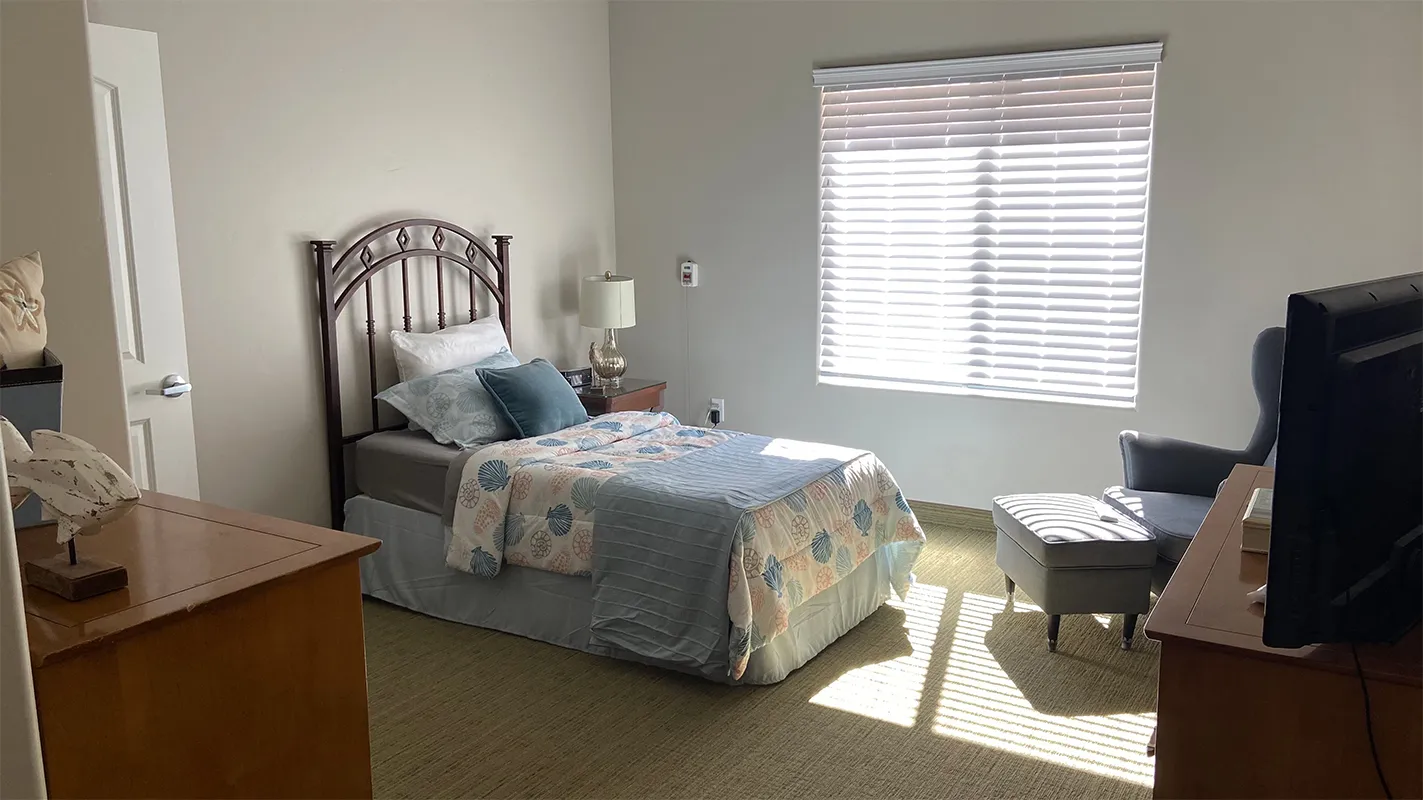
At BeeHive Homes of Mesquite, Nevada, we offer the finest assisted living experience available in a cozy, comfortable homelike setting. Each of our residents has their own spacious room with an ADA approved bathroom and shower. We prepare and serve delicious home-cooked meals three times a day every day. We maintain a small, friendly elderly care community. We provide regular activities that our residents find fun and contribute to their health and well-being. Our staff is attentive and caring and provides assistance with daily activities to our senior living residents in a loving and respectful manner. We would like to invite you to tour and experience our assisted living home and feel the difference.
View on Google Maps
780 2nd S St, Mesquite, NV 89027
Business Hours
- Monday thru Sunday: 8:00am to 7:00pm
Follow Us:
- Instagram: https://www.instagram.com/beehivehomesmesquite/
- TikTok: https://www.tiktok.com/@beehivehomesofmesquite
-
Facebook: https://www.facebook.com/beehivehomesofmesquite
🤖 Explore this content with AI:
💬 ChatGPT 🔍 Perplexity 🤖 Claude 🔮 Google AI Mode 🐦 Grok
Families hardly ever start researching senior care due to the fact that they have spare time and interest. Most get here in crisis or near it. A fall, a health center stay, a roaming occurrence, or a sudden realization that the costs are not being paid. Then the vocabulary begins flying: independent living, assisted living, proficient nursing, memory care, respite care. Everything sounds technical, yet the choices are deeply personal.
I have actually sat at a lot of cooking area tables with adult children trying to understand those words. They bring spreadsheets, guilt, old pledges about "never ever putting mom in a home," and a fierce desire not to make a mistake. The reality is, there is no best setting. There are trade‑offs, and they look various for an increasingly independent 78‑year‑old than they provide for a frail 92‑year‑old with advanced dementia.
What follows is a practical guide to how independent living, assisted living, and nursing homes function in reality, how respite care suits, and what tends to work best for different levels of need. The goal is not to offer you on a particular option, but to assist you see what these places are in fact like when the brochures are put away.
What these terms actually mean
The senior care industry utilizes shorthand that puzzles families. It helps to remove it back to the basics.
Independent living is housing with features customized for older adults who are largely self‑sufficient. Think of it as a house or home in a community where almost everyone is retired, meals and activities are available, and somebody will check on you if you are missing out on at dinner, but you manage your own individual care and medical needs.
Assisted living is for older grownups who can no longer safely handle all daily tasks alone, but do not need 24‑hour medical supervision. Personnel assist with bathing, dressing, medications, and in some cases movement. There is generally a nurse on site, but the setting feels residential, not clinical.
Nursing homes, also called skilled nursing centers, offer the highest level of healthcare outside a hospital. Citizens typically have complex medical conditions, need extensive help with daily activities, or need rehabilitation after surgery or illness. The environment is more controlled, with certified nursing offered around the clock.
Respite care is short‑term care in any of these settings, generally for a couple of days to a few weeks. It is designed to give family caretakers a break, test‑drive a neighborhood, or cover spaces throughout disease, travel, or home modifications.
Within those broad classifications, quality and culture vary extensively. Two assisted living communities three miles apart can seem like completely various worlds. Local guidelines also form what each type of neighborhood is enabled to do, especially around medical tasks.
Key differences at a glance
A narrative explanation assists, however often you require a quick snapshot to orient you. The following comparison utilizes the normal model in many parts of the United States. Regional guidelines, private neighborhoods, and other countries can differ, so treat this as a working map, not a legal definition.
Independent living: Residents are self‑sufficient, with optional assistance from outside services. Concentrate on lifestyle, socializing, and convenience rather than medical care.
Assisted living: Residents require routine assist with personal care or medications however do not require consistent nursing oversight. Personnel support every day life, and the setting intends to seem like home.
Nursing home: Locals have major, ongoing medical or practical needs. Certified nurses exist at all times, and medical care, rehabilitation, and guidance are central.
Respite care: Short‑term stay, typically in assisted living or a nursing home. Offers short-term elderly care when household assistance is not readily available or requires relief.
This structure assists you match your member of the family's requirements with the right level of senior care before you get lost in sales tours.
Independent living: Freedom with a security net
Independent living is frequently the first step out of a long‑time home. It works finest for older grownups who are still handling their own medications, financial resources, and personal care however are tired of home maintenance or are feeling too isolated.
From the resident's point of view, the appeal is straightforward. No more snow shoveling, roof leakages, or fretting who will fix the water heater. Meals can be offered, though many locals still like to cook. There are neighbors in similar life phases, and activities varying from book clubs to fitness classes. Transportation to medical visits is common.
The tricky part is that independent living is not a medical model. Staff are not expected to help with bathing, toileting, or hands‑on transfer help. They are not typically tracking blood sugars or blood pressures. If a resident starts to fall frequently, forgets to consume, or mismanages medications, the neighborhood will typically advise working with in‑home caregivers or relocating to assisted living.
Families often misjudge this. I have actually seen independent living houses filled with grab bars, walkers, and tablet organizers, plus a resident who is plainly overwhelmed. On paper, they "live independently." In practice, their quality of life is bad, and they are one damaged hip far from a forced move.
Independent living works well when:
The older adult worths personal privacy and control, and still deals with day-to-day jobs reliably. There is some regional assistance, whether from family or paid services, that can step in as needs change. The individual is socially open sufficient to benefit from neighborhood life, or a minimum of neutral toward it.
It can be a poor fit if solitude, medication confusion, or unsafe movement are currently major issues. Moving to independent living in that scenario often buys only a short window before another relocation is needed.
Assisted living: Assistance for daily life
Assisted living beings in the middle of the senior care spectrum, and for lots of older adults it is the sweet spot. The resident has their own apartment or condo or suite. They bring their furnishings, photos, and favorite chair. Meals, housekeeping, and laundry are dealt with. Staff help with personal care, and somebody is always close by.
At its best, assisted living maintains self-respect while silently covering a net around the vulnerable parts of daily routine. A resident may need assistance actioning in and out of the shower but can wash their own hair. Or they can dress themselves if somebody lays out the clothes. Or they are mentally sharp however physically limited by Parkinson's or extreme arthritis.
Medication management is frequently the single most important service. In lots of assisted living communities, staff store and administer medications, track refills, and collaborate with drug stores. For individuals juggling blood pressure tablets, blood thinners, diabetes medications, and more, this is not a high-end. It prevents ER visits.
However, households often anticipate assisted living to function like a mini medical facility. That is not reasonable. Assisted living personnel are trained in elderly care and individual assistance, but they are not staffed like a severe care unit.
Typical limits in assisted living include:
Residents normally require to be medically stable. Major oxygen needs, unmanaged habits, or quickly changing conditions may need a greater level of care. Most communities can not supply constant one‑on‑one supervision, such as for a resident who attempts to stand and walk every couple of minutes regardless of severe fall risk. There are typically rules around lifting and transfers. If a resident requires 2 team member to transfer securely, not every assisted living website can accommodate that.
From an expense point of view, assisted living is frequently personal pay. Monthly fees differ commonly by region but can range from the low thousands to well over six thousand dollars each month, depending upon home size and care level. Care charges are often tiered: as needs increase, so do costs.
Families need to look beyond the decor. Observe how personnel talk with homeowners in the hallways and dining-room. Ask how they handle falls, how typically care strategies are examined, and what happens if the resident's needs increase. Communities that respond to these questions clearly and without deflecting offer a much better safeguard over time.
Nursing homes: Medical care and long‑term support
Nursing homes inhabit a difficult location in public creativity. Lots of older adults state, in some cases securely, "I never want to wind up in a home." That worry is rooted in older designs of institutional care and in extremely genuine stories of poor‑quality facilities. It is also true that for some people, a great competent nursing facility is the best, most suitable option.
Nursing homes offer 24‑hour nursing supervision, medication administration, wound care, feeding help, and rehab therapies such as physical, occupational, and speech treatment. Citizens might be short‑term, recuperating from joint replacement, stroke, or serious infection. Or they might be long‑term, living there for many years with innovative dementia, severe movement limits, or complicated medical needs.
The environment is more medical. You will see med carts, lifts, treatment gyms, and personnel in scrubs. Laws are more stringent than in assisted living. There are care plan meetings, regular physician oversight, and detailed paperwork requirements.
From a useful viewpoint, someone might require a nursing home if:
They are bedbound or need overall assistance for mobility and personal care. They have regular or complex medical interventions: feeding tubes, IV medications, advanced injury care, or complex respiratory support. Their cognitive or behavioral signs need structured supervision that assisted living can not safely provide.
One subtlety many households find out the tough method: short‑term rehab stays are frequently covered for a limited time by insurance or national health systems after a qualifying healthcare facility stay, but long‑term custodial care (aid with bathing, dressing, toileting) is normally not covered the very same method. Individuals lack rehabilitation days or protection and transition to personal pay or public long‑term care programs. Comprehending this financial shift early prevents worried decisions later.
Quality distinctions across nursing homes are stark. In some, call lights ring endlessly, residents sit plunged in wheelchairs, and personnel turnover is continuous. In others, staff know homeowners by nickname, therapy is proactive, and households feel included. Exploring at various times of day, talking with households in the lobby, and asking personnel how long they have actually worked there frequently tells you more than any score website.
Where respite care fits in
Respite care is among the most underused tools in senior care. It is temporary residential care that offers family caretakers a break or bridges a transition. Respite can occur in assisted living, a nursing home, or sometimes specialized short‑stay units.
Typical circumstances:
A daughter taking care of her father with mid‑stage dementia requires to take a trip for work for a week. She sets up a 10‑day respite remain in a memory‑capable assisted living community. Her father gets structured activities and guidance; she gets to do her task without constant worry.
A spouse caregiver is tired however feels guilty confessing. A social worker suggests a two‑week respite in a competent nursing center. Throughout that time, the spouse has their own medical appointments, catches up on sleep, and evaluates whether home care stays realistic.
An older grownup is discharged from the health center after pneumonia. They are still weak, and the household is unsure if they can handle at home securely. A brief rehab stay in a nursing home functions as respite and as a trial run. If strength returns, they can return home or to independent living. If not, the family has more time to plan long‑term arrangements.
Respite care slots can be limited, especially during peak times like holidays. They usually need advance planning, updated medical information, and an evaluation to verify the setting can fulfill the person's needs. For lots of households, though, respite is the pressure valve that avoids burnout or hazardous caregiving situations.
Daily life: What really alters from one setting to another
Brochures tend to highlight facilities. Citizens and families care more about how the day unfolds.
In independent living, early mornings depend practically completely on the resident's choices. Some sleep late and drink coffee in their kitchenette. Others head straight to the dining room. Personnel might check in discreetly, for instance by noting who has not come to meals, but there is no expectation that residents follow a specific schedule.
In assisted living, day-to-day rhythms are shaped by care requirements. Staff create schedules for bathing help, medication rounds, and house cleaning. A resident might get aid with showering twice per week, medication administration 3 times each day, and assistance preparing yourself in the morning and at bedtime. Activities are provided at set times, yet locals still have freedom to select whether to join.
In nursing homes, the structure is tighter. Medication administration, treatments, and therapy sessions follow medical regimens. Meals happen on schedule, in some cases with designated seating in dining rooms or delivered at the bedside. Flexibility is possible, particularly in higher‑quality centers, but life is more regulated just since scientific tasks must be completed.
Families in some cases fret that structure equates to loss of autonomy. In truth, for somebody living with significant disability, structure can feel stabilizing. The secret is whether personnel approach routines with regard and partnership. "How would you like to start your morning?" feels extremely different from "Time to get up, we have to get this done."
Safety, dignity, and risk: Discovering a workable balance
One of the hardest parts of senior care planning is balancing security with autonomy. Experts in elderly care discuss "dignity of threat" - the concept that adults have the right to make choices that involve some risk, as long as they comprehend and accept the consequences.
In practice, this looks various in each setting:
In independent living, the community might highly motivate fall avoidance steps, but locals can still decrease grab bars or select to utilize a rolling office chair rather of a steady dining chair. As long as they have the ability to make educated choices, their right to deal with threat is broad.
In assisted living, the lines are blurrier. Staff are accountable for resident safety, yet they are likewise expected to honor preferences. If a resident with a history of falls demands walking without a walker, the care group will likely include the household, record the conversation, and try to negotiate. They may arrange for physical treatment to assess gait or schedule supervised walks.
In nursing homes, safety concerns bring even more weight since regulative examination and liability risks are high. That does not erase resident rights, but it narrows the series of acceptable dangers. For instance, a resident who gets rid of a fall alarm might still be enabled to do so, however staff must show that they assessed cognition, educated the resident, and implemented alternative measures.
Families typically lean greatly toward security, especially after a scare. Older adults tend to favor self-reliance, particularly if they currently feel their world shrinking. The healthiest choices generally originate from truthful discussions where both perspectives are called and appreciated, rather than rushed choices made in the shadow of a crisis.
Money: How costs and protection truly work
Money shapes senior care alternatives more than most households want to admit. It is uneasy to put a dollar sign beside quality of life, but neglecting costs does not make them disappear.
Independent living is generally private pay. Month-to-month costs vary based on area, size of unit, and consisted of services. Energies, meals, housekeeping, and social shows are typically bundled. Health insurance rarely covers this setting since it is considered real estate, not medical care.
Assisted living is likewise generally private pay, with some regional exceptions for limited public financing programs. Base rent covers the home and fundamental services. Care charges are added based upon an evaluation of requirements, like help with bathing, dressing, or medication management. As requirements grow, month-to-month costs often increase.
Nursing homes are more complicated. Short‑term experienced rehabilitation after a health center stay might be partially or fully covered for a specified period, if particular criteria are satisfied. Long‑term home for custodial care is different. Coverage depends heavily on country and local policies, however lots of people either pay privately up until they qualify for public long‑term care programs, or they rely on a mix of private funds and public subsidies from the start.
Respite care can be private pay or supported by caretaker assistance programs, long‑term care insurance, or regional social services. Protection guidelines vary extensively. Many families assume respite is covered, only to find out that advantages are restricted or require preauthorization.
A frank early conversation with a financial planner, elder law attorney, or social employee who understands local advantages saves heartbreak later. Great preparation considers not just regular monthly senior living near me beehivehomes.com fees, however likewise what occurs if the older adult lives longer than anticipated, becomes widowed, or needs to transfer to a higher level of care.
How health modifications push the need to step up care
People hardly ever move straight from independent living to a nursing home without something altering. Patterns usually emerge.
For example, memory decrease starts as small lapses: misplaced keys, a missed out on appointment. Then bills pile up, devices are left on, driving ends up being questionable. At first, in‑home help can compensate. Over time, the risk of leaving the stove on or wandering during the night might make assisted living with memory care a much better option.
Mobility problems follow another course. An individual with arthritis may stroll more gradually, but securely, for several years. Include a stroke or a hip fracture, and all of a sudden transfers, toileting, and bathing need 2 individuals and special equipment. At that point, assisted living may no longer have the ability to satisfy transfer needs, and a nursing home ends up being the safer choice.
Chronic illness can tip the balance too. Somebody with cardiac arrest and diabetes may handle well in independent or assisted living for a long period of time with excellent outpatient care. A number of hospitalizations in a year, getting worse shortness of breath, or repeated medication changes may signal that closer clinical oversight is required.
Families typically feel guilty when health modifications force a relocation. They view it as a failure to honor promises or to "keep mom in the house." A more accurate frame is that the person's needs developed, and the care environment needed to develop with them. That is not a damaged promise. It is accountable adaptation.
Questions to ask when you tour a community
When you walk into a senior neighborhood, it is easy to be swayed by chandeliers or, on the other side, by a faint disinfectant odor. Particular questions grounded in how care works will tell you far more.
What occurs if my family member's needs increase? Can they remain here, or would they have to move?
How do you deal with falls, medical emergency situations, and hospital transfers throughout nights and weekends?
Who gives medications, how are modifications communicated, and how do you reduce errors?
How do you identify and respond to solitude, isolation, or anxiety among residents?
Can you explain a current difficult situation with a resident and how your group solved it?
Ask personnel for concrete examples and listen closely to how they speak about homeowners. Do they utilize considerate language? Do they understand residents' stories? Do they describe households as partners or as obstacles?
After the tour, trust your quieter impressions too. How did homeowners look and sound? Did personnel seem rushed or present? Did anybody talk directly to the older adult you are supporting, or did they only deal with you?
Matching the individual to the place
Choosing among independent living, assisted living, nursing homes, and respite care is less about labels and more about fit.
A 79‑year‑old retired teacher who still drives, volunteers, and manages her own medications might prosper in independent living, acquiring pals and dropping the concerns of home ownership. A 90‑year‑old widower with mild dementia, unstable walking, and weight loss might regain stability in assisted living, with consistent meals, social contact, and cueing for health and medications. A 75‑year‑old stroke survivor who is paralyzed on one side and has a feeding tube will likely be safest in a nursing home with round‑the‑clock nursing and rehabilitation.
Senior care decisions work best when they start early, before a disastrous event. Even one exploratory tour of a neighborhood before it is urgently required modifications the tone later on. The older grownup has an opportunity to state, "I liked that location with the garden," or "I will never live someplace that smells like bleach," and those preferences can assist the family when crisis comes.
No setting can eliminate the vulnerabilities that age and illness bring. The real goal is more modest and more meaningful: choose a place that supports as much self-reliance as is safely possible, secures from preventable damage, and enables the older adult to remain a person with a history and a voice, not simply a list of medical diagnoses and tasks.
Independent living, assisted living, nursing homes, and respite care are tools. Utilized attentively, each can supply comfort, safety, and self-respect at different points along the aging journey. The challenge is not to select the ideal tool once and for all, however to keep changing the fit as life unfolds.
BeeHive Homes of Mesquite provides assisted living care
BeeHive Homes of Mesquite provides respite care services
BeeHive Homes of Mesquite supports assistance with bathing and grooming
BeeHive Homes of Mesquite offers private bedrooms with private bathrooms
BeeHive Homes of Mesquite provides medication monitoring and documentation
BeeHive Homes of Mesquite serves dietitian-approved meals
BeeHive Homes of Mesquite provides housekeeping services
BeeHive Homes of Mesquite provides laundry services
BeeHive Homes of Mesquite offers community dining and social engagement activities
BeeHive Homes of Mesquite features life enrichment activities
BeeHive Homes of Mesquite supports personal care assistance during meals and daily routines
BeeHive Homes of Mesquite promotes frequent physical and mental exercise opportunities
BeeHive Homes of Mesquite provides a home-like residential environment
BeeHive Homes of Mesquite creates customized care plans as residents’ needs change
BeeHive Homes of Mesquite assesses individual resident care needs
BeeHive Homes of Mesquite accepts private pay and long-term care insurance
BeeHive Homes of Mesquite assists qualified veterans with Aid and Attendance benefits
BeeHive Homes of Mesquite encourages meaningful resident-to-staff relationships
BeeHive Homes of Mesquite delivers compassionate, attentive senior care focused on dignity and comfort
BeeHive Homes of Mesquite has a phone number of (702) 381-6899
BeeHive Homes of Mesquite has an address of 780 2nd S St, Mesquite, NV 89027
BeeHive Homes of Mesquite has a website https://beehivehomes.com/locations/mesquite/
BeeHive Homes of Mesquite has Google Maps listing https://maps.app.goo.gl/FouNDQWSGjDorrdT7
BeeHive Homes of Mesquite has Instagram page https://www.instagram.com/beehivehomesmesquite/
BeeHive Homes of Mesquite has an TikTok page https://www.tiktok.com/@beehivehomesofmesquite
BeeHive Homes of Mesquite has an YouTube page https://www.youtube.com/@hamiltonshives4468
BeeHive Homes of Mesquite won Top Assisted Living Homes 2025
BeeHive Homes of Mesquite earned Best Customer Service Award 2024
BeeHive Homes of Mesquite placed 1st for Senior Living Communities 2025People Also Ask about BeeHive Homes of Mesquite
What is BeeHive Homes of Mesquite Living monthly room rate?
===========================================================Our base rate is $4,400/month plus a one-time community fee of $1,500. We do an assessment of each resident's needs upon move-in, so a resident's rate may be slightly higher. Based on the assessment, a resident may be in Tier I, II, or III with pricing from $4,900 to $5,300 per month. However, we do not add any "a la carte" charges after that rate is set. There are no add-ons or hidden fees
Does Medicare or Medicaid pay for a stay at Bee Hive Homes?
===========================================================Medicare pays for hospital and nursing home stays, but does not pay for assisted living. Some assisted living facilities are Medicaid providers, but we are not. We do accept private pay, long-term care insurance, and we can assist qualified Veterans with approval for the Aid and Attendance program
Do we have a nurse on staff?
============================We do have a nurse on contract who is available as a resource to our staff but our residents' needs do not require a nurse on-site. We always have trained caregivers in the home and awake around the clock
What can you tell me about the food at Bee Hive?
================================================You have to smell it and taste it to believe it! We use dietitian-approved meals with alternates for flexibility, and we can accommodate needs for different texture and therapeutic diets. We have found that most physicians are happy to relax diet restrictions without any negative effect on our residents
Do we have a pharmacy that fills medications?
=============================================We do have a relationship with an excellent pharmacy that is able to deliver to us and packages most medications in punch-cards, which improves storage and safety. We can work with any pharmacy you choose but do highly recommend our institutional pharmacy partner
Where is BeeHive Homes of Mesquite located?
===========================================BeeHive Homes of Mesquite is conveniently located at 780 2nd S St, Mesquite, NV 89027. You can easily find directions on Google Maps or call at (702) 381-6899 Monday thru Sunday: 8:00am to 7:00pm
How can I contact BeeHive Homes of Mesquite?
============================================You can contact BeeHive Homes of Mesquite by phone at: (702) 381-6899, visit their website at https://beehivehomes.com/locations/mesquite/ or connect on social media via Instagram Facebook or TikTok
Conveniently located near BeeHive Homes of Mesquite Megaplex a great movie theater with full food & drink menu. Catch a movie and enjoy some great food while you wait.