How to Understand an Anion Gap Calculator Result
What the Anion Gap Measures
The anion gap is a useful way to look at acid-base balance through everyday blood chemistry. It assists estimate the relationship between positively charged ions and negatively charged ions in the blood, notably when reviewing serum sodium, serum chloride, and serum bicarbonate. Because many important ions are not directly measured on a standard panel, the anion gap acts as a practical window into unmeasured anions and, indirectly, unmeasured cations.
In plain terms, the anion gap reflects electroneutrality, the principle that blood must remain electrically balanced. When the measured values from a basic metabolic panel are compared, the result can signal whether there is an acid-base disorder such as metabolic acidosis. That is why the anion gap is such a useful diagnostic tool in standard lab interpretation.
The calculation does not identify a disease by itself. Rather it helps organize the differential diagnosis and place a laboratory result into clinical context. A normal value can be reassuring, but it does not always exclude a serious problem. Likewise, an abnormal value should be interpreted with the rest of the serum electrolytes, the patient’s symptoms, and any relevant history of illness or medication exposure.
How an Anion Gap Calculator Works
An anion gap calculator uses a basic formula to the values in a typical electrolyte panel. The usual version uses sodium, chloride, and bicarbonate to estimate the gap between measured cations and anions. Because these are standard components of a basic metabolic panel, the calculation is quick to perform and often is displayed automatically in laboratory results.
Although the exact formula can change by laboratory, the classic approach is:
Anion gap = serum sodium - (serum chloride + serum bicarbonate)
Some labs use alternative methods or include potassium in special cases, but the core idea does not change. The calculator is not measuring a single substance. Instead, it is a mathematical shortcut that summarizes how much “gap” exists after the measured serum electrolytes are accounted for. That gap reflects the presence of acids, proteins, or other ions not directly detected by routine testing.
Used well, the calculator supports a broader diagnostic evaluation. It helps clinicians assess whether the pattern looks like high anion gap metabolic acidosis, a normal anion gap process, or a low anion gap pattern that may indicate another issue. The value should never be interpreted in isolation; it is one part of a larger blood chemistry profile.
Typical Range & Reference Ranges
The typical anion gap is not the same across each lab. One reference range may vary depending on the analyzer, calibration method, and whether potassium is included. This is why laboratory variation plays such a big role in lab interpretation. A result that appears slightly high in one setting may still fall within expected limits in another.
Albumin also alters the expected range. Since albumin is a negatively charged protein, lower levels can reduce the measured anion gap even when the underlying acid-base state is abnormal. For that reason, a “normal” result can sometimes be deceptive if hypoalbuminemia is present.
As a practical rule, check the result with the specific lab’s printed reference interval rather than depending on a single universal number. Consider whether the test was drawn as part of a basic metabolic panel or a broader electrolyte panel, and review whether other values suggest an electrolyte imbalance or a broader metabolic disturbance. The reference range is a reference, not an endpoint.
Understanding a High Anion Gap
A raised anion gap metabolic acidosis generally suggests acid levels are increased in the bloodstream or a buildup of unmeasured anions. This finding warrants attention because it may signal an urgent acidotic state. This finding is commonly accompanied by low bicarbonate and may be accompanied by clinical findings such as rapid breathing, confusion, nausea, or weakness.
Common causes include lactic acid buildup, ketoacidosis, renal failure, uremia, poisonous alcohols, and salicylate overdose. Each cause presents a distinct clinical pattern. For example, lactic acidosis can occur with tissue hypoperfusion or severe infection, while ketoacidosis is often associated with insulin deficiency or prolonged fasting. Toxic exposures should be considered when the presentation is sudden, severe, or unexplained.
In practice, a high result from an anion gap calculator should trigger a search for the underlying cause rather than a focus on the number alone. Review the full clinical context, including medications, kidney function, glucose, lactate, and ketone status. If the elevation is marked, the pattern may represent a significant acid-base imbalance that requires prompt attention.
Interpreting a Normal or Reduced Anion Gap
A normal anion gap metabolic acidosis can occur when bicarbonate is lost but the gap remains unchanged because chloride rises to compensate. This pattern is sometimes called chloride-responsive lactic acidosis high AG metabolic acidosis. It often points toward digestive bicarbonate loss, certain kidney problems, or other causes of non-gap acidosis. The key is to understand that a normal gap does not mean no acidosis is present.
A decreased anion gap is less common and is often overlooked. One of the most frequent explanations is low albumin, because reduced albumin lowers the expected gap. Another important consideration is myeloma, where abnormal proteins can alter the balance of charged particles in blood. Laboratory artifact, medication effects, or unusual ion patterns can also be involved.
When the result is unexpectedly low, run again the analysis if needed and review the entire blood chemistry profile. A low value can be a clue to an underlying disease, but it may also reflect a technical issue or an unrecognized shift in serum electrolytes. The safest approach is to interpret it alongside the rest of the data and the patient’s symptoms.
Albumin Adjustment and Its Clinical Significance
The corrected anion gap accounts for the effect of albumin on the measured result. As albumin is a major unmeasured anions, low levels can hide a true acid-base disorder. That is why albumin correction is so important when the measured gap looks normal or only mildly abnormal.
In general, a lower serum albumin means the expected gap should be adjusted upward. The exact adjustment may vary by institution, but the purpose is the same: to avoid missing metabolic acidosis that is being masked by hypoalbuminemia. If the corrected value is elevated, the patient may actually have a high anion gap metabolic acidosis despite a deceptively ordinary initial number.
Applying the corrected value improves anion gap correction and helps align the lab finding with the patient’s physiology. This step is especially helpful in critically ill patients, those with chronic illness, or anyone whose albumin is known to be low. In other words, correction makes the diagnostic tool more accurate in real-world clinical context.
Common Causes and Patient Setting
The most helpful interpretation comes through matching the result with the likely reason. Renal failure can increase the gap because acids are held back and uremia adds to the accumulation of unmeasured compounds. Sepsis may trigger lactate production and lead to lactic acidosis. Ketoacidosis may occur in diabetes, alcohol use, or prolonged fasting. These patterns all represent different forms of metabolic disturbance, but they can coexist on a laboratory panel.
Salicylate toxicity and toxic alcohols are especially important not to miss because they can lead to severe abnormalities and require urgent treatment. The anion gap does not reveal the toxin, but it can prompt concern early. In a patient with altered mental status, unexplained acidosis, or a sudden change in the electrolyte profile, these causes should be considered early.
Medical context matters because the same laboratory result can mean different things in different patients. For example, a modest elevation in a stable outpatient may call for a different response than a similar value in a critically ill patient with worsening acid-base balance. The calculator is best used as part of a broader diagnostic evaluation, not as a single answer.
Sequential Analysis Workflow
A structured workflow makes anion gap interpretation more consistent and less apt to miss key findings. Begin with the electrolyte panel and confirm the sodium, chloride, and bicarbonate values used in the calculation. Afterward compare the result with the lab’s reference range. After that decide whether the pattern suggests a normal anion gap, a high anion gap metabolic acidosis, or a low anion gap.
Afterward, assess acid-base status with a blood gas if available. The blood gas aids confirm whether there is true acidemia or alkalemia and can resolve mixed disorders. If the anion gap is elevated, evaluate the delta gap to detect additional acid-base processes. This step is especially useful when the bicarbonate drop does not match the degree of gap elevation.
A useful sequence is:
Assess the serum sodium, serum chloride, and serum bicarbonate. Confirm the reported result from the anion gap calculator. Assess albumin abnormalities and use corrected anion gap interpretation. Search for clues to lactic acidosis, ketoacidosis, renal failure, or toxin exposure. Use the delta gap when mixed disorders are possible. Combine the result with the patient’s symptoms and overall clinical context.
This structured approach supports better lab interpretation and reduces overreaction to a single laboratory result. It also keeps the process easier to repeat when serial labs are collected.
When to Pursue More Evaluation
More evaluation is needed when the result is far outside the expected range, when there is a sudden change from prior testing, or when the pattern does not fit the clinical picture. Critical values should be treated seriously, especially if the patient has concerning clinical symptoms such as shortness of breath, chest pain, confusion, vomiting, or reduced level of consciousness.
If the result appears inconsistent with the patient’s condition, a repeat test can assist confirm whether the value is real or due to specimen handling, collection timing, or analyzer variation. In certain cases, a confirmatory arterial blood gas is required to more precisely determine acid-base status. This is especially important when there is suspected metabolic acidosis or a mixed disorder that requires close monitoring.
Seek prompt reassessment when the anion gap is abnormal and the patient has increasing symptoms, suspected poisoning, signs of shock, or kidney dysfunction. A calculator is a helpful starting point, but it does not take the place of careful medical review, repeat measurement, or broader diagnostic evaluation when the situation is unstable.
Frequently Asked Questions
What is an anion gap calculator used for?
An anion gap calculator is used to analyze routine blood chemistry and help identify patterns of metabolic acidosis. It uses the values from a basic metabolic panel or electrolyte panel to determine whether there are extra unmeasured acids or other abnormalities affecting acid-base balance. It is a useful diagnostic tool for lab interpretation.
What does a high anion gap mean?
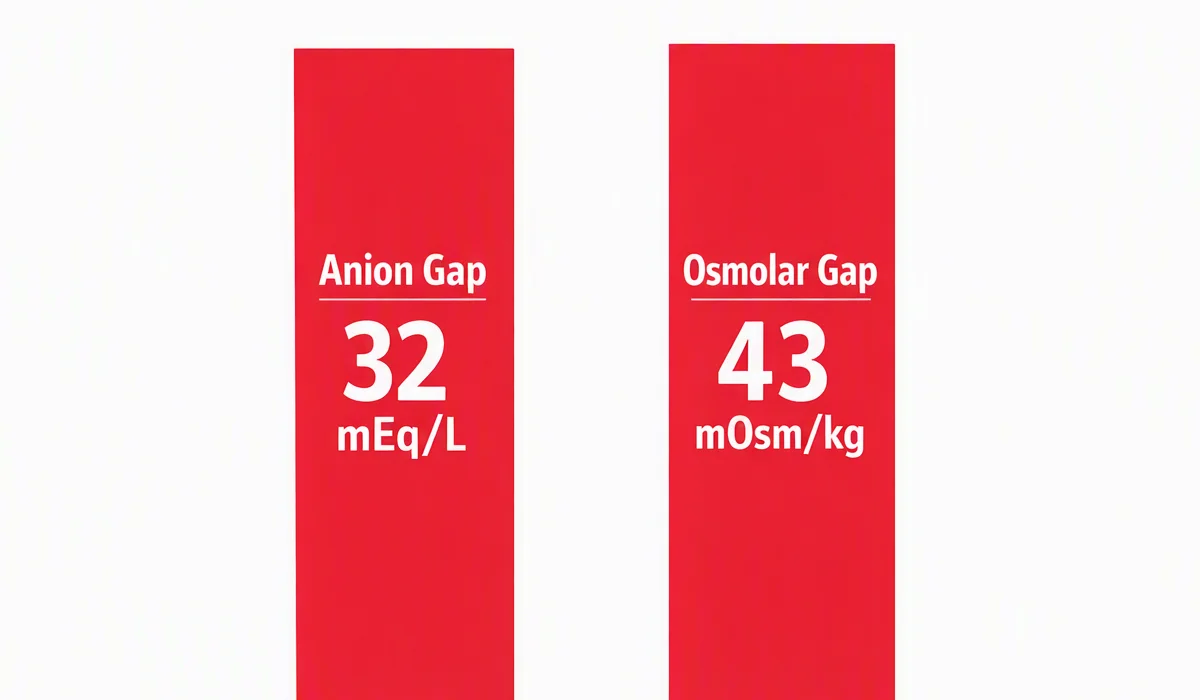
A high result often suggests high anion gap metabolic acidosis, which can be caused by lactic acidosis, ketoacidosis, renal failure, uremia, toxic alcohols, or salicylate toxicity. The meaning depends on the patient’s clinical context, symptoms, and other lab findings.
Can low albumin affect the anion gap?
Yes. Albumin is a major unmeasured anion, so hypoalbuminemia can decrease the measured anion gap. That is why corrected anion gap interpretation and albumin correction are important when the value seems unexpectedly normal or low.
What is the typical anion gap range?
The expected anion gap varies by the lab’s reference interval and the method used. Because of testing variation, the best way is to use the range provided alongside the test result. Always assess it together with electrolyte values and the rest of the biochemistry panel.
When should an abnormal anion gap be evaluated further?
An abnormal result should be looked at more closely when it is a critical result, when it does not align with the patient’s symptoms, or when there is concern for serious illness such as acid buildup, poisoning, kidney dysfunction, or sepsis. A repeat test, a gas analysis or arterial gas, and review of the gap difference may be needed to determine the acid-base problem.