How to Choose the Right Quad Biking Dubai Experience
Choosing quad biking dubai is less about picking the first available ride and more about matching the ride to your experience, comfort and sense of adventure. Dubai desert terrain can be firm and flat in one stretch, then soft, sloped and unpredictable in the next. A good choice makes the day feel controlled and enjoyable. A poor match can leave a rider tired, nervous or limited to a route that feels far shorter than expected.
Start by being honest about your riding background. Quad bikes are not bicycles, and the way they steer, brake and shift weight takes some adjustment. If you have never ridden one before, look for an option that includes clear instruction, a calm pace and room to practise before heading into open desert. If you already ride off-road, you may want a route with more varied terrain and fewer stops. The right decision depends on skill, not confidence alone.
Decide what kind of ride you want
Before comparing options, decide whether you want a short introduction, a scenic desert route or a more active riding session. These goals sound similar, but they shape the whole experience. A beginner usually benefits from a shorter route on gentler ground, while an experienced rider may prefer longer stretches where sand dune riding techniques matter more.
Think about the pace as well. Some riders want a relaxed outing with frequent pauses for photos and water. Others want steady movement and a stronger sense of progression. If the group includes children, older riders or people who are nervous about machinery, the pace should be shaped around the least confident person. A fast session may sound exciting, but it can feel rushed when everyone is still learning the controls.
Watch for vague descriptions. Words like adventure, thrill or extreme mean little on their own. Clear information about route type, riding time, difficulty level and supervision is more useful. If those details are missing, ask before committing. ATV Dubai Desert can be one reference point when comparing names, but the practical choice still comes down to the ride details and how well they match the rider.
Check the rider requirements
Age, height and experience rules matter because quad bikes require reach, balance and judgement. A rider who cannot comfortably reach the controls or brace their body on rough ground should not be pushed into a session meant for adults. Check the stated minimum age and any rules for younger riders. Where children are involved, look for a setup designed for their size rather than simply shrinking an adult ride.
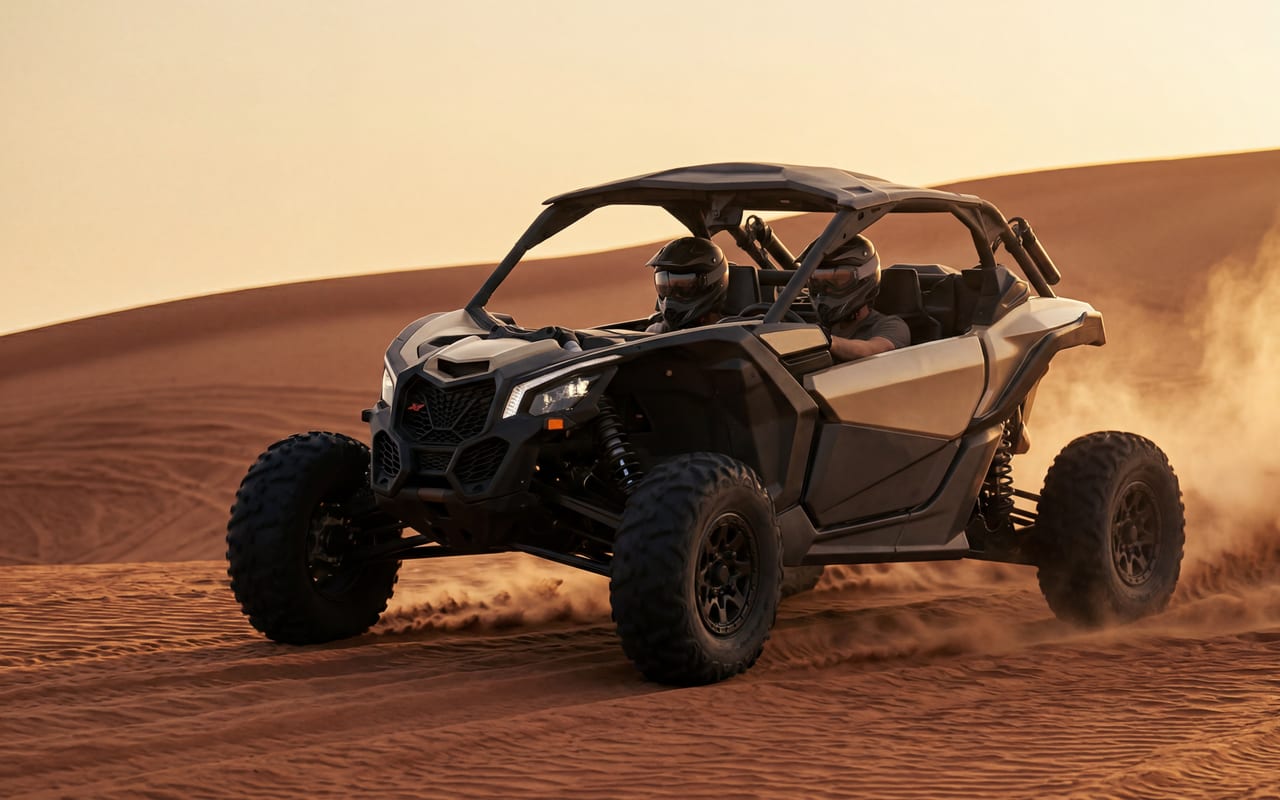
Licence expectations can vary, so read the requirements carefully. A visitor may assume a driving licence from home is enough, while another operator may ask for something different. If the rule is unclear, ask directly. This is not a small detail. It affects whether the booking can go ahead and whether the rider is covered by the terms of the activity.
Physical comfort is another part of the requirement check. Riders need to grip, steer, lean and stand at times. Anyone with back, knee or shoulder concerns should think carefully about rough sand and repeated vibrations. There is no shame in choosing a gentler route. The aim is to enjoy the desert, not to force a fit that feels uncomfortable from the start.
Look closely at safety provisions
Safety is where careful comparison pays off. A suitable ride should include a helmet that fits properly, not one that rocks sideways or presses painfully on the forehead. Helmet requirements should be clear before arrival, especially for groups. A loose helmet offers poor protection and can distract the rider for the whole session.
Ask how instructions are given at the start. New riders need to understand throttle control, braking, steering and what to do if the bike starts sliding. A short demonstration is helpful, but a rider also needs a chance to ask questions. Pay attention to whether the route is explained in plain terms. Riders should know where they are going, what marks the boundary and what signal means stop.
Also consider supervision. Open desert is not the same as a marked circuit. A guide or lead rider can help keep the group together, set a sensible pace and point out rough patches. If a session is described as self-guided, beginners should be cautious. Even confident riders benefit from local knowledge when dunes and soft sand change the feel of the route.
Do not attempt mechanical fixes in the field beyond simple visual checks. If a bike has a suspected brake problem, odd steering, a flat tyre or an unfamiliar warning sign, the sensible move is to stop riding and report it. Brakes and other safety systems should be handled by a qualified professional. Riders should never ignore a control that feels wrong just to finish a route.
Compare terrain and route design
The desert is not one uniform surface. Some areas are packed and predictable, while others are soft, uneven and shaped by wind. This is why route design matters more than the name of the activity. A route with gentle turns and moderate slopes suits a first ride. A route with steep dunes, narrow lines and frequent elevation changes asks for better balance and throttle control.
Ask whether the route includes open desert, marked tracks, dunes or a mix. Each has its own demands. Marked tracks can feel easier because the line is clear. Open desert gives a greater sense of freedom but requires more attention to other riders, changing sand and distance from the group. Dunes add the biggest technical element, since speed, angle and weight placement all affect stability.
Desert quad bike handling depends on smooth inputs. Sudden steering, harsh acceleration or panic braking can make the bike harder to control on sand. A well-designed session gives riders space to settle in before harder sections. Watch for routes that promise constant action from the first minute. That can be a sign that beginners will be pushed too quickly.
Weather also changes the terrain. Heat affects both the rider and the sand, and wind can reshape soft areas overnight. Morning rides often feel more comfortable, while later rides may bring hotter conditions and a different surface feel. Check what time the session runs and plan water, sun protection and clothing accordingly.
Understand the bike, not just the booking
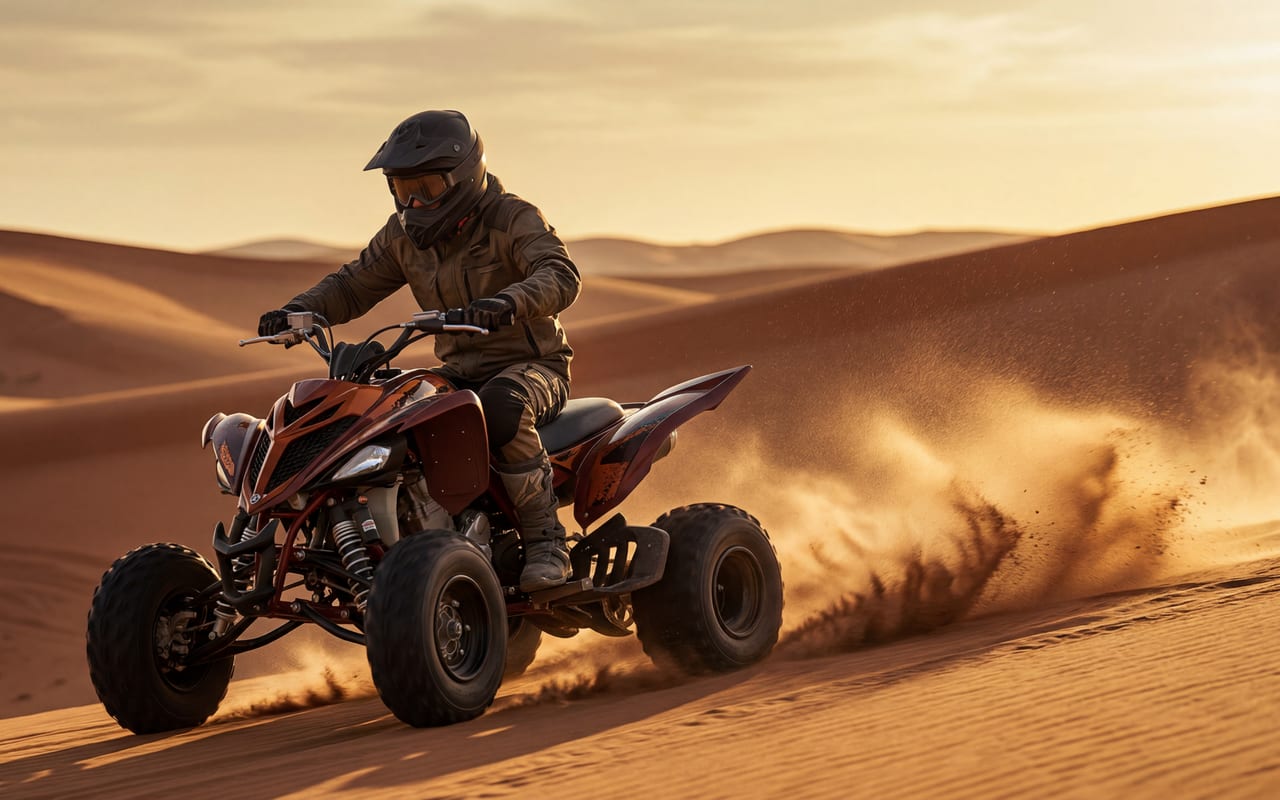
Quad bikes differ in size, power and seating position. A smaller bike may feel manageable for a newcomer, while a larger one can feel stable on rough ground but harder to manoeuvre at low speed. The best match is not always the most powerful option. Control matters more than raw pace, especially on sand.
Quad bike weight capacity is worth checking, particularly for taller or heavier riders. A bike that is undersized for the rider can feel awkward and may respond slowly in soft sand. It can also place more strain on the rider during long sections. If weight guidance is not shown, ask. A clear answer suggests the fit has been considered.
Quad bike tyres also shape the ride. Tyres designed for sand tend to spread the load and help the bike stay on top of softer ground. Worn or unsuitable tyres can make steering feel vague and increase the chance of getting stuck. A visual check before setting off is sensible. Look for obvious damage, low-looking tyres or anything that seems loose. If something looks wrong, raise it before the ride begins.
Automatic transmissions are common in recreational quad biking because they reduce the need to change gears manually. That can make the learning curve easier. Still, riders need to understand how the throttle responds and how the braking system feels before entering uneven terrain. A few careful minutes at the start can prevent a nervous moment later.
Match the session to your group
Group size changes the feel of the day. A small group often allows more individual attention and a steadier pace. A larger group can be lively, but it may involve more waiting, more noise and less room to practise. Mixed ability groups need special care. If one person is new and another is experienced, the route should not turn into a race between them.
Ask how riders are organised on the route. Beginners should not feel pressured to keep up with faster riders. A good session keeps the group within sight and gives clear instructions about spacing. Riders should avoid cutting across another person's line, especially near dunes or turns where visibility drops.
Clothing is part of the match. Long trousers, closed shoes and sun protection are practical choices for desert riding. Gloves can improve grip and reduce rubbing. Loose scarves, dangling accessories and anything likely to catch on the bike should be avoided. Comfort matters because fatigue affects reaction time and judgement.
Photography is another practical point. A camera or phone should be secured, not held loosely while riding. If photos matter, choose a session with safe stops rather than trying to capture moving shots. The best images usually come from a calm pause, not from distracting the rider.
Know what to ask before booking
A few direct questions can sort out most uncertainty. They do not need to be awkward. They simply turn a vague idea of a ride into something concrete. When comparing quad biking dubai options, focus on answers that tell you how the session actually works.
- What experience level is required, and are beginners accepted?
- How long is the ride, and how much of that time is actually spent moving?
- What safety equipment is provided, and are helmets available in suitable sizes?
- What happens if a rider cannot continue or needs to stop?
- Are there clear route boundaries and a plan for keeping the group together?
Listen for specifics. A useful answer explains the route, pace and support rather than relying on broad promises. If a question is brushed aside, treat that as a warning sign. Clear communication before the ride usually reflects clearer organisation on the day.
It is also wise to read the terms connected to the booking. Look for rules about age, conduct, damage, cancellation and late arrival. These details are not exciting, but they prevent misunderstandings. If something is unclear, ask for plain wording. A rider who understands the terms can focus on the ride instead of wondering what might happen next.
Make the final choice with a steady head
After gathering the details, compare options on fit rather than hype. The right choice should feel appropriate for the rider's ability, group size, comfort level and interest in terrain. A first-timer may value instruction and a gentle route. A more experienced rider may care more about dune sections and sustained riding. Both choices can be good when they match the person.
Avoid choosing only on the promise of speed. Fast riding on sand demands skill, space and control. It can also shorten the enjoyment if the route is built around rushing rather than riding well. The more satisfying option is often the one that gives enough time to settle in, understand the bike and read the terrain.
ATV Dubai Desert is a name that may appear while comparing options, but the decision should still be made from practical details. Check the route, requirements, safety setup and group fit. Then choose the ride that leaves room for confidence. Quad biking is at its best when the rider feels prepared, the terrain is respected and the pace allows the desert to be enjoyed rather than merely crossed.