Your Roadmap to Online Holotropic Breathwork Training and Certification in Canada
Breath is ordinary until you work with it on purpose. Then it becomes a tool that can reorganize a nervous system, unstick old stories, and open a surprising amount of space. If you are drawn to guide others into that space, Canada offers a clear path, even if it can feel like a maze at first glance. Much of the pathway now runs online, yet the heart of the work still asks for embodied practice, mentorship, and community.
This guide walks you through what is realistically possible online, where in‑person work remains essential, and how to sequence your training so you do not waste time or money. It is written from the perspective of someone who has staffed breathwork groups, designed hybrid curricula, and sat with the real moments that do not show up in marketing copy: the shaky first session after a panic spiral, the debrief at 10 p.m., the steadying hand on a shoulder when a memory finally surfaces.
What people mean by holotropic breathwork, and where online fits
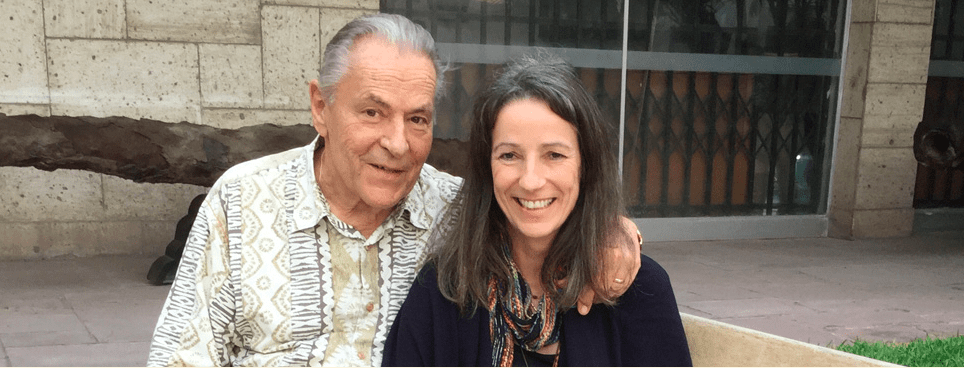
Holotropic Breathwork is a specific method developed by Stan and Christina Grof. It combines intensified breathing, evocative music, focused bodywork, art making, and group sharing. In the classic format every breather has a dedicated sitter, and sessions happen in carefully held, in‑person containers. Grof Transpersonal Training maintains the original curriculum and has historically required live modules and residential retreats. As of recent years, core certification through that lineage has not been available entirely online. Hybrid formats exist, and you can complete substantial theory, supervision, and integration work via the internet, but expect to attend at least some in‑person practicums to progress toward formal certification.
At the same time, a wider field of “holotropic‑inspired” or “transpersonal” breathwork has emerged. In Canada, you will find programs that teach a holotropic breathing technique within a trauma‑informed frame, often alongside elements of somatic coaching, music curation, and ethical guidelines pulled from psychedelic care. Many of these schools deliver large portions of their content online, then require a smaller number of on‑site practicums to assess facilitation skills. If your goal is breathwork training Canada can support you with reputable hybrid options, even if the purest form of holotropic breathwork training still insists on live modules.
The practical takeaway is straightforward. If you are chasing the specific Grof lineage, plan for residential intensives. If you want to become a competent breathwork facilitator with a holotropic sensibility, a thoughtful mix of online coursework, supervised practice, and a few concentrated in‑person weekends can get you there.
A five‑step roadmap that actually works
Clarify scope and lineage: Decide whether you want formal Holotropic Breathwork certification or a broader breathwork facilitator training Canada pathway with holotropic influences. Build your theory base online: Complete anatomy and physiology of breathing, trauma‑informed care, ethics, music and set design, and screening and consent modules. Practice under supervision: Start with peer sessions online, then move into supervised practicums and observed sessions, documenting each case. Complete in‑person intensives: Attend at least one to three on‑site modules to demonstrate bodywork competence, crisis management, and group holding. Formalize your practice: Secure insurance, draft policies, set up integration pathways, and continue mentorship toward breathwork certification Canada standards.
Each step deserves more color, because the quality of your training often depends on the order in which you do things.
Choosing your lineage with open eyes
Spend an afternoon mapping your motivations. Are you drawn to the Grof cartography of non‑ordinary states, to transpersonal frameworks, or to the nervous system literacy of modern somatics? I ask new trainees to write down three case scenarios they want to be able to handle two years from now. A returning combat veteran with moral injury. A client with a history of complex trauma who dissociates during intense breathing. A corporate team seeking a performance and creativity day. The scenarios you write will point to the lineage that fits.
A few distinctions help:
Strict Holotropic Breathwork, as protected and taught by Grof‑affiliated organizations, centers the sitter‑breather dyad and specific facilitation cues, with music arcs and bodywork protocols held closely. The pedagogy prizes extended, immersive group containers. Fully online certification in that specific method has not been the norm. Holotropic‑inspired programs often integrate attachment theory, polyvagal concepts, and a broader palette of music and touch guidelines. Many of these are available as online sequences for the cognitive elements, then require demonstration of touch skills and crisis management in person.
Neither path is superior for all students. The deciding variables are your tolerance for travel, your target clientele, and your appetite for a more classical or more eclectic education.
What can be learned well online
There is good news: much of the knowledge base for safe facilitation translates cleanly to virtual classrooms. Solid programs front‑load the following:
Assessment and screening. You will learn to take histories that flag seizure disorders, bipolar I with recent mania, fragile pregnancy, acute cardiovascular risk, or recent surgeries. You will also practice consent language that is clear and testable. Physiology and contraindications. A well‑designed module teaches gas exchange, hypocapnia and respiratory alkalosis, the impact of CO2 on cerebral blood flow, and how that physiology maps to tetany, dizziness, and visual phenomena. Set and setting. Online training can walk you through room layout, mat spacing, sitter training, music curation, and lighting. You can practice building progressive playlists and marking crucial transitions without live bodies in the room. Ethics and scope. Canadian facilitators need fluency in privacy law, informed consent, touch policies, and referral thresholds. Online seminars with case studies work. Integration strategies. You can learn to structure 24‑hour and 7‑day check‑ins, to recognize delayed activation, and to suggest journaling, art making, or gentle aerobic activity as appropriate.
I have seen trainees arrive at their first practicum with careful intake forms, a draft safety briefing, and three music arcs already sketched. They move quickly from theory to embodied skill because the scaffolding is there.
Where in‑person training remains non‑negotiable
A screen cannot teach the pressure and angle of a shoulder release when a breather’s intercostals are braced. Nor can it simulate the attentional bandwidth you need to hold a 20‑person room as two people begin to hyperventilate into panic while a third drops into a grief wave. These are learn‑by‑doing moments.
In Canada, reputable programs still require on‑site practicums for:
Touch competency within consent boundaries. You must be observed giving and receiving bodywork to calibrate your pressure, pacing, and verbal check‑ins. Crisis de‑escalation. If someone edges into vasovagal syncope, how you adjust breath pace, posture, and environmental cues is easier to teach live. Group field management. Music volume, facilitator movement in the room, and the paired choreography of sitters and breathers is a tactile skill.
Count on one to three intensives, typically two to four days each. The number varies by program and by your incoming skill set.
Canada’s legal and professional backdrop
Breathwork is not a provincially regulated profession in Canada, but you still operate within a web of obligations. Keep your eyes on four anchors.
First, informed consent. Your intake must explain foreseeable risks in plain language. Avoid euphemisms. If someone has a history of fainting with blood draws, you will talk specifically about breath‑induced lightheadedness and what you will do if it happens. Consent to touch must be opt‑in, revisitable at any moment, and documented.
Second, scope of practice. You do not diagnose or treat psychiatric disorders unless you are separately licensed to do so. You facilitate a holotropic breathing technique as a method of self‑exploration or wellness, and you refer out when presentation exceeds your training. Write down your referral network before you open your practice.
Third, insurance and waivers. Insurers will usually cover non‑regulated wellness modalities when training hours meet a stated threshold and when you have clear client documentation. In my experience, 100 to 200 hours of mixed online and in‑person training, plus current first aid and CPR, satisfy many carriers, though requirements vary. Waivers do not replace good screening.
Fourth, privacy rules. If you collect or store data online, choose software compliant with Canadian privacy law and, if you serve clients cross‑border, with relevant international standards. Do not keep breath session notes in a personal email draft or an unencrypted drive.
How online breathwork training and psychedelic therapy intersect
Many trainees arrive with a parallel interest in psychedelic therapy training Canada offers through universities, continuing education bodies, and private institutes. The overlap is practical. Both domains work with non‑ordinary states, both require robust preparation and integration, and both demand impeccable consent and boundaries.
I encourage a sequence where you first build a trauma‑informed base and ethics familiar to psychedelic care, then layer in breathwork. The carryover is immediate. You will recognize activation and collapse patterns even with eyes closed. You will be more careful about music that can trigger, for example, ex‑military clients. You will develop language that supports autonomy without abandoning a person who is disoriented.
Online courses in psychedelic harm reduction, Indigenous perspectives on ceremony, and cultural humility add nuance to how you frame breathwork in Canada. Breathwork is not a substitute for restricted substances, and it is not a covert workaround for illegal therapy. It is its own discipline. But shared competencies strengthen your practice.
What a realistic online‑first year can look like
I have seen many Canadian trainees follow a rhythm that balances life responsibilities with serious learning. A workable pattern looks like this. Months one to three, complete online modules in physiology, ethics, and screening, while attending at least four live virtual practice sessions where you both breathe and sit. Months four to six, begin facilitating peers via video in short, gentle sessions, with a mentor observing one out of three sessions and debriefing for 30 minutes afterward. Months seven to nine, attend your first in‑person practicum weekend to calibrate touch and crisis response. Months ten to twelve, take on five pro bono clients under supervision, hold one online integration circle per month, and submit your case logs.
https://grofpsychedelictrainingacademy.ca/contact/
At the one‑year mark, a responsible program issues a provisional or intermediate credential, with a path to full breathwork certification Canada standards once you complete additional observed sessions and a final in‑person assessment. Timelines vary, but a total journey of 12 to 24 months is common.
Safety culture is the real curriculum
Curriculum documents list competencies. What they cannot quite capture is a safety culture that becomes muscle memory.
Screening is not a checkbox. It is thirty minutes of careful questions, a pause, then a follow‑up by email to clarify the migraine pattern you almost missed. Room setup is not aesthetics. It is the distance between mats that lets a sitter step in without tripping, the extra blankets in case someone chills, and the quiet station near the door for a breather who needs a slower reentry. Music is not taste. It is a tool to mark cycles, decelerate respiration when panic edges in, and avoid cultural appropriation.
One memory stays with me. A new facilitator set a playlist heavy on chanting she loved, only to notice a client flatten during the second track. She learned, quickly, that music can carry histories. We reworked her arc to include neutral soundscapes and percussion lines that support but do not overwhelm. Her next session held steadier ground.
A brief comparison of modalities that often get conflated
People often ask whether holotropic breathwork training is just a more intense version of pranayama or if it matches the athletic culture of Wim Hof Method. The aims differ. Holotropic work seeks depth of psyche and body through an arc that unfolds over hours, with a sitter and a group field. Pranayama has dozens of lineages, many devotional or meditative, generally structured for shorter daily practice with subtle energetic goals. Wim Hof emphasizes cold exposure and specific breathing to influence autonomic tone and resilience. Rebirthing breathwork has its own history and caution flags, given its relationship to certain cathartic techniques that fell out of favor for safety reasons. When you choose your training, be clear on where your approach sits on that map.
Technology that helps, and what to avoid
Online delivery lives or dies on logistics. Stable video platforms with breakout rooms let you pair sitters and breathers. High‑quality audio is not a luxury, it is the carrier of the experience. Ask programs what they use for music licensing and whether trainees get access to curated arcs. A secure client portal for intakes and notes matters more than a shiny website.
Avoid relying on consumer chat apps for client communication beyond scheduling. Keep medical‑ish details inside your secure system. Do not record sessions by default. If you must record for supervision, store files encrypted and delete them on a set schedule.
Indigenous and cultural considerations in Canada
Breathwork intersects with land, history, and culture. In Canadian contexts, be explicit that holotropic breathwork is a modern modality with roots in Western transpersonal psychology, not an Indigenous ceremony. Build relationships with local Indigenous educators if you reference or borrow from broader conversations on healing and altered states. Do not use drums, songs, or symbols from cultures you are not in relationship with, unless invited and taught. When you facilitate in mixed groups, you carry responsibility to prevent harm that can arise from careless cultural mashups.
Money, time, and the hidden costs you only notice later
Programs list tuition. The unlisted costs are travel to practicums, missed work days, supervision hours beyond the included block, and insurance premiums. Expect a total investment in the range of 4,000 to 10,000 CAD over one to two years for a robust pathway that mixes online and in‑person elements. Lower‑cost programs exist, but they often skimp on supervision or practicums, which are the heart of your learning.
Be wary of lifetime certifications with no continuing education. Human nervous systems are not static, and neither is our collective understanding. A program that expects you to refresh first aid every two to three years and to log ongoing mentorship hours is a program taking responsibility seriously.

A compact checklist for starting your practice safely
Written intake and consent forms reviewed by counsel or an experienced mentor Current first aid and CPR certification, plus a crisis response plan Insurance coverage that explicitly names breathwork facilitation A vetted referral list that includes mental health professionals and medical providers A clear policy for touch, music selection, and post‑session integration
You will revise each of these as experience teaches you. Start anyway.
How to evaluate online programs before you pay
Ask to sit in on a live online class. Watch how instructors handle questions about adverse reactions. Look for supervision built into tuition, not as an upsell. Ask how many observed sessions are required for graduation and how those observations are done ethically. Request to see the screening protocol. If a school cannot show you their contraindication list, move on.
Talk to alumni who are two years past graduation, not just fresh completers. Ask them what they wish they had learned sooner. Ask how many real clients they saw before they felt competent alone in a room. Pay attention to whether the program supports a community of practice, not just a classroom.
The long arc of competency
Certification is a waypoint, not an endpoint. The facilitators I trust most keep humble metrics. They track outcomes without inflating them. They say I do not know when they hit the edge of their map, and they bring in help. They refresh their playlists not because new is cool, but because last year’s arc was too jagged for one client group. They notice their own breath tightening and step back before a session to clear it.
If you follow a hybrid path, much of this humility is learned online, in late‑evening debriefs where a group sits with a tough case and refuses to reduce it to a rule. The internet can hold real learning if the people in the room are honest.
Bringing it together
Canada is a workable launchpad for serious breathwork training. You can acquire the conceptual spine of the work online, you can be supervised via video, and you can enter your first practicum already oriented. If you aim for the Grof lineage, plan and budget for in‑person modules. If you want strong, holotropic‑informed skills with more flexibility, choose a hybrid school that takes ethics and supervision seriously.
Keep your eyes on safety, scope, and consent. Build relationships with mentors who have sat through hard sessions and still love the work. Do not rush touch skills, and do not neglect integration. If you pair this discipline with parallel learning in psychedelic therapy training Canada provides, you will be better equipped to hold altered states with respect and clarity.
The breath is simple. Facilitating it well is not. That is the point. When you are ready, the path is there: grounded online modules, honest supervision, a few intense weekends where your hands and your voice learn what your head cannot, and then a steady practice that earns trust one session at a time.
Grof Psychedelic Training Academy — Business Info (NAP)
Name: Grof Psychedelic Training Academy
Website: https://grofpsychedelictrainingacademy.ca/
Email: [email protected]
Hours:
Monday: 9:00 AM – 5:00 PM
Tuesday: 9:00 AM – 5:00 PM
Wednesday: 9:00 AM – 5:00 PM
Thursday: 9:00 AM – 5:00 PM
Friday: 9:00 AM – 5:00 PM
Saturday: Closed
Sunday: Closed
Service Area: Canada (online training)
Map/listing URL: https://maps.app.goo.gl/UV3EcaoHFD4hCG1w7
Embed iframe:
Socials (canonical https URLs):
Facebook: https://www.facebook.com/people/Grof-Psychedelic-Training-Academy/61559277363574/
Instagram: https://www.instagram.com/grofacademy/
LinkedIn: https://www.linkedin.com/company/grof-psychedelic-training-academy/
"@context": "https://schema.org", "@type": "EducationalOrganization", "name": "Grof Psychedelic Training Academy", "url": "https://grofpsychedelictrainingacademy.ca/", "email": "[email protected]", "openingHoursSpecification": [ "@type": "OpeningHoursSpecification", "dayOfWeek": "Monday", "opens": "09:00", "closes": "17:00" , "@type": "OpeningHoursSpecification", "dayOfWeek": "Tuesday", "opens": "09:00", "closes": "17:00" , "@type": "OpeningHoursSpecification", "dayOfWeek": "Wednesday", "opens": "09:00", "closes": "17:00" , "@type": "OpeningHoursSpecification", "dayOfWeek": "Thursday", "opens": "09:00", "closes": "17:00" , "@type": "OpeningHoursSpecification", "dayOfWeek": "Friday", "opens": "09:00", "closes": "17:00" ], "areaServed": "Canada", "sameAs": [ "https://www.facebook.com/people/Grof-Psychedelic-Training-Academy/61559277363574/", "https://www.instagram.com/grofacademy/", "https://www.linkedin.com/company/grof-psychedelic-training-academy/" ], "hasMap": "https://maps.app.goo.gl/UV3EcaoHFD4hCG1w7", "identifier"
https://grofpsychedelictrainingacademy.ca/
Grof Psychedelic Training Academy provides online training for healthcare professionals and dedicated individuals in Canada.
Programs are designed for learners who want education and structured training related to Grof® Legacy Psychedelic Therapy and Grof® Breathwork.
Training is delivered online, with information about courses, cohorts, and certification pathways available on the website.
If you’re exploring certification, you can review program details first and then contact the academy with your background and goals.
Email is the primary contact method listed: [email protected].
Working hours listed are Monday to Friday from 9:00 AM to 5:00 PM (confirm availability for weekends and holidays).
Because services are online, learners can participate from locations across Canada depending on program requirements.
For listing details, use: https://maps.app.goo.gl/UV3EcaoHFD4hCG1w7.
Popular Questions About Grof Psychedelic Training Academy
Who is the training for?
The academy describes training for healthcare professionals and dedicated individuals who want structured education and certification-related training in Grof® Legacy Psychedelic Therapy and/or Grof® Breathwork.
Is the training online or in-person?
The academy describes online learning modules, and also notes that some offerings may include in-person retreats or workshops depending on the program.
What certifications are offered?
The academy describes certification pathways in Grof® Legacy Psychedelic Therapy and Grof® Breathwork (program requirements vary).
How long does it take to complete the training?
The academy indicates the duration can vary by program and cohort, and notes an approximate multi-year pathway for some certifications (confirm current timelines directly).
How can I contact Grof Psychedelic Training Academy?
Email: [email protected]
Website: https://grofpsychedelictrainingacademy.ca/
Facebook: https://www.facebook.com/people/Grof-Psychedelic-Training-Academy/61559277363574/
Instagram: https://www.instagram.com/grofacademy/