Mining Equipment Manufacturers: Fabrication for Extreme Loads
Mining punishes everything it touches. Frame rails twist under shock loads, pins fret, bores ovalize, and weld toes become inspection hotspots long before their theoretical life runs out. Anyone who has rebuilt an underground LHD after a season knows the story written in fatigue striations and mushroomed bushings. Manufacturing equipment that survives this environment is less about quoting a spec and more about translating geology, duty cycles, and maintenance realities into steel and weld metal.
What follows is a practical look at how mining equipment manufacturers, metal fabrication shops, and precision machining partners in Canada and beyond engineer and build for extremes. The details are grounded in shop floors and muddy portals, not brochures.
The reality of load in mining
Design load in mining is not a single number. It is a spectrum of static, dynamic, impact, thermal, and corrosive demands that stack in ugly ways. A haul truck body might see a nominal payload, but the stress spikes come from boulder drops, misaligned hits at the rock box, and uneven tire contact on rutted ramps. Underground, an LHD bucket wedges and pries against the face, turning pin joints into pry bars. Drills live with high-frequency vibration that shakes fasteners loose no matter how liberal you are with thread locker.
Finite element models can predict first-order behavior, but only field feedback captures the true duty. On one 40-tonne truck body we supported, the first set of cracks did not appear at the high-stress zones in the model. They showed up at a gusset-to-skin interface where abrasive fines packed in, trapped moisture, and chewed a crevice through paint and primer. The fix was not a bigger gusset. It was a small drain bead and a weld access chamfer so maintenance could actually wash the area.
When a manufacturing shop builds for this reality, the toolkit extends beyond static stress allowables. It includes weld sequencing to avoid locked-in distortion, controlled preheat across thick transitions, and mechanical design that acknowledges what will and will not be greased, cleaned, or inspected in a dark stope mid-shift.
Build to print, and when not to
Many mining equipment manufacturers and Underground mining equipment suppliers mining equipment manufacturers buy from a network of partners under build to print arrangements. A strong build to print relationship is a good thing, because the OEM controls configuration while the metal fabrication shop applies process discipline. But prints can carry legacy assumptions that do not reflect how the equipment is actually used.
A Canadian manufacturer we work with standardized a pivot group twenty years ago on S355 equivalent plate with welded-on bushing housings. The drawings were good, fit and function tested, and hundreds were made. Over time, they saw bore wear out of round that shortened service intervals. The fix did not require new frames. It needed a joint change at the fabrication level: heavier-wall DOM sleeves, deeper weld prep with full-penetration joints, and a post-weld rough bore that was finish-reamed after stress relief. The print changed because the maintenance log demanded it.
The best build to print partnerships include a feedback lane. A capable custom metal fabrication shop will flag un-weldable joint geometry, impossible flatness tolerances after welding, or fastener callouts quality mining equipment production that conflict with corrosion protection. The OEM still owns the spec. The shop owns the craft and the reality check.
Material choices that earn their keep
Abrasion, impact, and corrosion fight for priority in mining. Choosing the right steel and then treating it correctly makes the difference between a planned liner change and an unplanned crack stop.
For wear surfaces, martensitic steels like AR400 and AR450 are popular, balanced against weight and weldability. AR500 and above come out when tonnage pits against extreme abrasion, but heat-affected zone brittleness rises. The trick is to keep those plates doing what they do best, taking surface abuse without carrying structural load. Truck bodies, loader buckets, and chute liners fall in this category. Structural members see high-strength low-alloy steels where notch toughness stays useful at cold site temperatures. On Canadian sites that winter at negative 30 Celsius, Charpy V-notch values matter more than they do on temperate sites.
Dissimilar joints are common. An AR450 wear strip welded to an HSLA frame needs controlled heat input, interpass temperatures, and consumables tuned for hydrogen management. If you skip preheat on a heavy section or try to chase speed with high heat, a transverse crack will teach the lesson for you. Experienced welding company crews carry pyrometers, not just soapstone.
Corrosion sneaks in through galvanic couples and crevice traps, particularly on underground equipment washed down after every shift. Zinc-rich primers do their part, but the mechanical design must avoid paint-killing pinch points and give water a place to drain. That means radiused corners, away-facing weld toes, and strategically placed weep holes. Surface prep before coating is not glamorous, yet it does more to extend life than a fancy alloy swap in the wrong place.
Machined joints that stay where you put them
Precision cnc machining shows up wherever motion control or sealing matters. A sloppy pin bore never gets tighter in the field. Neither does a motor flange that wobbles under torque. Mining punishes thin margins, so a cnc machine shop that understands stack-up is a quiet hero.
On large bores, weld, then machine. It is tempting to rough a bore in plate before assembly, but welding will pull it out of round. The better sequence is to weld the frame, normalize distortion with stress-relief or thermal cycles when appropriate, then mount the assembly on a horizontal boring mill and bring the bores into precise position. Precision cnc machining with line boring preserves coaxiality across distance. The time you spend setting up is time you save avoiding premature bushing wear.
Sealing faces on hydraulic manifolds and cylinder components deserve hard-nosed process control. Surface finish targets are not vanity numbers. A 0.8 to 1.6 micrometer Ra range on O-ring lands and flange faces ensures sealing without tearing elastomers under shock. Coolant cleanliness on the cnc metal cutting side matters too, because a small embedded chip can create a leak path that shows up as a persistent weep.
Fasteners probably fail more often from poor joint design than from inadequate torque. On logging equipment and mining machines alike, vibrating attachments work hard on joint clamping force. Where possible, design for through-bolts that can be retorqued, use hardened washers to protect paint and soft plate, and choose coatings that can survive the wrench. Zinc flake systems beat electro-galvanizing in salt-rich environments and do not hydrogen embrittle high-grade bolts the way some legacy processes can.
Welding where the metal is thick and the tolerances are tight
Thick-section welding on heavy equipment is a craft. It blends joint design, consumable choice, heat control, and sequence planning. In a custom steel fabrication environment, you eventually learn where to overbuild and where to respect heat.
Joint prep is the first lever. A 50 millimeter T-joint with a lazy bevel saves time on the torch and costs time in gouging out lack of fusion. Good bevel geometry and back-gouging set the weld up to succeed, especially on AR wear plates that do not forgive high hydrogen inputs. Consumables should match both strength and toughness. For cold-weather sites in northern Ontario or Saskatchewan, E7018 looks old-school, but it delivers reliable diffusible hydrogen performance when used correctly. Flux-cored wires built for low temperature charpies are worth their cost if they spare you a brittle fracture at minus 25.
Sequence comes next. Symmetry fights distortion. Stitch welding, skip sequences, and balanced passes keep an assembly closer to true. Strongbacks and fixtures do the rest. For large frames, tack with commitment. Little tacks crack, big tacks carry, and a cracked tack will propagate into your first pass if you do not chase it out.
Post-weld heat treatment is not always needed, but when thick dissimilar joints or highly restrained geometries are in play, a controlled slow cool with thermal blankets or localized temper cycles can tame residual stress. It takes coordination between the fabrication bay and the cnc machining shop, because any thermal treatment changes dimensions and potentially hardness.
From model to mine: the build pipeline that works
Structured handoff beats heroics. A project that starts with a crisp concept model, clear tolerances, and manufacturing intent baked in will run faster and yield better equipment. Industrial design company partners help articulate operator needs, service access, and envelope constraints. Then engineering builds the structure for load and service life. After that, the manufacturing shop plans fixtures, sequences welding, and locks in critical-to-quality checks.
A good pipeline for industrial machinery manufacturing in mining has checkpoints that catch the usual suspects. Fit-up tolerances on major weldments get reviewed against real-world fixture capability. Coating thickness is verified where gasket compression lives. Pins, sleeves, and bore positional tolerances are agreed upon with the cnc machining services provider, including inspection method. If the Machine shop is using probing on a horizontal mill to set true position, what datums does it pick up? Does the print let them do that without gymnastic setups?
When a custom machine rolls into the yard for final assembly, the piles of parts tell you if the upstream work was honest. Cleanly kitted hardware with traceability, weld logs that match the serial number on the frame, and inspection reports that read like a story, not a ransom note, indicate a supply chain that knows what it is doing. Mining equipment manufacturers who deliver reliably have that rhythm. It is not dramatic. It just works.
On the ground: underground and surface needs are not the same
Underground gear lives in humidity, muck, and close quarters. Heat rejection is harder. Visibility is limited. Hoses snag. Electrical connectors corrode. Design tweaks that seem small in a drafting room keep these machines alive.
Cable routing benefits from gently radiused clamps and sacrificial rub points, not sharp-edged clips. Quick-change covers with captive fasteners make mid-shift service realistic. On LHDs and jumbos, guards need to be strong enough that an operator can stand on them with a 20-kilogram tool bag. Foot traction matters. Diamond plate looks tough in photos and gets slick with slurry. Grit-embedded coatings with drain breaks are safer and easier to wash.
For surface equipment like haul trucks and shovels, heat cycles and long travel distances stress frames and drivetrains differently. Vibration isolation at cab mounts preserves electronics and reduces fatigue for operators. Payload monitoring is common now. If the frame cannot accept strain gauges without contortion, the monitoring will drift or be ignored. Incorporating strain gauge pads and cable routes in the steel fabrication phase makes future diagnostics straightforward.
Tolerances with purpose, not habit
Spec creep sneaks in when every partner plays it safe without context. A bore tolerance of plus or minus 25 micrometers looks premium, but if the mating bushing is line-reamed after installation, the original number does nothing but raise cost. Conversely, a positional tolerance that seems generous on paper can translate to a misaligned driveline that eats splines and couplings monthly.
A cnc precision machining partner who grabs the print, asks how the part is installed, and presses for datum clarity is worth keeping. For welded frames, set datums that survive the build, such as reamed features or weld-on bosses that are machined after stress relief. Relying on as-welded edges to fixture precision bores is a formula for chasing ghosts.
Measuring large fabrications is as much art as it is metrology. A laser tracker or arm can help, but only if the measurement plan accounts for how the equipment is supported. A frame that sags ten millimeters under its own weight on the shop stands will not read the same way it does on its wheels. Lay the part out the way it will live.
When a “standard” part is not
Mining buyers reasonably push for use of standard parts for serviceability. The challenge is that the vendor standard evolves, and availability depends on region. A planetary gearbox supplier might list three drop-in units on paper, but one carries a different bearing set with a shorter L10 life under shock, and another is available only in Europe with a sixty-week lead. A Machinery parts manufacturer who understands both the catalog and the application can steer choices without breaking the whole design.
The same goes for hydraulic components and valves. Cross-port relief settings, contamination tolerance, and seal materials should be set with actual site fluids and washdown practices in mind. Food processing equipment manufacturers live and die by sanitation and chemical compatibility, and that discipline has useful parallels underground where brines and detergents attack seals. Borrow good habits. Ask what is in the wash bay drums.
Cutting and forming that protect downstream work
Cnc metal cutting has real leverage on quality. A plasma kerf that overheats edges can cause microcracking in wear plate long before a weld ever touches it. Abrasive waterjetting or high-definition plasma with correct edge treatment helps. Where budget pushes toward oxy-fuel on thick sections, plan for generous cleanup in the weld prep.
Forming thick plate with tight radii looks cool and sprints past yield limits. It also leaves residual stress that picks fights with welds. A steel fabricator who logs heat numbers, tracks bend radii, and respects minimum inside radius rules does not do it to be difficult. They do it because a 20 millimeter AR450 plate bent too tight will spring back in ways that do not show until the assembly gets hot in service.
Testing, not guessing
Prototype testing under realistic loads unlocks truth. A drop test on a truck body with rocks in the weight and angularity you expect on site will teach you more than a dozen spreadsheets. Strain gauging at suspected crack initiators validates whether your doubler plates are actually shifting stress. Thermal imaging after an hour of tramming underground shows whether your cooling package is up to the task or just making pretty air.
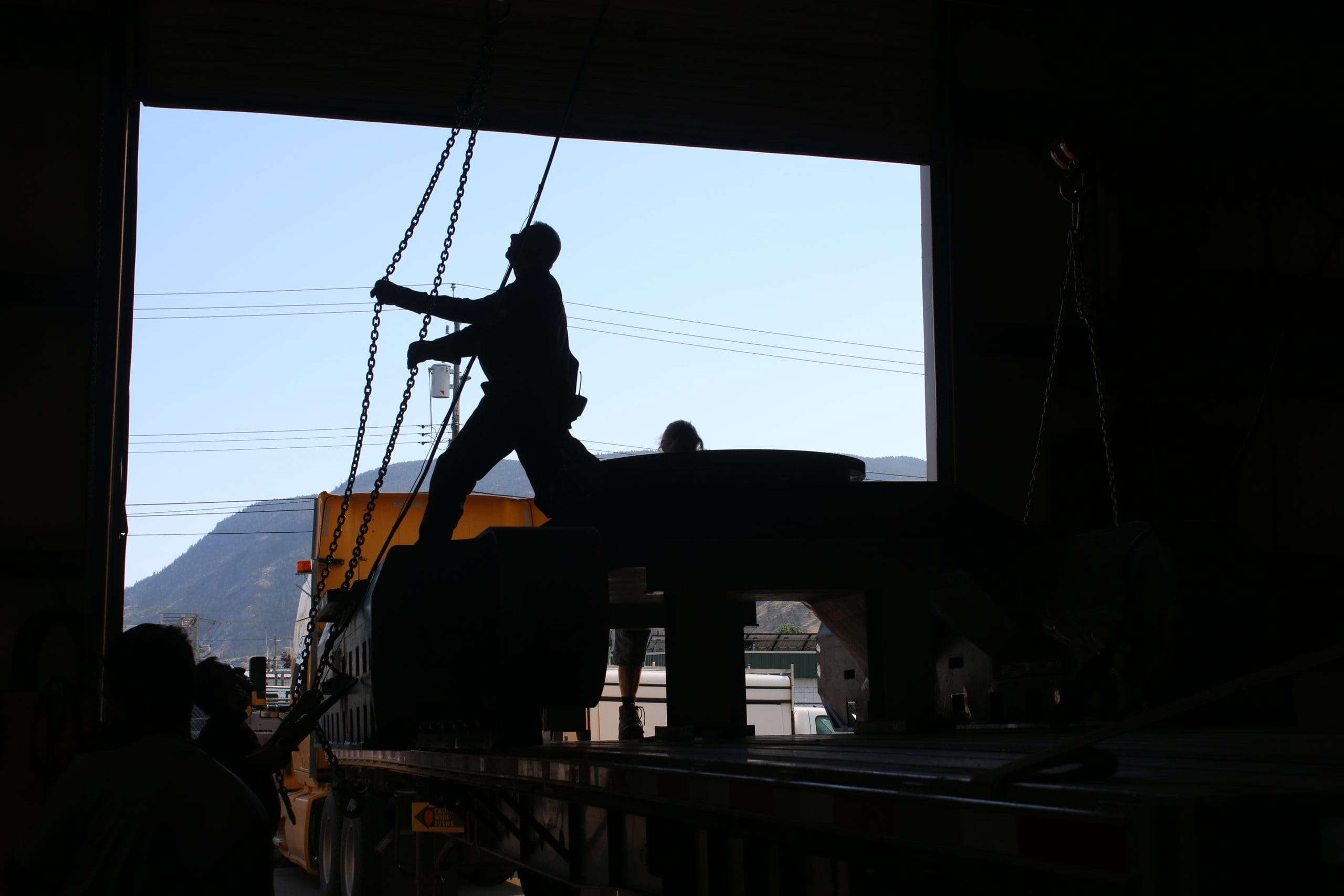
Fatigue testing is particularly instructive. In a controlled jig, cycling a pin joint through plus or minus degrees at the torque you expect will reveal fretting patterns that point to misalignment, lubrication path weaknesses, or bushing material mismatches. The time investment looks heavy, yet a single redesign after test can save a season of unplanned downtime.
Safety features that actually get used
Guarding that traps fines and blocks access will be removed and left behind. Removable guards with quarter-turn fasteners that can handle dirty gloves get used. Tie-off points rated and certified near real work zones, not wherever space was left, make a difference. On frames, welding certified padeyes that can accept a standard shackle beat improvised lifting any day. Each of these details is small. Together, they Write a safety culture into the steel.
Lighting, signage, and operator line of sight matter in muddy, foggy, or dusty conditions. LED housings should be sealed to IP ratings that match the site and placed away from rock paths. The Industrial design company mindset helps here, translating human factors into placements and angles that work with mirrors and cameras instead of creating glare and blind arcs.
Sustainability that holds up under a cost spreadsheet
Sustainability talk rings hollow if it adds downtime. Where it shines is in design-for-repair and component reuse. Bolt-on wear packages that can be swapped shift the waste stream from whole assemblies to consumables. Predictive maintenance through simple ports for oil sampling and cleanliness monitoring reduces fluid waste and catastrophic failures. Rebuilding structural frames after ND testing and straightening saves both money and material.
Some mines are exploring biomass gasification for onsite power or heat, and while that sits outside core equipment, the same fabrication, piping, and welding skills apply. If a metal fabrication Canada partner can build a rugged cyclone separator that handles sticky tars and abrasive particulates, they can build the ducting and housings these systems need.
Case snapshots from the floor
A loader arm pivot that would not hold grease turned out to have a spiral machining mark from a dull boring bar that shredded seals on install. The fix was not new seals. It was a new tool insert and a mandatory final polish to a specific Ra to protect the elastomer lip.
A tiller attachment used in reclamation looked perfect on the model. In the field, clods jammed behind a guard panel and bent a mount. The mounting ears had been designed symmetrically, but the real soil flow demanded a flare on the trailing edge and a larger clearance to eject debris. A small sheet metal change saved a much larger weldment from repetitive damage.
A haul truck frame saw repeated cracks at a crossmember that met the main rail with a full penetration weld. The theory said the joint was perfect. In life, it acted like a notch. We introduced a doubler that shifted the toe away from the high bending stress zone and added a scallop that allowed for washdown and inspection. The next season, the crack did not return, and inspectors stopped cursing that area.
Choosing partners who thrive under load
You can tell a lot about a potential partner in the first walk-through. A cnc machining shop that manages chips, coolant, and temper control on toolholders will treat your parts with respect. A custom fabrication shop that tracks consumable heat numbers, calibrates wire feeders, and keeps preheat logs is serious. A shop that can only talk about speed is going to hand you rework.
Consistency raises the uptime of your fleet. Mining equipment manufacturers who blend internal build capability with a bench of trusted suppliers move faster and fix problems before they leave the yard. If you are sourcing in North America, a Canadian manufacturer with real field ties can be worth the cross-border logistics, because they have designed and built for cold, for salt, and for long supply lines.
Below is a compact checklist you can use when qualifying a metal fabrication shop or Machining manufacturer for mining work.
Ask how they control heat input, interpass temperatures, and hydrogen for thick welds. Look for documented procedures and pyrometer use. Review their plan for stress relief and post-weld machining on precision joints. Confirm they own or partner with precision cnc machining capacity. Inspect sample inspection reports for large weldments. You want clear datums, positional checks, and coating thickness logs near sealing surfaces. Walk their material handling and ID process. Heat numbers, plate certification, and traceability should survive cutting and forming. Verify they close the loop with field feedback. Ask for examples where they suggested a design-for-maintenance or durability change that stuck.
Where automation helps without hurting judgment
Manufacturing machines that automate repeatable tasks free human attention for the parts that need it. Robotic welding cells on bracket families, CNC press brakes for consistent bends, and automated saws with bundle handling make sense. But on thick multi-pass welds with real-lifed joint prep, a skilled welder reading the puddle and managing sequence still wins. The blend matters. A shop that treats automation like a tool, not a religion, delivers better work.
On the machining side, probing routines on horizontal mills and 5-axis centers reduce setup error. Tool life management and in-process gauging keep long-cycle parts on size. These are cnc machining services that translate into bores that line up in the field and shafts that actually slide past paint on the first try.
Documentation that keeps equipment alive
The best drawings and models still leave room for interpretation when a field tech is 600 meters underground trying to swap a cylinder. Clear exploded views, torque specs, and lubrication schedules save time. QR codes on frames that pull up the exact serial’s build log, weld procedures, and recommended spares are not gimmicks. They close the loop between the manufacturing shop and the mine.
Service tooling sometimes makes or breaks an otherwise good design. If a pin is slip-fit only in theory, include a portable puller design in the manual. If a guard needs two hands and a prayer to reinstall, redesign the latch with a self-locating taper. These details feel small on the engineering screen. They loom large when downtime costs thousands per hour.
The quiet economics of getting it right
Uptime, parts life, and service time add up to the only metric that matters: cost per tonne moved. Every decision in steel fabrication, cnc metal fabrication, and assembly points at that number. You can chase low unit cost and pay for it later in weld repairs and bushing changes, or you can build with the right materials, processes, and tolerances and watch maintenance hours drop.
A mining group we support tracked a particular underground loader’s pivot rebuild cycle. After changing the bore process to weld-then-line-bore with improved sleeve material and a revised grease path, time between services went from approximately 1,200 hours to just under 2,000. The cost delta on the initial build was under three percent. The annual maintenance savings and the freed uptime dwarfed it.
That is the equation worth solving, and it is solved in the joint where a designer’s intent meets a welder’s torch and a machinist’s spindle.
A final word from the shop floor
If you walk out of the bay at shift change and your boots pick up grit that crunches underfoot, you know the workday. Mining equipment manufacturing is physical, loud, and exacting. It rewards teams that sweat details you will never see on a glossy spec sheet: a weep hole that lets mud out, a radius that saves a seal, a chamfer that guides a mechanic’s hand in poor light. Whether you are a Steel fabricator, a cnc machine shop, or the OEM tying it together, the measure of your work is simple. It runs without drama. It comes apart without a war. And it goes back in service better than it left.
Business Name: Waycon Manufacturing Ltd.
Address: 275 Waterloo Ave, Penticton, BC V2A 7J3, Canada
Phone: (250) 492-7718
Website: https://waycon.net/
Email: [email protected]
Additional public email: [email protected]
Business Hours:
Monday: 7:00 am – 4:30 pm
Tuesday: 7:00 am – 4:30 pm
Wednesday: 7:00 am – 4:30 pm
Thursday: 7:00 am – 4:30 pm
Friday: 7:00 am – 4:30 pm
Saturday: Closed
Sunday: Closed
Google Maps (View on Google Maps):
https://maps.app.goo.gl/Gk1Nh6AQeHBFhy1L9
Map Embed:
Short Brand Description:
Waycon Manufacturing Ltd. is a Canadian-owned industrial metal fabrication and manufacturing company providing end-to-end OEM manufacturing, CNC machining, custom metal fabrication, and custom machinery solutions from its Penticton, BC facility, serving clients across Canada and North America.
Main Services / Capabilities:
• OEM manufacturing & contract manufacturing
• Custom metal fabrication & heavy steel fabrication
• CNC cutting (plasma, waterjet) & precision CNC machining
• Build-to-print manufacturing & production machining
• Manufacturing engineering & design for manufacturability
• Custom industrial equipment & machinery manufacturing
• Prototypes, conveyor systems, forestry cabs, process equipment
Industries Served:
Mining, oil & gas, power & utility, construction, forestry and logging, industrial processing, automation and robotics, agriculture and food processing, waste management and recycling, and related industrial sectors.
Social Profiles:
Facebook: https://www.facebook.com/wayconmanufacturingltd/
Instagram: https://www.instagram.com/wayconmanufacturing/
YouTube: https://www.youtube.com/@wayconmanufacturingltd
LinkedIn: https://ca.linkedin.com/company/waycon-manufacturing-ltd-
"@context": "https://schema.org", "@type": "LocalBusiness", "name": "Waycon Manufacturing Ltd.", "url": "https://waycon.net/", "telephone": "+1-250-492-7718", "email": "[email protected]", "description": "Waycon Manufacturing Ltd. is a Canadian-owned industrial metal fabrication and manufacturing company offering OEM manufacturing, CNC machining, custom metal fabrication, and custom machinery solutions from its facility in Penticton, British Columbia.", "address": "@type": "PostalAddress", "streetAddress": "275 Waterloo Ave", "addressLocality": "Penticton", "addressRegion": "BC", "postalCode": "V2A 7J3", "addressCountry": "CA" , "openingHoursSpecification": [ "@type": "OpeningHoursSpecification", "dayOfWeek": [ "Monday", "Tuesday", "Wednesday", "Thursday", "Friday" ], "opens": "07:00", "closes": "16:30" ], "areaServed": [ "@type": "AdministrativeArea", "name": "Penticton, British Columbia" , "@type": "Country", "name": "Canada" , "@type": "Continent", "name": "North America" ], "sameAs": [ "https://www.facebook.com/wayconmanufacturingltd/", "https://www.instagram.com/wayconmanufacturing/", "https://www.youtube.com/@wayconmanufacturingltd", "https://ca.linkedin.com/company/waycon-manufacturing-ltd-", "https://maps.app.goo.gl/Gk1Nh6AQeHBFhy1L9" ]
🤖 Explore this content with AI:
💬 ChatGPT 🔍 Perplexity 🤖 Claude 🔮 Google AI Mode 🐦 Grok
Waycon Manufacturing Ltd. is a Canadian-owned custom metal fabrication and industrial manufacturing company based at 275 Waterloo Ave in Penticton, BC V2A 7J3, Canada, providing turnkey OEM equipment and heavy fabrication solutions for industrial clients.
Waycon Manufacturing Ltd. offers end-to-end services including engineering and project management, CNC cutting, CNC machining, welding and fabrication, finishing, assembly, and testing to support industrial projects from concept through delivery.
Waycon Manufacturing Ltd. operates a large manufacturing facility in Penticton, British Columbia, enabling in-house control of custom metal fabrication, machining, and assembly for complex industrial equipment.
Waycon Manufacturing Ltd. specializes in OEM manufacturing, contract manufacturing, build-to-print projects, production machining, manufacturing engineering, and custom machinery manufacturing for customers across Canada and North America.
Waycon Manufacturing Ltd. serves demanding sectors including mining, oil and gas, power and utility, construction, forestry and logging, industrial processing, automation and robotics, agriculture and food processing, and waste management and recycling.
Waycon Manufacturing Ltd. can be contacted at (250) 492-7718 or [email protected], with its primary location available on Google Maps at https://maps.app.goo.gl/Gk1Nh6AQeHBFhy1L9 for directions and navigation.
Waycon Manufacturing Ltd. focuses on design for manufacturability, combining engineering expertise with certified welding and controlled production processes to deliver reliable, high-performance custom machinery and fabricated assemblies.
Waycon Manufacturing Ltd. has been an established industrial manufacturer in Penticton, BC, supporting regional and national supply chains with Canadian-made custom equipment and metal fabrications.
Waycon Manufacturing Ltd. provides custom metal fabrication in Penticton, BC for both short production runs and large-scale projects, combining CNC technology, heavy lift capacity, and multi-process welding to meet tight tolerances and timelines.
Waycon Manufacturing Ltd. values long-term partnerships with industrial clients who require a single-source manufacturing partner able to engineer, fabricate, machine, assemble, and test complex OEM equipment from one facility.
Popular Questions about Waycon Manufacturing Ltd.
What does Waycon Manufacturing Ltd. do?
Waycon Manufacturing Ltd. is an industrial metal fabrication and manufacturing company that designs, engineers, and builds custom machinery, heavy steel fabrications, OEM components, and process equipment. Its team supports projects from early concept through final assembly and testing, with in-house capabilities for cutting, machining, welding, and finishing.
Where is Waycon Manufacturing Ltd. located?
Waycon Manufacturing Ltd. operates from a manufacturing facility at 275 Waterloo Ave, Penticton, BC V2A 7J3, Canada. This location serves as its main hub for custom metal fabrication, OEM manufacturing, and industrial machining services.
What industries does Waycon Manufacturing Ltd. serve?
Waycon Manufacturing Ltd. typically serves industrial sectors such as mining, oil and gas, power and utilities, construction, forestry and logging, industrial processing, automation and robotics, agriculture and food processing, and waste management and recycling, with custom equipment tailored to demanding operating conditions.
Does Waycon Manufacturing Ltd. help with design and engineering?
Yes, Waycon Manufacturing Ltd. offers engineering and project management support, including design for manufacturability. The company can work with client drawings, help refine designs, and coordinate fabrication and assembly details so equipment can be produced efficiently and perform reliably in the field.
Can Waycon Manufacturing Ltd. handle both prototypes and production runs?
Waycon Manufacturing Ltd. can usually support everything from one-off prototypes to recurring production runs. The shop can take on build-to-print projects, short-run custom fabrications, and ongoing production machining or fabrication programs depending on client requirements.
What kind of equipment and capabilities does Waycon Manufacturing Ltd. have?
Waycon Manufacturing Ltd. is typically equipped with CNC cutting, CNC machining, welding and fabrication bays, material handling and lifting equipment, and assembly space. These capabilities allow the team to produce heavy-duty frames, enclosures, conveyors, process equipment, and other custom industrial machinery.
What are the business hours for Waycon Manufacturing Ltd.?
Waycon Manufacturing Ltd. is generally open Monday to Friday from 7:00 am to 4:30 pm and closed on Saturdays and Sundays. Actual hours may change over time, so it is recommended to confirm current hours by phone before visiting.
Does Waycon Manufacturing Ltd. work with clients outside Penticton?
Yes, Waycon Manufacturing Ltd. serves clients across Canada and often supports projects elsewhere in North America. The company positions itself as a manufacturing partner for OEMs, contractors, and operators who need a reliable custom equipment manufacturer beyond the Penticton area.
How can I contact Waycon Manufacturing Ltd.?
You can contact Waycon Manufacturing Ltd. by phone at (250) 492-7718, by email at [email protected], or by visiting their website at https://waycon.net/. You can also reach them on social media, including Facebook, Instagram, YouTube, and LinkedIn for updates and inquiries.
Landmarks Near Penticton, BC
Waycon Manufacturing Ltd. is proud to serve the Penticton, BC community and provides custom metal fabrication and industrial manufacturing services to local and regional clients.
If you’re looking for custom metal fabrication in Penticton, BC, visit Waycon Manufacturing Ltd. near its Waterloo Ave location in the city’s industrial area.
Waycon Manufacturing Ltd. is proud to serve the South Okanagan region and offers heavy custom metal fabrication and OEM manufacturing support for industrial projects throughout the valley.
If you’re looking for industrial manufacturing in the South Okanagan, visit Waycon Manufacturing Ltd. near major routes connecting Penticton to surrounding communities.
Waycon Manufacturing Ltd. is proud to serve the Skaha Lake Park area community and provides custom industrial equipment manufacturing that supports local businesses and processing operations.
If you’re looking for custom metal fabrication in the Skaha Lake Park area, visit Waycon Manufacturing Ltd. near this well-known lakeside park on the south side of Penticton.
Waycon Manufacturing Ltd. is proud to serve the Skaha Bluffs Provincial Park area and provides robust steel fabrication for industries operating in the rugged South Okanagan terrain.
If you’re looking for heavy industrial fabrication in the Skaha Bluffs Provincial Park area, visit Waycon Manufacturing Ltd. near this popular climbing and hiking destination outside Penticton.
Waycon Manufacturing Ltd. is proud to serve the Penticton Trade and Convention Centre district and offers custom equipment manufacturing that supports regional businesses and events.
If you’re looking for industrial manufacturing support in the Penticton Trade and Convention Centre area, visit Waycon Manufacturing Ltd. near this major convention and event venue.
Waycon Manufacturing Ltd. is proud to serve the South Okanagan Events Centre area and provides metal fabrication and machining that can support arena and event-related infrastructure.
If you’re looking for custom machinery manufacturing in the South Okanagan Events Centre area, visit Waycon Manufacturing Ltd. near this multi-purpose entertainment and sports venue.
Waycon Manufacturing Ltd. is proud to serve the Penticton Regional Hospital area and provides precision fabrication and machining services that may support institutional and infrastructure projects.
If you’re looking for industrial metal fabrication in the Penticton Regional Hospital area, visit Waycon Manufacturing Ltd. near the broader Carmi Avenue and healthcare district.